
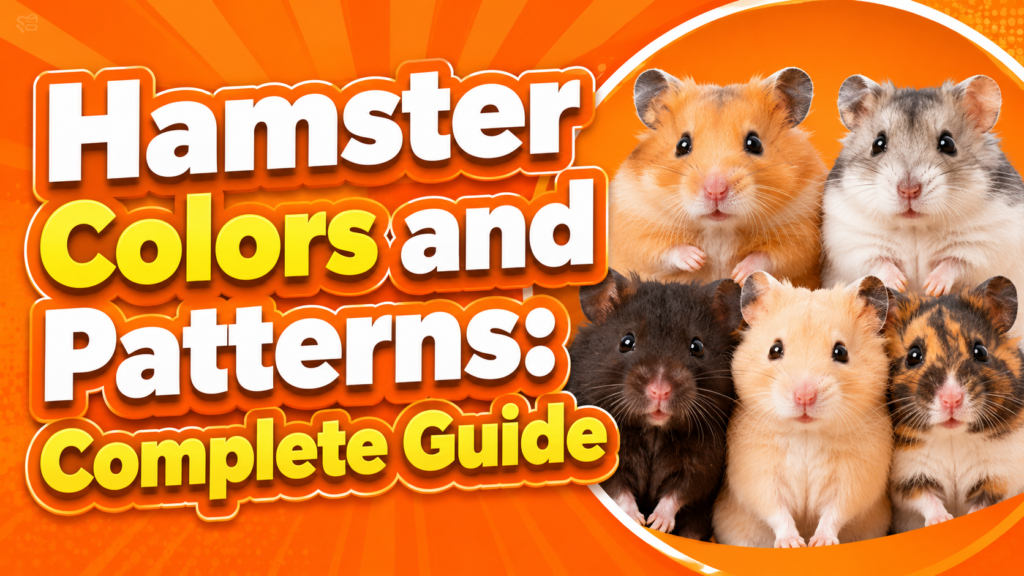
If you have ever wondered what makes a “panda hamster” or why some Winter Whites turn white in winter, this guide covers color genetics across all pet hamster species and explains the one case where color actually matters for health.
How hamster coat color works
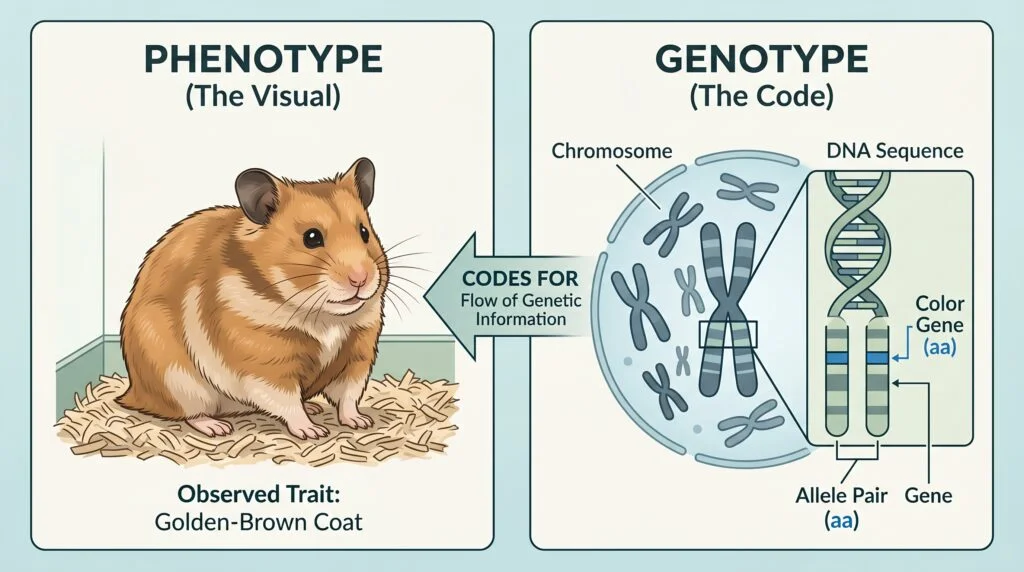
Coat color in hamsters is controlled by multiple genes that affect pigment type, distribution, and dilution. A hamster inherits one copy of each gene from each parent, and different combinations produce different colors. Two hamsters of the same visible color can carry hidden genes that produce differently colored offspring. Color and coat type (length, texture) are controlled by separate genes and can combine in any combination. Coat color predicts nothing about personality or lifespan, with one important exception covered below.
Syrian hamster colors
Syrians are the most varied pet hamster species for coat color. The base pigments are eumelanin (black/brown) and phaeomelanin (yellow/orange), modified by numerous dilution, extension, and pattern genes. Common coat colors include:
| Color name | Description |
|---|---|
| Golden | Warm orange-tan back, cream belly, dark cheek flashes. The original wild color. |
| Cream and yellow | Diluted orange tones, ranging from pale peach to deep yellow. |
| Cinnamon and sable | Brown-toned variants with different dilution genes. |
| Black (melanistic) | Deep even black coat, often with a lighter belly. |
| White (several types) | Ruby-Eyed White, Dark-Eared White, and Dominant Spot White are genetically distinct. |
| Gray and blue | Diluted black tones, ranging from pale silver to blue-gray. |
| Roan | Mixed white and colored hairs throughout, giving a mottled appearance. |
| Tortoiseshell | Mixed orange and black, only possible in females due to X-linked color genetics. |
Coat patterns in Syrians include banded (a white stripe around the middle), dominant spot (irregular white patches on a colored base), and piebald. Coat texture is separate: any color can appear short-haired, long-haired (the “teddy bear” look), or satin (high-gloss). Trade names like “teddy bear hamster,” “black bear hamster,” and “panda hamster” all refer to Syrians with specific coats, not separate species. See types of hamsters for the species overview.
Dwarf hamster colors
Dwarf species have fewer color mutations than Syrians but each has distinct natural colorways.
Campbell’s dwarf hamsters come in wild agouti (gray-brown with a dark dorsal stripe), albino, and several domestically bred colors including blue, lilac, platinum, and black. They have the broadest color range of the dwarf species due to their longer history in captivity.
Winter White dwarf hamsters are typically blue-gray or sapphire in summer and turn pale or fully white in winter in response to shorter daylight hours. In captivity, the coat change may be partial or absent depending on artificial lighting. Domestically bred Pearls (mostly white with dark ticking) are also common in the pet trade.
Roborovski hamsters are naturally sandy brown with white eyebrows and a white belly. A “Husky” or “White-Face” variety has a white face and lighter overall coat. Very few color mutations exist in Robos compared to other species.
Chinese hamsters tend toward a dark agouti (gray-brown with a prominent dark dorsal stripe) in their natural form, with cream and other mutations present in some captive lines.
When color does affect health
For most hamster colors, coat is purely cosmetic. There is one important exception: in Syrian hamsters, the dominant spot gene that produces white patches is a single-dose gene (one copy creates patches, two copies cause problems). A hamster inheriting two copies of the dominant spot gene, called double dominant spot, may be born with very small eyes, poor eyesight, neurological issues, or may fail to thrive. Responsible breeders never pair two dominant-spot Syrians for this reason. If you are buying a panda-patterned or very extensively white-patterned Syrian, ask the breeder whether the parents’ genetics are known.
In Campbell’s dwarfs, the albino gene is associated with increased light sensitivity, and some heavily diluted color lines may carry a slightly elevated risk of eye issues. The evidence here is less established than for the Syrian double dominant spot problem.
Color myths
“Black bear hamsters” are not more aggressive. They are dark-coated Syrians. “Albino hamsters” are not blind, though they are sensitive to bright light. “Teddy bear hamsters” are not a separate breed. They are long-haired Syrians. “Panda hamsters” are not a species. They are dominant-spot Syrians. Color predicts nothing about tameness or care needs.
Frequently asked questions
What is the rarest hamster color?
Rarity depends on breeding lines. In Syrians, true tortoiseshell (female only, requiring specific X-linked genes) and genetically confirmed true black are relatively uncommon in casual pet-store lines. Roborovskis have very few color mutations, making any non-agouti variety uncommon.
Does hamster coat color affect temperament?
No. Color is determined by pigment genes that have no connection to behavior. Individual personality varies more between hamsters than between colors.
Can you breed for a specific color?
Yes, but hamster color genetics is a specialist topic with real welfare implications, especially around the double dominant spot risk in Syrians. If you are interested, connect with a reputable hamster club before attempting any breeding program. Backyard breeding contributes to pet overpopulation.
The bottom line
Hamster coat color is cosmetic in almost every case. It does not change how you care for the animal, how long it lives, or how friendly it is. The one practical note: avoid all-white or very heavily white-patterned Syrians from unknown breeding backgrounds, as double dominant spot genetics can carry real health risks. For the full species picture, see types of hamsters and dwarf vs Syrian.
This article is for informational purposes only and is not a substitute for veterinary advice. Always consult a qualified exotic vet for health concerns. Check your local and state laws before getting any pet hamster. All hamsters are banned in Hawaii.