
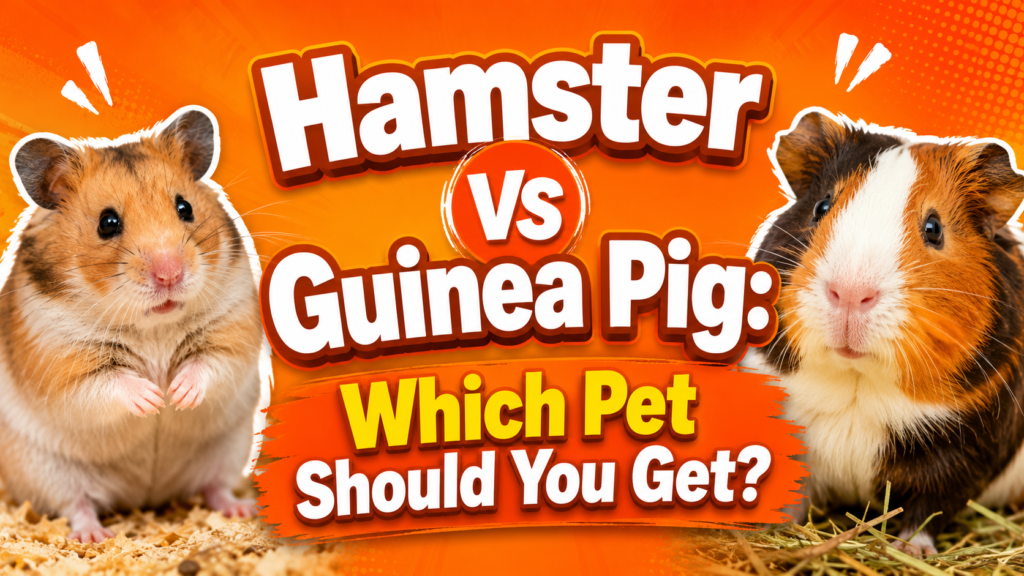
These two animals look superficially similar in pet store photos, but they have very different needs and personalities. Guinea pigs need companionship (from other guinea pigs), take up significantly more space, and are active during the day. Hamsters are solo animals, compact, and most active at night. Understanding those differences upfront saves a lot of surprises.
Head-to-head comparison
| Feature | Hamster | Guinea Pig |
|---|---|---|
| Body size | 2 to 7 inches | 8 to 12 inches, 1.5 to 2.5 lbs |
| Lifespan | 1.5 to 3 years | 4 to 7 years |
| Social needs | Solitary (must live alone) | Needs at least one guinea pig companion |
| Active hours | Mainly at night | Daytime and morning |
| Handling | Moderate (varies by species) | Calm and tolerant once socialized |
| Space needed | Minimum 40 x 20 inches | Minimum 7 to 8 sq ft per pig (more for two) |
| Monthly cost | Low ($15 to $30 food/bedding) | Moderate ($40 to $70 food/bedding/hay) |
| Best for | Small spaces, solo pet, adults/teens | Families, children, interactive pet lovers |
Size and space requirements
Guinea pigs are significantly larger and need much more floor space: at least 7 to 8 square feet for one, and 10 or more for two (which is the recommended minimum, as they are social animals). Hamsters need at least 40 by 20 inches (about 5.5 sq ft) per animal, and they live alone. If your living situation is space-limited, a hamster has a smaller footprint, but the gap is not as extreme as people expect.
Social needs and companionship
Guinea pigs are herd animals and become stressed and depressed without at least one same-species companion. You should plan to get two from the start (same sex to prevent breeding, or a neutered pair). Hamsters are territorial and must live alone regardless of species, including dwarfs. If you want to watch two animals interact and play together, guinea pigs deliver that; hamsters do not.
Handling and temperament
Well-socialized guinea pigs are among the calmest and most handleable small pets. They tolerate being held, rarely bite, and many will purr or “wheek” in delight. A tamed Syrian hamster is also pleasant to hold, but hamsters are smaller and can startle more easily. Dwarf hamsters are faster and trickier to handle. For young children who want to hold their pet safely, guinea pigs generally win on ease and patience.
Activity schedule
Guinea pigs are most active during the day, which aligns better with a typical family schedule. Hamsters are nocturnal and most lively in the evening and overnight. If you want a pet that is awake and engaging while the kids are home from school, guinea pigs are the better fit. If you are a night owl or want a pet that entertains itself overnight, a hamster works well.
Lifespan and commitment
Guinea pigs live 4 to 7 years, more than twice as long as most hamsters. That is a meaningful commitment, especially for a child who receives one as a gift. Hamsters at 1.5 to 3 years are a shorter commitment, which can actually be better for young children whose interest may shift, or for families who are unsure about long-term pet ownership.
Cost comparison
Guinea pigs eat hay as their main diet (unlimited timothy hay) plus pellets and fresh vegetables, which adds up to a higher monthly food cost than a hamster’s seed mix. Two guinea pigs also mean double the food and bedding. Setup costs for the larger enclosure are also higher. Hamsters are one of the most affordable small pets to keep month to month.
Which should you choose?
- Choose a hamster if you have limited space, you want a solo pet, you are an adult or teenager comfortable with a nocturnal animal, or you prefer a lower monthly cost. See our best hamster for beginners guide and types of hamsters overview to pick a species.
- Choose guinea pigs if you have space for a larger enclosure, you want a daytime pet that children can hold comfortably, you can commit to 4 to 7 years, and you can afford to keep two. Also read our dwarf vs Syrian comparison if a hamster is still on the table.
Frequently asked questions
Can a hamster and guinea pig live in the same cage?
No. They are different species with incompatible social and territorial needs. They must always be housed separately.
Are guinea pigs or hamsters easier to care for?
Guinea pigs require more daily effort (hay replenishment, larger cage cleaning, social needs) but are gentler to handle. Hamsters are simpler in space and daily routine, but are more nocturnal and need solitary housing.
Which is better for a 6-year-old?
Guinea pigs are generally safer and more tolerant for young children because they are larger, calmer, and harder to accidentally hurt. A hamster can be a good first pet for older children (8 and up) with adult supervision and guidance.
Do guinea pigs or hamsters smell more?
Both stay manageable with regular cage cleaning. Guinea pig cages tend to need cleaning more frequently (2 to 3 times a week for spot cleaning) due to their larger size and constant hay eating. Hamster cages need a full clean once a week.
The bottom line
Guinea pigs are the better family pet for daytime interaction, handling, and a longer bond. Hamsters are the better fit for smaller homes, quieter households, and people who are fine watching an active nocturnal animal rather than cuddling it daily. Neither is a lesser choice: they just suit different lifestyles. Always source from a reputable rescue or breeder, and check your local laws before getting either animal.
Keep reading: Types of Hamsters, Best Hamster for Beginners, Dwarf vs Syrian Hamster.
This article is for informational purposes only and is not a substitute for veterinary advice. Check your local and state laws before getting any pet, as some species may be restricted in your area.