
The difference between male and female hamsters is smaller than most people expect, and individual temperament varies far more than sex does. Still, there are a few real, consistent differences worth knowing before you choose, especially for Syrian hamsters where the heat cycle is most noticeable.
Head-to-head comparison
| Feature | Male Hamster | Female Hamster |
|---|---|---|
| Temperament | Generally calmer and more laid-back | Often more active and curious |
| Heat cycle (Syrian) | None | Every 4 days: restless, scent marking, distinctive odor |
| Scent | Mild musky smell from flank glands | Stronger scent during heat; otherwise similar |
| Aggression | Can mark territory with flank glands | Can be more territorial, especially in heat |
| Size | Slightly larger on average (Syrian) | Slightly smaller on average (Syrian) |
| Sexing ease | Easier: visible scrotal sac at rear | Harder to sex in young animals |
| Care requirements | Identical to females | Identical to males |
| Best for | First-time owners, calmer handling | Experienced owners who enjoy active pets |
Temperament differences
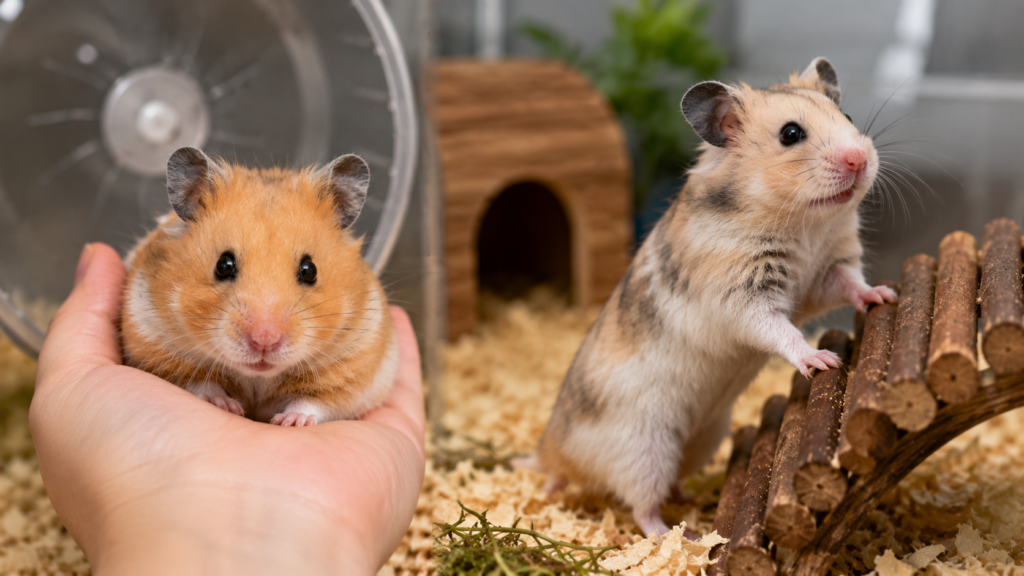
Males are broadly reported to be calmer and more tolerant of handling, particularly in the Syrian breed. They are less likely to be skittish or bite during routine interaction. Females tend to be more alert and active, which some owners love and others find harder to manage, especially during the heat cycle. Neither sex is inherently friendlier: an individual’s early socialization and handling history matters far more than whether it is male or female.
The heat cycle in female Syrians
Female Syrian hamsters cycle into heat (estrus) every 4 days, typically at night. During this time, they may become restless, pace their cage, press flat to the ground, and produce a noticeable musky odor from their vaginal discharge. This is completely normal and harmless, but it can be alarming to new owners who do not expect it. The smell usually dissipates within 12 to 24 hours. Dwarf females also cycle, though the signs are often less pronounced.
Scent and odor
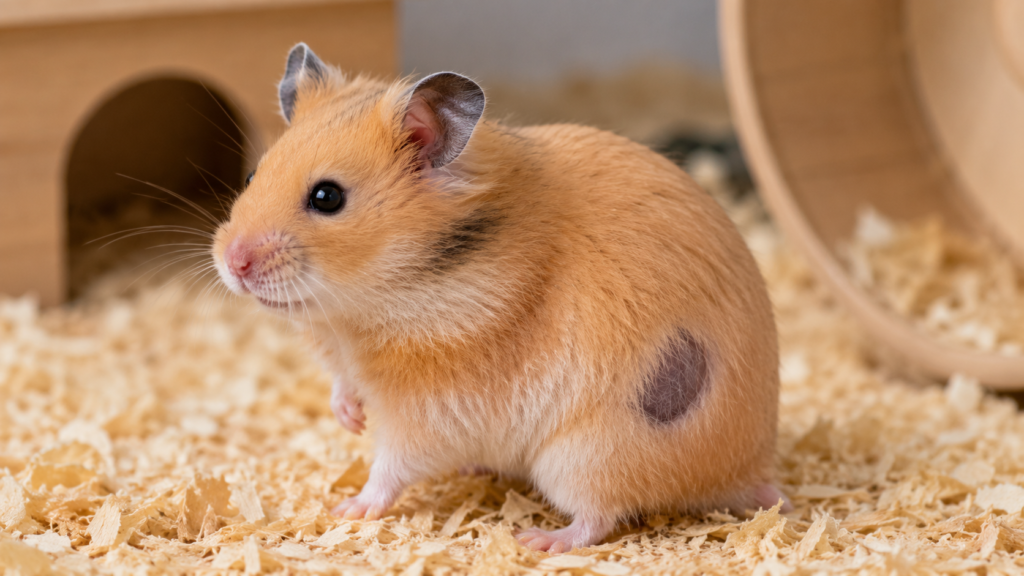
Male hamsters have visible flank glands (dark oval patches on their sides, more prominent in Syrians) that they use to mark their territory. The scent from these is mild and musky. Females produce a stronger and more distinct smell during heat, but are otherwise similar to males. Both sexes need weekly cage cleaning to prevent odor buildup, regardless of sex.
Sexing your hamster
Males are easier to sex: they have a visible scrotal sac at the base of the tail, which becomes obvious from around 4 weeks of age, and the anogenital distance (gap between anus and genitals) is noticeably longer in males than females. Young females in pet stores are sometimes mislabeled, so always verify with a knowledgeable seller or vet if it matters to you.
Care is identical for both sexes
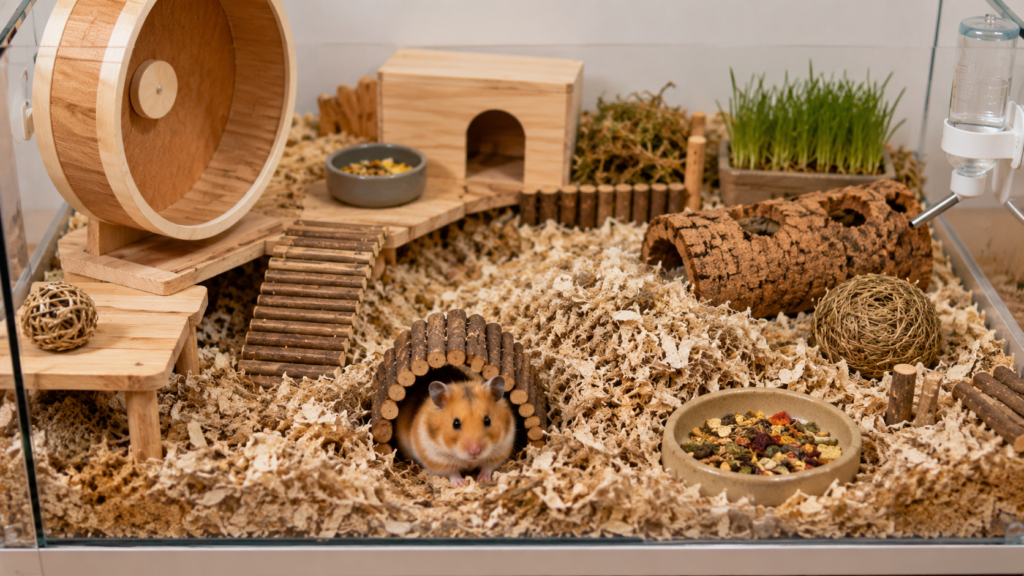
Housing, diet, wheel size, bedding depth, and enrichment needs are exactly the same for male and female hamsters. Both need a minimum 40 by 20 inch floor space, 8 inches or more of bedding, a solid wheel, and a varied diet. See our types of hamsters guide for species-specific needs, and our best hamster for beginners page for setup advice.
Which should you choose?
- Choose a male if you are a first-time owner, you want a calmer hamster to handle, or you want to avoid the heat cycle entirely. Males are the more commonly recommended starting point.
- Choose a female if you want an active, curious hamster, you are already familiar with the heat cycle, or the individual female at the rescue or breeder simply has the personality that appeals to you. See our dwarf vs Syrian comparison for help choosing a species first.
Frequently asked questions
Do male or female hamsters live longer?
There is no significant difference in lifespan between sexes. Diet, genetics, and care environment are far more influential than sex.
Are female hamsters more aggressive than males?
Female Syrians can be more territorial, particularly during heat. But individual variation is large, and a well-socialized female is often just as gentle as a male. Do not let generalized sex stereotypes override what you observe in an individual animal.
Can you tell a hamster’s sex by behavior alone?
Not reliably. The most accurate method is physical sexing: checking anogenital distance and looking for the scrotal sac in males. Behavioral differences are averages, not rules.
Do male hamsters fight each other?
Yes. All hamsters, regardless of sex, are solitary and territorial. Two males housed together will fight. Two females will also fight. All hamsters must be kept one per enclosure.
The bottom line
Males are slightly calmer and lack the heat cycle, making them a better default for beginners. Females are more active and equally rewarding once you understand the heat cycle. In practice, if you fall in love with an individual hamster at a reputable breeder or rescue, sex matters far less than the individual’s socialization and temperament. Choose the animal that you connect with, set up the cage correctly, and both sexes will thrive.
Keep reading: Types of Hamsters, Best Hamster for Beginners, Dwarf vs Syrian Hamster.
This article is for informational purposes only and is not a substitute for veterinary advice. If you have concerns about your hamster’s health or reproductive behavior, consult an exotic vet.