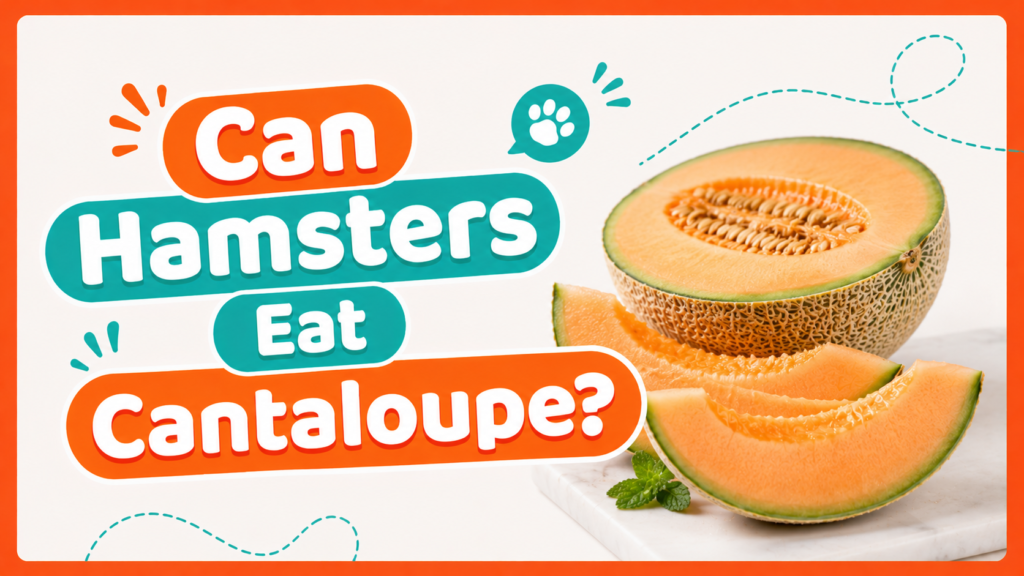
Cantaloupe is rich in vitamin A, vitamin C, and beta carotene, and hamsters generally enjoy its sweet flavor. The issue is the sugar content: cantaloupe is among the sweeter melons, with about 8 grams of sugar per 100 grams. Combined with its high water content, too much cantaloupe at once can cause diarrhea as well as blood sugar spikes. A tiny cube once a week is enjoyable and safe; regular large servings are not. This guide covers the safe amount, preparation, and the specific cautions for dwarfs.
Is cantaloupe safe for hamsters?
Yes, fresh cantaloupe flesh is not toxic to hamsters. The seeds and rind should be removed before offering: the seeds are a choking risk and difficult to digest, and the rind is tough and may carry pesticide residue on the outer surface. The flesh itself, in a small piece, is safe. The two concerns are sugar (for dwarfs especially) and water content (excess can cause diarrhea in any hamster).
Quick takeaway: a pinky-fingernail-sized cube of fresh cantaloupe flesh, once a week for a Syrian. A smaller piece, less often, for dwarfs. Remove seeds and rind.
How much cantaloupe can a hamster eat?
Keep the portion very small. Cantaloupe is a sweet, watery fruit, and both the sugar and the moisture are reasons to limit it.
| Hamster | Portion | How often |
|---|---|---|
| Syrian | A pinky-fingernail-sized cube of flesh | Once a week at most |
| Dwarf (Robo, Winter White, Campbell’s) | Half that, a very small sliver | Once every one to two weeks |
For a full picture of what is safe and what to avoid, see our guide to what hamsters can eat, our list of foods toxic to hamsters, and our roundup of safe vegetables for hamsters.
How to prepare cantaloupe for a hamster
Cut a small cube of fresh cantaloupe flesh. Remove all seeds and trim away the rind completely so only the orange flesh remains. Offer it fresh at room temperature. Remove any uneaten piece within a couple of hours, as melon spoils quickly and attracts fruit flies.
- Remove seeds and rind. Offer only the clean flesh.
- Fresh only. No canned cantaloupe in syrup, no dried cantaloupe (concentrated sugar), and no cantaloupe-flavored products.
- Keep the cube small. A pinky-fingernail-sized piece is the ceiling for a Syrian.
- Remove leftovers promptly. Cantaloupe wilts and can mold within a few hours in a warm cage.
The risks of too much cantaloupe
Too much cantaloupe causes diarrhea because of the high water content, and the sugar contributes to weight gain and, in dwarf hamsters, worsened blood sugar regulation. Signs to watch for include watery droppings, a damp rear end, lethargy, or increased thirst. If diarrhea lasts more than a day or your hamster seems weak, contact an exotic vet. A small hamster can become dehydrated quickly from persistent diarrhea.
Dwarf note: Winter White and Campbell’s dwarfs are prone to diabetes. Cantaloupe’s sugar content makes it one of the higher-risk fruits for these species. Keep the serving to a tiny sliver and offer it rarely, choosing lower-sugar vegetables like cucumber most of the time.
Frequently asked questions
Can dwarf hamsters eat cantaloupe?
Yes, a very small sliver every one to two weeks. Because dwarfs are prone to diabetes and blood sugar sensitivity, high-sugar fruits like cantaloupe should be an infrequent treat. Lower-sugar options like cucumber are better daily fresh foods for dwarfs.
Can hamsters eat cantaloupe seeds?
No. Remove all seeds before offering cantaloupe. The seeds are a choking risk and are difficult to digest.
Can hamsters eat cantaloupe rind?
No, or not reliably. The outer skin can carry pesticide residue and is very tough. The white part just inside the rind is less sweet and less risky than the green skin, but the safest approach is to offer only the orange flesh.
Is cantaloupe better or worse for hamsters than watermelon?
Both are high-sugar, high-water melons best offered in tiny amounts occasionally. Cantaloupe has a bit more sugar and beta carotene; watermelon has more water. The same small portion rule applies to both.
The bottom line
Cantaloupe is a safe, vitamin-rich treat for hamsters in very small portions. A pinky-fingernail-sized cube of flesh, once a week, is right for a Syrian. Dwarfs should have a smaller piece less frequently because of the sugar and diabetes risk. Always remove seeds and rind, offer only fresh flesh, and remove leftovers quickly. Keep low-sugar vegetables as the main fresh food and use cantaloupe as an occasional sweet treat.
Keep reading: What Can Hamsters Eat?, Foods Toxic to Hamsters, Safe Vegetables for Hamsters
Hamster Corner provides general educational information about hamster care. It is not a substitute for professional veterinary advice. If your hamster shows signs of illness, contact an exotic vet promptly.