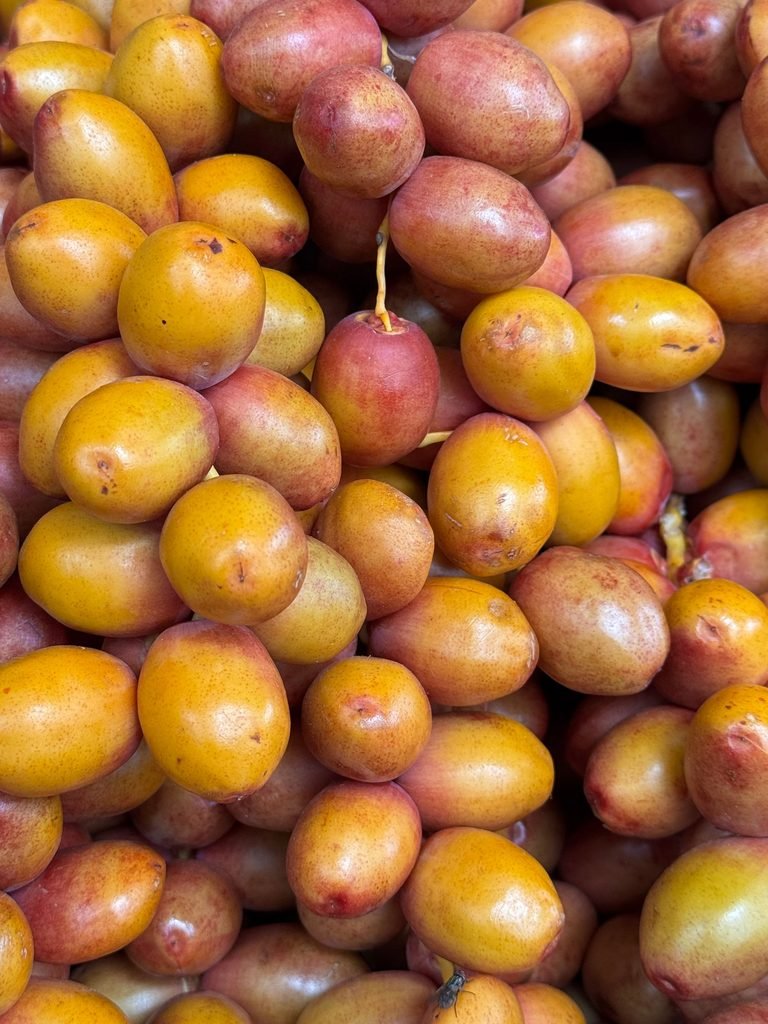
Dates are not a food I would intentionally give to a hamster. They are not known to be acutely toxic in the way certain fruit pits or other unsafe foods can be, but dates are extremely sugar-dense and there is very little hamster-specific feeding guidance supporting them as a treat.
That makes this an easy decision. Your hamster does not need dates, and there are plenty of fresh foods with clearer feeding guidance.
If your hamster accidentally eats a tiny piece of date flesh, that is different from deliberately adding dates to the diet. Remove the rest, return to the normal food, and watch for any significant change in your hamster.
Are dates safe for hamsters?
There is not enough hamster-specific evidence to give dates a confident recommendation.
Major hamster feeding guides from Woodgreen Pets Charity and PetMD recommend small amounts of fruits such as apple, pear, strawberry, blueberry, banana, and in Woodgreen’s case grapes. Dates are not included among their recommended options.
That does not prove dates are poisonous.
It means there is no good reason to invent a safe date portion when better-established foods are available.
Dates are also unusually concentrated compared with most fresh fruit. Nutritional analyses show that sugar makes up a large proportion of ripe date flesh, although the exact amount varies significantly by variety, ripeness, and processing.
So my practical recommendation is:
skip dates as a hamster treat.
Why are dates different from fresh fruit?
A strawberry and a date may both be fruits, but they are very different foods by the time they reach your kitchen.
Dates contain relatively little water and a large concentration of carbohydrates and naturally occurring sugars. Research reviews of date fruit show sugar concentrations commonly above 60% in mature dates, with substantial variation between cultivars and stages of ripeness.
That matters for a hamster because the animal only needs a very small amount of additional food beyond its staple diet.
A tiny piece of date can represent a surprisingly concentrated treat compared with the same-sized piece of cucumber, strawberry, or another less dense fresh food.
It is not that sugar becomes poison at a certain number.
It is that there is very little nutritional reason to use such a concentrated food in the first place.
How much date can a hamster eat?
There is no established veterinary serving size for dates specifically.
The original version of this article recommended:
a grain-of-rice-sized piece once a month
That sounds reassuringly precise, but there is no evidence behind that exact amount or schedule.
Woodgreen gives a much broader guideline for hamster treats in general: keep portions small, roughly around the size of the hamster’s ear, and offer treats only occasionally.
I would not apply that full portion to dates, though. Dates are much more concentrated than many of the fresh fruits Woodgreen actually recommends.
Rather than trying to shrink the portion until a date becomes acceptable, I would simply choose another food.
Can Syrian hamsters eat dates?
A Syrian hamster accidentally eating a tiny amount of plain date flesh is unlikely to justify panic.
But I would not make dates part of a Syrian hamster’s regular treat rotation.
Syrians can already have small amounts of better-established fruits such as banana, strawberry, apple, pear, and blueberry alongside an appropriate staple diet.
There is no nutritional gap that requires dates to fill it.
See what hamsters can eat for the broader feeding guide.
Can dwarf hamsters eat dates?
I would skip dates for dwarf hamsters too.
The important distinction is that not every dwarf hamster species has exactly the same diabetes risk. The original article grouped Roborovski, Winter White, and Campbell’s hamsters together and treated all three as equally diabetes-prone. That is too broad.
Campbell’s hamsters and some hybrid dwarf lines deserve particular caution around metabolic disease, but that does not mean every dwarf hamster becomes diabetic from tasting fruit.
We do not need that claim to decide what to do with dates.
A dwarf hamster is very small, dates are extremely concentrated, and the food provides no special benefit. That alone is enough reason to choose something else.
If your individual hamster has diagnosed diabetes or another condition requiring dietary management, follow your veterinarian’s feeding plan rather than a general treat guide.
Are dates toxic to hamsters?
There is no strong evidence that ordinary date flesh is acutely toxic to hamsters.
That distinction matters.
Calling dates “toxic” would imply a poisoning risk that has not been established.
Calling them “not recommended” means they are a poor choice for routine feeding because of their nutritional profile and lack of hamster-specific guidance.
Those are different things.
Hamster Corner’s foods toxic to hamsters guide covers foods where toxicity or another clear safety concern is the primary issue.
Dates fit better into the category of unnecessary food that is easy to avoid.
What about the date pit?
Do not give a hamster a whole date with the pit inside.
PetMD recommends removing fruit pits and seeds before offering fruit to hamsters.
A date pit is also large, hard, and provides no nutritional reason to be inside the enclosure.
This does not require claiming that the pit will definitely damage a hamster’s teeth or become trapped in its cheek pouch. Those specific outcomes would need evidence.
The simpler rule is enough:
if a fruit contains a large hard pit, remove it before the fruit reaches your hamster.
Are Medjool dates safer than other dates?
There is no useful reason to create separate hamster rules for Medjool, Deglet Noor, or other date varieties.
Their moisture, carbohydrate, and sugar content varies, but all are still concentrated sweet fruits compared with the fresh produce normally recommended for hamsters.
A softer Medjool date is not automatically a better hamster food because it contains slightly more moisture.
Choose a food with clearer feeding guidance instead.
Are fresh dates better than dried dates?
This distinction is also more complicated than it sounds.
Dates are sold at different stages of ripeness and moisture, and what people call a “fresh date” can have a very different composition from a dried or fully ripened date.
Research shows substantial variation in moisture and sugar content across varieties and ripening stages.
So I would not tell owners:
fresh dates are safe but dried dates are bad.
Neither is necessary.
If the goal is to give your hamster a little fresh fruit, use a fruit that hamster-care sources actually recommend.
Can hamsters eat date syrup or date paste?
No reason to offer either.
Date syrup and concentrated date paste move even further away from a simple fresh-food treat.
They are:
- concentrated
- sticky
- easy to over-serve
- designed as human foods rather than hamster foods
Date syrup may also appear in products containing additional ingredients.
Keep processed date products out of the hamster enclosure.
What if my hamster accidentally eats a date?
First, work out what was actually eaten.
If your hamster stole a tiny piece of plain date flesh, remove the rest and return to the normal diet.
You do not need to treat one accidental bite as an automatic poisoning emergency.
Watch for meaningful changes such as:
- diarrhea or unusually soft droppings
- reduced appetite
- unusual lethargy
- a significant change in drinking or urination
- any other clear change from normal behavior
If your hamster ate a large amount, swallowed part of a pit, ate a date product containing other questionable ingredients, or develops symptoms, contact a veterinarian experienced with hamsters.
Do not try to make your hamster vomit or give a home remedy.
What should I give instead of dates?
You have plenty of easier options.
Hamster feeding guidance from Woodgreen and PetMD includes fruits such as:
- strawberry
- blueberry
- banana
- apple with the seeds removed
- pear
Fruit should still remain an occasional part of the diet rather than something offered constantly.
You can also choose suitable vegetables instead. See our safe vegetables for hamsters for ideas.
The point is not that your hamster needs a replacement for dates.
It is that if you want to offer a treat, you might as well choose one with clearer guidance.
Are blueberries or raspberries better than dates?
I would choose a small piece of fresh berry over a date if you want to offer fruit.
But I would not create another rigid hierarchy where one fruit is labelled “safe three times a week” and another “safe once a month.”
Treats work better as part of the overall diet than as individual schedules.
If your hamster had banana recently, you do not need to add blueberry just because blueberry is another approved fruit.
Variety matters less than maintaining a balanced overall diet.
Do hamsters need fruit at all?
No individual fruit is essential.
A hamster can have a perfectly good diet without dates, banana, strawberry, melon, or any other particular fruit.
The foundation should be a nutritionally complete hamster food, with appropriate extras providing limited variety and enrichment.
This is worth remembering when searching questions like “Can hamsters eat X?”
A food being technically edible does not automatically make it worth adding.
Sometimes the best answer is simply:
your hamster does not need this one.
The bottom line
I would skip dates for both Syrian and dwarf hamsters.
There is no good hamster-specific evidence supporting a particular date serving, while dates are unusually concentrated in sugar compared with many fresh fruits. That makes recommendations such as “a rice-grain-sized piece once a month” more precise than the evidence allows.
Dates are not known to be acutely toxic to hamsters, so a tiny accidental bite of plain flesh is not automatically an emergency.
But for intentional feeding, there is no compelling benefit. Choose a fresh food with clearer hamster-care guidance instead.
Keep reading: What can hamsters eat? | Foods toxic to hamsters | Safe vegetables for hamsters | Can hamsters eat strawberries?
Hamster Corner provides general educational information about hamster care and nutrition. If your hamster eats a potentially harmful food, stops eating, develops persistent diarrhea, or shows another significant health change, contact a veterinarian experienced with hamsters.