Hamsters can eat a quality commercial hamster food as their staple, plus small amounts of safe vegetables, the occasional sliver of fruit, and a little protein like cooked egg or mealworms. Avoid chocolate, onion, citrus, and fruit seeds, which are toxic. Keep fresh extras to about 10 percent of the diet.
What goes in the bowl decides how long and how comfortably your hamster lives. The wrong foods cause obesity, diabetes, cheek-pouch problems, or poisoning. The right ones keep a hamster lean and active for its full life. This guide covers the staple diet, safe fresh foods, the foods you must never feed, and exact portions, because “in moderation” means different things for a 1 ounce dwarf and a 5 ounce Syrian.
What a healthy hamster diet looks like
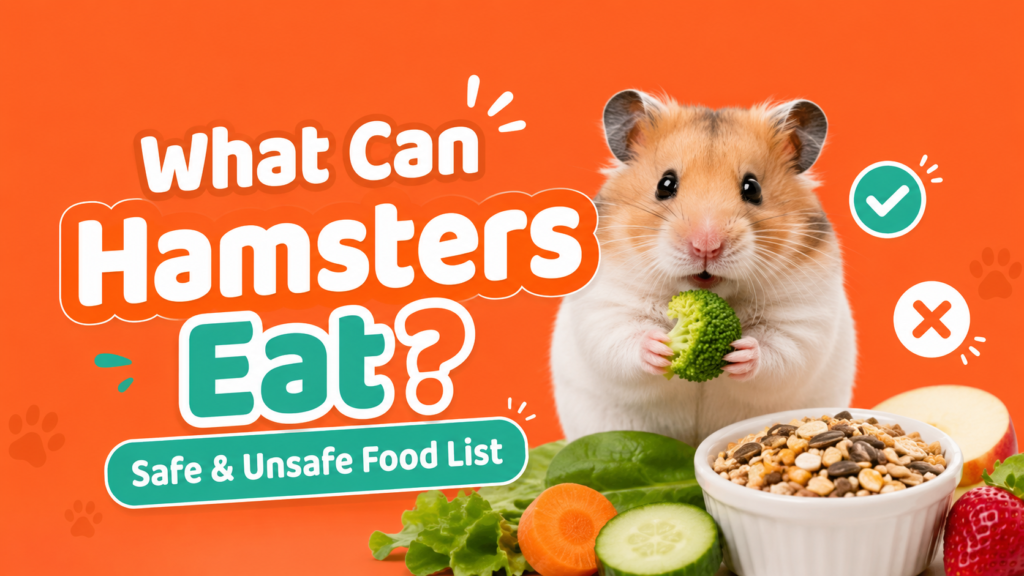
A good diet has three layers: a staple food for about 90 percent, fresh extras for about 10 percent, and a little protein a few times a week.
- Staple (about 90 percent): a quality commercial food, ideally a pelleted or lab-block diet, or a well-formulated seed-and-grain mix. Keep it available at all times.
- Fresh extras (about 10 percent): small amounts of safe vegetables, occasional fruit, and fresh herbs for variety and enrichment.
- Protein (a few times a week): hamsters are omnivores and need animal protein, such as a mealworm, a little cooked egg, or plain chicken.
Fresh, clean water must be available at all times, ideally from a bottle with a sipper tube. Change it daily.
The golden rule: fresh food is a supplement, not the meal. A hamster that fills up on fruit and carrots will leave its balanced staple untouched and miss the nutrients it needs.
The five rules for feeding fresh food safely
Follow these every time you offer something fresh.
- Tiny portions. A piece about the size of your hamster’s paw is plenty. Halve that for dwarfs.
- One new food at a time. Wait a day or two and check for soft stools before adding another, so you can spot what disagrees with them.
- Always wash produce. Pesticide residue is a real hazard for an animal this small. Rinse everything, even organic.
- Remove uneaten fresh food daily. Hamsters hoard food in their bedding, where it rots. Spot-clean nesting corners.
- Go easy on sugar, especially with dwarfs. Dwarf species are prone to diabetes, so sugary foods are rare treats for them.
Safe vegetables for hamsters
Vegetables are the best everyday fresh food because most are low in sugar. Offer a small piece a few times a week and rotate types.
| Safe vegetables | Notes |
|---|---|
| Cucumber | Very watery, so small amounts only or it can cause loose stools. |
| Carrot | Higher in sugar, so limit for dwarfs. See our full guide to whether hamsters can eat carrots. |
| Broccoli | Raw, in small florets. A good vitamin source. |
| Spinach | Low-sugar leafy green, fine for diabetes-prone dwarfs. |
| Bell pepper | Red, green, or yellow, with seeds removed. |
| Zucchini | Mild and well tolerated. |
| Romaine or leaf lettuce | In moderation. Skip iceberg, which is mostly water. |
Safe fruits for hamsters
Fruit is fine as an occasional treat, about once or twice a week, because of its sugar. Always remove seeds and pits, and offer only a small piece.
| Safe fruits (small amounts) | Notes |
|---|---|
| Apple | Flesh only. The seeds are toxic. See our full guide to whether hamsters can eat apples. |
| Banana | A thin slice. High in sugar. |
| Blueberries | Half a berry. Rich in antioxidants. |
| Strawberry | A small washed piece. |
| Pear | Flesh only, seeds removed. |
| Melon | Seedless watermelon or cantaloupe. Tiny amount, very watery. |
Dwarf caution: for Roborovski, Winter White, and Campbell’s dwarfs, treat fruit as a special-occasion item only. These species develop diabetes easily, and sugar is the main trigger.
Protein, the part owners forget
Hamsters are omnivores and need a little animal protein, especially pregnant, nursing, young, or older hamsters. Offer one of these a few times a week.
- Mealworms (dried or live), one or two at a time.
- Cooked egg, a small piece of plain scrambled or hard-boiled egg, no salt or oil.
- Plain cooked chicken, a pea-sized unseasoned piece.
Safe herbs, grains, and the occasional nut
These add low-sugar variety.
- Herbs: basil, parsley, cilantro, dill, and dandelion leaves, in small amounts.
- Grains: plain cooked whole-grain pasta or rice, a little plain oatmeal, or a small piece of whole-grain bread.
- Nuts and seeds: a single unsalted, plain nut or a few sunflower or pumpkin seeds. These are very high in fat, so think rare treat.
Foods you must never feed a hamster
Some foods are toxic, choking hazards, or harmful to the cheek pouches. Never offer any of these.
| Never feed | Why |
|---|---|
| Chocolate and candy | Theobromine and sugar are toxic. |
| Onion, garlic, leek, chives | Can damage red blood cells. |
| Citrus (orange, lemon, lime) | Too acidic, upsets the stomach. |
| Apple seeds, cherry and apricot pits | Contain cyanide compounds. |
| Raw potato, tomato leaves and stems | Contain toxic solanine. |
| Rhubarb | Leaves and stalk are toxic. |
| Avocado | High fat plus persin, which is harmful. |
| Bitter almonds | Contain cyanide. |
| Salty, sugary, or fried human food | Causes dehydration, obesity, diabetes. |
| Sticky foods (plain peanut butter) | Can clog cheek pouches and choke them. |
For the full explanation of each toxic food and the warning signs of poisoning, read our guide to foods toxic to hamsters.
How much and how often to feed
Most adult hamsters eat about a tablespoon of staple food per day, though they hoard far more, which is normal. Keep the staple available at all times. Add fresh extras like this:
- Vegetables: a small piece every other day.
- Fruit: a small piece once or twice a week, rarely for dwarfs.
- Protein: a few times a week.
- High-fat treats (nuts, seeds): once a week at most.
Dwarf hamsters and diabetes
Roborovski, Winter White, and Campbell’s dwarfs are prone to diabetes in a way Syrians generally are not. For these species, keep sugar low: favor leafy greens and herbs over sugary carrot and fruit, and check any commercial food for added sugar, molasses, or fruit pieces. If a dwarf shows excessive drinking, frequent urination, or sudden weight change, ask an exotic vet to check for diabetes.
Frequently asked questions
Can hamsters drink anything other than water?
No. Plain fresh water is all they need. Milk, juice, and sugary drinks cause stomach upset.
Why does my hamster stuff food in its cheeks?
That is normal. Hamsters carry food in their cheek pouches to store it. Just avoid sticky foods that can get stuck.
My hamster only eats the seeds and ignores the pellets. Is that a problem?
Yes. Selective feeding leads to an unbalanced diet. A pelleted or lab-block food prevents it because every bite is identical. With a mix, do not refill the bowl until it is mostly finished.
The bottom line
Build the diet on a quality staple food and clean water, then add small amounts of safe vegetables, the occasional sliver of fruit, and a little protein. Keep portions tiny, introduce new foods slowly, and avoid the toxic list. With dwarfs, keep sugar to a minimum. Get those basics right and you have covered the biggest thing you can do for your hamster’s long-term health.
Keep reading: Foods Toxic to Hamsters, Can Hamsters Eat Carrots?, Can Hamsters Eat Apples?
Hamster Corner provides general educational information about hamster care. It is not a substitute for professional veterinary advice. If your hamster shows signs of illness, contact an exotic vet promptly.