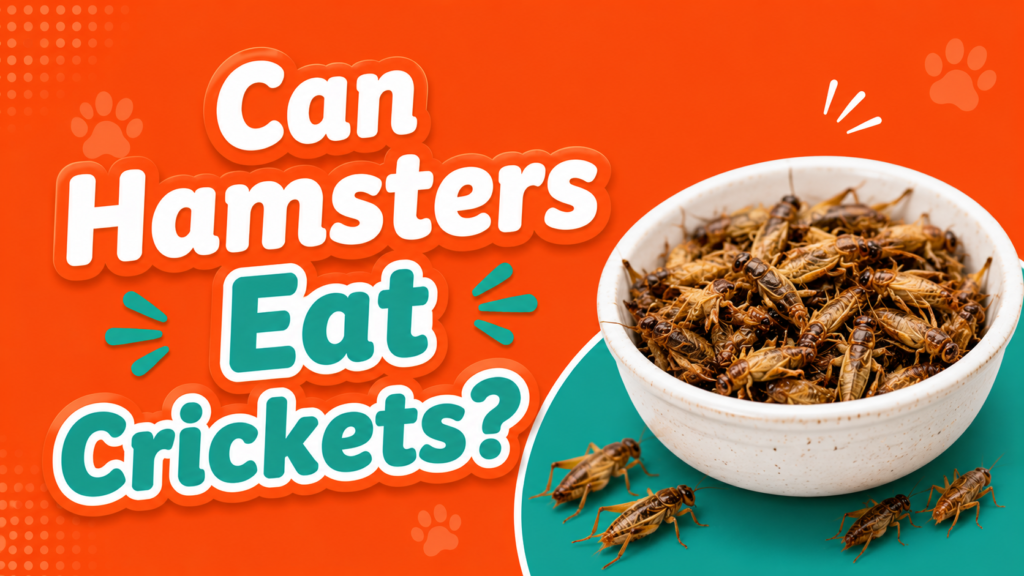
In the wild, hamsters are omnivores that naturally hunt and eat insects alongside seeds and plant matter. Crickets closely match that natural prey profile and provide high-quality protein, fat, and some vitamins. They are one of the better live food options for hamsters and are readily available at most pet stores that sell reptile supplies. This guide covers safe amounts, sourcing, how to offer them, and what to avoid.
Are crickets safe for hamsters?
Crickets from a reputable feeder-insect source are safe and genuinely beneficial. Feeder crickets sold at pet stores are bred and raised in controlled environments, gut-loaded with nutritious food, and are free of the parasites, pesticides, and heavy metals that wild-caught insects can carry. A cricket that has been gut-loaded (fed nutrient-rich food before being offered to your pet) passes those nutrients on to your hamster. Wild-caught crickets from your garden or yard are not safe: they may have been exposed to pesticide runoff and can carry internal parasites.
Quick takeaway: 1-2 small feeder crickets from a pet store, once or twice a week. Never use wild-caught crickets. Gut-loaded crickets are the best option.
How many crickets can a hamster eat?
One to two small crickets per feeding session is enough. Crickets are a protein supplement, not a daily staple, and too much animal protein over time can strain the kidneys.
| Hamster | Portion | How often |
|---|---|---|
| Syrian | 1-2 small feeder crickets (small or medium size) | 1-2 times per week |
| Dwarf (Robo, Winter White, Campbell’s) | 1 small feeder cricket | Once a week |
Crickets are low in sugar and not a diabetes concern for dwarfs. The limit here is about protein balance, not sugar. Dwarfs are smaller and require a proportionally smaller amount of animal protein. For a broader look at hamster nutrition, see our guide to what hamsters can eat, our list of foods toxic to hamsters, and our roundup of safe vegetables for hamsters.
How to offer crickets to a hamster
There are a few practical considerations for feeding live crickets.
- Buy from a pet store or reputable feeder insect supplier. Look for feeder crickets sold for reptile food. These are gut-loaded and clean. Online feeder insect suppliers are also a reliable option.
- Choose the right size. Small or medium crickets work best. A cricket that is larger than your hamster’s head is too big and could potentially bite or scratch inside the cheek pouch. Small crickets (about 1/4 inch or around 6 mm) are ideal for dwarfs.
- You can offer them live or freshly killed. Live crickets provide enrichment and stimulate natural hunting behavior. If your hamster is not interested in live prey, you can pinch the cricket to stun or kill it first. Frozen-thawed crickets (sold for reptiles) are also fine.
- Remove uneaten live crickets. A live cricket left overnight in the cage can actually bite or stress a sleeping hamster. If your hamster does not eat the cricket within an hour or so, remove it.
- Do not combine with other protein treats on the same day. If you give crickets, skip egg or meat treats that day.
What about dried crickets?
Dried crickets sold as pet treats are a convenient and safe alternative to live crickets. Check the ingredient list: plain dried crickets with no added salt, seasoning, or preservatives are fine. Flavored dried cricket treats for humans (sold as snack foods) are not appropriate, as they often contain salt, spices, or other coatings.
Frequently asked questions
Can dwarf hamsters eat crickets?
Yes, one small feeder cricket per week is a great protein supplement for any dwarf species. Crickets are low in sugar, so there is no diabetes concern. Choose the smallest size crickets available for dwarf hamsters.
Can hamsters eat wild crickets?
No. Wild crickets can carry parasites, bacteria, and pesticide residue. Only use crickets from a reputable pet store or feeder insect supplier.
How are crickets different from mealworms for hamsters?
Both are safe, naturally occurring prey items for hamsters. Mealworms are higher in fat than crickets; crickets tend to be higher in protein relative to fat. Either is a good choice. Many hamster owners rotate between the two to provide variety. Crickets are more active, which provides more enrichment through hunting behavior.
My hamster ate a cricket from the garden. Should I be concerned?
A single wild cricket is unlikely to cause immediate harm to a healthy adult hamster. Watch for any unusual symptoms over the following week, including changes in droppings, reduced appetite, or lethargy. Going forward, use only feeder crickets from a clean source.
The bottom line
Crickets are one of the best protein treats you can offer a hamster. They are natural prey, nutrient-dense, low in sugar, and provide enrichment through hunting behavior. One to two small feeder crickets from a pet store, once or twice a week, is the right amount for a Syrian. Dwarfs get one small cricket weekly. Always use pet-grade feeder crickets, never wild-caught insects, and remove any uneaten live crickets from the cage promptly.
Keep reading: What Can Hamsters Eat?, Foods Toxic to Hamsters, Safe Vegetables for Hamsters
Hamster Corner provides general educational information about hamster care. It is not a substitute for professional veterinary advice. If your hamster shows signs of illness, contact an exotic vet promptly.