
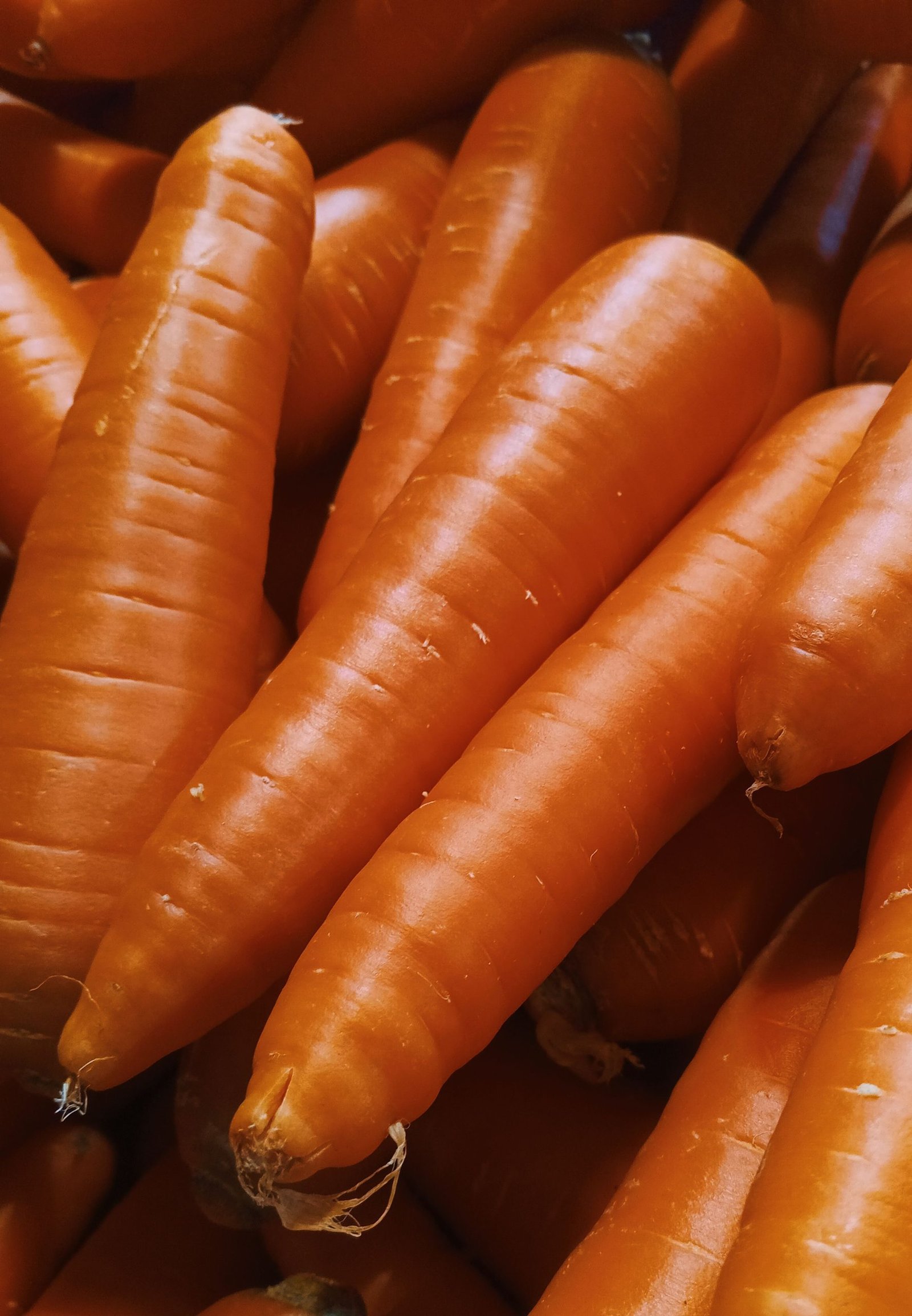
Yes. Hamsters can eat carrot in small amounts. Woodgreen Pets Charity specifically lists carrot among vegetables that are safe for hamsters, but it should remain a small extra alongside a complete dry hamster diet rather than becoming a major part of the menu.
There is also no need to invent a different carrot measurement for every hamster species. Woodgreen’s practical guideline is simpler: keep treat portions roughly the size of your hamster’s ear and offer them once or twice a week.
Are carrots safe for hamsters?
Yes. Woodgreen Pets Charity includes carrot on its list of safe vegetables for hamsters, alongside foods such as broccoli, cabbage, cucumber, peas and spinach.
The RSPCA also recommends small quantities of cleaned root vegetables as part of the fresh foods that can accompany a hamster’s main diet.
That is enough to give carrot a straightforward verdict: it is a suitable occasional fresh food for a healthy hamster.
What it does not mean is that your hamster needs carrot for vitamin A, hydration, dental health or any other particular benefit. A good-quality complete hamster food should already provide the essential nutrients your hamster needs.
For the broader feeding framework, see what hamsters can eat.
How much carrot can a hamster eat?
You do not need a dime, teaspoon or kitchen scale to measure a carrot treat.
Woodgreen recommends keeping treat portions roughly the size of the hamster’s ear and offering them once or twice a week. Because the guideline scales with the individual hamster, it is more useful than prescribing the same fixed measurement to every Syrian or dwarf hamster.
Start with a small piece if carrot is new to your hamster. Woodgreen also recommends introducing unfamiliar foods gradually.
Carrot is an extra, not part of the main ration. Merck Veterinary Manual recommends a balanced staple diet and limits fruits, vegetables and other treats to no more than about 10% of the total diet.
Can dwarf hamsters eat carrots?
Yes, but there is no good evidence for treating every dwarf hamster as if it has the same diabetes risk.
The common claim that “dwarf hamsters are prone to diabetes” is too broad. PDSA specifically warns that Russian dwarf hamsters are particularly prone to diabetes while advising owners generally not to overfeed sugary fruit and vegetables.
That does not justify automatically classifying every Campbell’s, Winter White, Roborovski and other hamster commonly called a “dwarf” as having an identical risk profile.
If you have a healthy dwarf hamster, carrot can still be treated as a small occasional extra rather than automatically banned.
If your hamster has already been diagnosed with diabetes or another condition requiring dietary management, follow the feeding plan recommended by your vet rather than a generic online serving rule.
Is carrot too sugary for hamsters?
This needs more nuance than the usual “carrots are high in sugar, so be careful” warning.
PDSA advises against overfeeding sugary fruit and vegetables because excess can contribute to problems such as obesity or diabetes. However, the authoritative hamster guidance reviewed here still includes carrot among acceptable vegetables.
So the practical conclusion is not that carrot is dangerous because it contains sugar. It is simply another reason to keep it as a small part of a balanced diet rather than allowing fresh treats to displace the staple food.
You also do not need to switch automatically to spinach or cucumber because they are supposedly “safer for dwarfs.” For a healthy hamster, variety and sensible quantities matter more than creating a complicated hierarchy of vegetables based on sugar alone.
How to prepare carrot for a hamster
Preparation can stay simple:
- Wash the carrot well. The RSPCA recommends cleaned root vegetables.
- Cut off a small piece. Use your hamster’s ear as a rough scale rather than a dime or teaspoon measurement.
- Serve it plain. Do not add salt, sauces, butter or seasoning.
- Introduce it gradually if your hamster has not eaten carrot before.
- Remove uneaten fresh carrot during your daily enclosure check.
That last point matters because hamsters naturally hoard food. A piece you no longer see may have been carried under the bedding rather than eaten.
Blue Cross recommends giving tiny portions of fresh foods and removing uneaten fresh food daily so that hidden pieces do not decompose.
At the same time, do not disturb or throw away an entire clean dry-food hoard just because you are looking for carrot. Hamsters need to be allowed to store food naturally.
Can hamsters eat raw carrots?
Raw, washed carrot is a straightforward way to offer it because the hamster welfare guidance above lists carrot among fresh vegetables.
There is no need to cook carrot to make it safe.
The more important questions are whether the carrot is plain, whether the portion is small and whether old fresh food is removed before it spoils.
Can hamsters eat cooked carrots?
There is less hamster-specific guidance on cooked carrot than on carrot generally.
A small amount of plain cooked carrot is not something I found identified as a hamster toxin, but there is also no clear reason to cook carrot specifically for a healthy hamster. Raw, washed carrot is therefore the simpler option when you have a choice.
Avoid carrots prepared as human food if they contain butter, salt, sugar, sauces or seasoning.
Can hamsters eat baby carrots?
Baby carrots do not need their own feeding rule.
What matters is the amount you actually give your hamster. Do not offer an entire baby carrot simply because the product is already small by human standards. Cut off an appropriately small portion instead.
Can hamsters eat carrot tops?
The RSPCA includes carrot tops among foods that can be offered to smaller pets including hamsters.
Wash the greens first and offer only a small amount as part of the same fresh-food moderation used for other extras.
There is no need to describe carrot tops as healthier, lower in sugar or nutritionally superior to the root unless there is hamster-specific evidence to support those claims.
What if my hamster eats too much carrot?
If your hamster gets a larger piece of plain carrot than intended once, do not panic.
Remove what remains and return to its normal diet rather than trying to compensate with fasting or another home treatment.
Monitor your hamster normally. The RSPCA advises contacting a vet promptly if a hamster starts eating less, develops moist or abnormal droppings, has a soiled hind end or otherwise appears unwell.
The same applies if your hamster develops significant lethargy, weakness or another notable change in behavior. Hamsters can deteriorate quickly, so persistent symptoms should not be managed with a rigid “wait 24 or 48 hours” rule.
The bottom line
Hamsters can eat carrot, and there is direct animal-welfare guidance listing it as a suitable vegetable.
Keep the serving small. Woodgreen’s practical guideline is roughly the size of your hamster’s ear once or twice a week for treats, rather than a dime-sized Syrian portion or a teaspoon-based dwarf portion.
Most importantly, carrot remains an extra. A complete, balanced hamster food should provide the nutritional foundation, while vegetables such as carrot add variety in small amounts.
Keep reading: What can hamsters eat? | Safe vegetables for hamsters | Foods toxic to hamsters
Hamster Corner provides general educational information about hamster care. It is not a substitute for professional veterinary advice. If your hamster becomes unwell or has a diagnosed condition that affects its diet, contact a hamster-experienced vet.