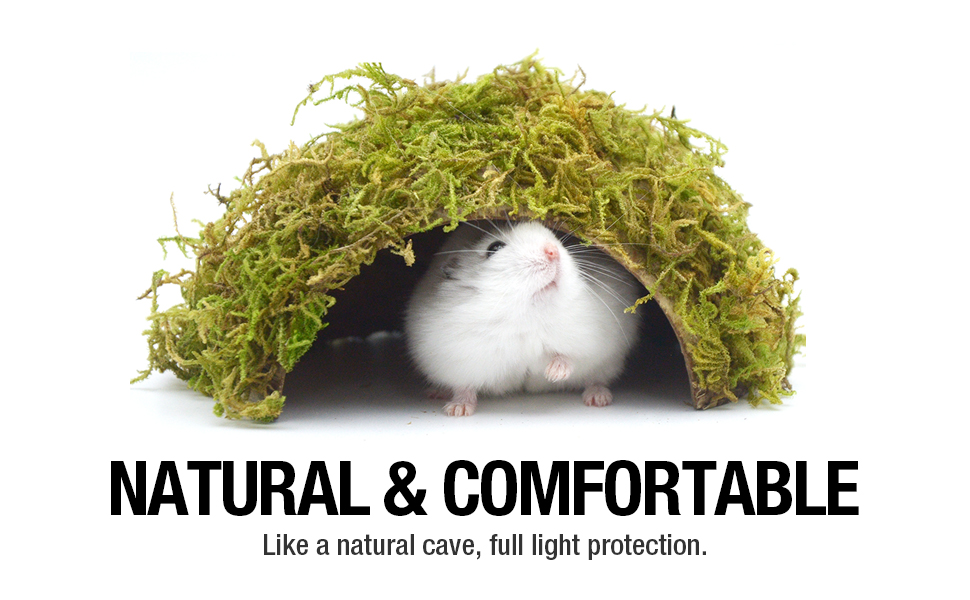
The SanmooAio Moss Hamster Hideout looks fantastic in a natural hamster setup, but I would treat it as a secondary hide or enrichment piece rather than my first choice for a primary sleeping house. The seller itself warns that excessive ingestion of the moss may lead to digestive blockage and advises supervision during use. That warning matters more to me than the product’s appearance or star rating.
The coconut shell structure is appealing, the moss gives it a convincing natural look, and available customer feedback suggests plenty of hamsters do use it. But a moss-covered accessory that your hamster actively dismantles is not something I would leave indefinitely just because the packaging describes the materials as natural.
Affiliate disclosure: As an Amazon Associate, Hamster Corner may earn from qualifying purchases. This does not affect our editorial assessment. This review is based on product information, available customer feedback and hamster welfare guidance, not personal hands-on testing unless specifically stated.
SanmooAio Moss Hamster Hideout at a glance
| Product | SanmooAio Mossy Cave Hamster Hideout |
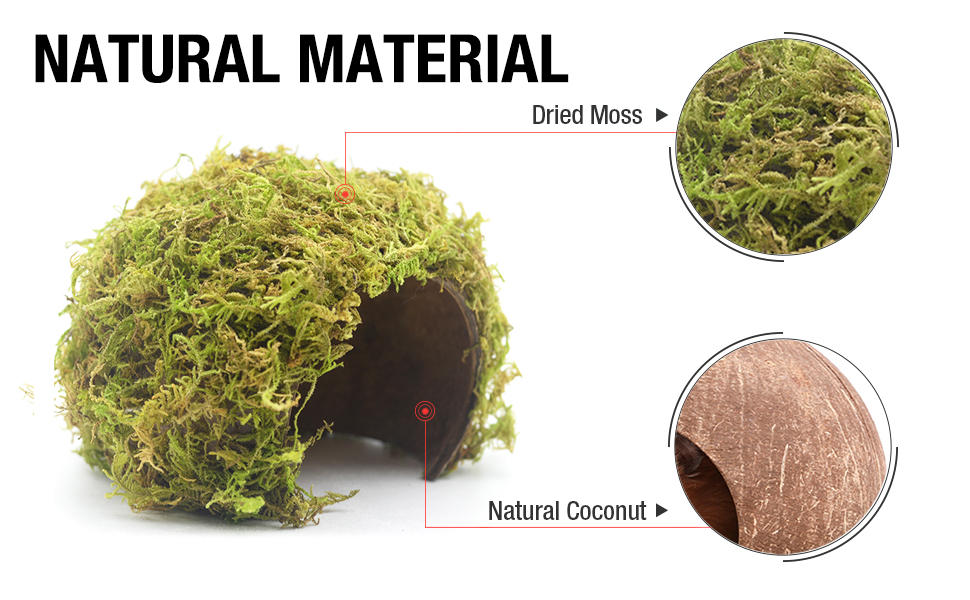
| Main materials | Coconut shell with dried natural moss |
| Adhesive | Seller describes a traditional edible adhesive |
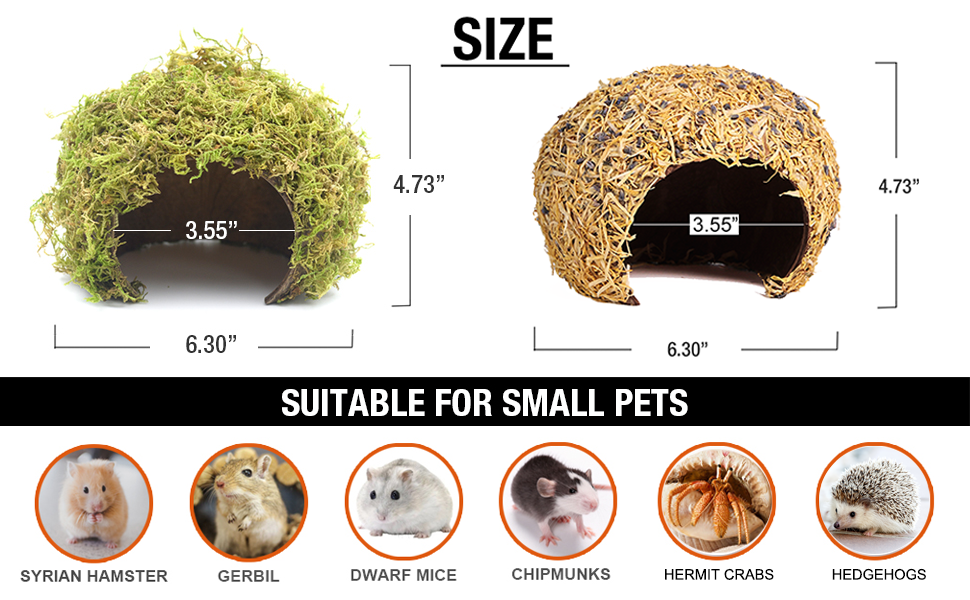
| Sizes | Small and Large variants are marketed for different small pets |
| Large size | Marketed for Syrian hamsters |
| Main advantage | Natural-looking enclosed hide |
| Main concern | Seller warns against excessive moss ingestion and recommends supervision |
| Best use | Secondary hide, exploration or naturalistic enclosure decor |
| I would skip it if | Your hamster aggressively strips and eats the moss, or you need an easily washable primary hide |
My verdict
I like the concept more than I like the product as an everyday sleeping house.
The coconut cave shape gives a hamster somewhere dark to retreat, and the moss makes it much more visually interesting than a basic plastic hut. If your hamster mainly climbs on it, hides inside it or gives the moss an occasional nibble, I can see the appeal.
The problem is the seller’s own safety instruction.
SanmooAio says gentle nibbling is normal but warns that excessive ingestion of moss may lead to digestive tract blockage and tells owners to supervise pets during use.
That does not prove that this moss has caused intestinal obstruction in hamsters. It is a manufacturer warning, not independent veterinary evidence.
But it does change how I would use the product.
If an accessory requires monitoring because eating too much of its decorative surface may be a problem, I would not choose it as the hamster’s only permanent sleeping hide.
What I like
It functions as a real hide, not just decoration
The enclosed coconut-shell shape is the strongest part of the design.
Hamsters need places where they can get away from light and feel concealed. RSPCA guidance says a hamster should have a dark nesting shelter large enough to sleep, move around and store food.
So the basic cave concept makes sense.
Available customer feedback also includes hamsters using the cave for sleeping and resting rather than ignoring it as cage decoration.
The natural look is genuinely good
This is probably the main reason to buy it over a plain ceramic or wooden hide.
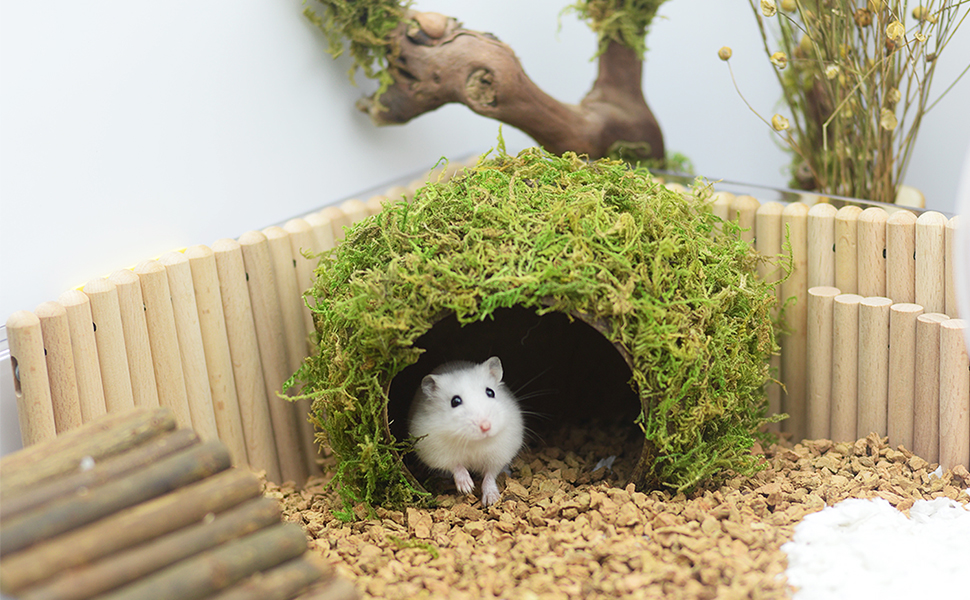
The coconut shell and dried moss work well in a naturalistic enclosure with cork, branches, seed sprays and deeper bedding. It looks much less artificial than many brightly colored small-animal houses.
That aesthetic value is real.
I just would not let the aesthetic override the chewing question.
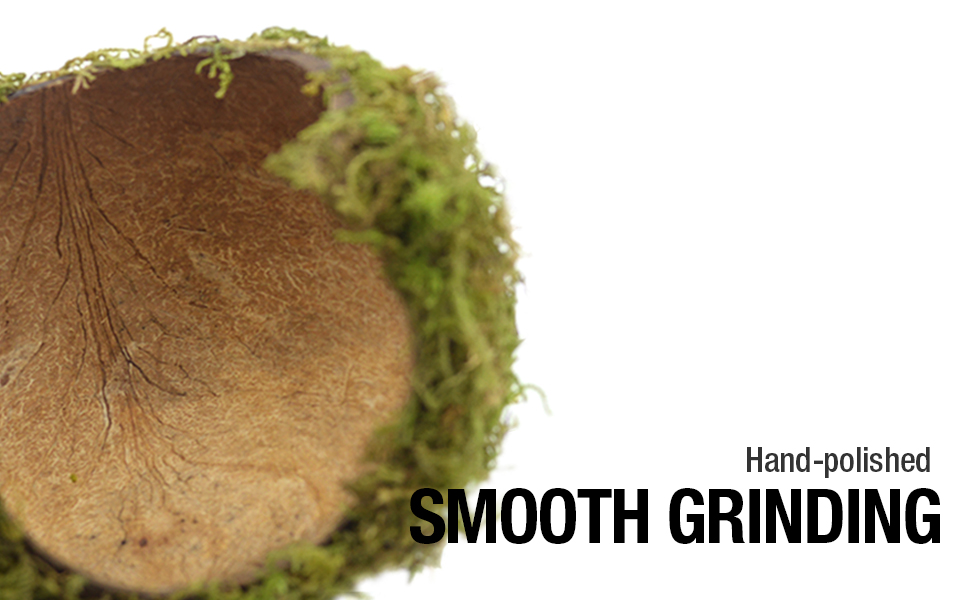
The shell is hand-finished
The seller says the coconut shell is polished on the inside and outside to reduce rough edges.
That is useful, although I would still inspect the actual unit before placing it in the enclosure. Natural products vary, and a marketing claim about polishing is not a substitute for checking for sharp edges, loose material or damage yourself.
The moss is the reason to think twice
The moss is both the best-looking part of the hide and its biggest drawback.
The seller describes the moss as natural and attached with an edible adhesive. It also acknowledges that some initial shedding can occur.
More importantly, the current product wording warns owners that excessive moss ingestion may cause digestive blockage.
I would therefore watch what your hamster actually does with the hide.
Occasional investigation or a little nibbling is very different from repeatedly tearing off pieces and consuming them.
If your hamster starts actively stripping and eating the moss, I would remove the hide rather than trying to decide how much moss is “safe.”
There is no evidence-based number of pieces or grams that makes excessive ingestion acceptable.
Is the Large size big enough for a Syrian hamster?
This is less straightforward than the product label makes it sound.
SanmooAio markets the Large version for Syrian hamsters, while the Small version is aimed at smaller hamsters and other small pets.
But species labels are only a starting point.
Available customer feedback is mixed. Some owners report that their Syrian fits comfortably, while others have found the cave tighter than expected.
I would not measure the hamster’s body length and assume that tells you whether a hide fits.
Instead, check the current product dimensions and entrance dimensions against your particular hamster and enclosure before buying. The hamster should be able to enter, turn around and leave comfortably without squeezing through a restrictive opening.
This matters especially with a large adult Syrian.
I would also recheck the Amazon listing immediately before ordering because dimensions and variant descriptions can change.
I would not use it as the only sleeping hide
This is where the review becomes more critical than the original draft.
A hamster needs somewhere secure to sleep regardless of whether this decorative cave works out.
RSPCA recommends a dark nesting shelter with enough room for normal movement and food storage. Blue Cross goes further and says the ideal sleeping hide is an enclosed multi-chamber hide, allowing the hamster to sleep farther from the entrance.
The SanmooAio cave can provide another covered retreat, but it does not offer the same functionality as a proper multi-chamber nesting house.
That changes my buying recommendation.
I would use it alongside a good primary hide rather than buying it to replace one.
What about cleaning?
Natural moss is less forgiving than ceramic or plastic when the hamster urinates on it or drags wet food inside.
I could not independently verify the original draft’s specific claim that the moss is attached with rice paste or that the manufacturer universally prohibits all contact with water.
The current information I found describes a traditional edible adhesive, but cleaning instructions shown by third-party listings are inconsistent.
Because of that, I would not give a made-up washing protocol.
Follow the care instructions supplied with the current product. Spot-clean light debris when practical, and make sure the hide is completely dry before it returns to the enclosure.
If urine or another contaminant soaks deeply into the moss and you cannot clean the accessory adequately without damaging it, replacement may be more practical than trying to sanitize porous natural material indefinitely.
That is one area where ceramic and suitable plastic hides have a clear maintenance advantage.
Moss shedding is normal for this product, but still inspect it
Some loose moss around a natural product is not surprising, and shedding appears in both seller information and available customer feedback.
I would shake off obviously loose material before first use and inspect the hide periodically.
The key question is not whether a few fragments fall off.
It is whether your hamster starts deliberately dismantling the moss covering and ingesting significant amounts.
If that happens, the seller’s own warning gives you a straightforward answer: remove the accessory.
Is the SanmooAio hide safe?
I would not give it a simple universal “yes.”
The coconut shell itself is marketed as a chewable natural material, and the seller describes the moss and adhesive as pet-safe materials. But the same seller also warns that excessive moss consumption may cause digestive blockage.
Those two statements are not actually contradictory.
A material can be intended for contact or occasional nibbling while still being unsuitable for consumption in larger quantities.
So my classification is:
Suitable with a condition: monitor how your individual hamster interacts with the moss.
That is different from calling the entire product toxic, and it is also different from treating the manufacturer’s warning as meaningless fine print.
Who I think it is best for
The SanmooAio cave makes the most sense for someone building a naturalistic enclosure who already has a proper sleeping hide and wants an additional cave for exploring, resting or climbing.
It is especially appealing if your hamster normally leaves moss and decorative natural materials alone.
Who should skip it
I would choose something else if your hamster aggressively destroys and eats moss-covered accessories.
I would also skip it if you specifically need:
- a primary multi-chamber sleeping house
- something that can be thoroughly washed and sanitized repeatedly
- a hide with no loose decorative covering
- a guaranteed fit for a particularly large Syrian
For simpler alternatives, see our Niteangel Hamster House review and AccEncyc Hamster Tunnel Hideout review.
How it compares with a basic wooden or ceramic hide
The SanmooAio wins on appearance.
A moss-covered coconut shell can make a natural setup look fantastic, and it provides another texture and shape for the hamster to investigate.
A simple wooden multi-chamber house wins on sleeping functionality.
A ceramic hide generally wins on cleaning.
That makes this product easier to understand when you stop asking whether it is simply “good” or “bad.”
It is a decorative secondary hide with a legitimate use case, not the accessory I would build the whole sleeping setup around.
What to check before using it
Inspect the actual product when it arrives. Natural coconut shells will not be perfectly identical.
Check that the entrance is comfortably large for your hamster, the shell has no sharp or damaged edges, and there are no large loose sections of moss.
Then watch the hamster’s first interactions with it.
Using a new accessory safely is more valuable than assuming that anything sold for hamsters must automatically suit every hamster.
Frequently asked questions
Is the moss safe for hamsters?
The seller describes the moss as a natural material intended for the product, but also warns that excessive ingestion may lead to digestive blockage.
That means I would not describe the moss as something a hamster should freely eat.
If your hamster mainly explores the hide and occasionally nibbles it, follow the seller’s supervision advice. If the hamster repeatedly tears off and consumes the moss, remove the hide.
Is the Large SanmooAio hide suitable for Syrian hamsters?
The Large version is marketed for Syrians, but that does not guarantee a comfortable fit for every adult Syrian.
Check the current dimensions and entrance size before ordering and make sure your particular hamster can enter and turn comfortably.
Does the moss fall off?
Some shedding appears to be expected, particularly when the product is new.
Minor shedding is mostly a maintenance issue. Active removal and ingestion of substantial amounts of moss is the more important safety concern.
Can it replace a multi-chamber hide?
I would not use it that way.
It gives your hamster another dark covered space, but Blue Cross recommends an enclosed multi-chamber hide for sleeping where possible.
I would keep a proper primary nesting hide and use the SanmooAio as additional enrichment.
Can I wash it?
Check the current care instructions supplied by the seller rather than relying on old marketplace descriptions.
Natural moss and adhesive make this less straightforward to clean than ceramic or plastic. If it becomes heavily urine-soaked or otherwise impossible to clean adequately, I would replace it.
Final verdict
I like the SanmooAio Moss Hamster Hideout, but only for the right job.
It looks excellent in a natural enclosure, provides an additional dark retreat and appears to appeal to plenty of hamsters.
But I would not ignore the seller’s warning about excessive moss ingestion, and I would not turn that warning into an unsupported claim that moss itself is universally dangerous to hamsters.
For me, the best role is secondary hide and supervised enrichment.
If your hamster leaves the moss largely intact, it can be a fun addition. If your hamster starts stripping and eating it, remove it. And if you are shopping for the main place your hamster will sleep and build a nest, I would put the money toward a roomy multi-chamber hide first.
As an Amazon Associate, Hamster Corner may earn from qualifying purchases. Prices, ratings, product specifications and availability can change, so check the current listing before ordering.