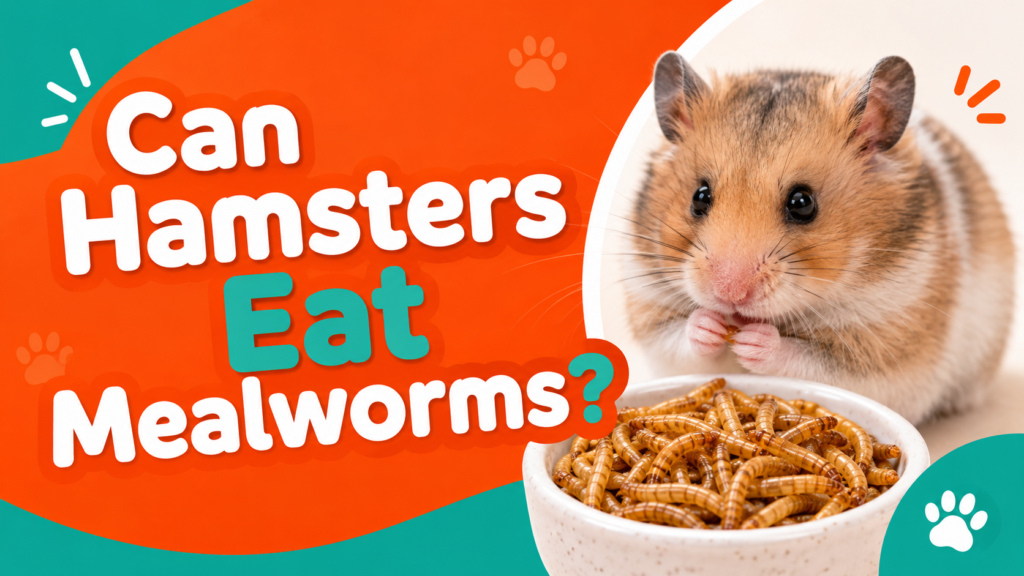
Mealworms are the larvae of the darkling beetle (Tenebrio molitor). They are a protein and fat source that hamsters eat eagerly. In the wild, hamsters regularly eat invertebrates, making mealworms a natural and nutritious part of the diet. Dried mealworms are widely available at pet stores and are easy to store and portion. Live mealworms provide an additional enrichment benefit because hunting and catching a live worm engages a hamster’s natural prey-finding instinct.
Are mealworms safe for hamsters?
Yes, pet-grade mealworms are safe. They provide around 20% protein and 13% fat when dried, making them a calorie-dense treat. The protein is the benefit; the fat means that too many mealworms per session can contribute to weight gain over time. Two to three is a serving, not the whole tub.
Quick takeaway: 2-3 live or dried mealworms, once or twice a week. Buy from a pet store. Never collect mealworms from compost bins, soil, or outdoor environments.
How many mealworms can a hamster eat?
Two to three mealworms is the right serving for both Syrians and dwarfs. Mealworms are richer than most of what a hamster eats. Offering more than a few at a time pushes the fat intake higher than necessary. If you offer mealworms twice a week, skip other high-protein or high-fat treats on those days.
| Hamster | Portion | How often |
|---|---|---|
| Syrian | 2-3 mealworms (live or dried) | Once or twice a week |
| Dwarf (Robo, Winter White, Campbell’s) | 1-2 mealworms (live or dried) | Once or twice a week |
For a full picture of what hamsters can eat, see our guide to what hamsters can eat and our list of foods toxic to hamsters.
Live vs. dried mealworms
Both forms are appropriate. Live mealworms provide the added benefit of behavioral enrichment: a hamster will sniff, stalk, and catch a live mealworm, which mimics natural foraging. Dried mealworms are much easier to store (no refrigeration needed for most dried varieties) and are simpler to portion. Freeze-dried mealworms retain most of the nutritional profile of live ones.
- Live mealworms: buy in small quantities and store in the refrigerator to slow their development into beetles. Feed within a few days.
- Dried/freeze-dried mealworms: store in a cool, dry place. Check expiry dates. One bag lasts much longer than a container of live worms.
- Avoid flavored or seasoned mealworms. Plain only. No added salt, spice, or oil.
What happens if a hamster eats too many mealworms?
Overfeeding mealworms causes soft stools and, over time, gradual weight gain from the fat content. Mealworms are also relatively rich in phosphorus compared to calcium, which can become a concern if they make up too large a proportion of the diet (this skews the calcium-to-phosphorus ratio). Keeping mealworms to a few per session, a couple of times a week, avoids all of these issues.
Frequently asked questions
Can dwarf hamsters eat mealworms?
Yes. Mealworms contain no sugar, making them a good protein option for diabetes-prone dwarf hamsters. Keep the serving to one to two mealworms to manage the fat intake, and offer them once or twice a week.
Can hamsters eat giant mealworms?
Giant mealworms are regular mealworms that have been treated with a hormone to delay pupation, making them larger. They are safe for a Syrian but may be a bit large for a dwarf hamster to manage easily. Cut a giant mealworm in half for a dwarf, or use regular-sized mealworms instead.
Are mealworms better than crickets for hamsters?
Both are excellent protein sources. Mealworms are higher in fat; crickets are slightly higher in protein and lower in fat per weight. Both are appropriate treats in similar quantities. Offering both at different times gives the most variety. Many hamsters show more excitement chasing a live cricket than a mealworm.
The bottom line
Mealworms are one of the most hamster-appropriate treats available, providing natural animal protein in a convenient, easy-to-source form. Two to three mealworms (live or dried) once or twice a week is a safe, beneficial serving for both Syrians and dwarfs. Buy pet-grade mealworms from a reputable source, avoid wild-caught insects, and do not offer more than a few at a time.
Keep reading: What Can Hamsters Eat?, Foods Toxic to Hamsters, Safe Vegetables for Hamsters
Hamster Corner provides general educational information about hamster care. It is not a substitute for professional veterinary advice. If your hamster shows signs of illness, contact an exotic vet promptly.