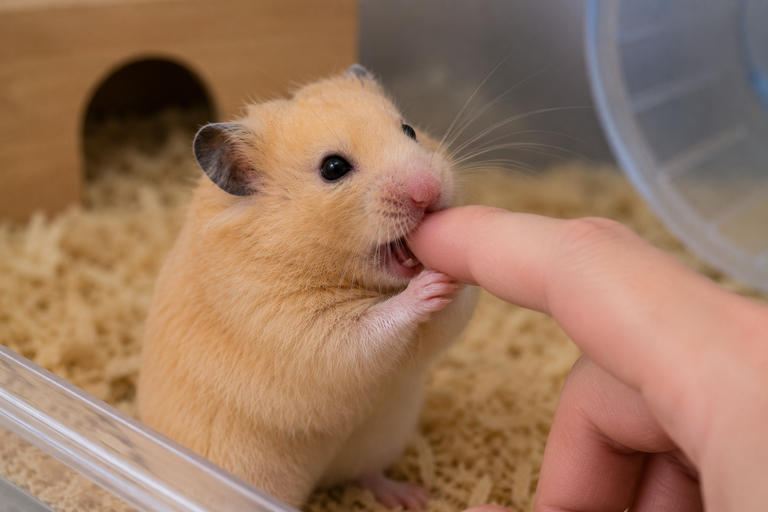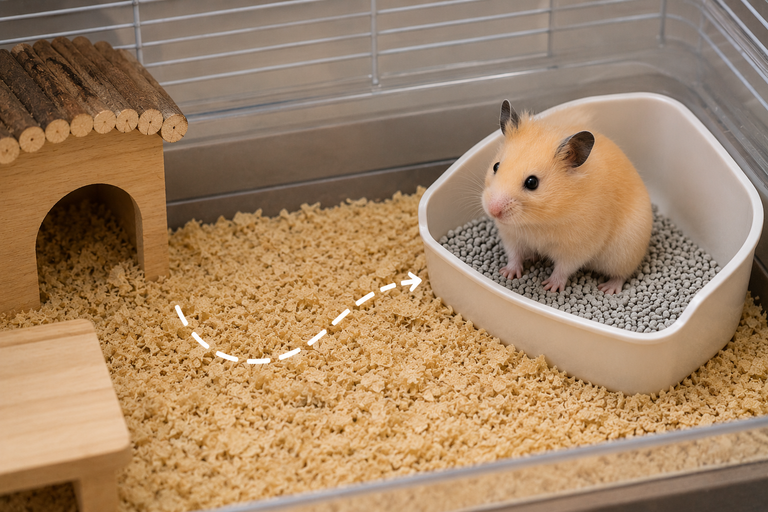
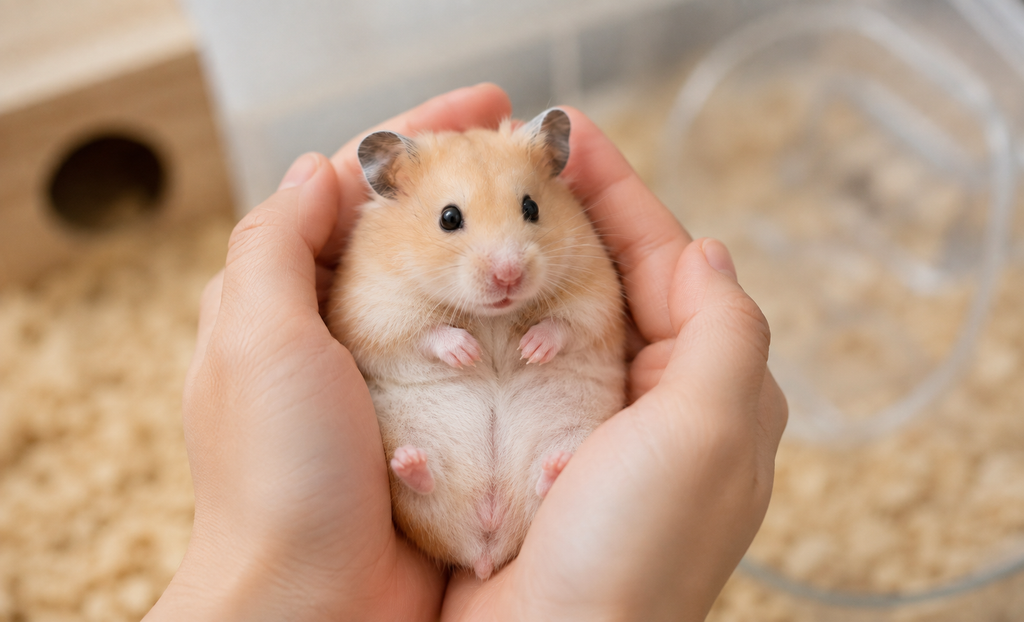
Some hamsters learn to enjoy being handled, some tolerate it comfortably, and others would rather interact without being held. Woodgreen says several commonly kept hamster species can become hand-tame and enjoy coming out of their enclosure, while Roborovski hamsters are often too small and fast for regular handling.
The useful question is therefore not “Do all hamsters like being held?” but “How does my hamster respond to handling?”
Do hamsters actually like being held?
Some can.
Woodgreen says Syrian, Winter White, Campbell’s and Chinese hamsters can become hand-tame and enjoy coming out of their enclosure. The RSPCA also recommends regular gentle interaction once a hamster is accustomed to handling.
But that does not mean being held is automatically enjoyable for every hamster.
PDSA points out that hamsters are prey animals and being picked up can be frightening. It even notes that if you specifically want a small pet that usually enjoys being picked up and held, rats or ferrets may be a better fit.
That is a useful expectation to set.
A hamster can trust you without wanting to sit still in your hands for long periods.
How can you tell if your hamster is comfortable?
Do not rely on one supposedly definitive body-language signal.
Instead, look at the overall interaction.
A hamster that is comfortable with handling may:
- voluntarily approach or investigate your hands
- walk across your hands without repeatedly trying to flee
- take treats during or around handling
- explore your lap or hands normally
- allow gentle cupping without an immediate struggle
- remain interested in interacting rather than persistently trying to return to cover
Woodgreen specifically recommends allowing hamsters to walk across your hands or lap during early handling. RSPCA likewise says they should be allowed to investigate your hands in their own time.
These behaviors are more useful when viewed together than individually.
For example, grooming while sitting on your palm may happen when a hamster is comfortable, but I would not call it a guaranteed sign of relaxation. Grooming is normal hamster behavior and can occur in different contexts.
How can you tell if your hamster wants to be put down?
Pay attention when the interaction starts becoming difficult rather than waiting for one dramatic stress signal.
A hamster that repeatedly tries to leave your hands, struggles against being restrained, attempts to jump away or becomes increasingly agitated is giving you a practical reason to end the handling session.
Woodgreen recommends putting hamsters back while they are still relaxed rather than continuing until they become irritable.
PDSA similarly advises returning a hamster to the enclosure if they appear frightened during handling.
Biting or vocalizing can also occur when a hamster is frightened or feels threatened, but one bite does not prove the hamster “hates being held.”
If your hamster consistently avoids handling, go back to slower trust-building rather than trying to hold them until they get used to it.
See how to bond with your hamster for that process.
Does a hamster need to enjoy being held?
No.
Handling is useful because a hamster needs to tolerate some human contact for health checks, enclosure transfers and veterinary care.
That does not mean cuddling is an essential welfare need.
A hamster that comfortably takes treats from you, walks onto your hands or uses a tunnel for transfers can still have a good relationship with you even if prolonged holding is not their preference.
This is particularly important with Roborovskis.
Woodgreen says Roborovski hamsters are exceptionally fast, make sudden movements and can be difficult to pick up because of their very small size. It recommends enjoying them primarily through observation rather than expecting regular handling.
Trying to force every hamster toward the same “cuddly pet” goal can make the relationship more stressful, not better.
Does species affect whether a hamster likes handling?
It affects what is practical, but species does not completely determine personality.
Syrian hamsters
Syrians are the largest commonly kept hamster species, which Woodgreen says can make them easier to handle.
With patient socialization, many become comfortable with being picked up and spending time outside their enclosure.
Winter White and Campbell’s hamsters
Woodgreen says both can become hand-tame and enjoy coming out of their enclosure.
Their smaller size means handling still needs to be careful and close to a safe surface.
Chinese hamsters
Chinese hamsters can also become hand-tame. There is no good reason to label the entire species inherently difficult based only on anecdotal temperament rankings.
Roborovski hamsters
Roborovskis are the important exception in practical terms.
Their tiny size, speed and sudden movement make regular hand handling much more difficult. A Roborovski may become comfortable around you without becoming a hamster that sits calmly in your hands.
So I would not create a simple “easiest to hardest hamster” ranking. Individual temperament and previous experience still matter.
Should you wake a hamster to hold it?
No, not for routine interaction.
The RSPCA says hamsters should not normally be handled while resting or sleeping because they can find the disturbance stressful. Blue Cross similarly warns that a hamster disturbed during the day may become alarmed and bite.
Wait until your hamster is naturally awake and alert.
“Active hours” also does not mean you have to follow an exact clock time every night. Let the hamster’s behavior tell you whether they are awake and ready to interact.
How long should you hold a hamster?
There is no authoritative ten-minute or twenty-minute daily target.
RSPCA recommends regular interaction, ideally as part of a routine, rather than doing very little during the week and then handling the hamster intensively at weekends.
Woodgreen gives another useful principle: return the hamster while they are still relaxed rather than waiting until they become irritated.
That makes more sense than running a timer.
For one hamster, a brief handling session may be enough. Another may happily explore your lap or a secure playpen for longer.
Let comfort and safety determine the length.
Does handling every day make a hamster like you?
Regular calm interaction can help a hamster remain accustomed to people.
RSPCA recommends interacting regularly and ideally establishing a routine.
But I would not say that missing a day causes a hamster to “regress” or that daily handling guarantees a strong bond.
Some days the hamster may wake later, appear less interested or simply prefer to explore independently.
Consistency is useful. Rigidity is not necessary.
Do young hamsters learn to enjoy handling faster?
Blue Cross recommends beginning the process when hamsters are young so they can become accustomed to handling.
That supports early gentle familiarization.
It does not establish an exact age such as six to eight weeks when bonding becomes faster, nor does it mean an adult hamster cannot become hand-tame.
A calm adult with good previous handling experience may already be comfortable with people. A young hamster with little experience can still be nervous.
Judge the hamster in front of you rather than assuming age determines the outcome.
What if your hamster never likes being held?
Work with that preference.
You can still interact by:
- offering treats by hand
- allowing the hamster to walk across your hands
- sitting with them in a secure playpen
- providing tunnels they can enter voluntarily
- letting them explore your lap without restraining them
- using a tunnel or container for necessary transfers
Both Woodgreen and Blue Cross recommend tunnel-based transfers for hamsters that are nervous about hands.
This is especially useful because being easy to transfer safely is more important than being willing to sit still and cuddle.
My hamster used to tolerate handling but suddenly does not
A sudden change deserves more attention than a hamster that has simply always preferred minimal handling.
Consider whether anything obvious has changed in the environment or handling routine.
But also remember that behavior can change when an animal is unwell.
The RSPCA notes that hamsters can hide signs of pain and recommends veterinary attention when their normal appearance or behavior changes.
If a previously comfortable hamster suddenly resists handling alongside reduced appetite, lethargy, altered movement, weight loss or another health change, contact a hamster-experienced veterinarian rather than treating it purely as a taming problem.
What if your hamster bites when held?
One bite does not tell you what your hamster permanently thinks about handling.
Hamsters may bite when frightened, startled or disturbed while sleeping.
Return the hamster to a safe surface without dropping them, then consider what happened immediately before the bite.
If your hamster repeatedly bites during handling, reduce the pressure rather than repeatedly testing them.
You can rebuild familiarity through voluntary interaction and hand-feeding before attempting more handling.
See how to hold a hamster safely for the actual pickup technique.
The bottom line
Yes, some hamsters can learn to enjoy being handled. Others comfortably tolerate brief handling, while some prefer not to be held much at all.
Do not judge that preference from one behavior such as grooming, squeaking or refusing a treat. Look at the overall pattern: does your hamster voluntarily approach, explore your hands and remain comfortable, or spend the interaction repeatedly trying to get away?
Species matters somewhat. Syrians are physically easier to handle, several species can become hand-tame, and Roborovskis are particularly difficult to hold safely because of their size and speed.
Most importantly, do not make “likes being held” the test of whether you have bonded successfully.
A hamster that trusts you enough to approach, take treats, explore around you and cooperate with safe transfers can have a perfectly good relationship with you without becoming a cuddly pet.
Keep reading: How to bond with your hamster | How to hold a hamster safely
Hamster Corner provides general educational information about hamster care. It is not a substitute for professional veterinary advice. If your hamster suddenly becomes unusually resistant to handling together with other behavioral or health changes, contact a hamster-experienced veterinarian.