Bonding with a hamster is less about following a fixed timeline and more about letting the hamster learn that your presence and hands are predictable and safe. Give a newly arrived hamster a short settling period, interact when they are awake, let them investigate your hand, use treats to build a positive association, and gradually progress to gentle handling.
Some hamsters become comfortable with people quite quickly. Others need much longer, and Roborovski hamsters may never enjoy regular hand handling at all. The goal is trust and low-stress interaction, not forcing every hamster to become cuddly.
What does bonding with a hamster actually mean?
Hamsters are naturally cautious animals. RSPCA notes that they can find unfamiliar or threatening situations stressful, while Woodgreen describes newly arrived hamsters as animals that need time to settle before regular handling begins.
So “bonding” is better understood as building familiarity and trust.
A hamster that trusts you may:
- approach when you are nearby
- investigate your hand instead of immediately hiding
- take food from your hand
- walk across your hands voluntarily
- tolerate or enjoy gentle handling
Not every hamster will reach every stage.
A Roborovski that comfortably explores around you without wanting to sit in your hands has not “failed” to bond with you.
Step 1: let a new hamster settle
You do not need to enforce a full seven-day no-contact rule.
Woodgreen recommends avoiding handling for a day or two after a hamster arrives so they have time to settle into the new environment.
During this period, provide food and water and carry out essential care without repeatedly disturbing the hamster or trying to pull them from a hide.
Normal quiet household activity is fine. You do not need complete silence, but avoid unnecessary handling, loud disturbances or repeatedly rearranging the enclosure.
Once the hamster is exploring normally and is awake during an active period, you can begin gentle trust-building.
Does handling too early cause wet tail?
This needs more nuance than many hamster guides give it.
Stress is one factor associated with diarrhea and wet tail, and transportation and major environmental changes can contribute to stress. Younger hamsters are particularly vulnerable to wet tail.
But it is too strong to say that picking up a new hamster before seven days have passed will cause wet tail.
Wet tail can have infectious and non-infectious causes, including bacteria, parasites, dietary disruption and environmental stress.
The sensible reason to avoid immediately handling a new hamster is simply that moving home is already a major change and the hamster should be allowed to settle.
Do not use wet tail as a scare tactic for owners who accidentally interacted with their hamster early.
If a hamster develops watery diarrhea, reduced appetite, lethargy or a wet, soiled rear, veterinary attention is important. See hamster wet tail for more detail.
Step 2: start when your hamster is awake
Do not wake a sleeping hamster for a bonding session.
RSPCA recommends respecting a hamster’s sleeping pattern and avoiding handling while they are resting or sleeping unless necessary. Blue Cross similarly warns that a sleeping hamster can become startled when disturbed.
Wait until your hamster is naturally awake and alert.
There is no need to schedule bonding at exactly the same minute every evening. Working within the hamster’s natural active period matters more than following a rigid clock.
Step 3: let your hamster investigate your hand
Start without trying to pick the hamster up.
Blue Cross recommends placing your hand in the enclosure so the hamster can smell and become accustomed to you. RSPCA similarly advises allowing hamsters to investigate hands in their own time.
Place your hand somewhere the hamster can approach without being cornered.
Then wait.
If the hamster hides, do not chase them through the bedding or remove hides to force an interaction. You are trying to make your hand predictable, not unavoidable.
You also do not need to keep your hand in the enclosure for exactly ten minutes. End the interaction before it becomes intrusive.
Step 4: use your voice, but do not overthink it
Quietly talking to your hamster can help make your presence less surprising.
Woodgreen specifically suggests speaking quietly so the hamster knows you are there before handling.
That does not mean you need a special phrase, repeated script or “auditory signature.”
Your voice is simply another cue that someone familiar is nearby.
Keep movements and sound calm and predictable.
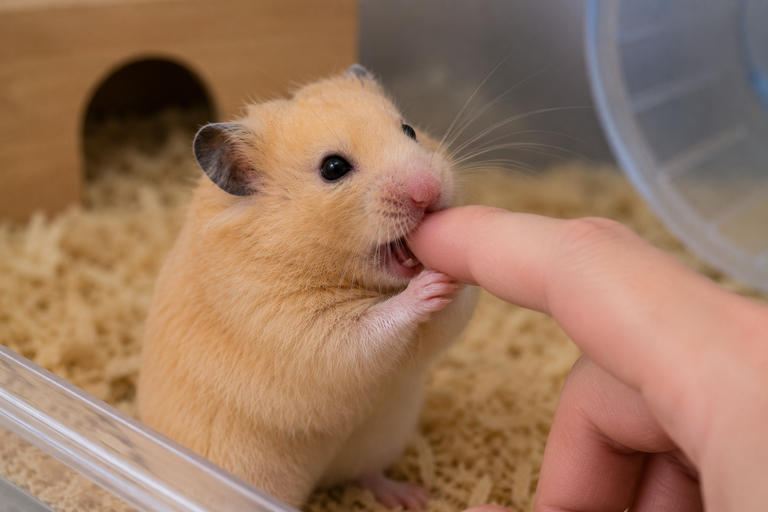
Step 5: offer a small treat from your hand
Treats can help build a positive association with your hand.
Blue Cross specifically recommends offering treats by hand as part of the handling process.
Start by allowing the hamster to take the treat without trying to grab or lift them immediately afterward.
Once that becomes comfortable, you can place the treat farther onto an open palm so the hamster has the option to step onto your hand.
Let the hamster leave when they want.
There is no need to repeat this for exactly three days, five days or a certain number of sessions before progressing.
Move forward when the individual hamster appears comfortable.
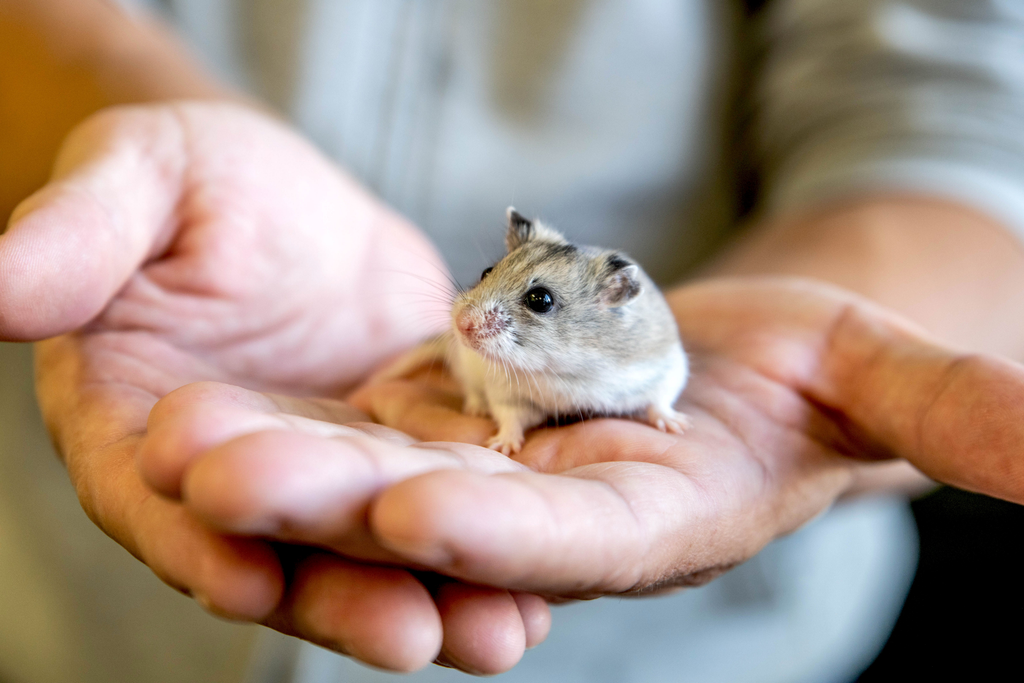
Step 6: let the hamster walk across your hands
This is a useful bridge between hand-feeding and being picked up.
Woodgreen recommends sitting on the floor during the early stages and allowing the hamster to walk across your hands or lap.
Keep your hands low over a safe surface.
Do not close your fingers around the hamster as soon as they step onto you. Let them learn that walking onto your hand does not automatically mean being trapped.
This is especially useful for a hamster that happily takes treats but becomes nervous as soon as lifting starts.
Step 7: gradually introduce picking up
Once your hamster is comfortable around your hands, progress to gentle lifting.
RSPCA and Blue Cross recommend cupping the hamster with both hands rather than grabbing.
Keep the hamster close to the floor, your lap or another safe surface at first. Hamsters can move suddenly, and a short fall is much safer than a drop from standing height.
For a more detailed handling technique, see how to pick up a hamster.
If your hamster repeatedly tries to escape, do not keep catching and lifting them until they give up.
Return to easier interactions and try again another time.
A tunnel can be better than your hands
Hand pickup is not the only successful outcome.
Woodgreen recommends placing a short tunnel in front of a hamster and allowing them to walk inside voluntarily. The tunnel can then be carefully moved to a secure play area or used to help transfer the hamster.
Blue Cross also recommends a tunnel or hide for nervous hamsters that are worried about hands.
This is particularly useful for very fast hamsters or animals still building confidence.
The point of bonding is not to prove that you can grab your hamster. A low-stress transfer method is often the better result.
How often should you interact with your hamster?
Regular interaction is useful.
RSPCA recommends getting into a routine and ideally interacting with hamsters every day rather than ignoring them most of the week and then handling them intensively at the weekend.
That does not establish a required ten-minute or fifteen-minute daily session.
Quality matters more than running a timer.
A short interaction that ends while the hamster is still comfortable can be more useful than continuing until the hamster becomes irritated or frightened.
Woodgreen specifically recommends returning the hamster to the enclosure while they are still relaxed rather than waiting until they become unhappy with the situation.
How long does it take to bond with a hamster?
There is no reliable universal timeline.
Woodgreen says that after one to two weeks of a calm and patient handling approach, many hamsters become happy to be picked up, handled and hand-fed.
Treat that as an example of possible progress, not a deadline.
A hamster may need longer because they are:
- naturally more cautious
- new to human handling
- recovering from previous stressful experiences
- particularly fast and difficult to handle
- simply an individual that prefers less physical contact
Do not assume you are doing something wrong because your hamster has not reached a certain stage after two, three or four weeks.
Does species affect bonding?
It can affect the type of interaction you should expect.
Woodgreen says Syrian, Winter White, Campbell’s and Chinese hamsters can become hand-tame and may enjoy coming out of the enclosure.
Roborovski hamsters are different in practice. They are exceptionally small and fast, make sudden movements and can be difficult to pick up safely. Woodgreen therefore does not recommend them for regular handling in the same way.
That does not mean a Roborovski cannot become comfortable with you.
It means a successful relationship may look more like voluntary exploration, taking treats and comfortably moving through a tunnel than sitting calmly in cupped hands.
I would also avoid ranking every species from “easiest” to “hardest.” Individual temperament and previous experience still matter.
What slows down trust?
A few things consistently work against the process:
- waking the hamster specifically to handle them
- chasing them around the enclosure
- grabbing or squeezing
- repeatedly removing them when they are trying to hide
- making sudden movements around a nervous hamster
- continuing a handling session after the hamster is clearly trying to get away
The common thread is loss of control.
Giving the hamster opportunities to approach, investigate and leave generally makes handling less confrontational.
My hamster suddenly became nervous. What should I do?
First, think about what changed.
A stressful experience or unfamiliar environment may temporarily make a hamster more cautious. In that situation, return to easier interactions such as quietly placing your hand nearby or offering a treat.
A sudden behavioral change can also matter medically.
If a previously comfortable hamster suddenly resists handling, becomes unusually withdrawn, eats less, moves differently or shows another health change, do not automatically label it a “bonding regression.”
Pain or illness can change behavior.
See signs of a sick hamster and contact a hamster-experienced veterinarian if the change is significant or persistent.
What if my hamster never likes being held?
That can be okay.
The purpose of trust-building is not to turn every hamster into an animal that enjoys long cuddling sessions.
PetMD notes that hamsters are active animals and generally do not enjoy being held for long periods. Woodgreen specifically cautions that Roborovskis may be better enjoyed through observation rather than regular handling.
A hamster can still be comfortable around you, accept treats, explore during supervised playtime and cooperate with necessary transfers without wanting to sit still in your hands.
Respecting that preference is part of good handling.
The bottom line
Bond with your hamster by going at the hamster’s pace, not by following a fixed calendar.
Give a new hamster a short settling period, interact when they are awake, allow them to investigate your hand, use small treats to create positive associations, and gradually progress from walking over your hands to gentle cupped handling.
You do not need to wait exactly seven days, complete daily ten-minute sessions or expect bonding to finish within two to four weeks.
Many hamsters become comfortable with handling through calm, regular interaction, but individuals differ. And for some hamsters, especially Roborovskis, trust may never look like happily sitting in your hands.
The useful goal is simpler: your hamster should learn that interacting with you is predictable, safe and not something they need to escape from.
Keep reading: How to pick up a hamster | Hamster wet tail | Signs of a sick hamster
Hamster Corner provides general educational information about hamster care. It is not a substitute for professional veterinary advice. If your hamster has a sudden behavioral change together with reduced appetite, lethargy, diarrhea, pain or another health concern, contact a hamster-experienced veterinarian.