
No, pet hamsters do not need routine vaccinations. Unlike dogs and cats, hamsters do not have a standard vaccine schedule. The Merck Veterinary Manual states that no vaccines are currently required or recommended for hamsters.
That makes hamster preventive care different, not nonexistent. Instead of yearly shots, the important things are establishing care with a hamster-experienced veterinarian, knowing your hamster’s normal weight and behavior, providing appropriate husbandry, and acting quickly when something changes.
Are there any routine vaccines for hamsters?
No routine vaccines are currently recommended for pet hamsters.
You do not need to arrange puppy-style vaccination appointments, boosters, or annual shots for diseases such as distemper or parvovirus. Those vaccination programs are designed for other species.
This also means you should be cautious if you see a generic pet-care checklist online telling you that every pet needs yearly vaccinations. Veterinary recommendations depend on the species.
For hamsters, preventive veterinary care focuses on health examinations and early detection rather than immunization.
Do hamsters need a rabies vaccine?
Pet hamsters do not receive routine rabies vaccinations.
Rabies is also very uncommon in small rodents. The CDC states that small rodents including hamsters are rarely infected with rabies and have not been known to transmit rabies to humans in the United States.
That does not mean every animal bite should be ignored. If a person is bitten and there are unusual circumstances, particularly involving wildlife exposure or an animal behaving abnormally, medical or public-health professionals should assess the situation.
But there is no routine rabies-shot schedule you need to arrange for a pet hamster.
No vaccines does not mean no vet care
This is the part new owners are more likely to misunderstand.
A hamster can go its entire life without receiving a vaccine and still need veterinary care.
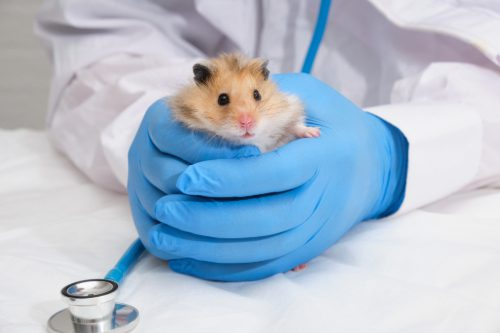
The Merck Veterinary Manual recommends taking a new hamster to a veterinarian for an initial health check. That visit can identify existing problems and establish a medical record before the hamster becomes ill.
VCA similarly recommends veterinary examinations for pet hamsters even though they do not require vaccinations.
A routine examination may include checking:
- body weight and condition
- teeth and mouth
- eyes and nose
- coat and skin
- movement
- breathing
- abdomen and any unusual lumps
The veterinarian can also review your hamster’s diet and housing and tell you where to go if an emergency happens outside normal clinic hours.
If you have not found a clinic yet, see our guide to how to find an exotic vet for your hamster.
What replaces a vaccination schedule?
There is no single preventive treatment that replaces vaccines. Instead, hamster health depends heavily on several small habits working together.
Know what normal looks like
One of the most useful things you can do is learn your individual hamster’s normal routine.
Pay attention to:
- when it normally wakes up
- how active it usually is
- how much it eats and drinks
- what normal droppings look like
- how its coat normally looks
- how comfortably it walks and climbs
A change from your hamster’s own baseline can be more useful than comparing it with another hamster.
Merck recommends spending time observing your hamster regularly because noticing changes early can make health problems easier to address.
Keep a weight record
Weight is particularly useful because gradual changes can be difficult to see under a hamster’s fur.
Use a digital kitchen scale that measures in grams and record the result rather than relying on memory.
You do not need to obsess over small day-to-day fluctuations. What matters is knowing your hamster’s usual range and noticing a meaningful downward trend.
Unexplained weight loss is one of the signs Merck lists as a reason to be concerned about a hamster’s health.
Keep food and water clean
A balanced hamster diet and reliable access to fresh water are basic preventive care.
Food that becomes damp, contaminated, or spoiled should be removed. Fresh foods should also be checked because hamsters commonly carry food into hidden storage areas rather than eating it immediately.
For feeding guidance, see what hamsters can eat.
Keep the enclosure sanitary without stripping it constantly
Cleanliness matters, but there is no need to turn hamster care into a rigid schedule such as “replace everything every seven days.”
Remove spoiled food, heavily soiled material, and other dirty areas as needed while maintaining an environment that is clean and safe.
Frequent complete removal of all familiar bedding can also disturb a hamster’s scent-marked environment, so cleaning should be based on what actually needs cleaning rather than an arbitrary calendar.
Prevent injuries and escapes
Preventive health is not limited to infectious disease.
Merck specifically highlights escape prevention because hamsters can be seriously injured after getting out of their enclosures or falling from furniture.
Check that doors and lids are secure, provide appropriate equipment, and do not leave a hamster unattended on a table, bed, or other raised surface.
Avoiding an injury is just as much a part of preventive care as recognizing disease early.
Does a healthy hamster need an annual vet check?
An annual examination is a reasonable preventive-care approach even though there are no annual vaccines to administer.
VCA recommends annual physical examinations for hamsters and suggests more frequent examinations for older animals.
A checkup can be particularly useful because hamsters are small and some problems are easy for an owner to miss early on.
It also establishes a relationship with a clinic before something urgent happens.
That matters more than it sounds. If your hamster suddenly develops breathing problems or severe diarrhea, you do not want your first step to be discovering that the nearest “exotic vet” does not actually treat hamsters.
For more detail, see do hamsters need a vet?.
Do hamsters need flea, worm, or parasite prevention?
Healthy pet hamsters are not normally placed on the same routine flea, tick, heartworm, or deworming schedules used for dogs and cats.
Do not apply a dog, cat, rabbit, or over-the-counter parasite treatment to a hamster simply as a precaution.
If your hamster develops itching, hair loss, skin irritation, or another possible parasite problem, the correct approach is to have the cause identified first.
Several different problems can produce similar symptoms, and a veterinarian can determine whether treatment is actually needed and which medication is appropriate for such a small animal.
The Merck Veterinary Manual also cautions that hamsters are easy to overdose and that some medications, including certain antibiotics, can cause serious problems.
What illnesses should owners watch for?
Vaccines are not available to prevent the common health problems owners are likely to notice in pet hamsters, so early recognition matters.
Contact a hamster-experienced veterinarian if you notice a significant change such as:
- loss of appetite
- unexplained weight loss
- diarrhea or a persistently wet rear
- unusual inactivity
- difficulty breathing
- discharge from the eyes or nose
- hunched posture
- abnormal walking
- significant hair loss or coat changes
These overlap with signs identified in the Merck Veterinary Manual as indications that a hamster may be sick.
You do not need to diagnose the disease yourself. Your job as an owner is to notice that something has changed and get appropriate help.
Our signs of a sick hamster guide covers these warning signs in more detail.
What about wet tail?
There is no vaccine that prevents wet tail.
The term is commonly associated with serious diarrhea, particularly in young Syrian hamsters. A wet or heavily soiled rear combined with diarrhea, lethargy, or loss of appetite should not be treated as a minor hygiene problem.
If you suspect it, contact a veterinarian promptly rather than buying an over-the-counter product and waiting to see what happens.
See our guide to hamster wet tail for more information.
Can my hamster catch something from another animal?
Keeping a hamster away from unfamiliar animals is sensible even though there is no vaccine schedule.
Avoid direct contact with wild rodents and animals whose health status is unknown. Wash your hands before handling your hamster if you have recently handled another animal, particularly one that is sick.
Good hygiene also protects people.
The CDC notes that small mammals, including hamsters, can sometimes carry germs that make people sick and recommends washing hands after handling the animal, its food, or its supplies.
That is a much more relevant everyday precaution than looking for vaccines your hamster does not need.
What should a new hamster owner do instead of booking vaccinations?
If you have just brought a hamster home, there is no vaccination appointment to schedule.
A more useful preventive-care checklist is:
- Find a veterinarian who actually treats hamsters.
- Consider an initial health examination.
- Save the clinic’s contact information and identify an after-hours option.
- Start recording your hamster’s weight.
- Learn its normal eating and activity patterns.
- Check food, water, and the enclosure regularly.
- Keep a secure carrier available for veterinary trips.
- Contact the vet when you notice a meaningful health change rather than trying medication at home.
That is the hamster equivalent of having a preventive healthcare plan.
Do hamsters need vaccination certificates for boarding or travel?
Usually, there is no hamster vaccination record to provide because hamsters do not have routine vaccinations.
However, travel and animal-entry requirements depend on the destination, and boarding facilities can set their own policies.
If you are crossing a national border, check the current government import rules for your destination rather than assuming the absence of vaccines means there are no requirements.
A boarding facility may also request veterinary records or proof that your hamster is healthy even though there is no vaccination certificate.
The bottom line
Hamsters do not need routine vaccinations. There is no annual shot or booster schedule that a typical pet hamster owner needs to follow.
Preventive hamster healthcare works differently. Find a veterinarian who treats hamsters, consider routine examinations, track your hamster’s weight and normal behavior, maintain good husbandry, and respond promptly to meaningful changes.
In other words, having no vaccines to schedule makes one part of hamster ownership easier. It does not make veterinary care unnecessary.
Keep reading: Do hamsters need a vet? | Signs of a sick hamster | Hamster wet tail | What can hamsters eat? | How long do hamsters live?
Hamster Corner provides general educational information about hamster health and care. It is not a substitute for advice from a qualified veterinarian. If your hamster shows signs of illness or injury, contact a veterinarian experienced with hamsters.