
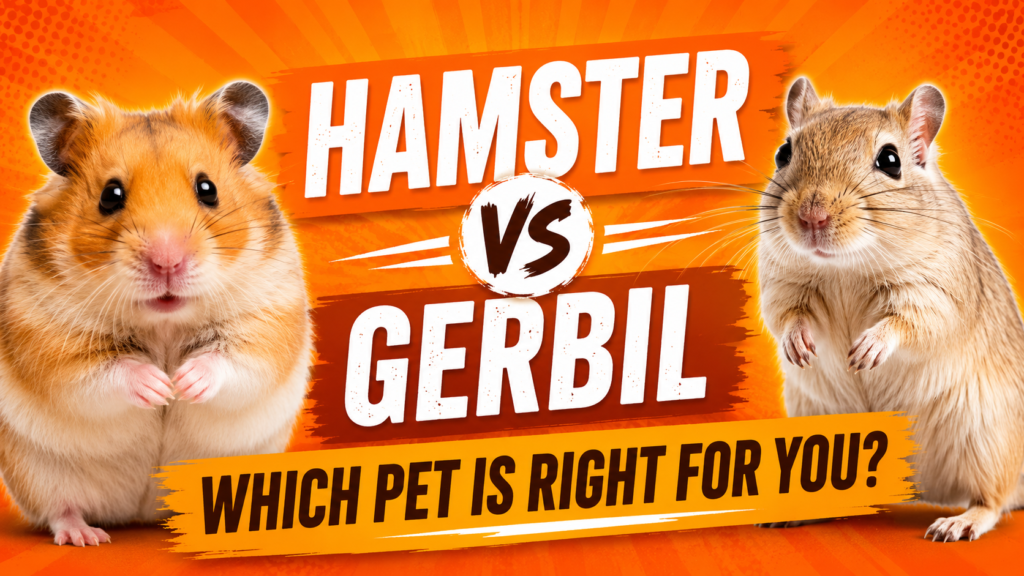
Both are small, affordable, and housed in similar enclosures, so the choice often surprises people. The biggest fork in the road is company: gerbils need a bonded pair (or more) for their wellbeing, while every hamster species does better alone. That single fact changes your budget, your setup, and what you observe every day.
Head-to-head comparison
| Feature | Hamster | Gerbil |
|---|---|---|
| Body size | 2 to 7 inches (dwarf to Syrian) | 4 to 5 inches body + long tail |
| Lifespan | 1.5 to 3 years | 3 to 5 years |
| Social needs | Solitary (must live alone) | Needs a bonded pair minimum |
| Active hours | Mainly at night | Active in short bursts day and night |
| Handling | Syrian: calm; dwarfs: fast | Fast and squirmy; manageable with patience |
| Care difficulty | Beginner-friendly (Syrian) | Moderate (pair bonding adds complexity) |
| Setup cost | Similar for both | Similar, but you buy for two |
| Best for | Handling, solo pet owners | Daytime watching, pairs enthusiasts |
Social needs: the biggest difference
Gerbils are colony animals by nature and experience stress when kept alone. You must start with a bonded pair (same sex to avoid breeding, or a neutered male with a female from a rescue). Introducing new gerbils to an established one is risky and often results in fighting. Hamsters are the opposite: every species, including dwarfs, is territorial and safest housed one per enclosure. There is no middle ground on this point.
Activity schedule
Gerbils take short active bursts throughout the day and night, so you are more likely to see them doing something during your waking hours. Hamsters are largely crepuscular and nocturnal, meaning they are most active around dusk, overnight, and at dawn. If daytime interaction matters to you, gerbils win here.
Handling and temperament
A well-tamed Syrian hamster is one of the easiest small pets to hold: slow enough to scoop up and calm enough to sit in a palm. Gerbils are curious but fast and prone to jumping; they can be tamed but rarely sit still the way a Syrian does. Dwarf hamsters and gerbils are more similar in handling difficulty, both requiring patience and low-to-the-ground sessions.
Lifespan and commitment
Gerbils typically live 3 to 5 years, noticeably longer than hamsters (1.5 to 3 years depending on species). Longer lifespan means a longer commitment, which is neither good nor bad but worth knowing upfront. Because gerbils live in pairs, you may also face the challenge of one outliving the other, which can cause depression in the survivor and may require careful introduction of a new companion.
Housing and diet
Both need a minimum 40 by 20 inch (100 by 50 cm) floor space per animal, deep bedding (10 inches or more for gerbils who love to tunnel; 8 inches or more for hamsters), a solid wheel, and hideouts. Gerbils need more enrichment for social play. Diet is similar: a quality rodent mix, fresh vegetables, and limited sugary fruit. Gerbils are less prone to diabetes than dwarf hamsters. See our cage setup guide and what hamsters can eat for hamster-specific details.
Which should you choose?
- Choose a hamster if you want a solo pet, you plan to handle it daily, you or your children are beginners, or your schedule means you are awake at night. Start with our best hamster for beginners guide and the full species overview.
- Choose gerbils if you want to watch two active animals during the day, you can commit to a pair, and you are comfortable with the slightly longer and more complex relationship of bonded gerbils. Also see our dwarf vs Syrian comparison if you lean toward hamsters but are not sure which type.
Frequently asked questions
Can hamsters and gerbils live together?
No. They are different species with incompatible social structures and territorial instincts. They must never share an enclosure.
Are gerbils easier to care for than hamsters?
They are roughly equal in daily effort, but gerbils add complexity because you need to keep a bonded pair and manage the social dynamic. Hamsters are simpler in that regard.
Do gerbils smell less than hamsters?
Gerbils are often described as producing less odor because they are desert animals that produce little urine. Male hamsters, especially Syrians, can have a musty scent from their scent glands. Both stay manageable with weekly cage cleaning.
Which is better for a child?
A Syrian hamster is generally the better first small pet for a child because it is larger, slower, and easier to handle safely. Gerbils are fast and can jump, increasing the chance of an accidental drop.
The bottom line
Pick a hamster for a solo, handleable, beginner-friendly small pet that is most active in the evening. Pick gerbils if you want a social pair you can watch during the day and you are ready for the bonding complexity that comes with keeping two. Neither is objectively better; the right choice is the one that fits how you actually live and what you want from a small pet. Check your local laws before getting either species, and always source from a reputable breeder or rescue.
Keep reading: Types of Hamsters, Best Hamster for Beginners, Dwarf vs Syrian Hamster.
This article is for informational purposes only and is not a substitute for veterinary advice. Check your local and state laws before getting any pet, as some species may be restricted in your area.