
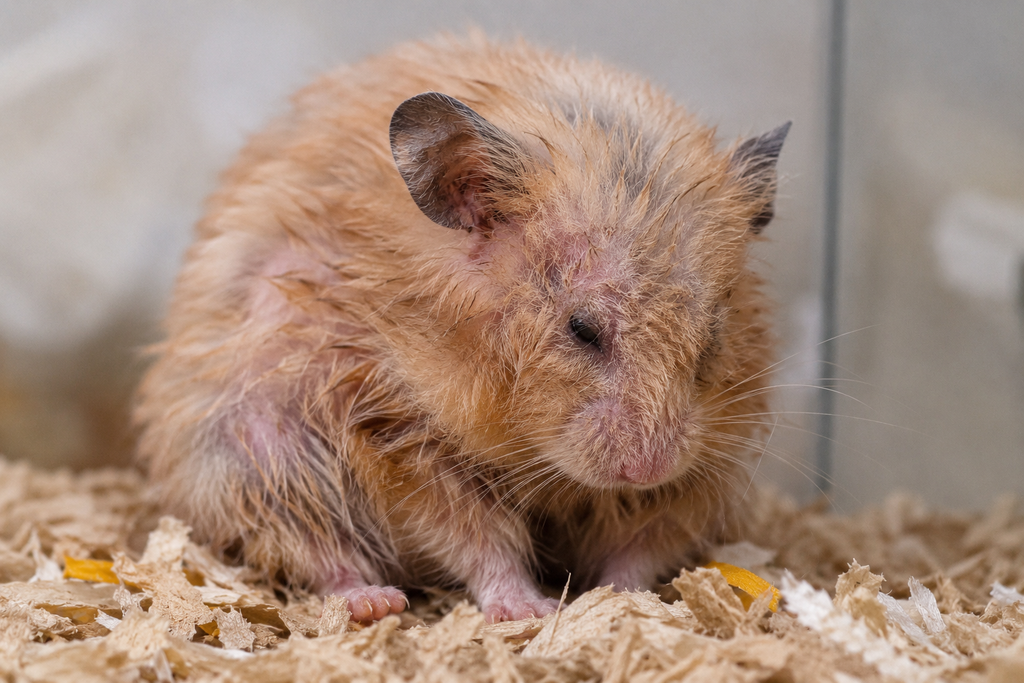
Common signs that a hamster may be sick include eating less, weight loss, diarrhea or a wet rear, difficulty breathing, discharge from the eyes or nose, hair loss, lumps, wounds, abnormal walking, and a clear change in normal activity or behavior.
Hamsters can lose condition quickly when they are ill and may show relatively subtle signs at first. Do not wait until a hamster looks dramatically sick before asking for veterinary advice. The RSPCA recommends contacting a vet when you notice changes in a hamster’s appearance or behavior, while Merck lists inactivity, appetite or weight loss, discharge, abnormal walking, diarrhea, hair loss, and trouble breathing among important illness signs.
Some symptoms are more urgent than others. Severe breathing difficulty, collapse, extreme weakness, or refusal to eat or drink require particularly urgent veterinary attention.
For hamster-specific veterinary care, see do hamsters need a vet?.
Signs that your hamster may be unwell
No single symptom identifies a disease by itself. The useful question is whether something has changed from your hamster’s normal appearance, appetite, movement, or behavior.
| Sign | Why it matters |
|---|---|
| Eating less or not eating | Can occur with dental disease, digestive illness, respiratory disease, pain, or many other conditions |
| Weight loss | May be an early sign of illness even before the hamster looks obviously thin |
| Diarrhea or a wet, fecal-stained rear | Can become serious quickly because hamsters dehydrate rapidly |
| Difficult, rapid, or noisy breathing | Respiratory and heart problems can become serious quickly |
| Eye or nasal discharge | Can occur with respiratory, eye, dental, or other disease |
| Hair loss or abnormal skin | Possible parasites, fungal disease, rubbing, barbering, or systemic illness |
| New lump or swelling | Could be an abscess, cyst, tumor, or another problem requiring examination |
| Drooling or difficulty eating | Dental disease and overgrown teeth are important possibilities |
| Abnormal walking or loss of balance | Needs veterinary assessment rather than a home diagnosis |
| Hunched posture or rough coat | General signs that a hamster may be unwell |
| Wound or unexplained bleeding | May need treatment and investigation of the cause |
| Change in urine or droppings | Merck identifies changes in color, consistency, smell, or amount as potential early illness signs |
The Merck Veterinary Manual specifically advises paying attention to your hamster’s normal appearance and behavior so changes are easier to recognize.
Reduced appetite matters
Do not use a rule such as “monitor for a day if your hamster is eating slightly less.”
The RSPCA hamster diet guidance recommends talking to a veterinarian immediately if a hamster starts eating less, develops moist droppings, or has a soiled rear.
Loss of appetite can occur with many different problems, including dental disease, respiratory illness, gastrointestinal disease, pain, and systemic illness.
Also remember that hamsters hoard food. An empty or full bowl does not tell you exactly how much was eaten.
If you suspect appetite has changed, check the food store where possible without unnecessarily destroying the nest, monitor weight, and tell your veterinarian what you have observed.
Diarrhea and “wet tail”
A wet or fecal-stained rear deserves prompt veterinary attention.
One important correction is that wet tail is not a precise diagnosis.
The term is commonly used for diarrhea in hamsters. Diarrhea can have several causes, including infection, dietary disruption, parasites, and other intestinal disease.
One particularly serious cause is proliferative ileitis, associated with the bacterium Lawsonia intracellularis. Merck describes it as the most consequential intestinal disease in young Syrian hamsters, particularly around 3 to 10 weeks of age.
Signs can include:
- wet or matted fur around the rear and belly
- diarrhea
- reduced appetite
- lethargy
- dehydration
- weight loss
The disease can progress rapidly.
Do not try to determine at home whether diarrhea is “true wet tail” before seeking help. A hamster with significant diarrhea or a fecal-stained rear needs veterinary advice.
For more detail, see hamster wet tail.
Breathing problems need prompt attention
Wheezing, noisy breathing, repeated sneezing, nasal discharge, rapid breathing, or obvious effort when breathing should not be treated as minor cold symptoms.
Merck notes that lung and airway disorders can become serious quickly because hamsters are so small. PetMD similarly recommends contacting an exotic veterinarian for coughing, wheezing, sneezing, nasal discharge, or other respiratory difficulty.
Seek urgent veterinary care if your hamster has:
- open-mouth breathing
- severe difficulty getting air
- blue or gray gums or skin
- extreme weakness or collapse
- refusal to eat or drink alongside respiratory symptoms
For nasal discharge specifically, see hamster runny nose.
Eye and nose discharge
Discharge should not automatically be diagnosed as an infection from its color.
Eye discharge can occur with conjunctivitis, dust irritation, injury, dental disease, or other eye conditions. Nasal discharge can occur with respiratory infection as well as environmental irritation and other problems.
Persistent discharge, swelling, an eye that stays closed, repeated sneezing, or discharge accompanied by reduced appetite or activity warrants veterinary assessment.
For eye symptoms, see hamster eye infection.
Hair loss and skin changes
Hair loss has a surprisingly long list of possible causes.
Mites, ringworm, rubbing, barbering, nutritional problems, endocrine disease, kidney disease, and some tumors can all affect a hamster’s coat.
Do not assume every itchy hamster has mites or every symmetrical bald patch in an older Syrian is adrenal disease.
Look for:
- spreading hair loss
- flaky or crusted skin
- redness
- repeated scratching or rubbing
- wounds
- lumps
- weight loss or reduced activity occurring at the same time
For the differential in more detail, see bald patches on hamsters and hamster mites.
Lumps and swellings
An unexpected lump should be examined rather than simply monitored indefinitely.
Merck notes that hamsters can develop both benign and malignant tumors, and abscesses can also appear as swellings. Earlier identification can make treatment easier depending on the cause and location.
Not every apparent lump is abnormal. For example, normal Syrian scent glands appear as paired dark areas on the flanks, while male hamster testicles can also look surprisingly prominent.
But a new, changing, painful, asymmetric, bleeding, or unexplained lump deserves veterinary assessment.
Dental warning signs
Hamster incisors grow continuously, and dental problems can interfere with eating.
Watch for:
- drooling
- dropping food
- difficulty chewing
- reduced food intake
- weight loss
- visibly abnormal or overgrown incisors
- facial swelling
RSPCA recommends checking the front teeth regularly, while PetMD specifically lists drooling and overgrown teeth among reasons to contact an exotic veterinarian.
Do not trim hamster teeth at home unless a veterinarian has specifically shown you that this is appropriate. Dental problems may involve more than simply long front teeth.
Changes in movement
An abnormal gait is a recognized illness sign in hamsters.
Pay attention if your hamster:
- repeatedly loses balance
- walks differently from normal
- stops using a limb
- is reluctant to move
- suddenly struggles to climb or run
- appears unusually weak
Do not automatically diagnose wobbling, circling, or a head tilt as a neurological disease or inner-ear infection. Several problems can affect movement and balance.
A veterinarian needs to determine the cause.
Behavior changes can be health clues
Behavior can change when a hamster is unwell.
Merck notes that sick hamsters may become inactive and stop exploring or playing as they normally would. RSPCA likewise recommends watching for changes in behavior because hamsters may not show obvious signs of pain.
Useful changes to notice include:
- unusually low activity
- no longer exploring at the normal time
- staying hunched or withdrawn
- reduced interest in food
- suddenly avoiding movement
- a clear change from the hamster’s usual routine
Do not interpret every behavior change as illness. Environment, handling, sleep disruption, and inadequate enrichment can also affect behavior.
For example, repeated bar biting is primarily a reason to review welfare and enclosure conditions rather than proof of a medical disease. See why hamsters bite cage bars.
When is it an emergency?
Some signs justify especially urgent veterinary attention.
Seek emergency veterinary help for:
- severe or open-mouth breathing
- collapse or unresponsiveness
- extreme weakness
- blue or gray gums or skin
- major trauma or uncontrolled bleeding
- seizures or severe neurological signs
- a protruding eyeball
- rectal prolapse
- inability or refusal to eat or drink accompanied by marked illness
Significant diarrhea, respiratory symptoms, reduced appetite, wounds, lumps, abnormal movement, or other noticeable illness signs also need veterinary attention, even when they do not yet look dramatic.
The distinction should be urgent versus more urgent, not “sick enough for a vet” versus “wait until tomorrow.”
What should you do when your hamster seems sick?
Contact a veterinarian experienced with hamsters or exotic small mammals and describe what has changed.
While arranging care:
- Keep the enclosure quiet and at its normal safe temperature, away from draughts and direct heat.
- Keep familiar food and fresh water easy to access.
- Minimize unnecessary handling if the hamster appears weak or distressed.
- Do not give human medicines, leftover antibiotics, or medication prescribed for another animal.
- Record when the symptoms began and whether they are changing.
- Note food intake, drinking, urine, and droppings.
- Take a current weight if you can do so without causing significant stress.
- Record a short video if the problem involves breathing, walking, or unusual behavior that may not happen during the appointment.
RSPCA specifically warns that human and other-animal medicines can be dangerous to hamsters. Merck also warns that certain antibiotics can cause severe and even fatal intestinal disease in hamsters.
A practical hamster health check
You do not need to perform a full medical examination every day.
RSPCA recommends visually checking your hamster every day to make sure it is behaving, moving, sitting, and breathing normally and that there are no obvious wounds or lumps.
Woodgreen recommends a more detailed health check weekly and monitoring behavior every day.
A useful routine includes checking:
Eyes: clear, without new discharge, swelling, or cloudiness.
Nose and breathing: no discharge and no new noisy or labored breathing.
Coat and skin: no unexplained bald areas, wounds, crusting, or redness.
Body: gently check for new lumps or unexpected changes in body condition.
Rear and genitals: clean, without fecal staining or abnormal discharge.
Teeth and mouth: no obvious overgrowth, drooling, or difficulty eating.
Feet and movement: no sores, limping, or problems with balance.
You can also weigh your hamster on small kitchen scales and keep a simple record. Woodgreen specifically recommends monitoring for unexpected or consistent weight loss or gain.
Do health checks when your hamster is already awake rather than repeatedly waking it during its normal sleep period.
Not everything unusual is disease
Knowing a few normal hamster features can prevent unnecessary panic.
For example, Blue Cross notes that Syrian hamsters have paired scent glands on their flanks that can look like dark bald patches. Dwarf hamster scent glands are located on the abdomen and may have some waxy yellow material around them.
Male hamsters can also have very prominent testicles.
The key is whether something is normal for that hamster and stable, or whether it is new, changing, painful, swollen, bleeding, or accompanied by another symptom.
When you are uncertain, a veterinarian can help distinguish normal anatomy from disease.
Common hamster health problems
You do not need to memorize every hamster disease to notice that something is wrong.
A few conditions owners commonly encounter include:
Diarrhea and wet-tail syndromes: several diseases can cause diarrhea. Proliferative ileitis is a particularly serious cause in young Syrian hamsters.
Respiratory disease: may produce sneezing, nasal or eye discharge, noisy or difficult breathing, reduced appetite, and lethargy.
Skin disease: mites, ringworm, wounds, and other conditions can cause hair loss, redness, scaling, or crusting.
Dental disease: overgrown or abnormal teeth can cause pain, drooling, difficulty eating, facial swelling, and weight loss.
Abscesses and tumors: both can appear as lumps, so a new swelling should be examined rather than diagnosed by touch alone.
Eye disease: conjunctivitis, injury, dental problems, glaucoma, and other disorders can cause discharge, swelling, or a closed eye.
Urinary or kidney disease: increased urination, abnormal urine, increased thirst, or weight loss can occur with several conditions.
Diabetes is also recognized in hamsters, including dwarf hamsters, but it should not be reduced to the blanket rule that every dwarf hamster is “diabetes-prone.” PDSA specifically highlights Russian dwarf hamsters as having increased risk.
Can good care prevent hamster illness?
Good husbandry can reduce some preventable risks, but it cannot prevent every disease.
A suitable diet, clean water, appropriate bedding, a clean and well-designed enclosure, safe enrichment, and protection from injury all matter. Genetics, aging, infection, tumors, and other medical problems can still occur in a well-cared-for hamster.
Avoid overcrowding and prevent fighting injuries.
Syrian and Chinese hamsters should be housed alone. Guidance for some dwarf species is less uniform between welfare organizations, but fighting should always be taken seriously and hamsters that fight need to be permanently separated.
Good care is not a guarantee against disease. Its role is to meet the hamster’s welfare needs and make preventable problems less likely.
Do you need a hamster-experienced vet?
Ideally, yes.
Hamsters are small animals with species-specific diseases, anatomy, medication considerations, and handling needs. PetMD recommends exotic-veterinary care for hamsters, and some medications that are commonly used in other animals can cause serious problems in hamsters.
Finding a clinic that treats hamsters before an emergency happens makes it much easier to act quickly when something changes.
The bottom line
Do not wait for a hamster to look extremely sick before asking for help.
Reduced appetite, weight loss, diarrhea or a wet rear, abnormal breathing, eye or nasal discharge, wounds, lumps, hair loss, abnormal walking, and a clear reduction in normal activity can all indicate illness.
Some signs, including severe breathing difficulty, collapse, extreme weakness, or refusal to eat or drink, require especially urgent care.
The best thing you can do at home is learn your hamster’s normal baseline. Look at your hamster every day, perform a more detailed health check regularly, monitor weight, and contact a veterinarian when something changes.
For individual symptoms and conditions, see hamster wet tail, hamster runny nose, hamster eye infection, hamster mites, and bald patches on hamsters.
Hamster Corner provides general educational information about hamster care. It is not a substitute for veterinary diagnosis or treatment.





[…] For a closer look at individual symptoms, see our guide to the signs of a sick hamster. […]
[…] our guide to the signs of a sick hamster if you are trying to distinguish a health problem from normal […]
[…] reading: Signs of a sick hamster | Do hamsters need a vet? | Hamster cage […]
[…] For other signs that may accompany illness, see signs of a sick hamster. […]
[…] For other illness and injury signs, see signs of a sick hamster. […]
[…] signs of a sick hamster for other changes worth […]
[…] If your hamster is showing several changes at once, see our guide to signs of a sick hamster. […]
[…] For other warning signs, see signs of a sick hamster. […]
[…] For other warning signs, see signs of a sick hamster. […]
[…] signs of a sick hamster for other health changes worth […]
[…] reading: Signs of a sick hamster | Hamster cage […]
[…] normal behavior deserves more attention because illness can also change how a hamster behaves. See signs of a sick hamster if the change is unusual for your […]
[…] something changes suddenly or significantly, see signs of a sick hamster and contact a hamster-experienced […]
[…] signs of a sick hamster and contact a hamster-experienced veterinarian if the change is significant or […]
[…] broader warning signs, see signs of a sick hamster and do hamsters need a […]
[…] signs of a sick hamster for other changes worth […]
[…] If your hamster also shows reduced appetite, unusual lethargy, abnormal movement, or another health change, see signs of a sick hamster. […]
[…] our signs of a sick hamster guide for warning signs that deserve […]