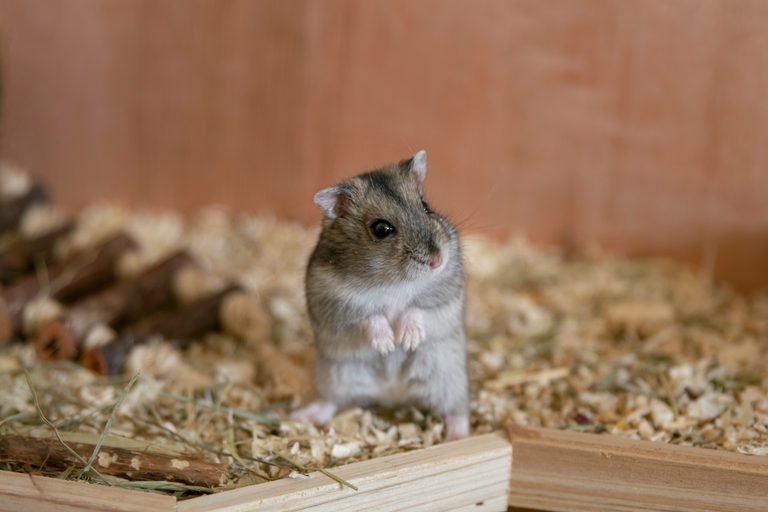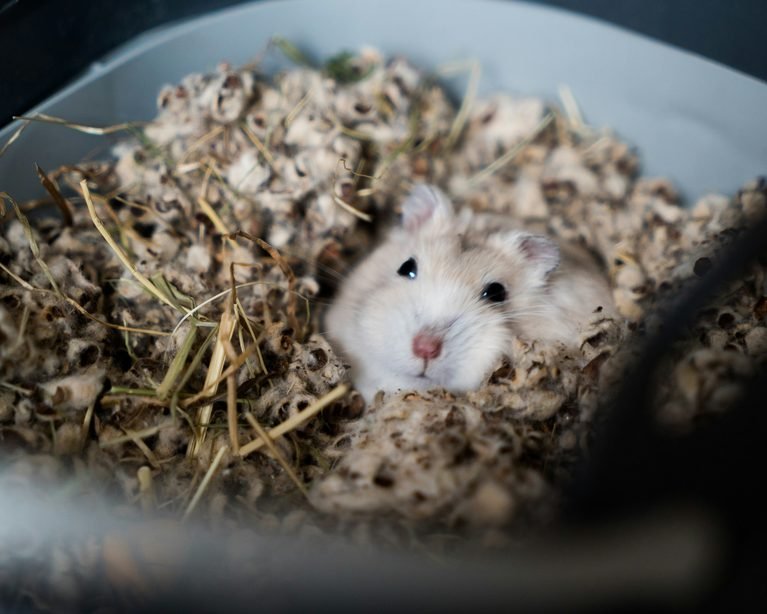
Hamsters are primarily active after dark, but calling every hamster strictly “nocturnal” or strictly “crepuscular” oversimplifies their activity pattern. Major hamster welfare sources commonly describe pet hamsters as nocturnal, while other guidance uses crepuscular for activity around dawn and dusk. Research also shows that activity can vary with species, environment and whether the hamster is living in captivity or the wild.
For owners, the practical rule is much clearer: let your hamster sleep undisturbed during the day and interact when they wake naturally in the evening or at night.
Are hamsters nocturnal or crepuscular?
There is no need to “correct” nocturnal to crepuscular as though only one term is scientifically valid.
The RSPCA says hamsters need to sleep undisturbed during the day and notes that wild hamsters are usually active at dusk and during the night.
Blue Cross describes hamsters as naturally nocturnal and says they are most active during the evening.
Woodgreen’s main hamster care guidance also calls hamsters nocturnal, saying they sleep mainly during the day and are most active at night. However, some Woodgreen adoption material describes hamsters as crepuscular and most active in the early morning and late evening.
That inconsistency reflects a broader point: real activity patterns are more complicated than a single label.
Laboratory studies of Syrian, Djungarian and Chinese hamsters have found substantially more locomotor activity during the dark period than the light period. Research on captive Syrian hamsters has similarly found most daily activity during darkness.
So for a pet hamster, night-active is probably the clearest practical description.
Wild and pet hamsters do not always follow the same schedule
The original article said the hamster’s activity rhythm is “hardwired” and does not change in captivity. Research does not support such a rigid claim.
A particularly interesting field study found that female golden or Syrian hamsters living in the wild showed primarily daytime surface activity, despite captive Syrian hamsters being strongly night-active under laboratory conditions.
Other species behave differently again. Field research on Roborovski hamsters shows that their activity changes with environmental conditions including temperature.
This means we should be careful about constructing a simple evolutionary story in which all hamsters emerged only at dusk to avoid predators and heat.
Both circadian biology and environmental conditions influence when a hamster is active.
For pet care, however, the observation remains straightforward: most pet hamsters sleep through much of the day and become active later.
What does a normal hamster day look like?
A hamster does not need to follow the exact timetable shown on many care websites.
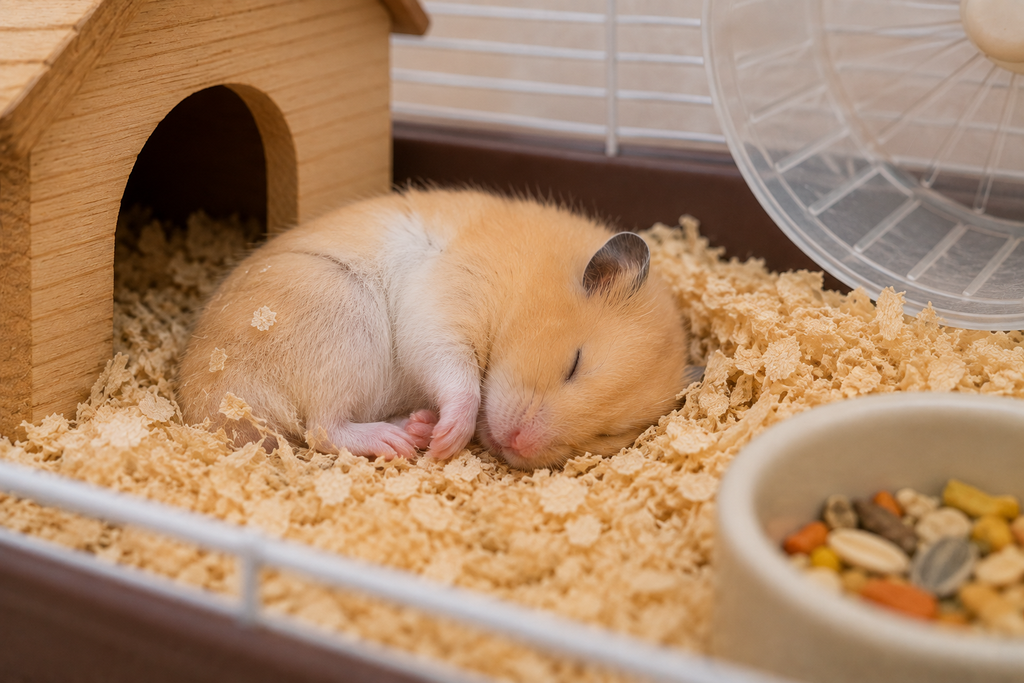
A typical pet hamster may sleep for much of the daytime, wake briefly at intervals, then become substantially more active after the room gets darker. During its active period it may forage, dig, explore, groom, carry food and run on its wheel.
Activity can continue well into the night and may occur in several bouts rather than one uninterrupted session.
Research on Syrian hamsters found strong dark-phase activity but also brief irregular bursts of activity during the light period. So finding your hamster awake for a short time in the afternoon is not automatically abnormal.
What matters more is the hamster’s usual pattern and whether something has clearly changed.
Should you wake a sleeping hamster?
Do not routinely wake a hamster just because you want to handle or play with them.
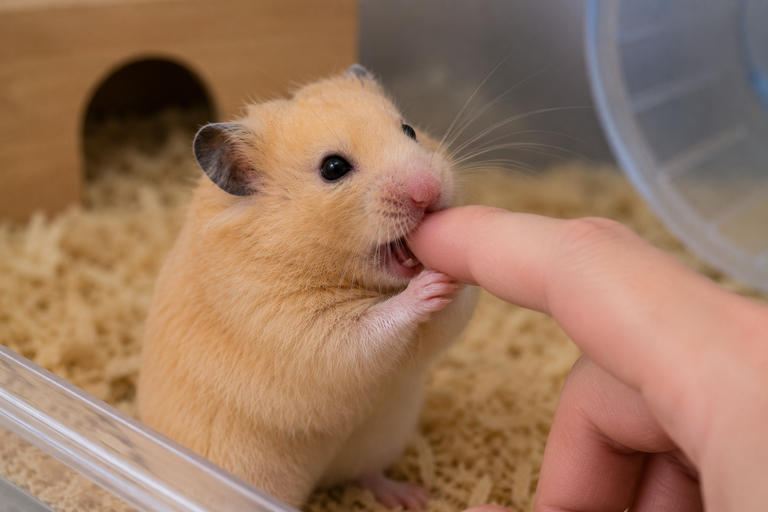
The RSPCA says hamsters should not normally be handled while resting or sleeping unless it is necessary because they can find the disturbance stressful. Blue Cross likewise warns that a hamster disturbed during daytime sleep may become alarmed and bite.
That is different from saying a hamster must never be woken under any circumstances.
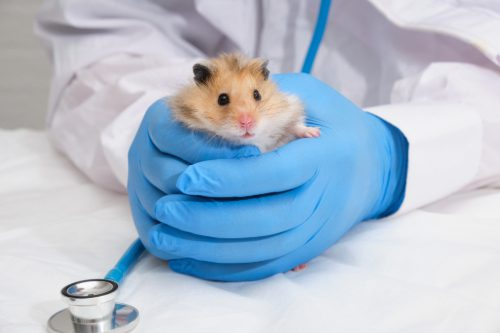
There are legitimate reasons to disturb a sleeping hamster, including an urgent health concern, necessary veterinary care or another situation where checking the animal cannot reasonably wait.
For normal handling, wait until your hamster wakes naturally and appears alert.
Is daytime activity a warning sign?
Not by itself.
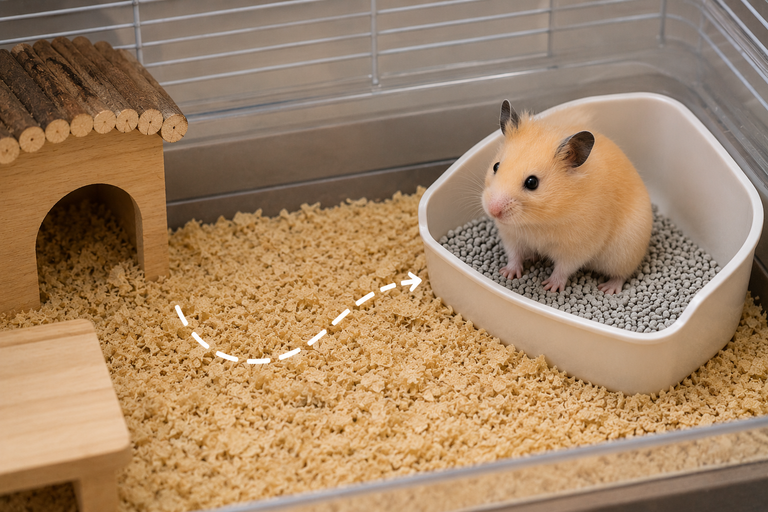
Hamsters may wake briefly during the day to drink, eat, move food, use a toilet area or change sleeping location.
A hamster that happens to be awake at noon is therefore not automatically stressed or ill.
Pay more attention to a change from that hamster’s normal behavior.
If your hamster suddenly becomes unusually restless, sleeps through periods when they would normally be active, eats less, loses weight or shows another significant behavioral or physical change, there may be more going on than a shifted sleep schedule.
See signs of a sick hamster for other changes worth watching.
Can you change a hamster’s sleep schedule?
A hamster’s circadian rhythm can shift. It is not biologically impossible.
Light exposure is one of the major cues regulating hamster circadian rhythms, and research on Syrian hamsters has repeatedly shown that changing light conditions can alter the timing of activity.
Arousal itself can also influence the hamster circadian clock under experimental conditions.
But that does not mean owners should repeatedly wake a hamster during the day to make it fit a human schedule.
The RSPCA recommends predictable lighting, including keeping hamsters in a room where lights go off at roughly consistent times and are not routinely left on late into the night.
So rather than trying to turn a hamster into a daytime pet, provide a stable light and dark routine and let its activity pattern settle naturally.
If nighttime pets do not fit your household schedule, that is worth considering before choosing a hamster.
Should you leave a red light on at night?
I would not recommend a constant red light based on the claim that hamsters cannot detect it or that it cannot affect their circadian system.
Red or dim light is often used in laboratory hamster research, but that does not prove that every red household light is biologically invisible.
More broadly, studies show that even dim nighttime illumination can affect hamster circadian or photoperiodic responses.
The RSPCA’s practical advice is simpler and safer: give hamsters predictable light and dark periods.
If you want to observe your hamster briefly at night, avoid flooding the enclosure with bright light. But there is no need to keep a colored lamp running throughout the night.
Why does my hamster make so much noise at night?
Because that is when much of a pet hamster’s normal activity happens.
Running, digging, moving bedding and rearranging objects can all be noisy.
A suitable wheel is an important part of the enclosure. RSPCA recommends a large, solid, axle-free wheel with a safe running surface, alongside other forms of enrichment.
Wild hamsters can travel long distances during their active periods. RSPCA says they may travel up to five miles in a day.
That figure should not be converted into “a healthy pet hamster must run several miles on its wheel every night.” Wheel use is only one part of activity.
If nighttime noise is a problem, use a well-made quiet wheel and consider whether the enclosure belongs in a bedroom.
Do not routinely remove the wheel simply to make the hamster quieter.
When should you feed and handle your hamster?
You do not need an exact feeding hour.
A predictable routine is useful, and offering food around the time your hamster normally becomes active makes practical sense because hamsters naturally forage during their waking period.
Handling should also happen when the hamster is already awake and alert.
That does not mean handling at 7 p.m. is universally better than handling at 10 p.m. One hamster may wake much earlier or later than another.
Follow your hamster rather than a generic clock.
What if my hamster looks asleep and will not wake?
Do not automatically assume that deep daytime sleep is torpor.
A normal sleeping hamster should still respond appropriately when genuinely disturbed. A hamster that is unusually cold, extremely lethargic, barely responsive or breathing very slowly needs more careful attention.
Pet hamsters can enter torpor, a dangerous state associated with conditions such as excessive cold and limited resources.
There is no single universal “below 60°F means torpor” rule.
PDSA recommends keeping a hamster’s environment at a steady 18 to 21°C (about 64 to 70°F). Woodgreen gives a similar 18 to 21°C range. PetMD notes that torpor becomes a particular concern at substantially colder temperatures, including exposure below about 41°F.
Those differences are another reason not to use one temperature as a home diagnostic test.
If your hamster is cold and unusually unresponsive, do not simply assume they are sleeping. Move them gradually to an appropriately warm environment and contact a hamster-experienced veterinarian.
See is my hamster hibernating or dead? for a more detailed explanation of torpor.
The bottom line
Most pet hamsters are strongly night-active. RSPCA, Blue Cross and Woodgreen commonly describe them as nocturnal, while some guidance uses crepuscular to describe activity around dawn and dusk.
Neither label tells the whole story. Captive Syrian hamsters show strong dark-phase activity, while field research has even documented wild Syrian hamsters being active during daylight.
For owners, the terminology matters less than the care decision: let your hamster sleep during its normal resting period, provide predictable light and darkness, and interact when the hamster wakes naturally.
Brief daytime activity is not automatically a problem, and you should not force a hamster onto a daytime schedule simply for convenience.
Also skip the common red-light shortcut. Hamster circadian biology is sensitive to light, including low levels of nighttime illumination, so a genuinely dark and predictable night period is the better default.
Keep reading: Signs of a sick hamster | Is my hamster hibernating or dead?
Hamster Corner provides general educational information about hamster care. It is not a substitute for professional veterinary advice. If your hamster is unusually cold, unresponsive, eating less or showing another significant change from its normal behavior, contact a hamster-experienced veterinarian.