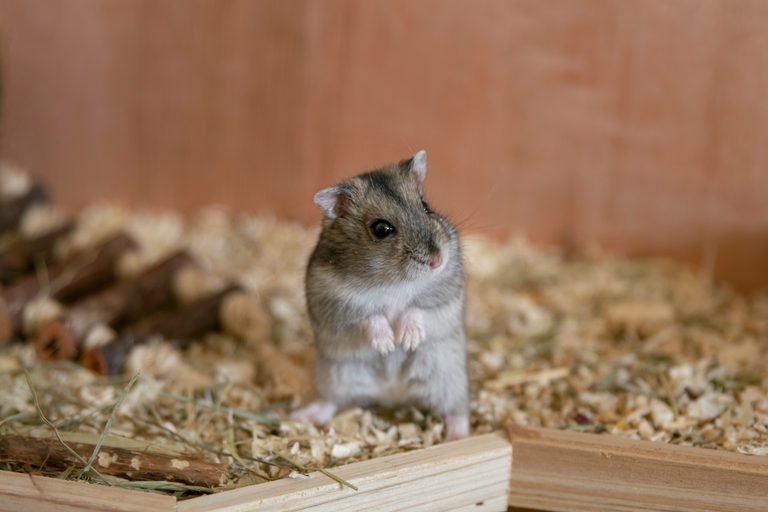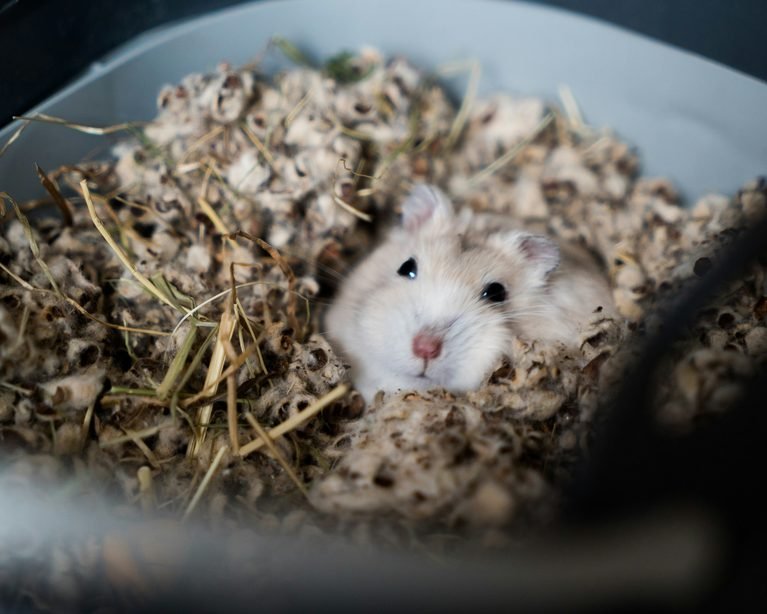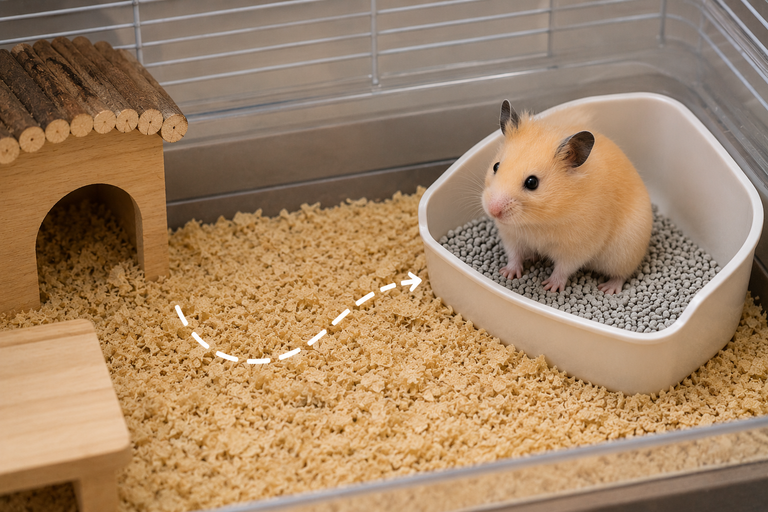
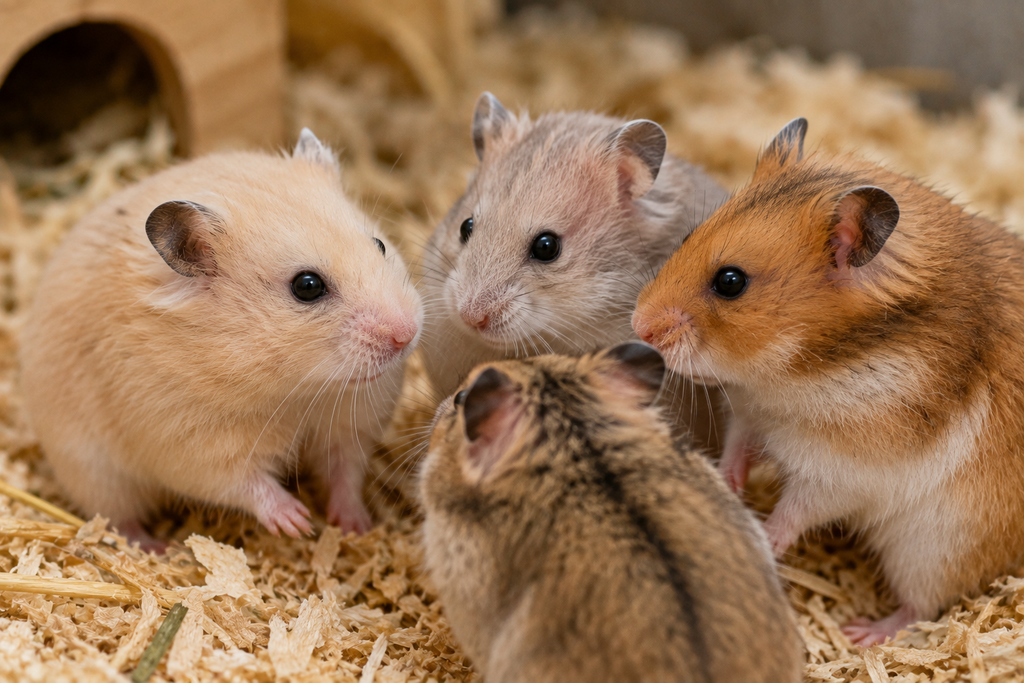
No, a pet hamster does not need another hamster for companionship. Syrian and Chinese hamsters should live alone. Dwarf species are more complicated: some naturally live in groups and RSPCA says certain established dwarf littermate pairs or trios can sometimes live together, but they do not need company to be happy and fights can still develop. For pet owners starting from scratch, one hamster per enclosure is the simplest and safest choice.
This distinction matters because “hamsters do not need a friend” is well supported, while “every hamster species is naturally solitary” is not.
Do hamsters need a friend?
No.
Current guidance from PDSA says hamsters do not get lonely or require another hamster for companionship. It recommends housing more than one hamster separately because living together can lead to fighting, stress and injury.
Blue Cross similarly says hamsters do not need company to be happy.
So keeping one hamster alone is not depriving it of a basic social need in the way solitary housing would be for genuinely social small pets such as guinea pigs or rats.
What matters much more is whether the hamster has enough space, bedding, enrichment and opportunities to perform normal behaviors.
Are all hamster species naturally solitary?
No, and this is where the old version went too far.
Syrian and Chinese hamsters are naturally solitary. RSPCA says they are not naturally sociable and should be housed alone.
Dwarf species are different.
RSPCA notes that species such as Roborovski, Campbell’s Russian dwarf and Winter White hamsters can naturally be more social and may sometimes live in pairs or small groups under appropriate conditions.
Woodgreen also acknowledges that dwarf and Roborovski hamsters can live in groups in the wild, although it recommends housing them individually as pets because fights are common in captivity and can cause severe injury.
So the accurate distinction is:
| Hamster type | Natural social behavior | Practical pet-housing advice |
|---|---|---|
| Syrian | Solitary | House alone |
| Chinese | Solitary | House alone |
| Campbell’s / Winter White | Can show group living in the wild | Individual housing is the safer default |
| Roborovski | Can naturally live in groups | Individual housing is safest; some established sibling pairs are accepted by some welfare guidance |
That is much more accurate than saying every hamster species evolved to defend a solitary burrow.
Why do reputable sources disagree about dwarf hamsters?
Because “can sometimes coexist” and “needs companionship” are two different questions.
RSPCA says some dwarf hamsters can sometimes live in pairs or trios if the group is formed early, remains stable and has enough space and resources. It also explicitly says that even these hamsters do not need other hamsters to be happy.
Woodgreen takes a more conservative position. Because dwarf hamsters kept together can eventually fight and captive enclosures cannot reproduce the space available in the wild, it considers individual housing safer.
PDSA also recommends separate housing for pet hamsters because dominance problems and fighting can occur.
Blue Cross takes a middle position for Roborovskis: same-sex sibling pairs are sometimes kept together, but they do not need company and must be permanently separated if fighting begins.
For a pet owner who has not bought the hamsters yet, this makes the decision fairly easy:
Buy one hamster and provide it with an excellent enclosure.
There is no welfare advantage that requires taking on the additional risk of group housing.
Can Syrian hamsters live together?
No.
Syrian hamsters should be housed individually.
RSPCA, PDSA, Woodgreen and Blue Cross all agree that Syrians are naturally solitary and can become aggressive toward other hamsters.
Do not house two Syrians together because they appear friendly in a pet shop or because they are siblings.
The same basic rule applies to Chinese hamsters.
Can dwarf hamsters live together?
Sometimes, according to some welfare guidance, but they do not need to.
RSPCA says compatible dwarf hamsters may sometimes live in pairs or trios, ideally when they are young littermates and the group has remained stable.
That should not be turned into “dwarf hamsters should live in pairs.”
Fighting can still develop, including after the hamsters have previously appeared compatible. RSPCA warns that aggression between cage mates can cause serious injury or death and says hamsters separated after fighting should not be reintroduced.
Woodgreen therefore recommends housing dwarf hamsters individually from the start.
If you are deciding whether to buy one dwarf hamster or two, one is the lower-risk choice.
What if two dwarf hamsters already live together peacefully?
This is one area where reputable welfare organizations do not give identical advice.
Woodgreen and PDSA favor separate housing.
RSPCA allows some established dwarf pairs or trios to remain together if they are compatible and the enclosure provides enough space, hides and resources for each hamster.
If you already have a stable pair, do not assume that peaceful behavior today guarantees they will always remain compatible.
You need to watch carefully for aggression and be prepared to provide two complete separate enclosures if they fall out.
Do not try to reintroduce hamsters after a serious fight.
For the full cohabitation decision, see can two hamsters live together?.
Do young hamsters get along better?
Young littermates may tolerate group housing better than unrelated adult hamsters, which is why RSPCA recommends that any dwarf group be formed early and ideally consist of littermates.
However, there is no good basis for the old rules that:
- hamsters are safe together until exactly 6 to 8 weeks old
- fights normally begin between 3 and 6 months
- every peaceful young pair will eventually fight
Those numbers create certainty that the evidence does not provide.
The useful point is simply that compatibility can change as hamsters mature.
Does living with another hamster cause chronic stress?
Conflict between hamsters can certainly create a serious welfare problem.
RSPCA describes aggression between cage mates as potentially traumatic and capable of causing severe injury or death.
But the old article went much further by saying cohabitation causes continuous low-level stress that suppresses immunity, disrupts sleep and shortens lifespan.
I could not find hamster-specific evidence establishing that entire chain of effects for every co-housed hamster.
The stronger argument does not require it.
Hamsters do not need a companion, and incompatible hamsters can seriously injure one another. That is already enough reason to favor individual housing.
What does a hamster need instead of a cage mate?
A hamster living alone still needs a rich environment.
Current welfare guidance from Woodgreen and Blue Cross supports several core requirements:
- A spacious enclosure. Woodgreen recommends at least 100 x 50 cm of floor space for pet hamsters.
- Deep bedding. Blue Cross recommends at least 20 cm of suitable digging substrate so hamsters can form burrows and nests.
- An appropriately sized solid wheel. The hamster should run without arching its back or lifting its head unnaturally.
- Places to hide. Multi-chamber hides, tunnels and other shelters allow the hamster to retreat and build a nesting area.
- Foraging opportunities. Scatter feeding and hiding food encourage natural searching behavior.
- Materials for digging and exploring. A sand bath, dig box, cork, branches and other safe enrichment can add complexity to the enclosure.
For more ideas, see hamster enrichment ideas.
A second hamster is not a substitute for any of these things.
Does a hamster need human companionship instead?
Not in the same sense that a social animal needs a companion of its own species.
Many hamsters can learn to tolerate or enjoy interaction with their owner. RSPCA notes that hamsters can learn quickly, while Woodgreen describes gradual handling and hand-feeding as positive interactions for hamsters that are comfortable with them.
But human handling is not something you need to use to “replace” another hamster.
Some individuals enjoy regular interaction more than others. Roborovski hamsters, for example, can be extremely fast and Woodgreen notes that they may not be well suited to frequent handling.
Focus on trust and choice rather than trying to meet a daily social quota.
If your hamster is still nervous around you, see how to tame a hamster.
Does a hamster that looks bored need a friend?
Not necessarily.
Pacing, repeated escape attempts or other unusual behavior should first make you look at the hamster’s environment and health rather than assume it is lonely.
Check:
- enclosure size
- bedding depth
- wheel size
- access to hides
- opportunities to forage and dig
- whether the hamster is being disturbed while sleeping
- whether there has been a recent behavioral change that could indicate illness
Avoid diagnosing “sadness” from one behavior such as staring at a wall.
A second hamster is not a treatment for boredom or abnormal behavior.
Can hamsters live with another animal species?
No hamster should share its enclosure with a gerbil, mouse, guinea pig or another species.
These animals have different communication, housing and social needs, and co-housing offers no established benefit to the hamster.
RSPCA also advises keeping hamsters protected from other household animals, particularly predator species such as dogs and cats, whose presence and scent may be stressful.
Is keeping one hamster alone cruel?
No.
For Syrian and Chinese hamsters, solitary housing matches their natural social system.
For dwarf species, the biology is more nuanced because some show group living in the wild. Even so, major welfare organizations agree that dwarf hamsters do not require cage mates to be happy, and several organizations now recommend individual housing as the safer captive option.
The welfare question is therefore not:
“Does my hamster have another hamster?”
It is:
“Can my hamster express normal behaviors safely in the enclosure I provide?”
A large, enriched enclosure for one hamster can meet that goal very well.
The bottom line
Hamsters do not need another hamster as a friend.
Syrian and Chinese hamsters should always be housed alone.
Dwarf species are more complicated because some naturally live in groups, and RSPCA says stable same-sex dwarf littermates can sometimes coexist in captivity. But they do not need companionship, compatibility can change, and fights can cause serious injuries.
That is why Woodgreen and PDSA recommend individual housing and why one hamster per enclosure is the simplest, lowest-risk recommendation for most pet owners.
Do not justify solitary housing by claiming every hamster species is naturally solitary. The evidence is more interesting than that, and the practical conclusion still stays the same.
Keep reading: Can two hamsters live together? | Hamster enrichment ideas | How to tame a hamster
Hamster Corner provides general educational information about hamster care. If your hamsters are fighting or one has been injured, separate them safely and contact a hamster-experienced veterinarian when medical care is needed.