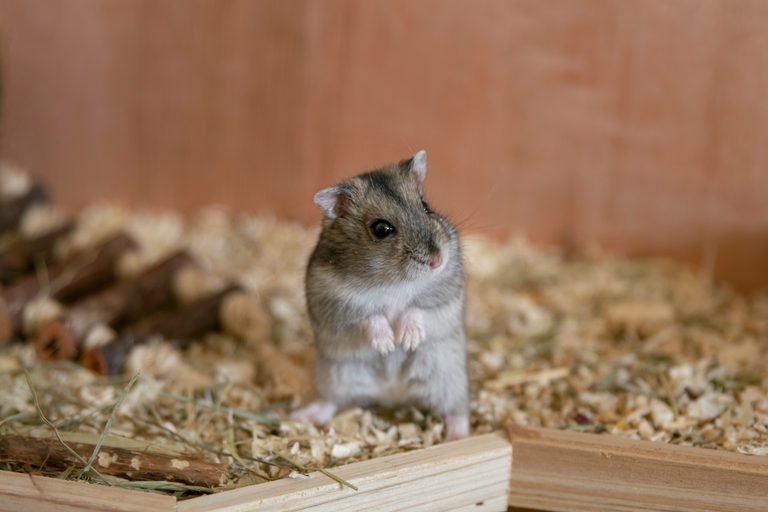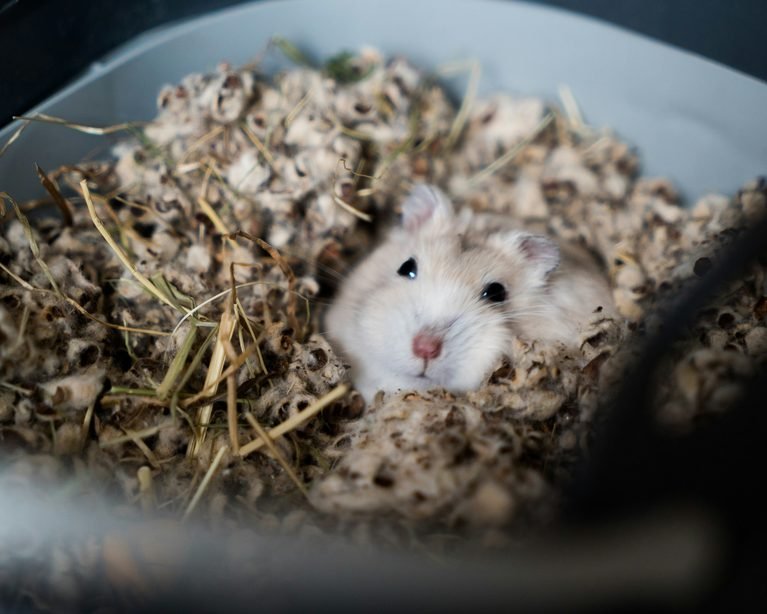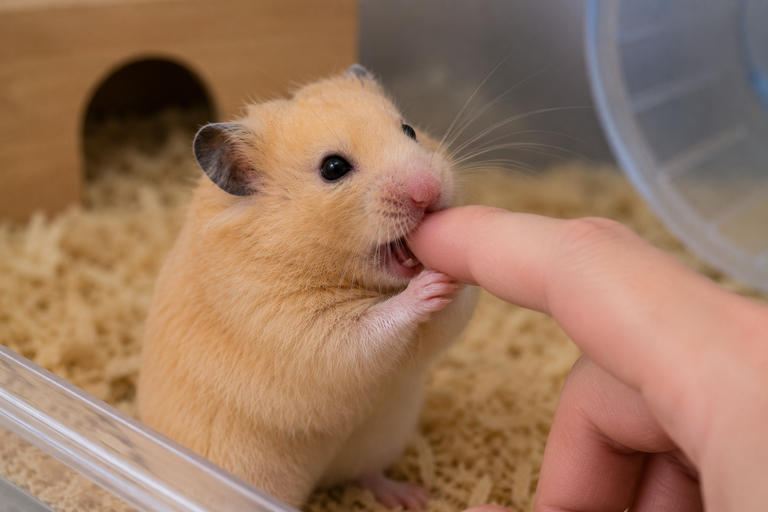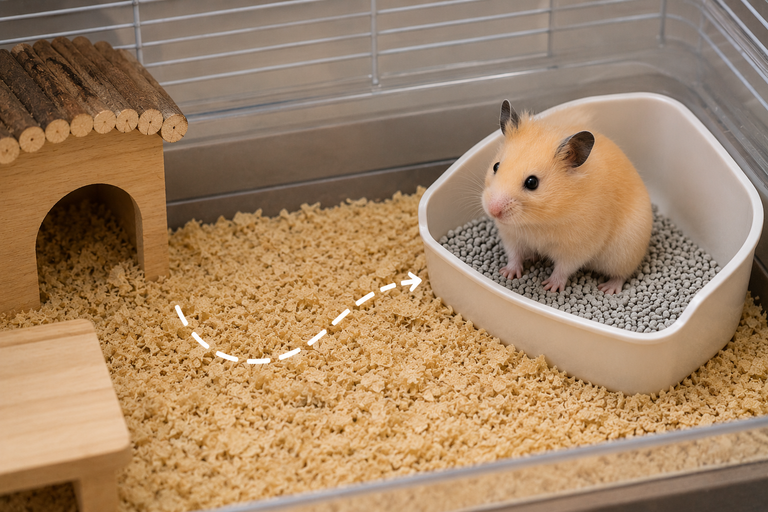
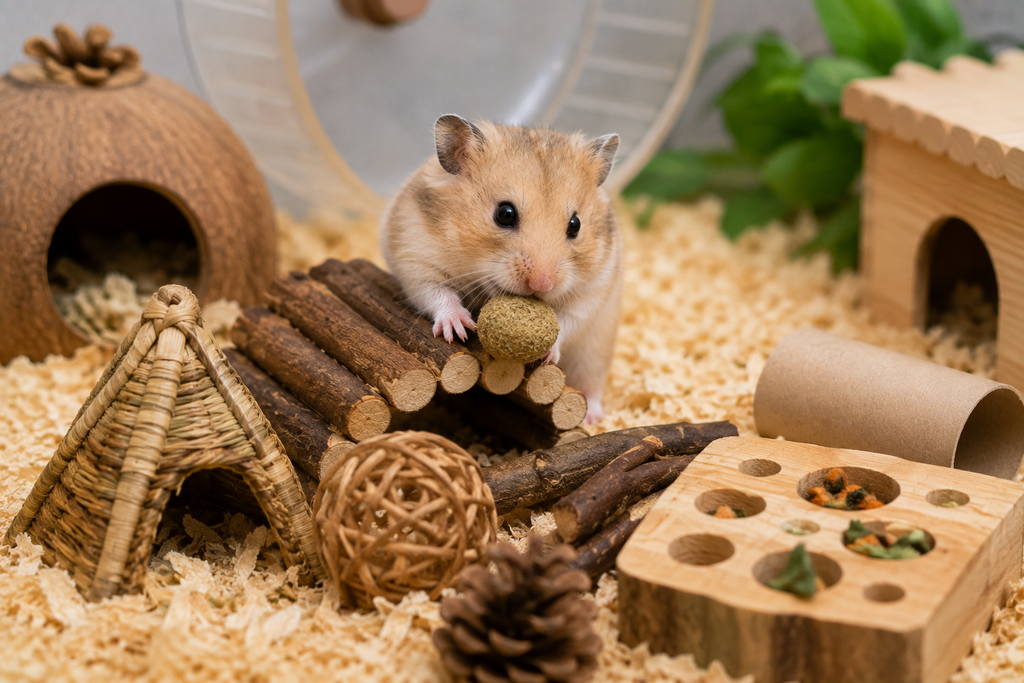
Good hamster enrichment is less about buying toys and more about giving a hamster ways to perform normal behaviors. The strongest foundations are deep bedding for burrowing, an appropriately sized solid wheel, secure hides and tunnels, opportunities to forage, a sand bath, suitable materials to gnaw, and enough usable space to explore.
Not every enrichment item is equally important, and adding more toys cannot compensate for an enclosure that does not allow basic behaviors such as burrowing or running.
Start with the habitat, not the toy aisle
A useful way to think about hamster enrichment is in layers.
The enclosure first needs to support:
- burrowing
- hiding and nesting
- running
- foraging
- digging and exploring
- gnawing
After those basics are covered, dig boxes, cardboard puzzles, playpens, branches, different substrates, and other activities can add variety.
This distinction matters because a colorful toy in a shallow, bare enclosure does not provide the same welfare value as giving the hamster enough bedding to build a real burrow.
Deep bedding is foundational enrichment
Burrowing is one of the best-supported natural behaviors to design a hamster enclosure around.
Current welfare organizations differ slightly on the exact depth they recommend. Blue Cross recommends at least 20 cm of suitable digging bedding. PDSA recommends no less than 25 cm. Woodgreen advises at least 15 cm across most of the enclosure, with a deeper section of about 25 to 30 cm for larger burrows and nests.
There is also direct behavioral research behind the importance of depth.
A study of male Golden Syrian hamsters compared bedding depths of 10, 40, and 80 cm. Hamsters housed with 10 cm showed significantly more wire gnawing than those in deeper bedding, while the hamsters given 40 or 80 cm built and occupied burrows.
That does not prove that every pet hamster of every species needs exactly 40 cm of bedding. The study involved Golden hamsters under controlled conditions.
It does show that bedding depth can meaningfully change hamster behavior, which is much stronger evidence than simply saying hamsters “like to dig.”
Choose a substrate that can hold tunnels rather than collapsing immediately. Paper-based bedding works well, and suitable materials can be combined to improve stability.
Avoid cotton wool and other fluffy nesting products that can separate into strong fibers. RSPCA, Blue Cross, PDSA, and Woodgreen all warn about the risks of entanglement or ingestion.
Give your hamster a properly sized wheel
A wheel is another core part of a good setup.
Research in pet Golden hamsters found that access to a large functioning wheel was associated with less climbing and stereotypic bar mouthing compared with hamsters given a non-functioning wheel.
The more complicated question is wheel size.
Different reputable organizations currently give somewhat different numbers:
| Hamster | Blue Cross guidance |
|---|---|
| Syrian | 27 to 32 cm |
| Campbell’s dwarf | 22 to 25 cm |
| Winter White | 22 to 25 cm |
| Roborovski | 20 to 22 cm |
| Chinese hamster | 25 to 27 cm |
PDSA recommends at least 30 cm for Syrians and 20 cm for dwarf hamsters. Woodgreen uses 30 cm for Syrian and Chinese hamsters and 20 cm for other species.
Rather than arguing over a centimetre, use the posture test.
Your hamster should be able to run with a straight back without having to raise its head.
If its back curves noticeably while running, move up a size.
The wheel should also be upright and have a solid running surface. Avoid mesh, runged, or widely spaced running surfaces where feet can become caught.
A wheel is important, but it should not be the hamster’s only activity. Deep bedding, hiding spaces, foraging, and other forms of exploration still matter.
Add hides, tunnels and covered spaces
Hamsters spend much of their natural lives associated with burrows and protected spaces, so an enclosure should not force them to remain exposed.
Useful options include:
- multi-chamber hides
- cardboard boxes
- wide cardboard tubes
- cork tunnels
- appropriately sized wooden or plastic tunnels
- covered nesting areas
Blue Cross specifically recommends an enclosed hide and notes that multi-chamber houses allow hamsters to sleep farther from the entrance.
Make sure tunnel openings are wide enough for your hamster to move through comfortably, particularly when its cheek pouches are full.
Heavy ceramic hides, sand baths, and other substantial objects should stand on stable platforms or directly on the enclosure base rather than balancing on deep bedding where burrowing could undermine them.
Make your hamster work for some of its food
Scatter feeding is one of the easiest enrichment upgrades.
Instead of putting the entire dry ration into a bowl, scatter some through the enclosure so the hamster has to search for it.
Blue Cross specifically recommends scattering dry food and hiding some beneath bedding to encourage natural foraging. Seed sprays and suitable dried plants can add more opportunities to search and harvest.
You can also place dry food:
- inside cardboard tubes
- in small cardboard boxes
- beneath loose bedding
- around tunnels and hides
- inside simple cardboard puzzles
Use the hamster’s normal food allowance for many of these activities rather than adding extra treats every time you want to create enrichment.
That gives the hamster something to do without quietly increasing the amount it eats.
For feeding more generally, see what hamsters can eat.
Provide a sand bath
A sand bath adds both grooming opportunities and a different substrate for digging and exploring.
Blue Cross recommends including a sand bath in the enclosure and notes that a large sand area is particularly useful for Roborovski hamsters because of their natural habitat.
Woodgreen also includes a sand bath among its standard hamster-enrichment recommendations.
Use hamster-safe sand rather than a very dusty powder.
The original version of this article said that every hamster needs its sand bath permanently available. The care sources support providing one, but I would not turn that into a universal evidence-based 24/7 requirement for every hamster species.
If you keep the bath in the enclosure, maintain it properly. Woodgreen recommends removing wet areas and replacing dirty sand, particularly when the hamster uses the bath as a toilet.
Give hamsters appropriate things to gnaw
Hamster incisors grow continuously, so suitable gnawing opportunities belong in the enclosure.
Useful options supported by hamster-care guidance include:
- suitable untreated wooden chews
- safe branches
- cardboard tubes
- plain cardboard boxes
- gnawing blocks designed for small animals
PDSA specifically recommends untreated branches and gnawing blocks, while RSPCA guidance mentions cardboard tubes and suitable wood blocks.
Do not assume that a particular crunchy food will maintain a hamster’s teeth by itself. Dental disease can still occur even when a hamster has plenty of chew items.
Add a dig box for another texture
Once the main bedding is deep enough, a separate dig box can add another type of digging experience.
Woodgreen specifically suggests coco coir or coco fibre as a dig-box substrate.
This works best as additional enrichment, not as a substitute for deep bedding across the enclosure.
Other substrates need to be assessed individually. Avoid soil or materials containing fertilizers, pesticides, fragrances, or unidentified chemical treatments.
Cheap DIY enrichment works perfectly well
You do not need to continually buy new hamster toys.
Cardboard forage tube
Put some of the hamster’s normal dry food inside a plain cardboard toilet-paper tube and loosely fold the ends.
The hamster can investigate, chew, and open the tube to reach the food.
Cardboard hide
A plain cardboard box with appropriately sized entrances can become a temporary hide, tunnel, or nesting space.
Blue Cross and Woodgreen both recommend cardboard boxes and tubes as simple hamster enrichment.
Scatter-feed challenge
Scatter part of the hamster’s dry ration across different areas and depths of the bedding rather than putting everything in one location.
Start easy. You do not need to bury every piece deep underground.
Coco-fibre dig box
Add a container of appropriate coco fibre for another digging texture.
Make sure the container is stable and easy for the hamster to enter and leave.
Multi-box tunnel
Connect several plain cardboard boxes using wide cardboard tubes. This creates covered routes and chambers without needing an expensive plastic tunnel system.
Avoid tape, staples, sharp edges, or small openings the hamster could become trapped in.
Does handling count as enrichment?
It can provide an interesting experience for some hamsters, but human interaction should not be described as a core social need.
Hamsters are generally solitary animals. Syrian and Chinese hamsters should live alone, and even dwarf species do not require another hamster for companionship.
Individual hamsters also differ greatly in how much handling they enjoy.
Some will voluntarily climb onto their owner’s hands, explore a lap, take food by hand, or enjoy supervised playpen time. Others are much more cautious.
Woodgreen specifically notes that Roborovski hamsters can be difficult to handle because of their speed and small size, and for some individuals it may be better to enjoy watching them rather than repeatedly picking them up.
So interaction is enrichment when the hamster chooses to engage and remains comfortable. It should not be a daily handling quota.
Never wake a hamster specifically for handling or play.
For a gradual approach, see how to bond with a hamster and how to tame a hamster.
What about a playpen?
A secure playpen can provide supervised exploration outside the main enclosure.
Blue Cross and Woodgreen both recommend playpens as an alternative to exercise balls.
Use:
- secure, escape-proof sides
- hides and tunnels
- a familiar-smelling item
- access to water during longer sessions
- close supervision
Only use a playpen when your hamster is already awake.
A nervous hamster may benefit from starting with a smaller, well-covered play area rather than being placed immediately into a huge open space.
Playpen time is optional enrichment. It does not compensate for an inadequate permanent enclosure.
If your hamster ever disappears during out-of-enclosure time, see how to find an escaped hamster.
Why hamster balls are not good enrichment
I would skip exercise balls.
Blue Cross says exercise balls can quickly exhaust a hamster, prevent access to food, water, and hiding places, provide poor ventilation, and leave the hamster unable to choose when to exit.
Woodgreen also advises against them because they can be disorienting, remove access to water, and allow feet or toes to become caught.
A 2024 study surveying Syrian hamster owners also found hamster-ball use was associated with greater owner-reported bar biting, although an observational survey cannot prove that the ball itself caused the behavior.
A secure playpen gives the hamster far more control over movement and exploration.
Does bar biting mean a hamster is bored?
It can be a welfare warning, but it does not give you a diagnosis.
Bar biting, repeated climbing, pacing, or other repetitive behaviors can occur when a hamster’s environment is not meeting its needs, but you should not automatically reduce every case to “boredom.”
One controlled Golden hamster study found substantially more wire gnawing in hamsters kept on 10 cm of bedding compared with deeper conditions.
More recently, an owner survey of Syrian hamsters found shallower substrate, exercise-ball use, and more frequent handling were associated with greater reports of bar biting.
Because that study was observational, those associations do not prove cause and effect.
Still, repeated bar biting is a reason to review the whole setup, including:
- enclosure size
- bedding depth
- wheel
- hiding opportunities
- opportunities to forage
- handling
- out-of-cage routine
- environmental disturbance
Simply buying another chew toy may not solve the underlying problem.
Should you rotate enrichment every week?
There is no evidence-based rule requiring you to rearrange the enclosure every one or two weeks.
In fact, familiar scent matters to hamsters. Blue Cross and RSPCA both recommend preserving some clean used bedding during cage cleaning because familiar smells help the hamster feel secure.
Novelty can still be useful, but you do not need to demolish the hamster’s whole environment to provide it.
A better approach is to:
- keep important hides and resources predictable
- preserve clean familiar bedding
- add or swap one item at a time
- change a foraging challenge
- occasionally introduce a different safe texture or cardboard item
This provides something new without making the hamster rebuild its entire world every week.
What if my hamster ignores enrichment?
That is normal.
A hamster does not need to use every object you provide. Different individuals prefer different activities, and some may use an item mainly when you are asleep.
Pay attention to what your hamster actually does.
A hamster that spends hours burrowing may get more from another deep-bedding section than from a new plastic toy. A Roborovski that repeatedly digs in its sand bath may benefit from a larger sand area. A hamster that loves shredding cardboard does not need an expensive chew toy to make that behavior more “valuable.”
Good enrichment is about enabling behavior, not maximizing the number of objects in the enclosure.
A practical enrichment checklist
A well-designed hamster enclosure should ideally give the animal opportunities to:
- burrow deeply
- run with a straight posture on a suitable wheel
- sleep and hide in protected spaces
- search for food
- dig in different suitable substrates
- use a sand bath
- gnaw appropriate materials
- investigate tunnels and covered routes
- explore safely without being forced into an activity
Optional supervised playpen time and calm human interaction can add variety for hamsters that enjoy them.
The goal is not to keep changing the cage until it looks entertaining to a human. It is to build an environment in which the hamster can repeatedly choose behaviors that matter to a hamster.
Hamster Corner provides general educational information about hamster care. If you notice persistent abnormal behavior, injury, reduced appetite, or another health concern, contact a hamster-experienced veterinarian.