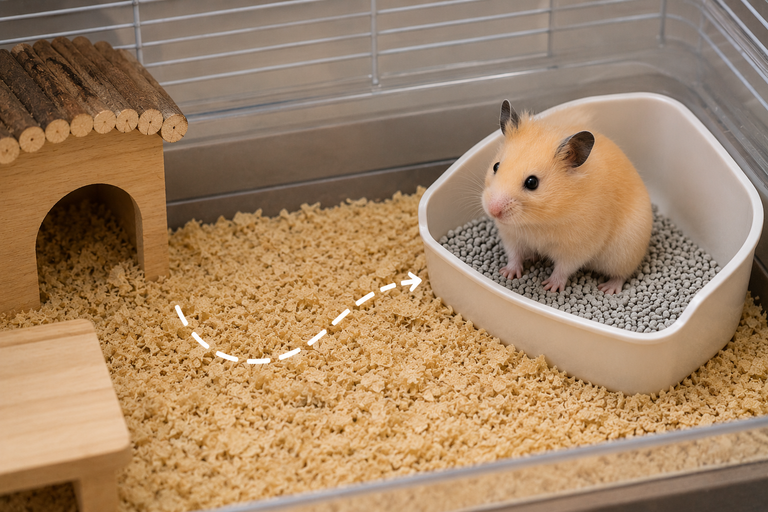

The safest way to pick up a hamster is to wait until they are fully awake, let them become aware of your hands, then gently scoop them with two cupped hands. Keep your hands low over the enclosure, your lap or another safe surface so the hamster cannot fall far if they suddenly move.
Avoid surprising a sleeping hamster or suddenly reaching down over them. Hamsters can bite when frightened, startled or poorly accustomed to handling, but there is no single pickup technique that guarantees a bite will never happen.
Why hamsters bite when you try to pick them up
Fear and surprise are more useful explanations than assuming a hamster is being aggressive.
Blue Cross notes that hamsters may bite if they are disturbed during the day and become alarmed. PetMD similarly says hamsters may nip when frightened, startled, poorly socialized, roughly handled or unwell.
That gives us several common situations to avoid:
- waking a hamster and immediately trying to lift them
- moving a hand toward them before they realize you are there
- grabbing or squeezing
- trying to force handling when the hamster is frightened
- attempting too much handling before a new hamster has settled in
Woodgreen also notes that Syrian hamsters in particular can feel threatened by a hand suddenly hovering above them while they are resting.
That supports avoiding a sudden overhead grab. It does not, however, establish that an overhead hand is the single most common cause of hamster bites.
How to pick up a hamster safely
1. Wait until your hamster is awake
This is one of the most consistent recommendations across reputable hamster-care sources.
The RSPCA says hamsters should not normally be handled while resting or sleeping because they can find it stressful. PDSA and Blue Cross similarly recommend handling them when they are awake and active.
Do not wake a sleeping hamster just because you want to play with them.
If they have started waking naturally, give them time to become alert and aware of what is happening around them before attempting a pickup.
There is no need for an exact rule such as waiting 15 or 20 minutes.
2. Let your hamster know you are there
Hamsters do not have particularly strong eyesight, so avoid suddenly placing your hands around an animal that has not noticed you.
Woodgreen suggests quietly talking to the hamster so they are aware of your presence. RSPCA recommends allowing hamsters to investigate your hands in their own time.
For a hamster still learning to trust you, simply placing a hand in the enclosure without immediately trying to grab them can be part of the process.
You do not need to interpret one sniff as a formal “green light.” Watch the hamster’s overall response and avoid forcing the interaction if they retreat or appear frightened.
3. Cup your hands around the hamster
The two-handed cupping method has strong support.
PDSA recommends forming a cup with both hands on either side of the hamster’s body, then securely scooping them into both palms.
RSPCA similarly recommends cupping the hamster with both hands before gently opening them so the hamster is sitting across the joined palms.
The goal is support, not restraint.
Do not squeeze the hamster tightly or grab them by the tail.
4. Keep the hamster close to a safe surface
Hamsters are small, quick and fragile.
Blue Cross and PDSA recommend holding them close to a surface, such as your lap or the floor, so a sudden jump does not become a long fall.
When you are first practicing handling, sitting on the floor is a sensible option.
Woodgreen specifically recommends allowing a newly handled hamster to walk across your hands or lap during the first stages of socialization.
5. Keep the first sessions easy
Handling does not have to begin with carrying your hamster around the room.
Let the hamster walk across your hands. Offer opportunities to climb on and off rather than repeatedly lifting them.
If the hamster becomes increasingly frightened or repeatedly tries to get away, calmly return them to a secure surface rather than turning the interaction into a struggle.
Woodgreen recommends returning a hamster while they are still relaxed rather than repeatedly pushing handling until they become irritable.
What if my hamster will not let me pick them up?
Do not chase them around the enclosure with your hands.
Blue Cross recommends allowing a nervous hamster to become familiar with your hand first. Treats can also help build a positive association with your presence.
Our guide to bonding with your hamster covers that process in more detail.
There is also another option that is often overlooked: use a tunnel or small container.
Woodgreen recommends placing a short tunnel in front of a hamster and allowing them to walk inside before carefully moving them. Blue Cross gives similar advice for hamsters worried about hands, and PetMD notes that a container can be useful for hamsters that are not accustomed to handling.
This can be particularly useful when you need to transfer a nervous or very fast hamster safely.
Should you always approach from the side?
Avoiding a sudden hand descending directly onto a hamster is sensible, particularly when the hamster is resting.
Woodgreen specifically notes that Syrian hamsters may feel threatened when a hand suddenly hovers above them.
But I would not turn that into a rigid rule that your hand must remain exactly at cage-floor level or that any movement from above automatically activates a predator reflex.
The more important principles are:
- make sure the hamster knows you are there
- move calmly
- avoid grabbing
- let them investigate your hands
- scoop and support rather than snatching
That is better supported than prescribing one exact approach angle.
What to do if your hamster bites you
First, avoid turning one bite into a second accident.
If you are holding the hamster, bring your hands back down to the enclosure, your lap or another secure surface before allowing them to move away. Do not intentionally drop or throw the hamster.
Do not punish them. A bite can occur because the animal was frightened, startled, restrained or not yet comfortable with handling.
If the bite breaks your skin, the CDC recommends washing a small-mammal bite immediately with warm soapy water.
Seek medical attention if the wound is serious or develops signs of infection such as increasing redness, warmth, swelling or pain. CDC also advises considering medical advice based on your tetanus vaccination status.
Afterward, reassess the circumstances surrounding the bite. If your hamster regularly bites despite calm handling, or has suddenly started biting when that is unusual for them, consider whether pain or illness could be contributing and speak with a hamster-experienced veterinarian if needed.
Are Syrian hamsters easier to pick up than dwarf hamsters?
There are some practical species differences, but a strict difficulty ranking is too simplistic.
Woodgreen notes that Syrian hamsters are the largest commonly kept species and can be easier to handle because of their size.
Roborovski hamsters sit at the opposite end of the practical spectrum. They are extremely small and fast, and Woodgreen says they can be difficult to pick up and are not especially suitable for regular handling.
Winter White, Campbell’s and Chinese hamsters can also become hand-tame.
Individual temperament, previous handling and confidence still matter, so species alone cannot tell you whether a particular hamster will enjoy being held.
For a very fast hamster, a tunnel or container transfer may be safer than repeatedly trying to catch them with your hands.
Can you pick a hamster up by the scruff?
Scruff restraint exists, but I would not use it as the normal way to pick up a pet hamster.
PetMD notes that a gentle, firm scruff hold can sometimes be used for very brief restraint. That is different from routine handling intended to make a hamster comfortable around people.
For normal owner handling, reputable welfare sources consistently recommend cupping and supporting the hamster instead.
If restraint is needed for an examination or medical procedure, let a hamster-experienced veterinarian demonstrate or perform the appropriate technique.
What if my hamster squeaks when being picked up?
Do not assume every squeak has one universal meaning, but pay attention to the whole interaction.
If your hamster vocalizes while also struggling, trying to escape or otherwise appearing frightened, lower them to a safe surface and do not force the handling session.
PDSA’s broader advice is straightforward: if a hamster seems frightened during handling, return them to their enclosure and continue building positive interactions at their pace.
You do not gain anything by proving that you can keep holding a hamster that is trying to get away.
How long does it take for a hamster to tolerate handling?
There is no universal taming deadline.
Woodgreen suggests that with a calm and patient approach many hamsters become comfortable with being picked up over the following weeks, but individual hamsters differ.
A newly arrived hamster should also be allowed time to settle before you begin regular handling.
Progress matters more than a calendar:
- The hamster remains comfortable while your hand is nearby.
- They investigate your hand voluntarily.
- They walk across your hands.
- You briefly scoop and place them back down.
- Handling gradually becomes easier.
Some hamsters may enjoy this interaction more than others. Roborovskis in particular may be better suited to exploration and observation than long handling sessions.
The bottom line
To pick up a hamster safely, wait until they are awake and alert, let them become aware of your hands, then scoop and support them with two cupped hands. Keep them low over a safe surface.
Avoid suddenly grabbing a sleeping hamster or forcing interaction with one that is frightened.
A hand hovering above a resting hamster can feel threatening, particularly to Syrians, but there is not good evidence that an “overhead predator response” is the single main cause of hamster bites.
If hand pickup is not working, a tunnel or small container is a legitimate safer transfer method. The goal is not to make the hamster submit to being held. It is to make necessary handling calm, predictable and as low-stress as possible.
Keep reading: How to bond with your hamster | What can hamsters eat?
Hamster Corner provides general educational information about hamster care. It is not a substitute for professional veterinary advice. If handling suddenly becomes painful or unusually difficult for your hamster, or their behavior changes significantly, contact a hamster-experienced veterinarian.