
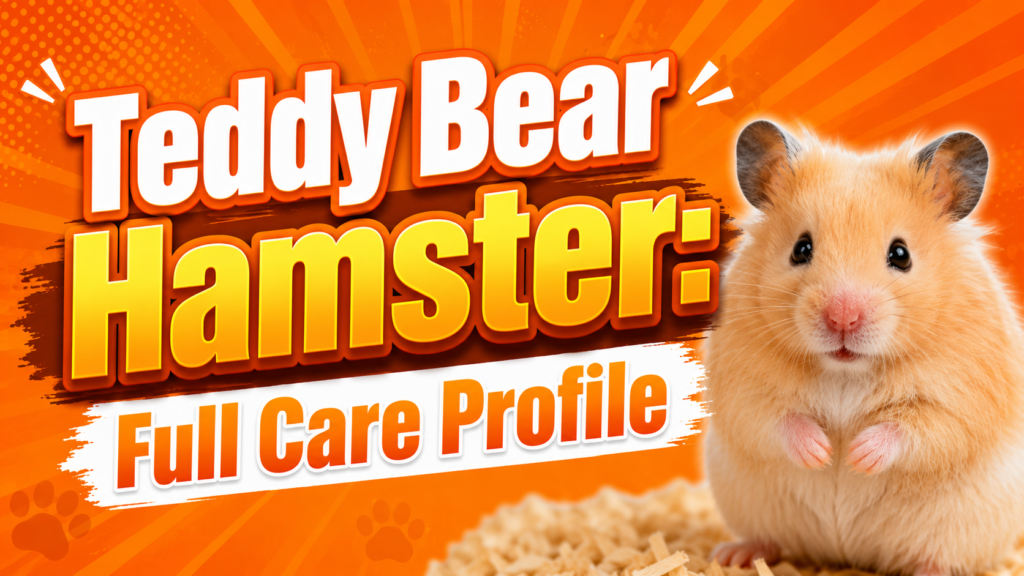
The name “teddy bear hamster” is a pet-store label for the long-haired coat variety of the Syrian hamster. You may also see short-haired Syrians sold as “golden hamsters” or dark ones sold as “black bear hamsters,” but all are the same species. If you are considering one, this profile covers everything you need to know before buying.
Teddy bear hamster at a glance
| Trait | Detail |
|---|---|
| Species | Syrian hamster (Mesocricetus auratus) |
| Size | 5 to 7 inches long |
| Weight | 3.5 to 7 oz |
| Lifespan | 2 to 3 years |
| Temperament | Friendly, handleable, docile once tamed |
| Housing | Strictly alone (one per enclosure) |
| Coat type | Long, dense, soft; can be any Syrian color |
What is a teddy bear hamster?

A teddy bear hamster is a Syrian hamster that carries the long-hair gene. No separate breed exists. The plush, stuffed-animal appearance comes entirely from coat length, not from any biological difference in species. You will find them under many marketing names, including “fancy hamster,” “panda bear hamster,” and “black bear hamster,” all of which refer to coat color or length, not different animals. See our guide to hamster species for full species context.
Appearance
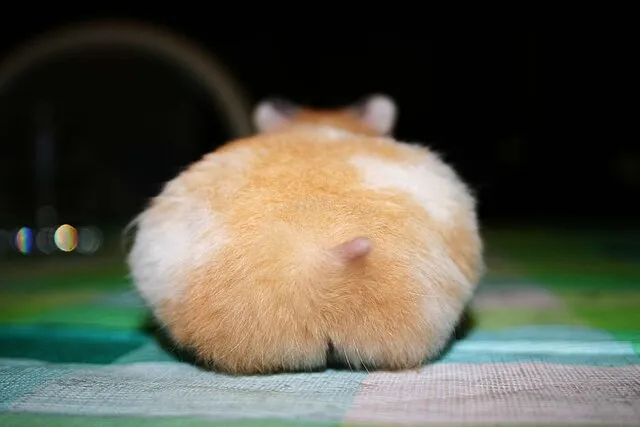
Teddy bear Syrians have a noticeably longer, softer coat than standard short-haired Syrians. Adult males often develop a longer, skirt-like fur around the hindquarters. They come in every Syrian color: golden, cream, cinnamon, black, banded, and roan, among others. Coat length varies by individual genetics from a gentle wave to a full dense fluff. The body shape and size are identical to any other Syrian, wide-set and chunky.
Temperament and handling
Teddy bear hamsters have the same calm, handleable temperament as all Syrians. They are the most tolerant pet hamster species for picking up, and they become genuinely docile with regular, gentle handling. They are nocturnal, so plan your interactions for the evening when the hamster is naturally awake. Never wake a sleeping hamster. For a step-by-step taming plan, see our guide on how to tame a hamster.
Housing: always alone
This is non-negotiable. Syrians are territorial and will fight, sometimes fatally, if housed together. A single teddy bear hamster needs its own enclosure with at least 40 by 20 inches (100 by 50 cm) of continuous floor space, bedding 8 to 10 inches deep for burrowing, a solid-surface wheel at least 11 inches (28 cm) across, and at least one hide. A barless glass tank or large bin cage is better than a barred cage for maintaining bedding depth and humidity. See our hamster cage setup guide for full details.
Grooming the long coat
Unlike short-haired Syrians, teddy bear hamsters benefit from a couple of gentle coat checks a week. Look for mats or soiling, especially around the rear. A small soft-bristle toothbrush can work out mild tangles. Never wash a hamster in water. If the area around the bottom becomes soiled with bedding, spot-clean very gently with a barely damp cloth and dry immediately. Provide a small shallow dish of dry chinchilla sand several times a week so the hamster can sand-bathe and naturally maintain its coat.
Diet
Feed the same diet as any Syrian: a quality seed-and-grain or pelleted staple mix, small amounts of safe vegetables, occasional fruit, and a little protein such as plain cooked egg. Syrians are less prone to diabetes than dwarf species but still benefit from a varied, low-sugar diet. See what hamsters can eat for a full breakdown.
Health and lifespan
With good care, a teddy bear hamster lives 2 to 3 years. Common health issues are identical to all Syrians: wet tail in juveniles, respiratory infections, dental problems, and skin conditions. The long coat can sometimes hide early skin problems or weight changes, so run your fingers gently through the fur during weekly checks. See signs of a sick hamster for what to watch for.
Legal note
Syrian hamsters, including long-haired teddy bear varieties, are legal in most US states and do not need a permit in California. All hamsters are banned in Hawaii. Check your local and state laws before getting one.
Frequently asked questions
Is a teddy bear hamster a different species from a Syrian?
No. Teddy bear is a trade name for the long-haired coat variety of the Syrian hamster. The species, care, and temperament are unchanged.
Do teddy bear hamsters need extra grooming?
A little. Check the coat twice a week for mats and provide regular sand-bath access. Otherwise care is the same as a short-haired Syrian.
Can two teddy bear hamsters live together?
No. Syrians are strictly solitary and will fight regardless of coat length or color. Always keep one per enclosure.
How big does a teddy bear hamster get?
The same as any Syrian: 5 to 7 inches long. The fluffy coat makes them look larger than they are.
The bottom line
A teddy bear hamster is a long-haired Syrian, which means it brings the same friendly, handleable personality and the same care requirements as the standard Syrian. The only difference is the plush coat, which needs a couple of extra checks each week. House it alone in a large enclosure with deep bedding and a solid wheel, and you have one of the best beginner hamsters available. For more options, see types of hamsters and best hamster for beginners.
This article is for informational purposes only and is not a substitute for veterinary advice. Always consult a qualified exotic vet for health concerns. Check your local and state laws before getting any pet hamster. All hamsters are banned in Hawaii.