
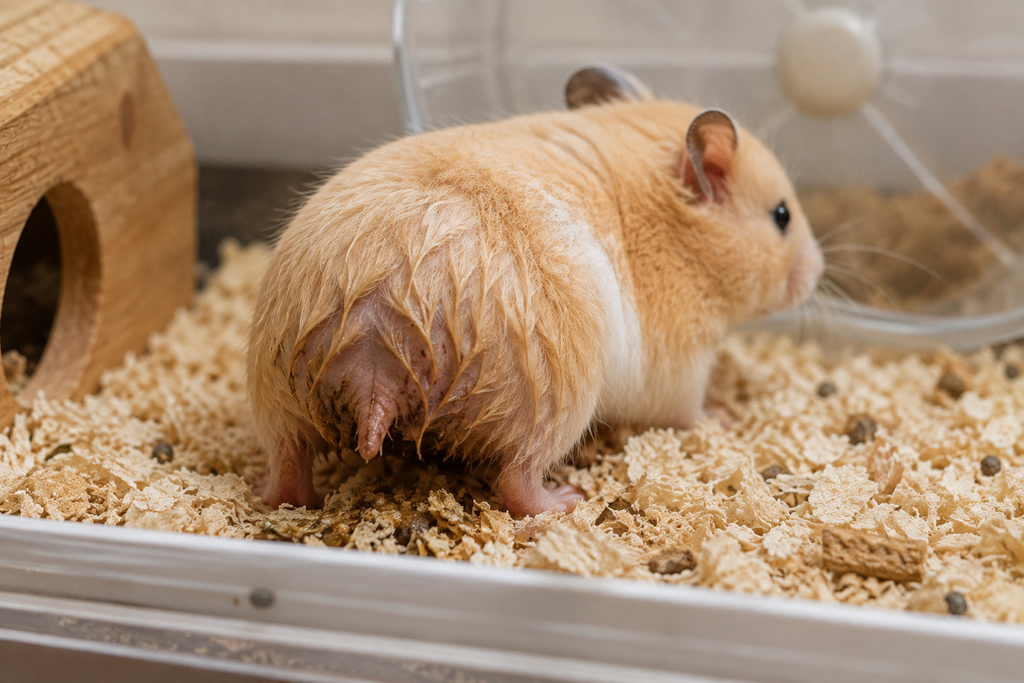
Wet tail usually refers to diarrhea that leaves the fur around a hamster’s rear wet or soiled. In young hamsters, especially Syrian hamsters around 3 to 10 weeks old, one important cause is proliferative ileitis associated with the bacterium Lawsonia intracellularis. But not every case of diarrhea is the same disease. Because hamsters can become dehydrated and seriously ill quickly, watery diarrhea or a persistently wet rear deserves prompt veterinary attention rather than home treatment.
The distinction matters because “wet tail” describes what you can see, while a veterinarian still needs to determine what is causing the diarrhea.
What is wet tail?
The term wet tail is commonly used for diarrhea in hamsters because liquid stool soils and mats the fur around the tail, belly and hindquarters.
Merck Veterinary Manual notes that diarrhea can occur in Syrian hamsters of any age and is often called wet tail.
In young Syrian hamsters, however, one particularly important disease is proliferative ileitis, caused by Lawsonia intracellularis. Merck describes it as the most consequential intestinal disease affecting Syrian hamsters around 3 to 10 weeks old.
That means these two statements are not identical:
My hamster has wet tail.
and
My hamster has proliferative ileitis caused by Lawsonia intracellularis.
The first describes diarrhea. The second is a specific veterinary diagnosis.
What are the signs of wet tail?
Common warning signs include:
- Soft or watery diarrhea
- Wet or matted fur around the tail or belly
- Reduced appetite
- Lethargy or unusual inactivity
- Weight loss
- Hunched posture
- Rough or unkempt coat
- Abdominal discomfort or bloating
PetMD also notes that sick hamsters may spend more time hiding because they feel unwell.
A wet rear by itself does not tell you exactly which disease your hamster has. Urinary problems and other conditions may also soil the hindquarters.
But watery diarrhea plus lethargy, reduced appetite or a visibly unwell hamster should be treated seriously.
For other warning signs, see signs of a sick hamster.
What causes wet tail?
There is no single cause of every case of hamster diarrhea.
Possible causes described in veterinary guidance include:
- Lawsonia intracellularis, which causes proliferative ileitis
- Clostridioides difficile enterotoxemia
- Clostridium piliforme, associated with Tyzzer disease
- Protozoal infections
- Intestinal parasites
- Certain medications
- Sudden dietary changes or inappropriate feeding
- Environmental stress and overcrowding
This is why diagnosing wet tail from appearance alone is difficult.
Proliferative ileitis
Lawsonia intracellularis is especially important in young Syrian hamsters.
Merck describes proliferative ileitis as a stress-related disease, with factors such as transportation, overcrowding, surgery, illness and dietary change associated with increased risk.
Stress therefore matters, but it should not be described as the direct cause by itself. The bacterial infection causes proliferative ileitis.
Other infections
Not every hamster with severe diarrhea has Lawsonia.
Merck notes that Tyzzer disease can cause signs similar to proliferative ileitis, including watery diarrhea, dehydration and loss of appetite.
Adult Syrian hamsters can also develop diarrhea associated with Clostridioides difficile, including after exposure to certain antibiotics.
If your hamster has recently received medication, tell the veterinarian exactly what it was.
Which hamsters are most at risk?
Young hamsters deserve particular attention.
Merck describes proliferative ileitis as especially important in 3 to 10-week-old Syrian hamsters, while PetMD similarly identifies younger hamsters in this age range as being at higher risk of wet-tail-type illness.
But diarrhea can occur outside this group.
An adult hamster with watery diarrhea should not be considered safe simply because it is “too old for wet tail.” Other gastrointestinal diseases can produce similar signs and may also be serious.
Is every case of hamster diarrhea wet tail?
The terminology is messy.
Some veterinary sources use wet tail broadly as another term for diarrhea. Others use it more specifically when discussing severe infectious diarrhea in young hamsters.
For an owner, the safest approach is not to diagnose the label at home.
Ask instead:
- Is the stool watery?
- Is the rear becoming wet or soiled?
- Is the hamster eating normally?
- Is it active or unusually lethargic?
- Is there weight loss or a hunched posture?
- Is the condition getting worse?
If diarrhea is watery or your hamster appears systemically unwell, contact a hamster-experienced vet promptly.
Can vegetables cause wet tail?
Do not assume that every episode of diarrhea came from “too many watery vegetables.”
PetMD includes dietary disruption among possible non-infectious contributors to diarrhea, including abrupt food changes and excessive extras.
But that is different from saying cucumber, lettuce or another high-water food directly causes classic proliferative ileitis.
Likewise, removing fresh food and waiting to see whether diarrhea disappears is not a reliable way to distinguish a minor dietary problem from an infection.
A hamster with significant watery diarrhea or other signs of illness needs veterinary assessment.
What should you do if you suspect wet tail?
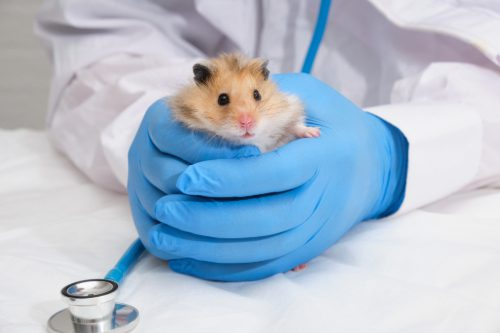
Contact a hamster-experienced or exotic-animal veterinarian promptly.
VCA Animal Hospitals states that any hamster with diarrhea should be seen by a veterinarian as soon as possible.
While arranging care:
- Keep fresh water accessible.
- Keep the hamster in a calm environment.
- Minimize unnecessary handling.
- Continue the normal diet unless your veterinarian tells you otherwise.
- Note changes in appetite, activity and stool.
- Tell the vet about recent diet changes, medication, transport or other stressors.
If possible, ask your clinic whether bringing a fresh stool sample would be useful.
Do not deliberately wait for 24 or 48 hours if your hamster is already lethargic, refusing food or producing profuse watery diarrhea.
What should you not do at home?
Do not try to treat suspected wet tail with leftover medication or human diarrhea remedies.
Avoid:
- Human anti-diarrheal medication
- Leftover antibiotics
- Antibiotics prescribed for another animal
- Force-feeding fluids without veterinary instruction
- Fasting the hamster
- Waiting several days to see what happens
Antibiotic choice matters particularly in hamsters because certain antibiotics themselves can disrupt intestinal bacteria and cause serious gastrointestinal disease.
Veterinary treatment needs to address the actual cause rather than simply stopping visible diarrhea.
How do vets diagnose wet tail?
A vet may start with the hamster’s age, history, symptoms and physical examination.
Depending on the case, PetMD notes that further testing may include:
- Examination of a stool sample
- Fecal flotation or cytology
- PCR or antigen testing
- Bacterial culture
- X-rays
Not every hamster will need every test.
The goal is to distinguish among possible infectious, parasitic, dietary and other gastrointestinal causes and assess how dehydrated or unwell the hamster has become.
How is wet tail treated?
Treatment depends on the cause and severity.
For proliferative ileitis, Merck Veterinary Manual describes treatment that addresses both the infection and the consequences of severe diarrhea.
Veterinary treatment may involve:
- Fluid and electrolyte replacement
- Appropriate antimicrobials when indicated
- Nutritional support
- Supportive care
- Monitoring for complications
PetMD notes that some severely affected hamsters may need hospitalization.
Do not try to reproduce veterinary fluid or antibiotic treatment at home from an online dosage. Hamsters are small, and both the drug choice and dose matter.
Will a hamster recover from wet tail?
Recovery is possible, especially when veterinary treatment begins early, but prognosis should not be presented as guaranteed.
PetMD reports that many hamsters can recover with early treatment, while Merck describes proliferative ileitis as a disease with high mortality.
Both points can be true. Severity varies, and the exact underlying cause matters.
This is why early veterinary care improves the hamster’s options without allowing anyone to promise an outcome.
I would also avoid claiming that improvement must occur within exactly two or three days. PetMD notes that improvement is often seen in that period, but individual recovery can take longer.
Is wet tail contagious?
Some causes of diarrhea can spread between hamsters.
Merck recommends keeping sick hamsters separate from healthy hamsters when infectious gastrointestinal disease is suspected and cleaning contaminated housing and equipment appropriately.
If you have more than one hamster:
- Do not share dirty equipment between enclosures.
- Wash your hands after handling a sick animal or contaminated bedding.
- Ask your vet whether the suspected cause requires additional infection-control measures.
Do not assume every case of diarrhea has the same contagiousness.
PetMD also notes that some organisms capable of causing diarrhea in hamsters can be zoonotic, meaning they may infect humans. If your veterinarian identifies an infectious organism, follow their hygiene instructions, particularly if anyone in the household is medically vulnerable.
Can wet tail be prevented?
There is no way to guarantee that a hamster will never develop diarrhea or proliferative ileitis.
Good husbandry can reduce avoidable risk.
Reduce unnecessary stress
Merck associates proliferative ileitis with stressors including transport, overcrowding, surgery, illness and changes in diet.
When bringing home a new hamster, allow it time to settle and avoid immediately subjecting it to repeated handling.
See how to tame a hamster for a gradual approach.
Keep food and water clean
Provide fresh water and an appropriate complete diet.
Remove spoiled fresh food and keep feeding equipment hygienic.
Avoid abrupt diet changes
Make changes gradually where possible rather than suddenly replacing the entire diet.
For general feeding guidance, see what hamsters can eat.
Maintain appropriate housing
Good housing, enough space and appropriate hygiene all matter for overall welfare.
Do not try to prevent wet tail by repeatedly stripping and disinfecting the entire enclosure more often than necessary. Major environmental disruption can itself be stressful.
Frequently asked questions
Can a hamster survive wet tail?
Yes, recovery is possible, particularly with early veterinary care, but severe proliferative ileitis can have a high mortality rate. Do not delay treatment because someone online says most hamsters recover.
Is wet tail always caused by Lawsonia intracellularis?
No. Lawsonia intracellularis causes proliferative ileitis and is particularly important in young Syrian hamsters, but hamster diarrhea can have other bacterial, parasitic and non-infectious causes.
Is all diarrhea in a hamster an emergency?
Any significant watery diarrhea deserves prompt veterinary attention because hamsters can lose fluid and become weak quickly. A veterinarian can determine whether the cause is proliferative ileitis or another gastrointestinal problem.
How quickly does wet tail become serious?
It can progress rapidly, particularly in young hamsters with proliferative ileitis. I would not rely on a universal 24 or 48-hour countdown. If diarrhea is watery or your hamster is lethargic, hunched or eating less, contact a vet promptly.
The bottom line
Wet tail describes diarrhea and a wet, soiled rear, but it is not one single diagnosis.
In young Syrian hamsters around 3 to 10 weeks old, proliferative ileitis caused by Lawsonia intracellularis is an especially serious possibility. Other infections, parasites, medications and gastrointestinal problems can also cause diarrhea.
The practical response is the same: do not diagnose or medicate severe diarrhea at home. Make sure water is accessible, minimize stress and contact a hamster-experienced veterinarian promptly.
Early care matters because dehydration and serious intestinal disease can progress quickly in a small animal.
For a broader overview of warning signs, see signs of a sick hamster.
[…] our guide to hamster wet tail for more […]
[…] our complete guide to hamster wet tail for more […]
[…] diarrhea, reduced appetite, lethargy or a wet, soiled rear, veterinary attention is important. See hamster wet tail for more […]
[…] For a closer look at the condition, see our hamster wet tail guide. […]
[…] For more detail, see hamster wet tail. […]