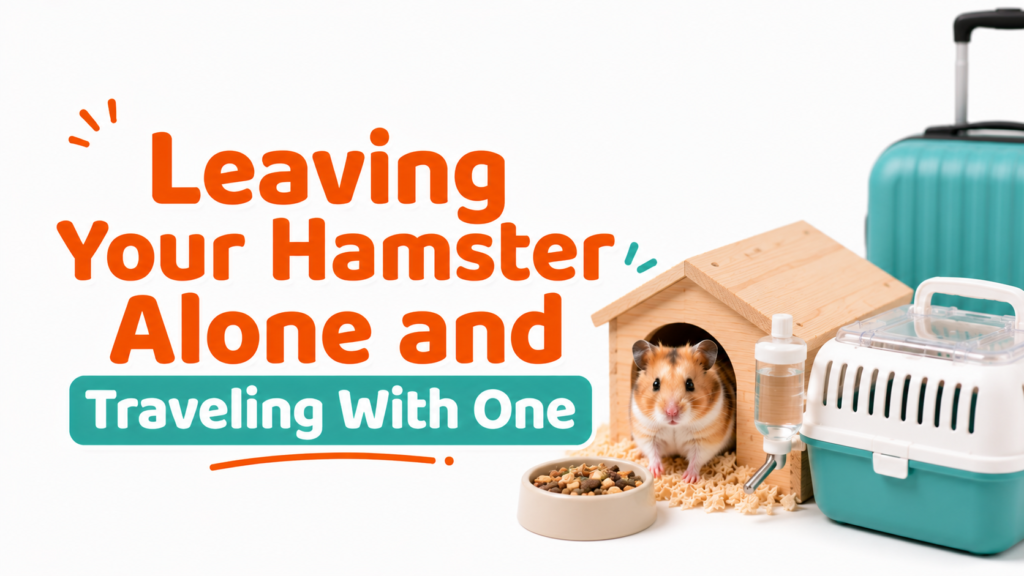
A healthy adult hamster can be left alone safely for about 1 to 2 days with plenty of food and a full water bottle. For anything longer, arrange a pet sitter to check daily. Avoid taking a hamster on trips unless necessary, since travel is stressful, and never leave a hamster in a hot or cold car.
Hamsters are fairly independent, but they still rely on you for food, water, and a safe temperature. Knowing how long you can leave yours, and how to handle travel or vacations, keeps your pet safe when life takes you away from home. Here is what to plan for.
How long can you leave a hamster alone?
A healthy adult hamster can usually be left for about 1 to 2 days on its own, provided it has enough food and water and the room stays at a safe temperature. Hamsters naturally hoard food, so a good supply in the bowl plus scattered around lasts well. Beyond a couple of days, though, you should not leave a hamster unattended, because the water bottle could fail, the room temperature could drift, or a health problem could go unnoticed.
| Time away | What to do |
|---|---|
| Up to 1 to 2 days | Leave extra food and a full, checked water bottle |
| 3 days or more | Arrange a sitter to check in daily |
| A week or more | Daily sitter visits, ideally someone who knows hamsters |
Before you go: a quick checklist
- Fill the food bowl generously and scatter some extra in the bedding for foraging.
- Check the water bottle works and is full. If possible, add a second bottle as a backup in case one clogs or leaks.
- Set the room to a steady 65 to 75°F. Make sure heating or cooling will hold while you are away. See our temperature guide.
- Spot-clean before leaving so the enclosure stays fresh.
- Remove perishable fresh food that would spoil, leaving dry staple food.
Using a pet sitter
For trips of three days or more, a sitter is the safe choice. Ideally choose someone who has met your hamster or is comfortable with small pets. Leave clear written instructions: how much to feed, how to refill water, the safe temperature range, what a healthy hamster looks like, and the warning signs to watch for, along with an exotic vet’s contact details. A daily visit to top up food and water and glance at your hamster is usually all that is needed.
Better to leave them home: in most cases, a hamster is happier and safer staying in its own familiar enclosure with a sitter than being transported to a new place. Keep travel for genuine necessity.
Traveling with a hamster
Sometimes you do need to move a hamster, such as a house move or a vet trip. Keep it low-stress and safe:
- Use a secure, ventilated carrier with some familiar bedding inside so it smells like home.
- Add a piece of cucumber or a water-rich vegetable for short trips, since water bottles leak in transit. Offer water properly at stops.
- Keep the carrier out of direct sun and never leave it in a parked car, which can become dangerously hot or cold within minutes.
- Drive smoothly and keep noise low. Cover part of the carrier to provide a calm, den-like feel.
- Settle them back quickly into their normal enclosure at the destination, and give them quiet time to recover.
Food and water while you are away
The two things that must not fail are food and water. For food, hamsters self-regulate well on dry staple food, so a generously filled bowl plus some scattered in the bedding is ideal, and because they hoard, they will not overeat and run out the way some pets do. Water is the bigger risk, since a single bottle can clog, leak, or run dry. The simplest safeguard for a short absence is a second water bottle on the enclosure, so if one fails the other keeps your hamster hydrated. Avoid relying on water bowls, which get filled with bedding and tip over.
What about automatic feeders?
Automatic feeders designed for cats and dogs are generally unnecessary and unsuitable for hamsters, which store their own food and eat little at a time. A well-stocked bowl does the job better and with nothing to malfunction. Your effort is far better spent making sure the water supply is reliable and the room temperature will stay steady. For anything beyond a day or two, a person checking in remains the safest option, since no gadget can spot a health problem or a failed water bottle.
Frequently asked questions
Can I leave my hamster alone for a weekend?
A single overnight or one full day is usually fine with extra food and full water. For a longer weekend of two to three days, it is safer to have someone check in daily.
Can hamsters travel long distances?
They can when necessary, but travel is stressful for them. Keep journeys short where possible, use a secure ventilated carrier, and never leave them in a parked car.
Should I take my hamster on vacation?
Usually no. A hamster is happier staying home in its familiar enclosure with a sitter than being moved to a new environment.
Can a hamster run out of water in a day?
A full, working bottle holds plenty for a day, but bottles can clog or leak, which is the real risk. Fitting a second bottle as a backup is the simplest way to make sure your hamster never goes without.
The bottom line
Leave a healthy hamster alone for no more than 1 to 2 days with extra food and full water, and arrange a daily sitter for anything longer. Keep the room temperature steady while you are away, and reserve travel for real necessity, always in a secure carrier and never in a parked car. For the home setup itself, see our cage setup guide.
Keep reading: Cage Setup Guide, Temperature Guide, What Can Hamsters Eat?
Note: every hamster is an individual, and needs vary a little by species. When in doubt about your hamster’s comfort or health, an exotic vet can advise.