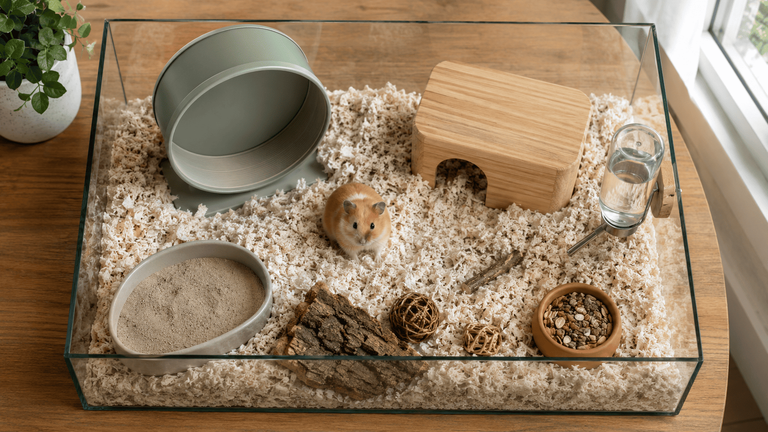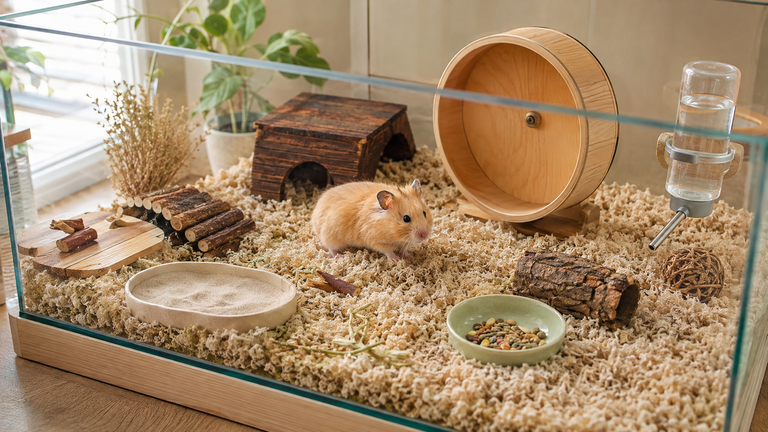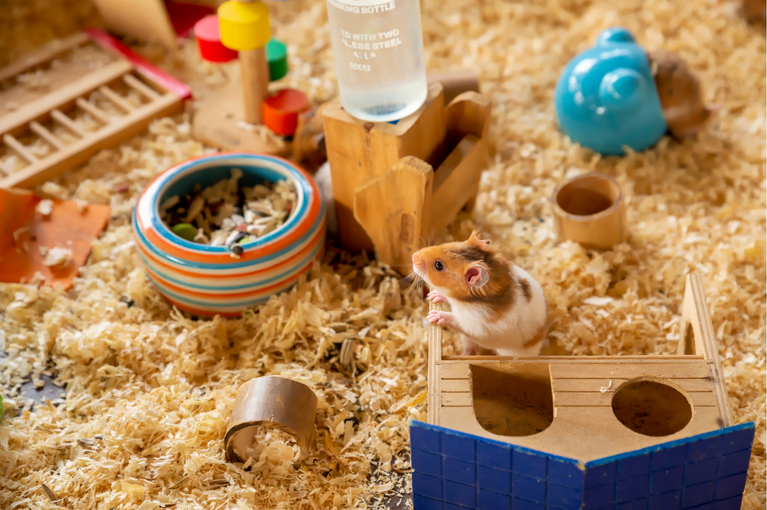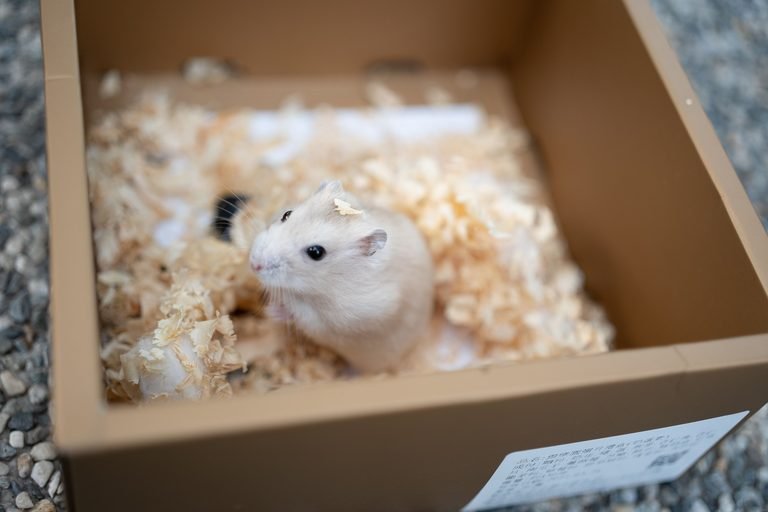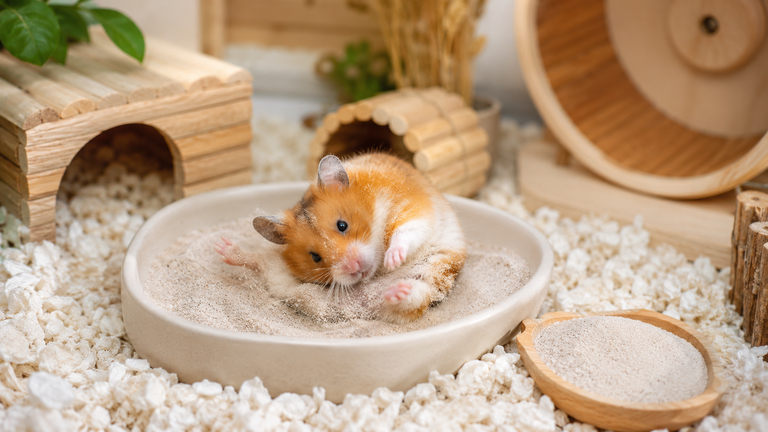
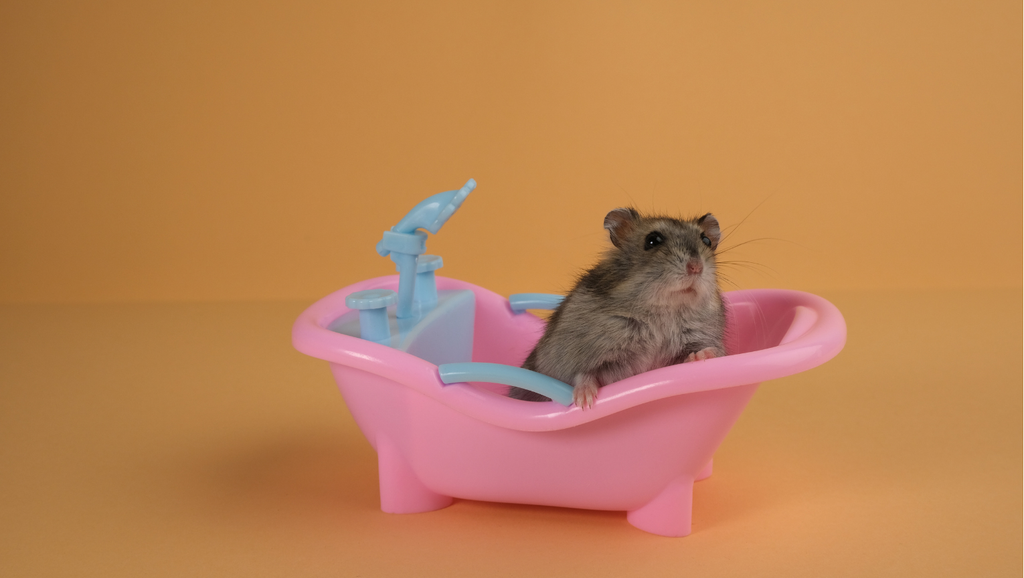
Hamsters do not need routine water baths. Healthy hamsters groom themselves, and a suitable sand bath can help them keep their coat clean without getting wet.
Avoid putting your hamster in a sink, bowl, or tub simply because its fur looks a little greasy or you think it smells. Water bathing can be stressful, can remove natural oils from the coat, and leaves a small animal wet and vulnerable to becoming chilled.
There are rare situations where a hamster may need help getting something off its fur, but that usually means careful spot-cleaning or following a veterinarian’s instructions, not giving it a regular bath.
Why hamsters do not need water baths
Hamsters are active self-groomers. They use their paws and tongue to clean their face, coat, and body throughout their waking period.
The RSPCA notes that hamsters generally do not need grooming beyond their own self-grooming and occasional access to a sand bath. Long-haired hamsters are one exception because debris and bedding can become caught in longer fur.
A routine water bath creates problems without offering much benefit.
Getting the coat wet can:
- remove some of the natural oils that help maintain the coat
- create unnecessary stress
- leave the hamster cold while the fur dries
- make drying difficult, particularly with long-haired Syrians
PetMD advises that most hamsters do not need bathing with soap and water unless a veterinarian specifically recommends it.
So if your hamster looks healthy and is grooming normally, leave the water out of it.
What should hamsters use instead?
A sand bath is the usual grooming option for hamsters.
Blue Cross includes a sand bath as part of a suitable hamster enclosure because rolling and digging in sand helps hamsters keep their coat clean while also giving them another texture to explore.
You do not wash the hamster with the sand. Simply provide a container large enough for the hamster to climb into, turn around, dig, and roll.
Some hamsters will roll dramatically through it. Others may dig, sit in it, or use it as a toilet.
All of those behaviors can happen.
What kind of sand is safe?
The most important distinction is sand versus dust.
Look for a bathing sand intended for hamsters or another suitable small mammal. Low-dust chinchilla bathing sand is also commonly used for hamsters.
Avoid products described as chinchilla dust or very fine bathing powder. Fine airborne particles can irritate the eyes and respiratory system.
A simple test is to pour a small amount gently into the container. If it produces a visible cloud of fine powder that hangs in the air, it is not a good choice for a hamster enclosure.
Also avoid:
- scented bathing powders
- fragranced sand
- products containing added perfumes
- wet or damp sand
- unknown outdoor sand that may contain contaminants
For specific products and sand types, see our best sand for a hamster sand bath guide and complete hamster sand bath guide.
Does every hamster need a sand bath?
A sand bath is a useful addition for pet hamsters and is especially valuable for hamsters that enjoy digging and rolling.
Roborovski hamsters in particular are strongly associated with sandy environments, and Blue Cross specifically highlights the importance of providing them with a substantial sand area.
But you do not need to force your hamster to roll in it.
If your hamster simply digs or sits in the sand, that does not mean the bath is failing. The hamster controls how it uses the area.
Should the sand bath stay in the cage all the time?
There is not one universally agreed schedule.
Some animal welfare guidance treats a sand bath as a normal part of the permanent enclosure, while some veterinary guidance recommends offering sand for limited sessions to reduce possible eye or respiratory irritation.
The practical issue is less about following a timer and more about the quality and cleanliness of the sand.
If you leave the bath in the enclosure:
- use a genuinely low-dust sand
- remove urine clumps and soiled areas
- remove buried food
- replace sand when it becomes dirty or damp
- watch for eye or nose irritation
If your hamster repeatedly urinates in the sand, that is not unusual. It simply means the bath may need cleaning more often.
There is no need to throw away perfectly clean sand on an arbitrary weekly schedule.
What if my hamster is actually dirty?
First, work out why.
A healthy hamster should normally be capable of keeping itself reasonably clean. A dirty coat can sometimes tell you more about the enclosure or the hamster’s health than about its need for a bath.
If bedding or dry debris is stuck in the fur
For a long-haired Syrian, gently loosen loose bedding with your fingers or a soft brush.
Do not pull aggressively at a mat close to the skin. Hamster skin is delicate, and cutting tangled fur with scissors near a moving animal can cause an injury.
If a large mat cannot be loosened safely, ask a hamster-experienced veterinarian for help.
If there is a small dirty spot
A slightly damp, soft cloth can be used to clean a limited area when necessary.
Use plain lukewarm water and clean only the affected fur rather than soaking the entire hamster. Pat the area dry afterward.
This should be occasional problem-solving, not a new grooming routine.
If the rear end is dirty
Do not immediately assume your hamster simply needs cleaning.
A wet, soiled, or repeatedly dirty rear may be associated with diarrhea, urine staining, reduced mobility, or another health problem.
Cleaning the fur does not fix the underlying cause.
If your hamster has diarrhea, seems lethargic, stops eating, or repeatedly develops a soiled rear, contact a veterinarian.
See our guide to hamster wet tail if diarrhea is part of the problem.
What if something dangerous gets on the fur?
This is different from ordinary dirt.
If your hamster gets a household cleaner, paint, oil, glue, medication, or another potentially harmful substance on its coat, the immediate concern is that it may lick the substance off while grooming.
Do not automatically reach for shampoo, soap, baby wipes, or another cleaning chemical. Mixing products can make the problem worse, and some substances require specific removal methods.
Instead:
- Prevent the hamster from grooming the contaminated area as much as you safely can.
- Identify exactly what the substance is.
- Keep the packaging or ingredient list.
- Call an exotic veterinarian or animal poison service for instructions.
- Follow their advice on whether the area needs rinsing, wiping, clipping, or professional treatment.
In some contamination emergencies, using water may be safer than leaving a toxic substance on the coat. That is why “never use water under any circumstances” is too absolute.
The rule is that routine bathing is unnecessary. Emergency decontamination is a different situation.
Can you use baby wipes on a hamster?
I would not make baby wipes a routine grooming product.
Even products marketed as unscented can contain preservatives and other ingredients designed for human skin rather than hamster grooming.
For a simple dirty spot, a soft cloth lightly dampened with plain water gives you more control and introduces fewer unnecessary ingredients.
If the hamster needs repeated cleaning, the bigger question is why it cannot keep itself clean.
Why does my hamster smell?
Before bathing the hamster, smell the enclosure.
Urine-soaked bedding, old fresh food, and food stored in humid areas can create much more odor than the hamster itself.
Hamsters also use scent to communicate, so they are not supposed to smell like shampoo.
Instead of washing the animal:
- remove clearly soiled bedding
- check favorite toilet areas
- clean the sand bath if it has become a toilet
- remove spoiled fresh food
- check hidden food stores when necessary
- keep the enclosure dry
Avoid repeatedly stripping the entire enclosure just to make it smell completely neutral. Familiar scent is part of a hamster’s environment.
If a clean enclosure smells normal but the hamster itself suddenly develops a strong or unusual odor, check for a dirty rear, discharge, wounds, damp fur, or other health changes.
That may justify a vet call rather than a bath.
What if my hamster stops grooming itself?
This is more important than whether the fur looks perfect.
A hamster that normally keeps itself clean but suddenly becomes greasy, matted, or dirty may be having difficulty grooming because of:
- illness
- pain
- reduced mobility
- dental problems
- obesity
- an injury
- age-related physical changes
Look at the hamster as a whole.
Is it still eating normally? Is its weight stable? Is it moving comfortably? Is the rear clean? Are the eyes open and clear? Is it active during its normal waking period?
If poor grooming appears alongside lethargy, appetite loss, weight loss, abnormal movement, diarrhea, breathing problems, or another significant change, contact a hamster-experienced veterinarian.
For more warning signs, see signs of a sick hamster.
Do long-haired hamsters need different grooming?
Sometimes.
Long-haired Syrian hamsters can collect bedding and debris in their coat more easily than short-haired hamsters. The RSPCA notes that some long-haired hamsters may need regular brushing to remove mats and debris.
A soft brush and gentle finger-combing are usually more appropriate than water.
Check areas where longer fur tends to tangle, particularly around the rear and sides.
If the coat repeatedly becomes wet, heavily matted, or soiled, investigate why instead of continually brushing over the problem.
Is a greasy coat always a bathing problem?
No.
A little oiliness does not automatically mean something is wrong, and a sand bath may help with normal coat maintenance.
But a major or sudden change in coat quality deserves more attention.
Persistent greasy fur, bald patches, severe flaking, redness, sores, scratching, or extensive matting can be associated with skin or health problems.
A sand bath is grooming enrichment. It is not treatment for mites, fungal disease, infection, or another medical condition.
If the coat looks abnormal rather than simply a little untidy, get veterinary advice.
Sand bath versus water bath
| Sand bath | Routine water bath | |
|---|---|---|
| Used for normal grooming | Yes | No |
| Hamster controls participation | Yes | Usually no |
| Keeps coat dry | Yes | No |
| Provides digging enrichment | Yes | No |
| Appropriate for a healthy hamster | Yes | Generally unnecessary |
| Useful for toxic contamination | No | Sometimes, but only with appropriate guidance |
The last row is important.
Sand is excellent for normal grooming, but it cannot remove every substance. If the fur is contaminated with something potentially dangerous, treat that as a separate safety problem rather than trying to solve everything with more sand.
The bottom line
Healthy hamsters do not need routine water baths. They normally keep themselves clean through self-grooming, and a suitable low-dust sand bath can help maintain the coat while also providing enrichment.
Do not put your hamster in water simply because the coat looks greasy or the enclosure smells.
If there is a small dirty area, limited spot-cleaning with a slightly damp cloth may be enough. If the hamster becomes repeatedly dirty, stops grooming, has a soiled rear, or develops an abnormal coat, look for an underlying problem rather than repeatedly cleaning the animal.
And if a potentially toxic substance gets onto the fur, that is an exception to the ordinary bathing rule. Contact a veterinarian for decontamination advice rather than relying on a blanket “never use water” rule.
Keep reading: Hamster sand bath guide | Best sand for a hamster sand bath | Complete hamster cage setup | Signs of a sick hamster
Hamster Corner provides general educational information about hamster care and health. It is not a substitute for veterinary advice. If your hamster cannot groom normally, develops diarrhea or another health change, or gets a potentially harmful substance on its coat, contact a veterinarian experienced with hamsters.