Do not plan to leave a hamster completely unattended for a weekend or several days. Hamsters need fresh food and water, a stable environment and regular welfare checks, and a blocked water bottle or sudden illness can become a problem while you are away. If you are going on holiday, arrange for a responsible person to check and care for your hamster while keeping it in its familiar enclosure whenever possible.
Hamsters are independent in the sense that they do not need constant human company. That is different from being able to go without care.
How long can you leave a hamster alone?
There is no strong welfare guidance supporting a universal rule that a healthy hamster can safely be left completely alone for 24 or 48 hours.
The RSPCA recommends arranging for a responsible person to look after your hamster when you go away. Its broader pet-sitting guidance is even clearer: pets should not be left on their own without someone responsible for their care.
That is more useful than trying to calculate a maximum number of unattended hours.
A hamster can develop a problem while you are gone even when you leave plenty of food. A water bottle can leak or become blocked, the room can become too hot or cold, or the hamster can become ill or injured.
Hamsters can also hide signs of illness. Woodgreen recommends watching for behavioral changes every day, while older RSPCA hamster health guidance similarly recommends a daily visual welfare check.
So if you will not be home, arrange for someone to check the hamster rather than relying on a two-day countdown.
Should someone check a hamster every day while you are away?
That is the approach I would use.
A sitter does not necessarily need to wake or handle a sleeping hamster every day, but someone should be responsible for checking that the enclosure and basic care are normal.
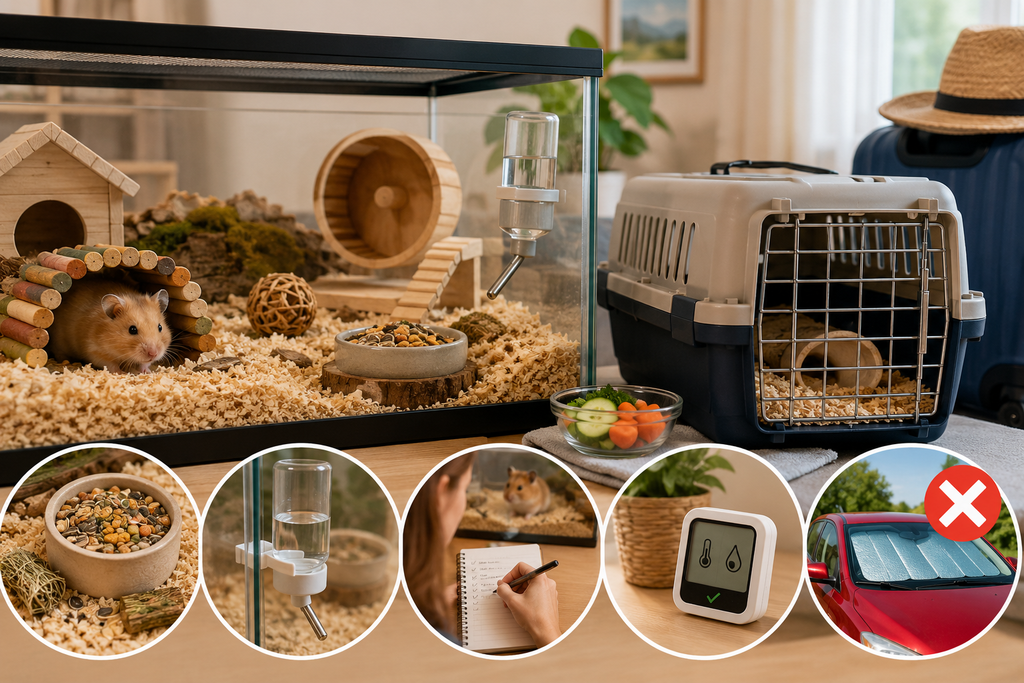
A practical daily check should confirm that water is available and dispensing properly, food is available, the room has remained comfortable, the enclosure is secure, and there is no obvious change suggesting illness or injury.
If your hamster normally appears only late at night, the sitter may need to use indirect signs such as disturbed food, normal droppings and changes in the water level rather than repeatedly waking it.
They should also know when a change is significant enough to call you or a hamster-experienced veterinarian.
Is one night away different from a vacation?
Yes, practically, but I would still avoid publishing a promise that one particular number of hours is always safe.
If you are away only briefly, the risk is obviously lower than leaving for several days. But the same failures are possible, especially a leaking or blocked water bottle.
Rather than saying:
One or two days is safe.
the more defensible advice is:
Arrange care whenever your absence means the hamster will miss its normal daily welfare check.
That wording also works for older hamsters, hamsters receiving medication and animals with recent health problems, where leaving them unattended may be especially inappropriate.
What should you prepare for a hamster sitter?
Leave the sitter simple instructions rather than an elaborate care schedule.
They should know what food your hamster normally eats, how the water bottle or bowl works, where supplies are stored, what normal behavior looks like, and how to contact you and your veterinarian.
Ask them not to make unnecessary diet changes or introduce new treats while you are away.
The RSPCA recommends keeping pets’ routines and environments as familiar as possible and providing carers with clear instructions and veterinary contact details.
Should you leave extra food?
Make sure enough of the hamster’s usual complete dry food is available, but do not turn the enclosure into an unlimited pile of food just because you are leaving.
Hamsters naturally cache food, so the amount visible in the bowl does not necessarily tell you how much food remains available.
The original article also said hamsters “self-regulate” and therefore will not overeat. I would remove that claim. Food intake, hoarding and selective feeding are more complicated than that, especially with seed mixes.
The sitter should continue the hamster’s normal feeding routine rather than relying on a huge pre-vacation refill.
See the What can hamsters eat? guide for the broader diet framework.
Should you add a second water bottle?
A second functioning water source can provide redundancy, but it should not replace human checks.
If your hamster already knows how to use two bottles, adding a backup before a short absence can be reasonable.
Do not install a completely unfamiliar water system and leave immediately, though. Check beforehand that your hamster can use it and that neither bottle leaks.
A second bottle also does not solve every problem. Both can fail, and no water setup can detect illness or an unsafe room temperature.
The important point is still that somebody checks the enclosure.
What temperature should the room stay at?
Keep the room stable and away from draughts, direct sun and heat sources.
Woodgreen recommends keeping the hamster’s room at around 18–21°C (64–70°F) throughout the year to help prevent cold-induced torpor.
That is a practical welfare target rather than a reason to panic over a brief small temperature fluctuation.
The enclosure should also remain away from windows, radiators and direct sunlight.
See the Hamster temperature guide for more detail.
Is it better to take your hamster on vacation?
Usually not.
The RSPCA specifically recommends keeping a hamster in its familiar enclosure when you go away and trying not to transport it unless necessary.
Its general holiday guidance says that small animals unfamiliar with travel and new places are generally better left at home because travelling and environmental change can be stressful.
So a familiar enclosure plus a responsible sitter is usually the better vacation arrangement.
Travel becomes more reasonable when it is actually necessary, such as a veterinary appointment or a house move.
How should you transport a hamster when necessary?
Use a robust, secure, well-ventilated carrier that cannot be chewed open easily.
Woodgreen recommends a hard plastic pet carrier and suggests adding some bedding from the enclosure, a small hide or tunnel and a little scattered food.
The RSPCA similarly recommends used, unsoiled nesting material because the familiar smell can be reassuring. It also says small animals should have adequate food and water during transport.
For car travel, secure the carrier so it cannot slide, roll or fall if the vehicle stops suddenly.
Keep the trip as direct and quiet as practical.
Should you put cucumber in the carrier instead of water?
This needs more nuance than the original article gave it.
Older RSPCA hamster-specific transport guidance does mention small pieces of fruit or vegetable as a way to provide moisture on shorter journeys when a water bottle might spill.
However, the RSPCA’s current general travel guidance says small animals should have adequate water during transport and recommends appropriate non-spill arrangements for longer journeys.
So I would not turn cucumber into a universal hamster travel hack.
For a short necessary journey, follow the setup recommended by your veterinarian or current transport guidance. For longer travel, plan a reliable way to provide water rather than assuming a watery vegetable is an equivalent replacement.
Should you cover the hamster carrier?
Providing some visual shelter can help a prey animal feel less exposed, but ventilation must remain excellent.
The RSPCA’s hamster transport guidance recommends a cover that keeps the carrier darker while still allowing airflow.
A hide inside the carrier is another practical option. Woodgreen specifically recommends a small house or tunnel.
Do not wrap the entire carrier tightly in heavy material, especially in warm weather.
Can you leave a hamster in a parked car?
No.
The RSPCA says never to leave animals in a car on a warm or hot day because temperatures can rise rapidly enough to cause severe distress or death.
During travel, keep both the vehicle and carrier well ventilated and cool.
PetMD also advises securing small-animal carriers in the vehicle and carefully managing temperature during both hot and cold weather.
A hamster should never be left behind in the car while you stop for food, shopping or sightseeing.
What about long-distance travel?
Long-distance transport requires more planning than simply putting the hamster in a carrier.
The RSPCA recommends choosing the most direct route, maintaining suitable environmental conditions and considering a veterinary check before long journeys.
Airlines, trains and ferries can have their own animal rules, and air travel can involve periods when temperature control and access to the animal are limited.
If relocation requires a long journey or flight, check the carrier requirements and transport rules well in advance and ask a hamster-experienced veterinarian whether your hamster is fit to travel.
Are automatic feeders useful?
Usually not enough to solve the actual vacation problem.
A hamster does not simply need food dispensed while you are gone. It needs a functioning water supply, safe temperature, secure enclosure and someone able to notice a health problem.
An automatic feeder cannot provide that welfare check.
If your normal feeding system works well, keep it familiar rather than adding an unnecessary gadget just before leaving.
Frequently asked questions
Can I leave my hamster alone for a weekend?
I would arrange for someone to check it rather than relying on a blanket “two days is safe” rule. RSPCA holiday guidance recommends having a responsible person look after your hamster while you are away.
Should I move my hamster to a sitter’s house?
Keeping the hamster in its familiar enclosure at home is usually preferable when a competent sitter can visit. Moving the hamster introduces transport and a new environment. If home care is impossible, discuss the least disruptive alternative with the sitter or a reputable small-animal boarder.
Does the sitter need to handle my hamster every day?
Not necessarily. The important job is checking food, water, temperature, security and signs of illness. A hamster should not be woken simply so the sitter can prove it is there unless there is a welfare concern.
Should I take my hamster on vacation with me?
Usually no. Small animals can find transport and unfamiliar surroundings stressful, so staying home with appropriate care is generally the better option.
The bottom line
Do not rely on a universal rule that a hamster can safely be left completely alone for one or two days.
Hamsters may be independent animals, but they still need regular welfare checks. A responsible sitter can catch a failed water bottle, unsafe temperature or sudden health problem that extra food cannot solve.
When you go away, keep your hamster in its familiar enclosure where possible and arrange responsible care.
If transportation is genuinely necessary, use a secure ventilated carrier with familiar bedding, control the temperature and keep the journey as short and calm as practical.
And never leave a hamster unattended in a warm or hot parked vehicle.