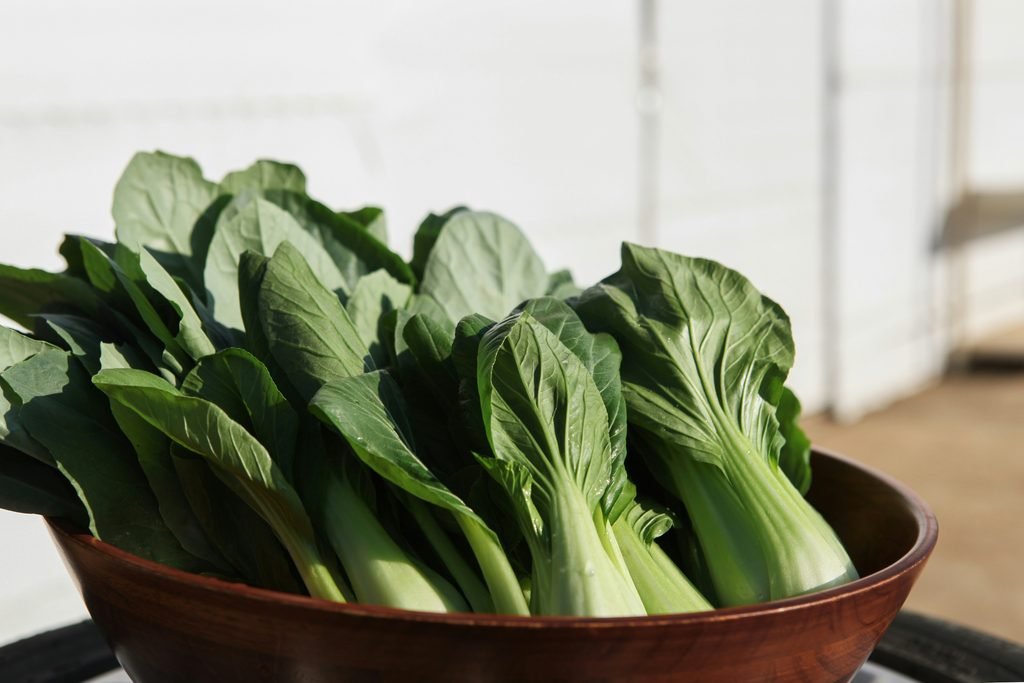
Yes. Hamsters can eat bok choy as a small fresh-food extra. An exotic-animal veterinary practice specifically includes bok choy among fresh leafy greens suitable for rodents including hamsters, and there is even direct research in Syrian golden hamsters involving diets supplemented with bok choy.
That does not give us an exact pet serving, though. There is no good evidence for a “thumbnail-sized piece once or twice a week,” nor for giving dwarf hamsters exactly half as much.
The original warning that bok choy causes gas because it is a brassica is also much shakier than it sounds. I could not find hamster-specific evidence establishing bok choy as a particular gas or bloating risk.
Is bok choy safe for hamsters?
There is better evidence here than simply assuming bok choy is safe because cabbage and broccoli are.
Long Island Bird & Exotics Veterinary Clinic includes bok choy among fresh leafy greens that can supplement the diets of rodents including hamsters.
There is also an unusual piece of direct research. A 2020 study published in Food & Function fed male Syrian golden hamsters experimental high-fat diets supplemented with either 5% or 7% freeze-dried green or purple bok choy for 56 days.
That study was investigating lipid metabolism, liver enzymes, and related gene expression. It was not designed to establish a safe serving size for pet hamsters.
So the useful conclusion is narrower:
We have direct evidence that Syrian hamsters have consumed bok choy in a controlled dietary study, plus veterinary guidance listing bok choy as an appropriate fresh green. That supports offering it, but not an exact serving schedule.
For the broader feeding framework, see what hamsters can eat.
How much bok choy can a hamster eat?
I could not find reliable bok-choy-specific guidance establishing a thumbnail-sized serving or a separate allowance for Syrian and dwarf hamsters.
That means I would remove rules such as:
- one thumbnail for a Syrian
- half a thumbnail for a dwarf
- once per week for dwarfs
- twice per week for Syrians
They sound precise without being evidence-based.
For fresh foods more generally, Woodgreen recommends keeping treat portions roughly comparable to the size of the hamster’s own ear. That is a more defensible practical reference because it naturally scales with the hamster’s body size.
Bok choy should remain a small addition to a complete hamster diet rather than becoming a major part of the bowl.
Does bok choy cause gas and bloating?
I would not use that as the main warning.
Bok choy belongs to the Brassica family, alongside foods such as cabbage, broccoli, cauliflower, and Brussels sprouts. But botanical family membership alone does not prove that normal pet-sized servings cause clinically meaningful gas or bloating in hamsters.
I could not find good hamster-specific evidence establishing the original chain of reasoning:
brassica → glucosinolates → gas → bloating in pet hamsters
That does not mean an individual hamster can never have digestive trouble after a dietary change. RSPCA and other hamster-care sources advise changing diets gradually because sudden changes can cause digestive upset.
But that is different from claiming bok choy has a special gas problem.
In fact, Woodgreen and PDSA both list several other brassicas, including cabbage, broccoli, cauliflower, kale, and Brussels sprouts, among suitable vegetables for hamsters.
So I would treat bok choy like another optional fresh green rather than putting it in a special “gas-risk” category.
Does bok choy have health benefits for hamsters?
This is where the direct hamster study needs to be handled carefully.
The 2020 study found changes in lipid profiles, liver enzymes, and gene expression in Syrian golden hamsters eating high-fat experimental diets supplemented with bok choy.
That is interesting research, but it does not mean pet hamsters should be given bok choy to:
- lower cholesterol
- prevent obesity
- protect the liver
- provide antioxidants
- improve metabolism
The hamsters were being used as an experimental model, the diets contained relatively large controlled proportions of freeze-dried bok choy, and the study was investigating metabolic effects rather than everyday pet feeding.
Likewise, there is no reason to recommend bok choy because it contains vitamins A, C, or K. A complete hamster food should already provide the nutrients a pet hamster needs.
For a pet owner, bok choy is simply an optional vegetable, not a functional supplement.
Can dwarf hamsters eat bok choy?
There is no good evidence for a special dwarf-hamster bok choy rule.
The controlled feeding study involved Syrian golden hamsters, so it should not automatically be extrapolated to every dwarf species.
At the same time, there is no basis for the original claim that bok choy is especially suitable for dwarf hamsters because it is low in sugar.
A food being low in sugar does not by itself make it beneficial or necessary for Roborovski, Winter White, Campbell’s, Chinese, or hybrid hamsters.
If you have a healthy smaller hamster, keep any fresh-food portion correspondingly small rather than following an invented “half a thumbnail” formula.
If the hamster has a diagnosed metabolic condition, follow feeding advice from a hamster-experienced veterinarian.
Can hamsters eat bok choy leaves and stems?
I could not find strong hamster-specific guidance requiring owners to separate the green leaf from the white stalk.
The veterinary guidance simply includes bok choy among suitable leafy greens.
That means I would not claim:
- the leaf is safer than the stem
- the stem contains too much water
- the stem is difficult to digest
- the crunchy stem helps wear down hamster teeth
Those are all unnecessary additions unless we have evidence for them.
Use a small piece of clean, fresh bok choy and wash it before serving.
There is also no need to turn bok choy into dental care. Hamsters should have appropriate materials for gnawing rather than relying on vegetables to maintain their teeth.
Raw or cooked bok choy?
The pet-feeding guidance I found does not establish a special cooked-bok-choy rule.
Since bok choy is being recommended as a fresh leafy green, washed fresh bok choy is the simplest option.
I would not serve bok choy taken from a human dish because stir-fried or restaurant bok choy may contain oil, salt, garlic, sauces, or other ingredients that change the question completely.
If you are offering bok choy specifically for the hamster, keep it plain.
What if my hamster has never eaten bok choy before?
Introduce unfamiliar fresh foods gradually rather than changing several parts of the diet at once.
That makes it easier to notice a genuine change in appetite, stools, or behavior without blaming bok choy automatically for every variation.
You do not need a rigid rule saying to wait exactly 24 hours after one bite.
If your hamster develops persistent diarrhea, stops eating normally, becomes markedly lethargic, appears weak, or shows another significant change, contact a hamster-experienced veterinarian rather than waiting for a predetermined number of days.
Is bok choy worth feeding?
Yes, if you already have it and want another fresh-food option. But your hamster does not need it.
Bok choy has unusually good supporting evidence for such a specific vegetable: it appears in exotic-veterinary feeding guidance and has even been used directly in Syrian hamster research.
What that evidence doesn’t support is arguably just as useful. There is no established thumbnail serving, no proven once-or-twice-weekly bok choy schedule, no special dwarf allowance, and no need to sell its vitamins or experimental metabolic effects as pet-health benefits.
Treat it as a small optional fresh green alongside a nutritionally complete staple diet.
For vegetables with clearer practical feeding guidance, see safe vegetables for hamsters.
Hamster Corner provides general educational information about hamster care. It is not a substitute for veterinary advice. Contact a hamster-experienced veterinarian if your hamster has persistent digestive changes, reduced appetite, weakness, or another significant health change.