
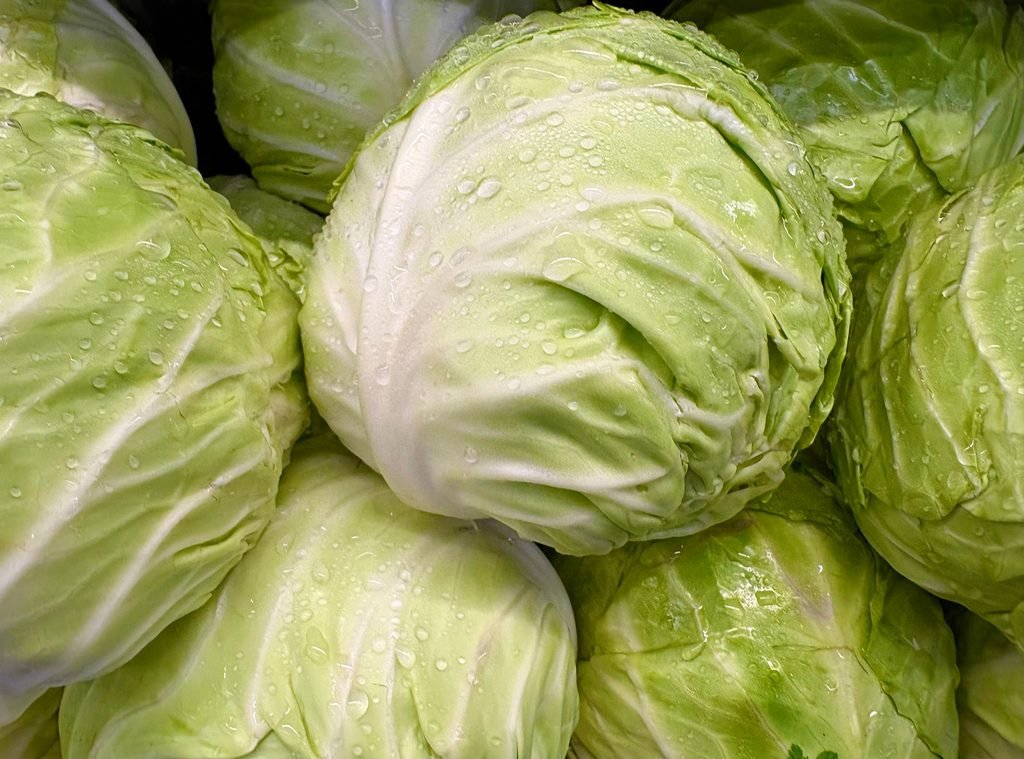
Yes, hamsters can eat cabbage. Both Woodgreen Pets Charity and PDSA specifically list cabbage among suitable vegetables for hamsters. Keep it as a small fresh-food extra alongside a nutritionally complete hamster diet, but there is no evidence-based cabbage dose such as a thumbnail-sized piece once a week or a separate half-portion for dwarf hamsters.
Cabbage sometimes gets treated as a more dangerous vegetable than it really is because it belongs to the brassica family.
You will often see warnings that cabbage inevitably causes gas, bloating or even thyroid problems in hamsters. Those claims need more context.
Cabbage is directly included in reputable hamster feeding guidance. The sensible approach is moderation, not fear.
Is cabbage safe for hamsters?
Yes.
Woodgreen Pets Charity lists cabbage among safe fresh vegetables for hamsters. PDSA also specifically includes cabbage in its list of suitable vegetables.
That gives cabbage considerably stronger hamster-specific support than many foods commonly discussed online.
It can be offered as part of the fresh-food portion of the diet, while the hamster’s complete dry food remains the nutritional foundation.
How much cabbage can a hamster eat?
There is no cabbage-specific serving size established for hamsters.
The old rule of:
- one thumbnail-sized piece for a Syrian
- half that amount for a dwarf
- once or twice per week
was more precise than the evidence supports.
Blue Cross gives a useful general rule for fresh hamster foods: portions should be roughly as small as the hamster’s ear. Woodgreen gives a similar ear-sized guideline for treats.
Those are practical visual guides for fresh extras generally, not scientifically established cabbage doses.
So rather than measuring a cabbage leaf against your thumbnail, offer a small piece as part of the hamster’s overall fresh-food allowance.
There is also no evidence that every dwarf hamster needs exactly half the Syrian serving.
Does cabbage cause gas and bloating in hamsters?
Cabbage is widely known as a gas-producing food in human nutrition, but that does not establish a hamster-specific dose at which cabbage causes uncomfortable bloating.
I could not find strong hamster-specific evidence showing that an ordinary small serving of cabbage predictably causes clinically significant gas.
That means the old advice that cabbage must be restricted to once a week specifically because its raffinose and glucosinolates cause hamster bloating was too confident.
A simpler rule works better:
- offer a small amount
- do not make any single fresh vegetable dominate the diet
- observe how your individual hamster responds to new foods
If your hamster repeatedly develops a problem after a particular food, stop offering it.
A swollen abdomen, significant lethargy, obvious discomfort or reduced appetite should not simply be diagnosed at home as “cabbage gas.” Those signs can have more serious causes and deserve veterinary attention.
Does cabbage cause diarrhea?
There is no good evidence that cabbage automatically causes diarrhea because it contains water, fiber or brassica compounds.
Fresh vegetables can be overfed, and sudden dietary changes may not agree with every individual animal, but watery stool in a hamster should not be casually explained away as “too much cabbage.”
Significant or persistent diarrhea can become serious in hamsters.
If your hamster develops diarrhea together with reduced appetite, lethargy, weakness, a dirty rear or another meaningful change, contact a veterinarian experienced with hamsters rather than waiting for a fixed number of hours.
Does cabbage affect a hamster’s thyroid?
This warning is usually overstated.
Brassica vegetables contain glucosinolates and related compounds that have been studied for possible effects on thyroid function.
Animal research has found thyroid effects under some experimental conditions involving large and sustained dietary exposures. For example, one rat study replaced a substantial part of the experimental diet with dried cabbage for around two months.
That is very different from a pet hamster eating a small piece of cabbage as one fresh-food extra.
It would therefore be inappropriate to take those high-exposure experiments and conclude that occasional cabbage causes thyroid disease in hamsters.
There is no good hamster-specific evidence establishing that normal treat-level cabbage needs to be restricted because of thyroid risk.
Can dwarf hamsters eat cabbage?
Yes, cabbage is not restricted to Syrian hamsters.
Neither Woodgreen nor PDSA excludes dwarf species when listing cabbage as a suitable vegetable.
The old article described cabbage as particularly good for dwarfs because it is “low in sugar” and then linked that to diabetes risk. That reasoning is unnecessary.
Different dwarf hamster species do not have identical metabolic profiles, and a food being relatively low in sugar does not turn it into a diabetes-prevention food.
For a healthy dwarf hamster, cabbage can simply be treated as another suitable fresh vegetable.
If your hamster has diagnosed diabetes or another condition requiring dietary management, follow the plan recommended by a hamster-experienced veterinarian.
Can hamsters eat green cabbage?
Yes.
Ordinary green cabbage is a reasonable choice when served plain and in a small amount.
Wash fresh vegetables before offering them, as PDSA recommends.
You do not need to peel individual leaves or follow a special preparation process.
Can hamsters eat red or purple cabbage?
There is no good reason to assume that plain red cabbage is unsuitable simply because of its color.
Red and green cabbage are closely related forms of cabbage, but major hamster welfare sources do not provide separate feeding rules for the two.
The old article claimed red cabbage was better because it contained more antioxidants and vitamin C.
That may describe differences in human food composition, but it does not establish that red cabbage produces a meaningful health benefit in hamsters.
There is no need to rank them nutritionally.
Can hamsters eat Savoy cabbage?
Savoy is another cultivated form of cabbage.
There is little hamster-specific guidance distinguishing Savoy from ordinary green cabbage.
A small piece of plain fresh Savoy cabbage is therefore a reasonable extension of the general cabbage guidance, but there is no need to create a separate serving schedule for it.
If you prefer to stay entirely within foods named explicitly by hamster-care sources, ordinary cabbage is already well supported.
Should cabbage be raw or cooked?
Raw cabbage is easy to offer and requires very little preparation beyond washing it.
But cooked cabbage is not automatically unsafe simply because it has been cooked.
The real issue is what accompanies it.
Plain cabbage is very different from cabbage prepared with:
- butter
- salt
- sauces
- seasoning blends
- onion
- garlic
- gravy
There is no reason to prepare cooked cabbage specifically for a hamster. If you are deliberately choosing a fresh vegetable, a washed piece of plain cabbage is simpler.
Can hamsters eat coleslaw?
Skip ordinary prepared coleslaw.
The problem is not the cabbage itself. Commercial and homemade coleslaw recipes can contain mayonnaise, salt, sugar, vinegar, onion, seasonings and other ingredients.
Because recipes vary, it is much easier to give the hamster plain cabbage than to assess a mixed human dish.
Do not assume that every ingredient in every coleslaw recipe is toxic. It is simply an unnecessary and unpredictable way to serve cabbage.
Can hamsters eat sauerkraut?
Sauerkraut is also unnecessary.
Commercial sauerkraut is generally made with substantial salt as part of fermentation, and Woodgreen advises avoiding salty human foods for hamsters.
Fermentation itself does not need to be turned into a toxicity claim.
The simpler choice is fresh plain cabbage.
Should you avoid broccoli and Brussels sprouts on the same day?
There is no established hamster rule saying different brassica vegetables can never be eaten on the same day.
Broccoli, Brussels sprouts, cauliflower and cabbage are all brassica vegetables, but grouping them botanically does not create a demonstrated hamster toxicity threshold.
The old recommendation to never combine cabbage with another brassica because the “gas load” would become dangerous was unsupported.
What matters more is keeping the total amount of fresh extras small and varied rather than filling the diet with large portions of any vegetables.
For more suitable vegetables, see our safe vegetables for hamsters guide.
Is cabbage nutritious for hamsters?
Cabbage contains vitamin C, vitamin K, fiber and various plant compounds.
Those facts describe cabbage’s composition.
They do not prove that separately feeding cabbage improves a hamster’s immune system, digestion, bones or general health.
A healthy hamster should receive its essential nutrition from a properly formulated staple diet.
Fresh vegetables add variety and can be part of appropriate feeding, but cabbage does not need to be sold as a nutritional supplement.
How should you prepare cabbage?
Keep preparation simple.
- Choose fresh cabbage without obvious mold or spoilage.
- Wash it thoroughly.
- Offer a small plain piece.
- Do not add seasoning, salt, oil or sauce.
- Check later for uneaten fresh cabbage that has been carried into the food hoard.
Hamsters naturally cache food, including fresh foods.
Fresh cabbage will deteriorate much faster than dry hamster food, so remove spoiled or wet leftovers while preserving clean dry food stores wherever possible.
What if your hamster eats a lot of cabbage?
If your hamster takes more plain cabbage than you intended, remove the remaining cabbage and continue the normal balanced diet.
Monitor:
- normal appetite
- activity
- stool
- drinking
- overall behavior
Do not fast the hamster or attempt to “balance out” the cabbage with another food.
Do not force water, give milk, oil or human digestive medicines.
If your hamster develops significant diarrhea, a swollen or painful-looking abdomen, reduced appetite, weakness, unusual lethargy or another meaningful change, contact a veterinarian experienced with hamsters.
The bottom line
Yes, cabbage is a suitable vegetable for hamsters.
Woodgreen and PDSA both specifically include cabbage in their hamster feeding guidance, so there is no need to treat it as a questionable or dangerous food.
What the evidence does not support is a rigid thumbnail-sized serving, separate Syrian and dwarf schedules, a rule banning multiple brassicas on the same day, or claims that an ordinary small cabbage serving causes thyroid problems.
Offer a small amount of fresh, washed, plain cabbage as one of several optional fresh foods and keep a nutritionally complete hamster diet at the center of feeding.
There is also no need to choose red cabbage over green cabbage for antioxidants or to promote cabbage as a special low-sugar food for dwarf hamsters.
Simple is enough.
Keep reading: What can hamsters eat? | Safe vegetables for hamsters | Foods toxic to hamsters
Sources: Woodgreen hamster feeding guide | PDSA hamster care guide | Blue Cross hamster care guide | PubMed study on high dietary cabbage exposure and thyroid function
Hamster Corner provides general educational information about hamster care and nutrition. If your hamster develops significant diarrhea, reduced appetite, abdominal swelling, weakness, lethargy or another meaningful change, contact a veterinarian experienced with hamsters.
[…] reading: What can hamsters eat? | Safe vegetables for hamsters | Can hamsters eat cabbage? | Foods toxic to […]