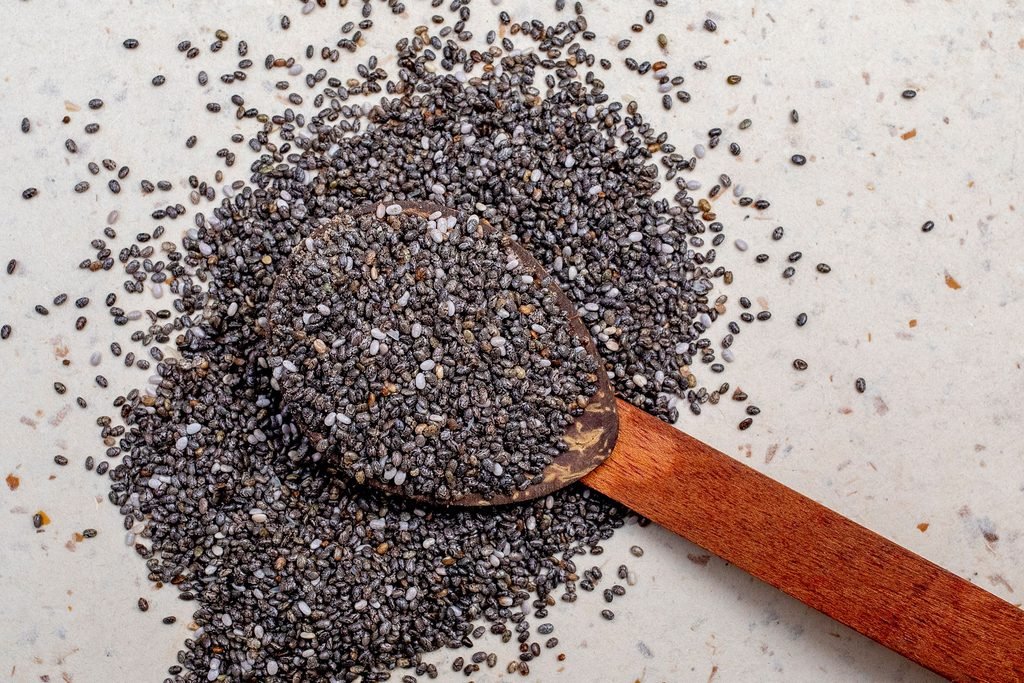
Chia seeds are not known to be toxic to hamsters, but there is surprisingly little hamster-specific guidance on feeding whole chia seeds as a treat. Chia does appear as an ingredient in some formulated hamster foods, which is reassuring, but that does not establish a safe number of seeds or a weekly feeding schedule. If your hamster’s main diet is already complete, there is no nutritional reason to add chia separately.
This is one of those hamster foods where online advice is often much more precise than the evidence.
You may see recommendations such as “three to five seeds twice a week” or warnings that dry chia will expand in a hamster’s stomach and cause a blockage. Neither claim has a solid hamster-specific basis.
The more useful answer is that chia appears to be low concern in the context of a properly formulated diet, but evidence is limited for using whole chia seeds as a standalone treat.
Are chia seeds safe for hamsters?
There is no good evidence that plain chia seed is inherently toxic to hamsters.
The RSPCA notes that hamsters naturally eat seeds and cereals and recommends either a balanced compound ration or a seed mixture formulated for hamsters. Some commercial hamster diets also contain ground chia seed.
For example, Vitakraft lists ground chia seed among the ingredients in both its Vita Prima Hamster & Gerbil Food and its Vita Prima Dwarf Hamster Food.
That is useful evidence that chia can be incorporated into a formulated hamster diet.
It does not prove that:
- whole chia seeds should be fed separately
- three to five seeds is the correct serving
- chia should be given once or twice each week
- dwarfs require a different chia allowance
- chia provides specific health benefits when added to an already balanced diet
The distinction matters. An ingredient being used in a complete commercial formula is not the same thing as having a validated treat dose.
Do hamsters need chia seeds?
No.
Chia is an optional ingredient, not a supplement that a pet hamster needs.
A nutritionally complete hamster food should provide the protein, fat, vitamins and minerals required for the normal diet. The RSPCA recommends a good-quality balanced diet formulated for hamsters rather than relying on individual seeds or human foods to supply particular nutrients.
For the broader feeding framework, see what hamsters can eat.
There is therefore no need to add chia because it contains omega-3 fatty acids, calcium, fiber or protein. Those nutrients exist in chia, but their presence does not demonstrate that separately feeding chia improves a hamster’s coat, digestion, bones or general health.
How many chia seeds can a hamster eat?
There is no reliable hamster-specific answer.
The previous recommendation of exactly three to five seeds for a Syrian and two to three for a dwarf was false precision.
I could not find a veterinary or major hamster-welfare source that establishes a safe number of whole chia seeds per serving or a weekly frequency.
That means it is better not to turn chia into a scheduled treat.
If your hamster already receives a formulated food containing chia, simply feed that product according to its instructions. There is no reason to add additional chia on top.
If you choose to offer plain chia separately despite the limited guidance, keep it as a very minor part of the overall diet rather than measuring out a supposed medicinal or nutritional dose.
Do dry chia seeds expand inside a hamster?
Chia seeds really do absorb water and develop a gelatinous outer layer called mucilage.
A scientific review of Salvia hispanica describes chia mucilage as highly water-holding and reports substantial water absorption under laboratory conditions.
What has not been established is the next part of the common hamster claim: that a few dry chia seeds will continue expanding after a hamster drinks and cause an intestinal or stomach blockage.
That is an extrapolation from chia’s physical properties, not demonstrated hamster toxicology.
So the old explanation that “three to five dry seeds are safe, but more may expand dangerously in the stomach” should not be presented as fact.
Should chia be fed dry or soaked?
There is no strong hamster-specific evidence showing that one form is medically safer than the other.
The old article said soaked chia was dangerous because it had already formed a gel, while also warning that dry chia could swell after being swallowed. Those two explanations do not fit together well.
For routine hamster care, there is little reason to prepare soaked chia at all. Wet foods are harder to keep fresh, and hamsters may carry them into their food stores.
If chia is already included dry or ground in a properly formulated hamster food, use the food as directed.
There is no need to make chia pudding, chia gel, smoothies or other human chia preparations for a hamster.
Can dwarf hamsters eat chia seeds?
There is no evidence supporting a special chia serving size for dwarf hamsters.
The old advice also described chia as particularly good for “diabetes-prone dwarfs” because it contains little sugar. That is too broad.
Roborovski, Winter White and Campbell’s hamsters should not automatically be treated as if they have identical diabetes risk, and a food being low in sugar does not make it a treatment or preventive food for diabetes.
If a healthy dwarf hamster’s formulated diet contains chia, that is not automatically a concern.
If your hamster has diagnosed diabetes or another metabolic condition, follow the diet recommended by a hamster-experienced veterinarian rather than adding individual seeds because of their sugar content.
Are chia seeds good for a hamster’s coat?
There is not enough evidence to say so.
Chia seeds contain alpha-linolenic acid and other nutrients, but nutritional composition alone does not prove a particular benefit in pet hamsters.
Claims such as:
- chia makes a hamster’s coat shinier
- chia improves skin health
- chia strengthens bones
- chia improves digestion
would need hamster-specific evidence before they should be presented as benefits.
A balanced staple diet is a much more important determinant of nutritional adequacy than adding one “superfood.”
What about flaxseed instead?
Flaxseed has similar problems when people try to turn its human nutrition profile into hamster health claims.
There is no need to choose between chia and flax based on which supposedly delivers more omega-3 to your hamster unless the ingredients are part of a properly formulated diet.
If you use a commercial hamster food containing ground flax, chia or other seeds, the overall formulation matters more than any single ingredient.
Can chia seeds be used for foraging?
Hamsters benefit from opportunities to forage. The RSPCA specifically recommends scattering or hiding their normal food around the enclosure to encourage natural foraging behavior.
You do not need chia seeds to provide that enrichment.
Scatter part of the hamster’s normal dry ration instead. This provides the same opportunity to search for food without introducing an unnecessary extra or disrupting the nutritional balance of the diet.
What if my hamster already ate chia seeds?
A hamster eating a few plain chia seeds is not automatically an emergency.
First check what was actually eaten. Plain chia seeds are different from chia pudding or a packaged human food containing chocolate, sweeteners, dairy products or other ingredients.
If it was plain chia and your hamster is behaving, eating and drinking normally, monitor them rather than attempting a home treatment.
Do not:
- force water
- give milk
- induce vomiting
- give oil or laxatives
- withhold the normal diet
If a very large or unknown amount was eaten, the chia was part of a product containing a potentially hazardous ingredient, or your hamster develops reduced appetite, abdominal discomfort, significant diarrhea, weakness, lethargy or another meaningful change, contact a veterinarian experienced with hamsters.
For other ingredient risks, see foods toxic to hamsters.
The bottom line
Chia seeds are not known to be toxic to hamsters, but evidence for feeding whole chia seeds separately is limited.
Ground chia is used as an ingredient in some formulated hamster foods, so chia itself should not automatically be treated as dangerous. However, that does not justify a rule such as three to five seeds once or twice a week.
The claim that dry chia will expand inside a hamster and cause a blockage is also not supported by direct hamster evidence. Chia does absorb water and form mucilage, but the digestive-risk story goes beyond what the available evidence shows.
If your hamster eats a complete diet, there is no need to add chia for omega-3, fiber, coat health or diabetes prevention.
The simplest choice is to let chia remain an ingredient in properly formulated foods rather than turning it into another scheduled supplement.
Keep reading: What can hamsters eat? | Foods toxic to hamsters | Safe vegetables for hamsters
Sources: RSPCA hamster diet guidance | Vitakraft Vita Prima Hamster & Gerbil Food | Scientific review of chia seed and mucilage
Hamster Corner provides general educational information about hamster care and nutrition. If your hamster eats a potentially hazardous product or develops a significant change in appetite, stool, activity or behavior, contact a veterinarian experienced with hamsters.