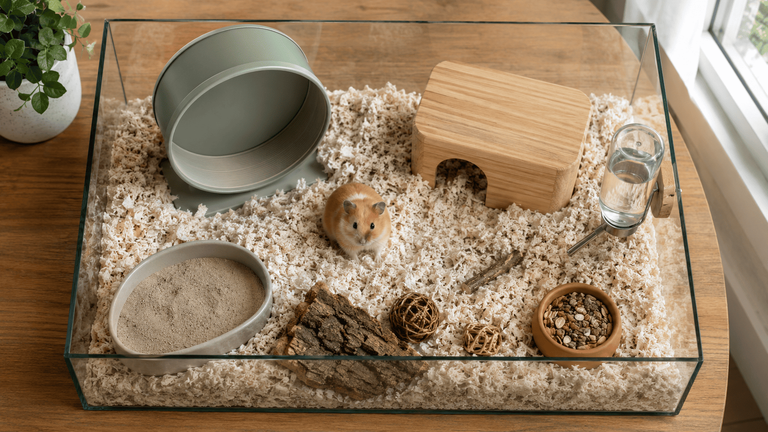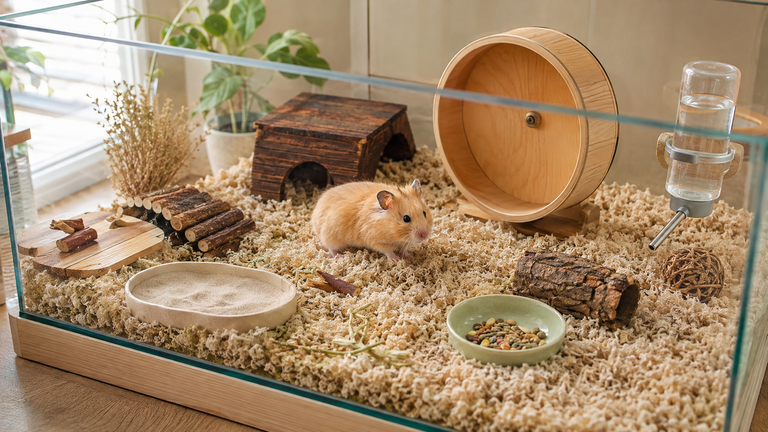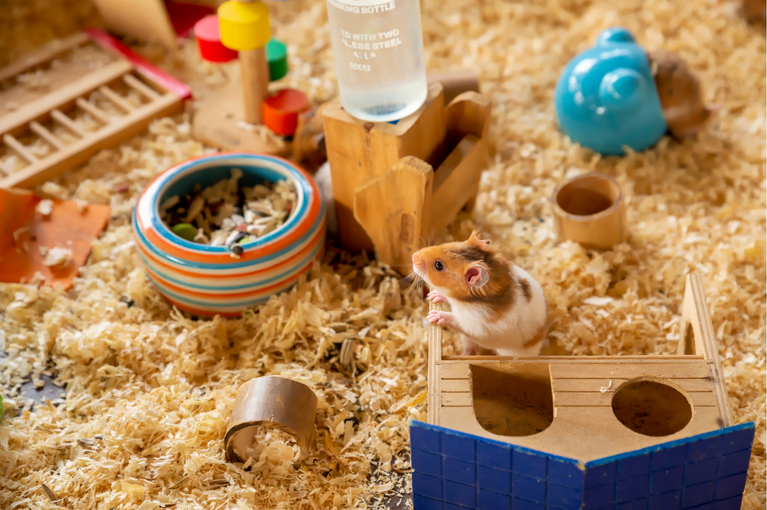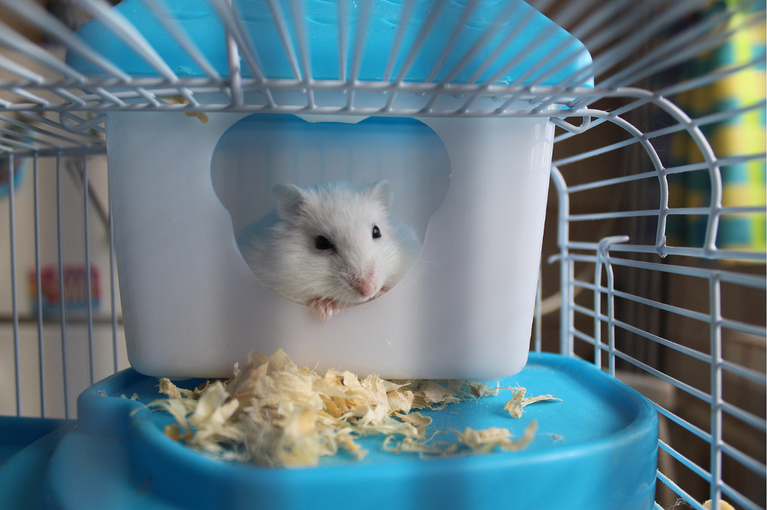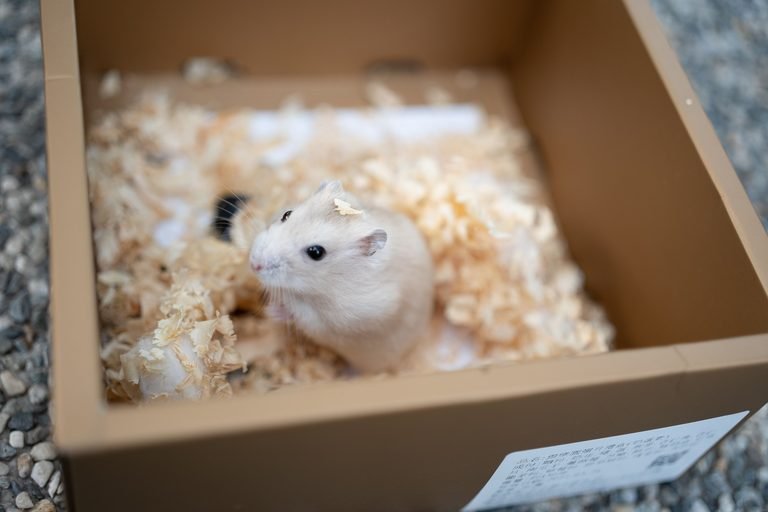
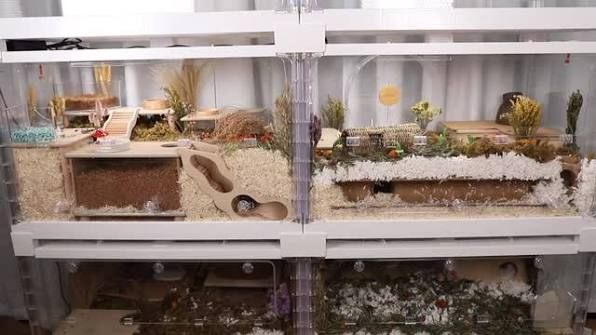
Every hamster needs a secure enclosed place to sleep and nest, and additional hides and tunnels can make the enclosure feel safer and more interesting to explore. A multi-chamber hide is an excellent option because hamsters often prefer to sleep away from the entrance, but it does not have to be wooden. Cardboard, ceramic, plastic and suitable wooden hides can all work when they are roomy, stable and free from hazards.
For nesting material, soft paper is one of the simplest choices. Avoid cotton-wool-style or fluffy nesting products because their long fibers can entangle limbs and have also been associated with pouch and intestinal problems.
Why do hamsters need a hide?
Hamsters naturally spend much of their resting time inside burrows and nests rather than sleeping exposed.
The RSPCA says hamsters should always have a suitable place to hide as well as a nesting box large enough to sleep, move around and establish a food store.
Blue Cross similarly recommends an enclosed sleeping hide.
This makes a hide a basic part of the enclosure rather than optional decoration.
A hamster with deep bedding may also build its own underground nest, which is exactly the kind of natural behavior a good setup should allow.
See the hamster bedding depth guide for the burrowing side of the setup.
Is a multi-chamber hide better?
A multi-chamber hide is a very good choice, but it is not the only acceptable design.
Blue Cross specifically says that an enclosed hide should ideally be multi-chamber because hamsters prefer to sleep away from the entrance.
That is a much better reason to recommend one than saying it perfectly replicates a natural burrow.
A multi-chamber layout can also give the hamster separate sheltered spaces it can use differently.
But if your enclosure has a roomy single-chamber nest box that your hamster uses comfortably, there is no evidence-based reason to declare it unsafe simply because it has one entrance.
The important features are:
- Enough room for the hamster to turn and nest comfortably
- A sheltered, dark interior
- Safe access
- Stable construction
- No sharp or damaged edges
- Enough space around it for normal movement
Does a hamster need more than one hide?
At least one proper enclosed sleeping or nesting hide is essential.
Additional hides, tunnels and covered areas are useful enrichment when the enclosure has room for them.
Woodgreen recommends houses, hides, tunnels, tubes and cork logs as part of hamster enrichment, while Blue Cross recommends hides and tunnels because they encourage cautious hamsters to explore while still having cover available.
I would not turn this into a fixed rule such as:
Every hamster needs exactly three hides.
Enclosure size, bedding depth and layout differ.
A better setup goal is to provide one secure nesting area plus additional cover around the enclosure, without filling so much floor space with objects that the hamster loses room to dig and move.
What materials are safe for hamster hides?
There is no need to choose one universally superior material.
Cardboard
Cardboard is inexpensive and has direct support from several welfare and veterinary sources.
Blue Cross recommends cardboard boxes as hides and notes that several boxes can be connected with cardboard tubes.
Merck Veterinary Manual also lists sturdy cardboard as suitable material for a hamster nesting box.
Cardboard will eventually become chewed or soiled, which is fine. Replace it when necessary.
Wood
Wooden houses and hides are also widely recommended.
Woodgreen includes wooden houses among suitable enclosure enrichment, and Merck lists sturdy wood as an option for a nesting box.
If you use a DIY wooden object, avoid unknown paints, preservatives or finishes that the hamster may chew.
Inspect wooden items periodically for damage, splinters or heavily soiled areas.
Ceramic
Woodgreen specifically includes ceramic houses and hides among suitable options.
Ceramic hides are sturdy and easy to clean, although heavy objects should be placed securely so that burrowing underneath them cannot cause them to collapse onto the hamster.
Woodgreen recommends sturdy platforms for heavy items such as ceramic hides.
Plastic
Plastic is not automatically inferior.
Woodgreen also lists plastic houses and hides as acceptable enrichment.
Choose a sufficiently roomy product and inspect it for damaged or heavily chewed areas.
So the useful question is not:
Is wood better than plastic?
It is:
Is this particular hide large, secure and appropriate for my hamster?
What about cork hides and tunnels?
Cork logs can be useful enrichment.
Woodgreen specifically recommends cork logs, along with tunnels and branches, as part of a varied hamster enclosure.
They can provide covered routes and additional texture without replacing the hamster’s main enclosed nesting area.
Inspect natural items periodically and replace them if they become badly damaged or contaminated.
Are tunnels good for hamsters?
Yes.
Tunnels give hamsters covered routes to move through and explore.
Woodgreen recommends:
- Plastic tunnels
- Wooden tunnels
- Cardboard tubes
- Cork logs
Blue Cross also recommends hides and tunnels in both the enclosure and supervised play areas.
Merck suggests cardboard packing tubes as play items, provided the tube is large enough for the hamster to move through freely.
That last part is important.
A toilet-paper tube may work for a small hamster but may be too narrow for a large Syrian. Do not force a hamster through a tube simply because it is commonly recommended online.
The hamster should be able to enter, turn or pass through without becoming stuck.
Do tunnels replace deep bedding?
No.
Pre-made tunnels are enrichment. They do not replace the hamster’s opportunity to excavate its own burrow.
The RSPCA emphasizes providing deep substrate that allows digging and burrow construction.
A strong setup therefore combines:
deep bedding + secure nesting space + optional tunnels and covered routes
rather than filling a shallow cage with plastic tubes.
What nesting material should go inside a hide?
Soft paper is one of the simplest choices.
Blue Cross recommends shredded soft paper, bedding or toilet paper inside the sleeping hide.
Merck Veterinary Manual recommends plain white facial tissue or unprinted paper towel cut into strips.
Suitable options therefore include:
- Plain soft toilet tissue
- Unprinted paper towel
- Soft paper-based bedding
- Shredded plain paper or cardboard suitable for hamsters
You do not need to build the finished nest yourself.
Place suitable material in or near the sleeping area and allow the hamster to arrange it.
Is hay safe as nesting material?
Some reputable welfare guidance does include hay.
The RSPCA lists good-quality hay among suitable hamster nesting materials, and Woodgreen also includes meadow or orchard hay as part of suitable substrate options.
So hay does not need to be categorically removed from hamster setups.
However, hamsters do not depend on hay nutritionally in the way rabbits and guinea pigs do.
Soft paper bedding remains a simple nesting option if you prefer not to use hay.
Why is fluffy hamster bedding dangerous?
This warning has strong welfare support.
The RSPCA advises against cotton wool and similar fluffy nesting products because the material can separate into thin, strong strands. These can tangle around a hamster and interfere with circulation to a limb.
The RSPCA also notes concern if the material is eaten.
Woodgreen gives an even more specific warning: cotton-wool-style bedding and seed-pod bedding can become wrapped around the body and legs and may contribute to pouch prolapse and intestinal blockage.
So I would avoid these products even when the package says they are designed for small animals.
Use soft paper-based nesting material instead.
Are scented or colored nesting materials unsafe?
I would prioritize plain, low-dust, hamster-appropriate paper material.
There is no reason to seek scented nesting products, and strong fragrance provides no benefit to the hamster.
However, I would not automatically label every colored piece of paper toxic merely because it has color.
For DIY materials, plain unprinted paper is the simplest conservative option because you know exactly what you are providing.
Should you rotate hides and tunnels?
Not constantly.
Changing enrichment occasionally can create novelty, but hamsters also depend heavily on familiar scent and enclosure layout.
There is no need to rearrange the entire enclosure every few days to prevent boredom.
Keep important sleeping and nesting areas relatively predictable and add enrichment without repeatedly destroying established burrows and nests.
How should you clean a hamster hide?
Clean based on what is actually dirty rather than stripping the nest on a rigid schedule.
The RSPCA recommends removing soiled bedding and uneaten food regularly while avoiding excessive disturbance.
During larger enclosure cleans, it recommends retaining some clean, unsoiled old bedding and nesting material because scent is important to hamsters.
So:
- Remove wet or visibly soiled material.
- Remove perishable food that has been stored and is beginning to spoil.
- Clean a hide if it has become contaminated.
- Preserve some clean familiar nesting material when possible.
- Avoid destroying a clean nest simply because it exists.
Do not ignore a wet or dirty nest indefinitely in the name of preserving scent. Hygiene still matters.
Can cardboard boxes be used as hamster hides?
Yes.
Blue Cross specifically recommends them, and they are one of the easiest inexpensive enrichment options.
Choose an appropriately sized plain cardboard box, remove tape or potentially hazardous attachments, and make sure any doorway is large enough for comfortable entry.
Replace the box when it becomes heavily soiled or damaged.
Can toilet roll tubes be used?
Yes for appropriately sized hamsters.
Merck specifically mentions toilet-paper tubes as toys for small hamsters.
For a larger hamster, use a wider cardboard tube instead if the opening is tight.
The goal is a usable tunnel, not squeezing the hamster into whatever cardboard happens to be available.
Where should a sleeping hide go?
Give the hamster somewhere sheltered and relatively undisturbed.
The RSPCA notes that hamsters like the nesting box placed near nesting material and food, but recommends keeping it away from the water source in case a bottle leaks.
Deep bedding beneath or around a floorless hide can also let the hamster extend the nest into its own burrow.
Blue Cross suggests cutting an opening in the bottom of a cardboard hide so the hamster can burrow directly into the substrate underneath.
Frequently asked questions
What is the best hamster hide?
A roomy enclosed hide is the priority. A multi-chamber design is an excellent option because Blue Cross notes that hamsters prefer sleeping away from the entrance, but it does not need to be wooden.
Are plastic hamster hides safe?
They can be. Woodgreen specifically lists plastic houses and hides as suitable enrichment. Choose an appropriately sized one and replace it if chewing creates damaged or sharp areas.
How many hides does a hamster need?
Provide at least one secure enclosed nesting space and additional cover or tunnels where the enclosure allows. There is no evidence-based universal rule requiring exactly two or three hides.
Can I use a cardboard box as a hamster hide?
Yes. Cardboard boxes are recommended by Blue Cross and Merck and are inexpensive to replace when chewed or soiled.
Should I remove my hamster’s nest when cleaning?
Remove wet, dirty or spoiled material, but try to preserve some clean familiar nesting material. The RSPCA advises balancing hygiene with avoiding unnecessary disruption of the hamster’s scent environment.
The bottom line
Every hamster should have a secure enclosed place to sleep and nest, but there is no single material or hide design that every owner needs to buy.
Multi-chamber hides are an excellent choice and have direct support from Blue Cross, particularly because they allow the hamster to sleep away from the entrance.
Wood, ceramic, plastic and cardboard hides can all work. Tunnels made from suitable cardboard, wood, plastic or cork can add useful covered routes for exploration.
For nesting, soft plain paper is simple and well supported. Avoid cotton wool and fluffy fiber products because their strands can entangle a hamster, and welfare guidance also warns about pouch and intestinal complications.
Most importantly, hides and tunnels should complement deep bedding rather than replace it. Give your hamster somewhere sheltered to sleep and enough substrate to build the underground spaces it would choose for itself.
Keep reading: Hamster cage setup | Hamster bedding depth | Hamster sand bath | How to tame a hamster