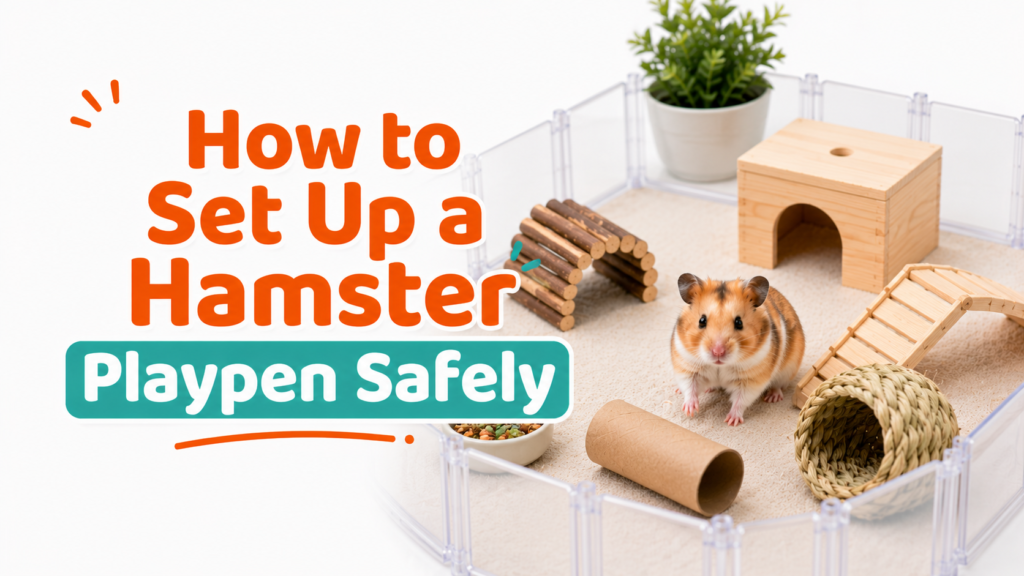
A hamster playpen is a safe, enclosed floor area for supervised out-of-cage time. Use solid, tall walls of at least 12 inches that your hamster cannot climb or chew through, place it on an easy-to-clean floor, and add hides and toys. Always supervise, never leave a hamster unattended, and skip exercise balls, which are welfare-contested.
A playpen is a great way to give your hamster extra space to explore beyond the cage, as long as it is set up safely. Hamsters are surprising escape artists and chewers, so a few precautions make all the difference. This guide shows how to build a safe playpen and what to put in it.
Why use a playpen?
Even a large enclosure benefits from occasional change of scenery. A playpen gives your hamster a fresh space to explore, more room to roam, and enrichment that breaks up the routine. It is also a useful safe spot to keep your hamster during cage cleaning. Supervised floor time in a secure pen is far safer than letting a hamster roam a room, where it can disappear, chew wires, or get hurt.
Choosing the right playpen
- Tall, solid walls. Aim for at least 12 inches high, with smooth solid sides. Hamsters are excellent climbers, so mesh or barred panels can be scaled and escaped.
- Chew-proof material. Avoid thin cardboard walls a determined hamster can gnaw through. Sturdy plastic or a large storage bin works well.
- A secure base. Place the pen on an easy-to-clean, non-slip floor, or line it with a washable mat. Hamsters can squeeze under gaps, so make sure the base is flush.
- Enough space. Bigger is better, giving real room to explore.
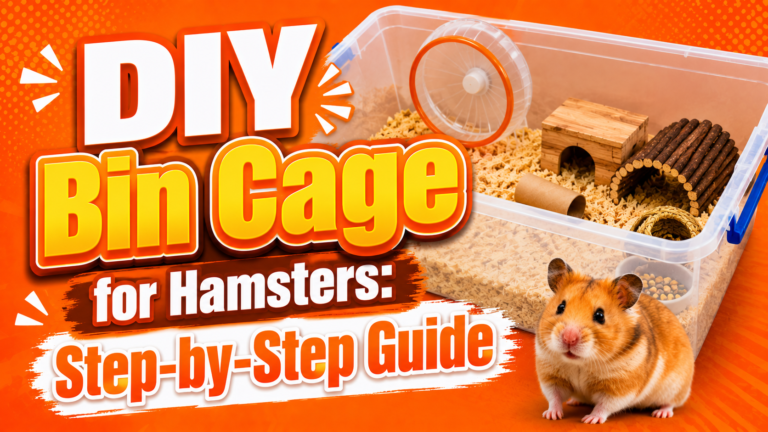
A simple DIY option: a large empty storage bin makes an instant, escape-proof playpen with tall smooth walls. Add bedding or a towel, some hides, and toys, and you have a safe space in minutes.
What to put in the playpen
Make it interesting and reassuring.
- A hide or two, so your hamster has somewhere to retreat if startled.
- Tunnels and safe chews for exploration and gnawing.
- A scatter of food to forage, which encourages natural behavior.
- Familiar items from the cage, such as a hide that smells like home, to reduce stress.
Playpen safety rules
- Always supervise. Never leave a hamster alone in a playpen, even briefly. They escape and chew faster than you expect.
- Hamster-proof the area. Clear away cables, small objects, houseplants, and anything that could be chewed or swallowed if your hamster does get out.
- Choose the right time. Use the playpen in the evening when your hamster is naturally awake, not during the day when it wants to sleep.
- Keep sessions reasonable. A relaxed 20 to 30 minutes is plenty. Return your hamster to its cage if it seems tired or stressed.
- Watch for gaps. Check the walls and base for any spot a hamster could squeeze under or climb.
A note on exercise balls
Many owners ask about plastic exercise balls. These are welfare-contested, since hamsters cannot see or smell well through them, the ventilation is limited, and they can bump into furniture. A secure playpen with supervised floor time is a kinder way to give extra exercise. If you ever use a ball, keep it very brief and supervised, but a playpen is the better default.
Choosing a floor surface
What the playpen sits on matters for both safety and cleanup. A smooth, washable floor like tile, laminate, or sealed wood is easy to wipe down, but it can be slippery, so add a towel, fleece liner, or a layer of bedding for grip and comfort. Avoid setting up directly on carpet, where droppings and scattered food are hard to clean and a determined hamster may try to chew or dig at the fibers. A large washable mat under the whole pen catches mess and gives your hamster a surer footing as it explores.
Reading your hamster in the playpen
Out-of-cage time should be fun, not frightening, so watch your hamster’s body language. A relaxed, curious hamster will sniff around, explore, and forage, which are all good signs. A hamster that freezes, presses into a corner, or repeatedly tries to climb out may be overwhelmed and ready to go back to its cage. Let your hamster set the pace, keep early sessions short, and always make returning to the familiar enclosure easy and calm rather than chasing or grabbing.
Frequently asked questions
How tall should a hamster playpen be?
At least 12 inches with smooth, solid walls. Hamsters climb well, so anything shorter or with a grippable surface can be escaped.
Can I leave my hamster in a playpen unsupervised?
No. Always supervise. Hamsters escape and chew quickly, and an unsupervised pen is not safe.
How often can my hamster use a playpen?
Daily is fine if your hamster enjoys it, in short evening sessions. Let your hamster’s comfort guide you, and never force a nervous one out.
What can I use as a playpen without buying one?
A large empty storage bin makes an instant, escape-proof playpen with tall smooth walls. Add a towel or bedding, a hide, and a few toys, and supervise as always.
How long should playpen time last?
A relaxed 20 to 30 minutes is plenty, always supervised and in the evening. Let your hamster’s comfort guide you, and return it to its cage if it seems tired or stressed.
The bottom line
A playpen gives your hamster safe extra space to explore, as long as it has tall solid walls, a secure base, familiar hides and toys, and your full supervision. Skip exercise balls in favor of supervised floor time. For the home base itself, see our cage setup guide, and build trust first with our taming guide.
Keep reading: Cage Setup Guide, How to Tame a Hamster, Leaving Your Hamster Alone.
Note: every hamster is an individual, and needs vary a little by species. When in doubt about your hamster’s comfort or health, an exotic vet can advise.