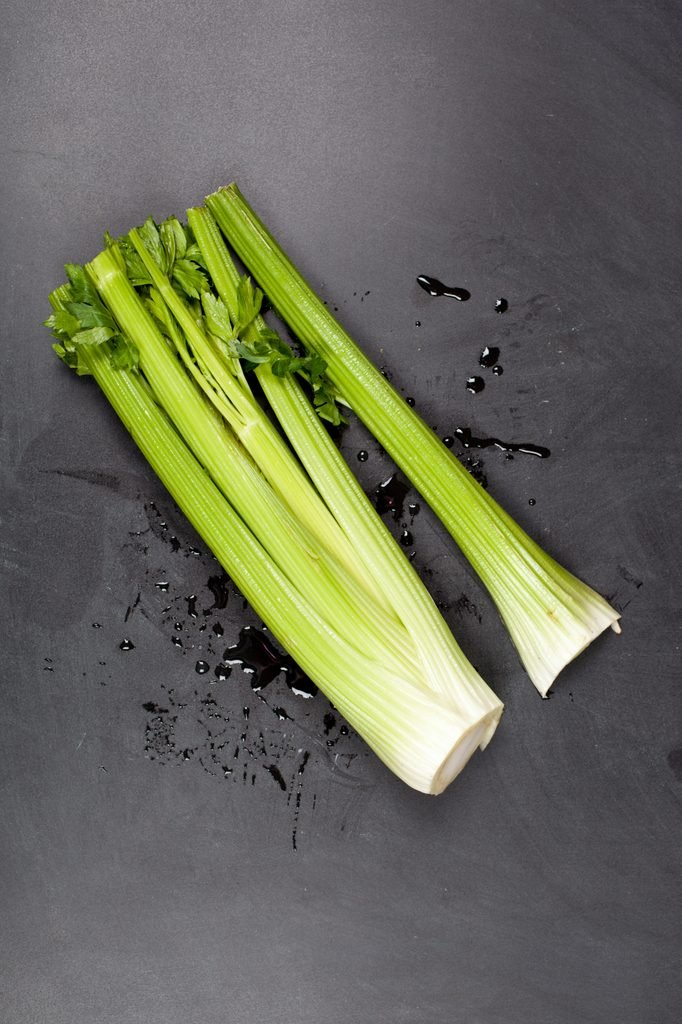
I would skip celery for hamsters. It is not a food I would label as a known poison, but PetMD’s veterinarian-reviewed hamster feeding guidance specifically advises against celery stalks because the stringy fibers can present a choking hazard. Celery also offers little nutritional reason to take that avoidable risk.
That makes celery a good example of why “low in sugar” does not automatically mean “good for hamsters.” There are plenty of fresh foods with clearer hamster-specific guidance behind them.
Is celery safe for hamsters?
I would not describe celery simply as “safe.”
PetMD’s veterinarian-reviewed hamster feeding guide specifically says celery stalks are not a good snack for hamsters because their strings can pose a choking hazard. The same guide recommends other raw vegetables such as leafy greens, bell peppers and cucumber instead.
By comparison, Blue Cross says that most vegetables can be offered in very small portions, but it does not specifically list celery.
When a general recommendation and a food-specific veterinary warning point in different directions, the conservative decision is straightforward: there is little reason to bother feeding celery.
For vegetables with clearer guidance, see our safe vegetables for hamsters.
What is the problem with celery strings?
Celery stalks contain long fibrous strands. PetMD specifically identifies those strings as a choking hazard for hamsters.
Hamsters also have unusually large cheek pouches that they use to transport food. Separate PetMD veterinary guidance explains that pieces of food can sometimes become stuck in these pouches, causing impaction and potentially abscesses.
However, I would be careful not to turn those two facts into the stronger claim that “celery strings are proven to tangle inside hamster cheek pouches.” The hamster-specific celery guidance directly establishes the choking concern. Cheek-pouch impaction is a broader food-related problem.
Either way, there is no obvious benefit to choosing a stringy vegetable when other options are available.
Can I make celery safe by chopping it finely?
Chopping celery into smaller pieces would logically shorten the fibers, but I could not find an authoritative hamster source establishing a particular cutting size that makes celery safe.
That means rules such as:
- cut it under 1 cm
- make it pea-sized
- peel every string
- give half as much to a dwarf
should not be presented as evidence-based hamster feeding instructions.
You could spend time modifying celery to reduce an avoidable concern, but there is a simpler decision: choose another vegetable.
Is celery good for dwarf hamsters because it is low in sugar?
No. That reasoning is too simplistic.
Celery being relatively low in sugar does not override the practical concern identified in hamster-specific veterinary guidance. A food does not become useful for a hamster merely because its sugar content is low.
It is also inaccurate to treat every dwarf hamster as having the same diabetes risk. Campbell’s hamsters and some Campbell’s/Winter White hybrid lines deserve more metabolic caution, but that does not mean every low-sugar food should automatically be recommended to every dwarf species.
In the case of celery, there is no need to create separate Syrian and dwarf serving rules at all. I would simply choose a better-supported fresh food.
Does celery’s water content cause diarrhea?
I would not use this as a reason to avoid celery.
The common claim that “watery vegetables cause diarrhea in hamsters” is more specific than the evidence supports. The RSPCA warns against sudden dietary changes and stale food because these can upset a hamster’s stomach, but that is not the same as proving that celery’s water content itself causes diarrhea.
Fresh foods should still be offered in small amounts, introduced sensibly and removed before they spoil.
If a hamster develops moist droppings, reduced appetite or soiled hindquarters, the RSPCA advises contacting a veterinarian promptly rather than following a rigid waiting period at home.
Can hamsters eat celery leaves?
I could not find strong hamster-specific veterinary or animal-welfare guidance specifically establishing celery leaves as a recommended food.
Because the stalk already has little reason to be included in the diet, there is no practical need to experiment with the leaves either.
I would choose a vegetable that reputable hamster sources actually name instead.
What if my hamster already ate celery?
A small accidental bite of plain celery is not the same situation as eating a known toxin.
If your hamster has already eaten a little celery and appears normal, remove the remaining celery and monitor normal eating, activity and droppings. There is no reason to attempt home treatments or induce vomiting.
Pay particular attention if your hamster appears to have difficulty swallowing or eating, repeatedly paws at its mouth, or develops swelling around a cheek pouch.
PetMD advises veterinary attention when a hamster has swollen cheek pouches that do not empty normally. Contact a hamster-experienced veterinarian promptly if your hamster appears unwell.
If the celery came from a prepared human dish rather than a plain stalk, check the other ingredients as well.
What vegetables are better choices than celery?
There is no shortage of alternatives with clearer support.
Blue Cross says most vegetables can form part of the small amount of fresh food offered alongside a commercial hamster diet. Woodgreen specifically lists options including broccoli, cucumber, cabbage, kale, peas, green beans, cauliflower and asparagus.
The goal is not to find the vegetable with the lowest possible sugar number. It is to choose a food with reasonable hamster-specific support and keep the complete staple diet as the foundation.
See what hamsters can eat for the wider feeding framework.
The bottom line
I would skip celery for hamsters.
PetMD specifically cautions against celery stalks because their strings can present a choking hazard, and celery provides little nutritional reason to work around that concern. General advice saying hamsters can eat many vegetables is not strong enough to justify calling celery unequivocally safe when a veterinarian-reviewed hamster source specifically advises against it.
There is also no evidence-based need for pea-sized celery portions, weekly celery schedules or special dwarf hamster limits.
Instead of trying to make celery work, choose one of the fresh vegetables that established hamster-care sources explicitly recommend.
Keep reading: What can hamsters eat? | Safe vegetables for hamsters | Foods toxic to hamsters
Hamster Corner provides general educational information about hamster care. It is not a substitute for professional veterinary advice. If your hamster has difficulty eating or swallowing, persistent cheek swelling, reduced appetite or another meaningful change in health or behavior, contact a hamster-experienced veterinarian promptly.