
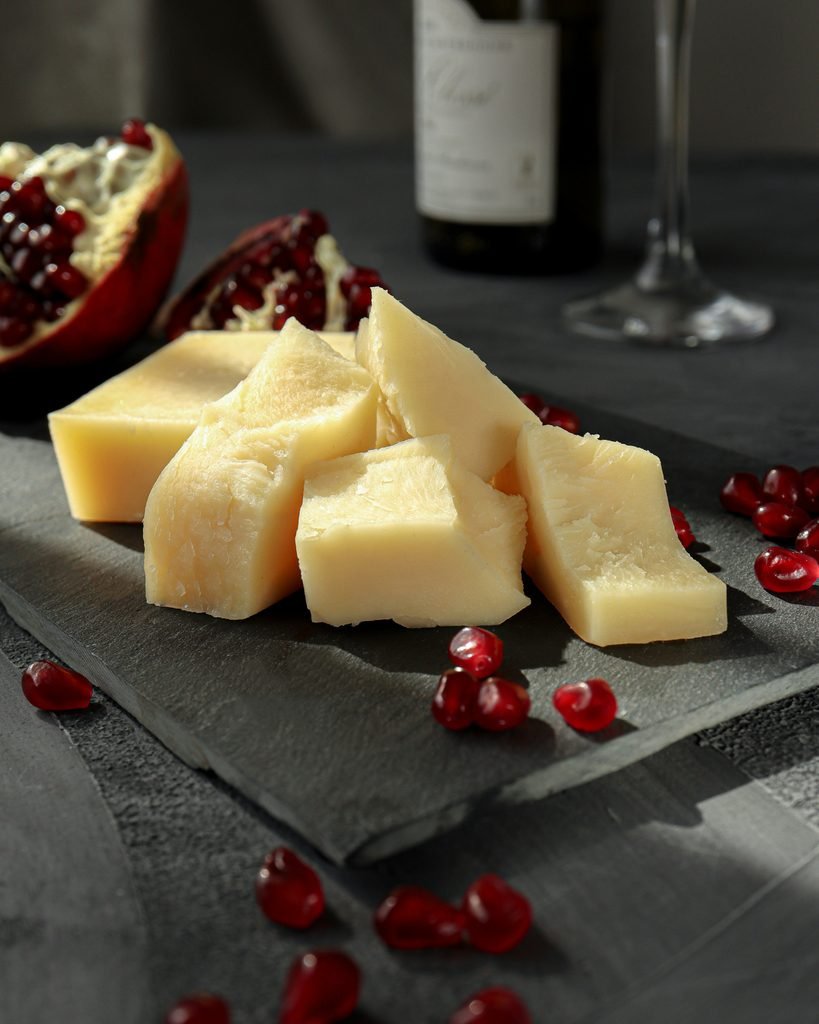
Yes. Hamsters can eat a small amount of plain cheese occasionally, but there is no nutritional reason they need it. Cheese is better treated as an optional extra rather than a protein food you deliberately add to the diet. If you do offer it, keep the amount very small and avoid mold-ripened, flavored or heavily processed varieties.
One common warning about cheese also needs correcting: it is not accurate to simply say that hamsters cannot digest dairy. Research on adult golden hamsters found an unusual tolerance for lactose. That does not make cheese an ideal hamster food, but lactose intolerance is not a good reason by itself to label cheese unsafe.
Is cheese safe for hamsters?
There is direct hamster-specific guidance supporting cheese in the diet.
The Agriculture, Fisheries and Conservation Department describes hamsters as omnivores and lists cheese, boiled egg, meat and invertebrates as possible sources of animal protein.
More recent veterinary-reviewed guidance also supports small amounts. Chewy’s hamster cheese guide, which includes advice from an exotic veterinarian and a veterinary toxicologist, says hamsters can be fed cheese in moderation.
So cheese is not something that needs to appear on a hamster’s toxic-food list.
But safe to eat does not mean necessary or particularly useful.
A good complete hamster food should already provide the protein and other nutrients your hamster needs. Woodgreen, for example, notes that a quality dry mix should already contain an appropriate protein source and suggests foods such as boiled egg or mealworms only as occasional extras.
For the broader feeding framework, see what hamsters can eat.
Do hamsters have trouble digesting dairy?
The blanket claim that hamsters are lactose intolerant or “do not digest dairy well” is poorly supported.
A published study titled Lactose ingestion in the adult golden hamster tested adult golden hamsters consuming lactose solutions and lactose-containing diets. The animals consumed substantial amounts without noticeable adverse effects, leading the researcher to describe hamsters as having an unusual tolerance for lactose.
There is an important limitation: the study involved golden hamsters. It does not establish identical lactose tolerance in every pet hamster species.
It also does not prove that pet hamsters should be eating cheese regularly. An experimental lactose-tolerance study answers a much narrower question than a pet feeding guide.
The practical takeaway is simply this: lactose intolerance is not a strong reason to call a small amount of cheese unsafe for a Syrian hamster.
How much cheese can a hamster eat?
There is no need to invent a rule such as “one pea-sized piece twice a month.”
Cheese-specific veterinary guidance generally says to keep servings tiny, while broader welfare guidance also emphasizes that extras should remain small compared with the complete diet.
If you choose to offer cheese, give only a very small piece occasionally. There is no benefit to turning it into a scheduled weekly or monthly food.
This approach also avoids pretending that there is a scientifically established cheese allowance for Syrian, Campbell’s, Winter White and Roborovski hamsters when there is not.
What type of cheese can hamsters eat?
If you want to offer cheese, choose something plain and non-moldy, with no added seasoning.
Chewy’s veterinary-reviewed guidance lists several non-moldy cheeses as acceptable in small amounts, including cheddar, Swiss, Colby and cottage cheese.
However, you do not need to search for a special “hamster cheese.” The simplest choice is a tiny amount of plain cheese with a straightforward ingredient list.
Cheese I would skip
I would avoid:
- Blue cheese and other mold-ripened cheeses
- Cheese containing onion or garlic
- Spicy or heavily seasoned cheese
- Highly processed cheese products with long ingredient lists
- Cheese that is old or has developed unintended mold
Chewy specifically advises against moldy, soft or flavored cheeses, including blue cheese and products containing ingredients such as onion or garlic.
This is also a case where being conservative costs you nothing. Hamsters do not need cheese, so there is no reason to experiment with a questionable variety just because another type might be acceptable.
Can dwarf hamsters eat cheese?
I would not create a separate rule that says all dwarf hamsters should avoid cheese.
The original version of this article treated dwarf hamsters as universally more prone to obesity and diabetes and therefore unsuitable for cheese. That oversimplifies the differences between hamster species and lines.
There is also no good hamster-specific evidence establishing a special cheese serving schedule for Roborovski, Campbell’s or Winter White hamsters.
If you have a healthy dwarf hamster and choose to offer cheese, the same conservative principle applies: keep it very small and occasional.
If your hamster has a diagnosed medical condition or your vet has recommended a specific diet, follow that advice instead of a general online treat guide.
Is cheese a good protein treat?
Cheese contains protein, but that does not mean your hamster needs cheese as a protein supplement.
A properly formulated staple food should already cover the hamster’s protein requirements. Woodgreen Pets Charity notes that a quality dry mix should already contain a protein source such as dried mealworms.
Woodgreen also lists small amounts of boiled egg and mealworms as optional treats.
That makes the decision fairly easy: if you specifically want to offer an animal-based extra, cheese is one option, but it has no obvious advantage over other suitable foods.
See can hamsters eat eggs for another commonly used animal-based extra.
Can hamsters eat cottage cheese?
Veterinary-reviewed guidance from Chewy includes cottage cheese among cheeses that can be offered in small amounts.
However, cottage cheese is moist and perishable. If you offer it at all, keep the quantity very small and make sure leftovers do not remain hidden in the enclosure.
The RSPCA warns that wet foods can support mold and bacterial growth when left in the cage and recommends removing perishable wet food promptly.
There is no need to offer cottage cheese simply because it contains protein. It remains an optional extra.
Can hamsters eat cream cheese?
I would skip cream cheese.
Not because I found evidence that plain cream cheese is specifically toxic to hamsters, but because there is little reason to choose it when better-supported options exist.
It is a soft, rich and highly perishable food, and I could not find strong hamster-specific guidance recommending it.
That makes this an unnecessary food, not a known poison.
What if my hamster accidentally eats cheese?
If your hamster steals a small amount of ordinary plain cheese, there is usually no reason to panic.
Remove the rest, check exactly what type of cheese it was and look at the ingredient list. Flavored products matter because they may contain ingredients that need to be assessed separately.
If it was a large amount, a mold-ripened cheese, a product containing a known hazard, or your hamster develops diarrhea, reduced appetite, significant lethargy or another noticeable change, contact a hamster-experienced vet.
Do not try to induce vomiting, force water, fast your hamster or use another home treatment.
The bottom line
Hamsters can eat a small amount of plain cheese occasionally, but cheese is optional and there is no good reason to make it part of the regular diet.
The common claim that hamsters cannot digest dairy is also too simplistic. Adult golden hamsters have shown unusual lactose tolerance in published research, although that evidence should not automatically be extended to every hamster species.
If you do offer cheese, choose a plain, non-moldy variety and keep the amount very small. Skip mold-ripened, flavored and heavily processed products.
More importantly, do not use cheese as a protein supplement. A complete hamster diet should already cover your hamster’s nutritional needs.
Keep reading: What can hamsters eat? | Can hamsters eat eggs? | Foods toxic to hamsters
Hamster Corner provides general educational information about hamster care. It is not a substitute for professional veterinary advice. If your hamster becomes unwell or needs a medically managed diet, contact a hamster-experienced vet.


[…] Rare treat only. See can hamsters eat cheese […]