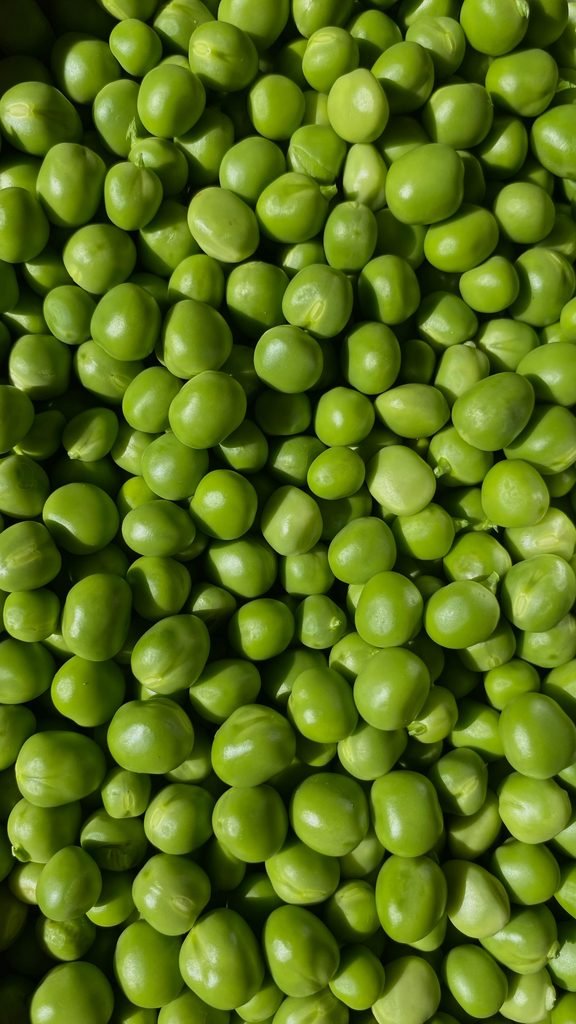
Yes. Hamsters can eat peas in small amounts. PDSA specifically lists peas among vegetables suitable for hamsters, and Woodgreen includes peas in its safe vegetable list. Keep them plain and treat them as a fresh extra rather than an everyday food.
Peas are one of the easier foods to answer because we do not have to infer their suitability from human nutrition data. The main questions are how much to offer, whether frozen or canned peas are okay, and whether hamsters can eat the pods too.
Are peas safe for hamsters?
Yes. Both PDSA and Woodgreen directly include peas in their hamster feeding guidance.
That is stronger evidence than simply saying peas “contain nothing toxic.” We have reputable hamster-specific sources actually recommending them as part of the small amount of fresh food that can accompany a hamster’s main diet.
The RSPCA recommends building the diet around a nutritionally balanced hamster food and supplementing it with small quantities of fresh plant foods.
Peas do not need to be presented as a protein supplement, fiber supplement or special source of nutrients. A complete hamster food should already provide the nutritional foundation.
For more context, see what hamsters can eat and our guide to safe vegetables for hamsters.
How many peas can a hamster eat?
There is no good pea-specific evidence establishing “one pea for dwarfs” or “one to two peas for Syrians.”
Woodgreen gives a broader practical guideline for fresh treats: keep portions roughly the size of your hamster’s ear and offer them once or twice a week.
That is more defensible than creating a pea count for each species.
Depending on the size of the pea and the hamster, that may mean only a small amount. If peas are new to your hamster, start conservatively and introduce them gradually.
There is also no reason peas need to appear on a fixed weekly schedule. They are simply one of several fresh vegetables you can rotate through in modest amounts.
Can hamsters eat frozen peas?
Plain frozen peas are probably low concern once fully thawed, but there is an evidence distinction worth making.
The hamster-specific sources I found list peas but do not specifically discuss frozen peas. If the ingredient list contains nothing except peas, freezing does not turn them into a different food, so a small amount of fully thawed plain pea is a reasonable option.
Do not serve a pea frozen solid. There is no benefit to doing so when it can simply be thawed first.
Avoid frozen vegetable mixes with sauces, seasoning or other ingredients unless you have checked exactly what they contain.
Can hamsters eat canned peas?
Fresh peas are the simpler choice.
The problem with canned peas is not that every can is automatically “full of salt.” Sodium content varies, and no-salt-added products exist.
However, Woodgreen advises avoiding salty and seasoned human foods for hamsters. Many canned vegetables contain added salt or other ingredients, so canned peas require more label checking than fresh or plain frozen peas.
If you already have canned peas, check the ingredients and nutrition label rather than assuming all canned peas are identical. Still, there is little reason to choose them specifically for a hamster when plain peas are readily available.
Can hamsters eat pea pods?
There is direct support for this too.
An RSPCA pet-safety guide lists peas, including leaves and pods, among foods suitable for smaller pets such as hamsters and gerbils.
So an edible pea pod does not need to be automatically classified as unsafe or “too stringy.”
Wash it and offer only a small piece. As with the peas themselves, the pod is an optional fresh extra rather than something your hamster needs.
Can dwarf hamsters eat peas?
Yes. Neither PDSA nor Woodgreen restricts peas to Syrian hamsters.
What I would remove is the common explanation that peas are especially suitable for “diabetes-prone dwarfs because they are low in sugar.”
PDSA specifically says Russian dwarf hamsters are particularly prone to diabetes and recommends avoiding overfeeding sugary fruits and vegetables. That is not evidence that every Roborovski, Campbell’s, Winter White, Chinese hamster and hybrid has the same diabetes risk, nor does it turn peas into a diabetes-management food.
A dwarf hamster can simply have peas as one of the vegetables included in reputable hamster feeding guidance.
If your hamster has diagnosed diabetes, obesity or another condition affecting its diet, follow veterinary advice for that individual hamster.
Do peas cause digestive problems?
Peas are not singled out by the hamster sources I found as a particular digestive hazard.
As with any unfamiliar food, however, introduce them gradually rather than making a sudden large change to the diet. Woodgreen specifically recommends gradual introduction of new foods to reduce the chance of digestive upset.
The RSPCA also advises avoiding sudden dietary changes. If your hamster begins eating less, develops moist droppings or has soiled hindquarters, it recommends contacting a vet promptly.
Do not automatically stop all fresh foods for several days and wait for the problem to resolve. Significant or persistent changes in appetite, stools, energy or behavior deserve veterinary attention.
Are peas better than fruit for hamsters?
There is no need to rank peas against fruit solely by sugar content.
Peas are directly listed as suitable vegetables, while reputable hamster guides also approve certain fruits in small amounts. What matters more is the overall diet, portion size and variety.
If you are deciding between several fresh foods, choose foods with clear hamster-specific guidance rather than trying to calculate a “weekly sugar budget.”
The bottom line
Yes, hamsters can eat peas. PDSA and Woodgreen both directly list them among suitable vegetables for hamsters, so this is a well-supported fresh-food option.
Keep the amount small rather than relying on an invented one-pea-versus-two-pea species chart. Plain fresh peas have the clearest support, while plain frozen peas are a reasonable option once thawed. Canned peas are less convenient because products may contain added salt or other ingredients.
Pea pods also have direct support from RSPCA guidance for small pets.
And there is no need to sell peas as a special high-protein, high-fiber or diabetes-friendly food. They are simply one suitable fresh extra alongside a nutritionally complete hamster diet.
Keep reading: What can hamsters eat? | Safe vegetables for hamsters | Foods toxic to hamsters
Hamster Corner provides general educational information about hamster care. It is not a substitute for professional veterinary advice. If your hamster shows signs of illness, contact a hamster-experienced vet promptly.