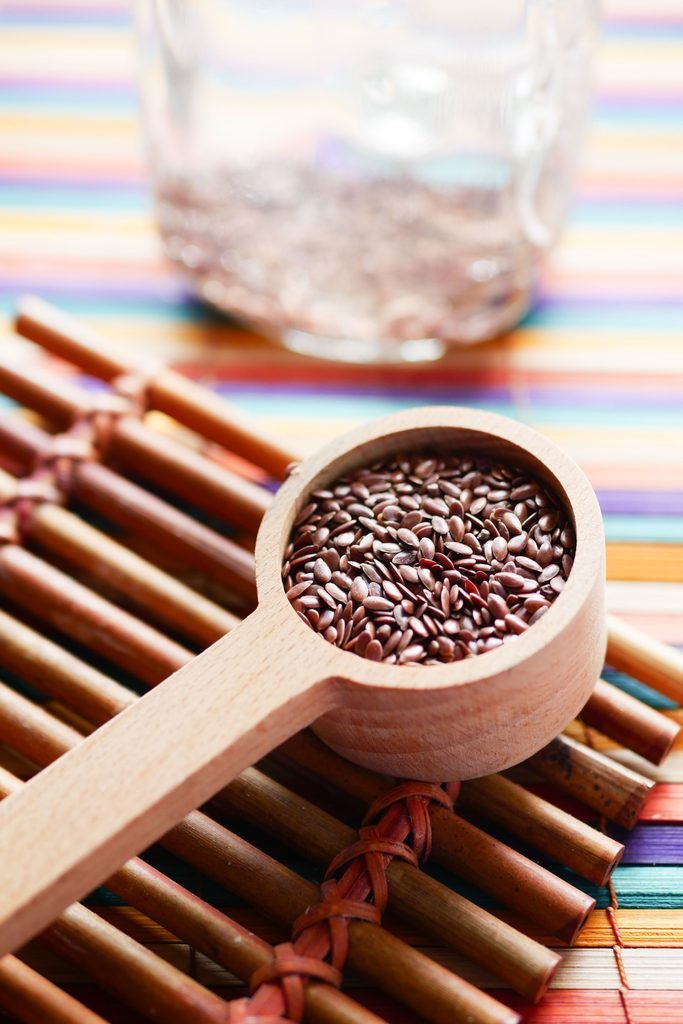
Yes, hamsters can eat flax seeds, also called linseeds, as part of a varied diet. Woodgreen Pets Charity specifically lists flax seed sprays among suitable seed sprays for hamsters, making flax one of the seeds with direct hamster-care support.
What we do not have is an evidence-based rule saying a hamster should receive exactly one or two individual seeds two or three times a week.
Flax is energy-dense, so keep it as a small part of the overall seed mix or use it as occasional foraging enrichment rather than adding large spoonfuls separately.
Are flax seeds safe for hamsters?
Yes, plain flax seeds can be included in a hamster’s diet.
Woodgreen specifically recommends seed sprays such as sorghum, flax, amaranth, pagima, and delicia as part of hamster feeding and enrichment.
There is also experimental evidence that Golden Syrian hamsters can consume diets containing flaxseed. Several published hamster nutrition studies have used flaxseed-enriched diets over periods of weeks or months.
Those studies were designed to investigate metabolism and disease, not to determine pet treat portions. So they support the broader point that flaxseed is not inherently incompatible with hamster diets, but they do not give us a rule such as “two seeds every Tuesday and Friday.”
How many flax seeds can a hamster eat?
There is no established veterinary serving specifically for individual flax seeds.
That makes the original chart:
| Hamster | Portion | Frequency |
|---|---|---|
| Syrian | 1–2 seeds | 2–3 times a week |
| Dwarf | 1 seed | Twice a week |
more precise than the evidence supports.
Flax seeds are tiny. If your hamster’s nutritionally appropriate dry mix already contains flax, you do not need to pick the seeds out or count them individually.
If you are adding flax separately, use a very small amount and treat it as part of the hamster’s overall seeds and extras rather than an unlimited bonus food.
For the bigger feeding picture, see what hamsters can eat.
What are flax sprays?
A flax spray is the dried seed-bearing part of the flax plant rather than a pile of loose seeds.
This is actually the form with the clearest hamster-care recommendation.
Woodgreen includes flax among seed sprays that can be placed in the enclosure. Seed sprays encourage a hamster to forage and harvest food rather than receiving everything from a bowl.
That gives flax sprays two useful roles:
- a small food source
- foraging enrichment
You do not need to strip every seed from the spray before putting it in the enclosure.
However, sprays still contain food. They should complement the normal diet rather than become an unlimited refill station.
Are flax seeds high in fat?
Yes.
Flaxseed is roughly 40–45% fat by weight, depending on variety and growing conditions. A recent review gives an average composition of about 42% fat.
That sounds dramatic until you remember how tiny an individual flax seed is.
So I would not write:
“a few flax seeds will quickly make your hamster obese.”
The more useful point is that seeds contribute calories to the total diet. If your hamster already eats a balanced seed-based mix, extra seeds should be counted as extras rather than piled on top without limit.
Body condition and total food intake matter more than fear of one particular seed.
Do flax seeds improve a hamster’s coat?
I would not promise that.
Flaxseed is rich in alpha-linolenic acid, or ALA, an omega-3 fatty acid. Research in hamsters has examined flaxseed and ALA for effects on lipid metabolism and several experimental health outcomes.
But that does not establish that feeding a pet hamster a few flax seeds will noticeably improve its fur.
A healthy coat depends on the complete diet, overall health, grooming, age, genetics, and other factors.
If your hamster develops hair loss, flaky skin, an unusually greasy coat, or another persistent coat change, adding flax is not a substitute for finding the cause.
Can dwarf hamsters eat flax seeds?
Yes. There is no reason to automatically exclude dwarf hamsters from plain flax.
The original article argued that flax was especially suitable because it is low in sugar and therefore has no diabetes concern.
That is unnecessary.
Roborovski, Winter White, Campbell’s, and hybrid dwarf hamsters should not all be treated as one identical medical-risk category, and sugar content is not the only factor determining whether a food belongs in a balanced diet.
A dwarf hamster simply eats less food overall than a Syrian, so any separately added flax should also be proportionally modest.
If your individual hamster has diabetes, obesity, or another medical condition requiring dietary management, follow your veterinarian’s advice.
Can hamsters eat ground flaxseed?
I would not deliberately add spoonfuls of ground flaxseed to a hamster’s food.
The original article suggested up to one-third of a teaspoon, which is difficult to reconcile with its recommendation of only one or two whole seeds.
Ground flax is much easier to dispense in an unexpectedly large amount because the individual seeds are no longer visible.
Research in humans also shows that grinding changes the accessibility of flaxseed’s fats and other compounds.
For an ordinary pet hamster, there is no need to maximize flax nutrient absorption.
Whole flax seeds or a flax spray are much easier ways to offer it as part of a varied diet.
Are raw flax seeds safe?
Plain mature flax seed is the form normally used in foods and seed mixes.
Flax naturally contains cyanogenic glycosides. This sounds alarming, but the existence of a compound does not by itself establish that a few flax seeds are dangerous to a hamster.
Reviews of flaxseed nutrition confirm that these compounds are present and that their concentration varies between cultivars and processing methods.
What we cannot responsibly say is:
one or two seeds contain a negligible dose proven safe for every hamster.
There is no hamster-specific toxicology threshold supporting that exact claim.
Fortunately, we do not need one. Flax is already used in hamster feeding, including as seed sprays, and controlled hamster studies have used diets containing considerably more flaxseed than an occasional seed.
Use ordinary food-grade or pet-quality mature flax rather than immature plants or concentrated flax products.
Should flax seeds be cooked?
No special cooking step is necessary for ordinary flax offered as part of a hamster diet.
Woodgreen recommends flax seed sprays, which are used dry rather than cooked.
Do not confuse whole seeds with flax products designed for people, such as:
- flaxseed oil supplements
- flavored flax crackers
- sweetened cereal
- baked flax snacks
- seasoned seed mixes
For a hamster, plain is enough.
Can hamsters have flaxseed oil?
I would not add flaxseed oil to a healthy hamster’s food.
Oil is far more concentrated than a whole seed and removes the natural portion control that comes from eating the seed itself.
There is also no routine hamster-care guidance suggesting that healthy pet hamsters need supplemental flax oil.
If a veterinarian recommends a specific fatty-acid supplement for a medical reason, that is different from adding oil because flax has a healthy reputation in human nutrition.
Whole flax vs. ground flax vs. flax spray
For most owners, the choice is straightforward.
| Form | Recommendation |
|---|---|
| Whole plain flax seed | Fine as a small part of the diet |
| Flax seed spray | Good option for food-based enrichment |
| Ground flaxseed | Not necessary, easy to over-serve |
| Flaxseed oil | Do not routinely supplement |
| Flavored or salted flax products | Skip |
The flax spray is particularly useful because it makes your hamster work for the seeds.
Can flax seeds cause diarrhea?
I would not claim that a few seeds commonly cause diarrhea because they contain fiber.
Flax is fiber-rich by weight, but the amount contained in a few tiny seeds is also tiny.
Sudden dietary changes and excessive amounts of unfamiliar foods can contribute to digestive upset more broadly.
If your hamster develops persistent soft or watery droppings, do not simply blame flax and wait several days. Remove unusual foods, keep the normal diet and water available, and seek veterinary advice if diarrhea persists or your hamster appears unwell.
Can flax seeds make a hamster fat?
Any calorie-containing food can contribute to excess weight if the overall diet provides more energy than the hamster needs.
Flax is energy-dense because it contains a substantial amount of fat, but it is misleading to single out one or two seeds as an obesity problem by themselves.
The more important questions are:
- Is the staple food nutritionally balanced?
- Is the hamster receiving large amounts of extra seeds and treats?
- Is food being portioned appropriately?
- Is the hamster maintaining a healthy body condition?
Woodgreen recommends portioning the complete dry food and using scatter feeding to encourage natural foraging rather than continuously filling a bowl.
That has a much bigger impact on diet quality than obsessing over one flax seed.
How should you offer flax seeds?
There are a few easy options.
You can:
- leave flax already present in a balanced seed mix
- scatter a small amount with the normal food
- provide a flax seed spray for foraging
- place a few seeds in different areas of the enclosure
Scatter feeding is especially useful because hamsters naturally spend time searching for and collecting food.
Do not keep adding seeds because the previous ones disappear. Hamsters often move food into hidden caches rather than eating it immediately.
How should flax seeds be stored?
Keep dry seeds in a sealed container in a cool, dry place and follow the storage guidance on the package.
Flax contains a high proportion of unsaturated fats, which can oxidize over time, particularly after grinding.
If seeds or ground flax develop an obviously stale or unpleasant odor, replace them rather than feeding questionable food.
There is no need to create an arbitrary rule that every opened pack must be discarded after a specific number of months. Packaging and storage conditions differ.
Flax seeds vs. sunflower seeds
Both can occur in seed-based diets, but they have different nutritional profiles.
Flax is particularly rich in ALA, while sunflower seeds have a different fatty-acid composition.
That does not mean flax is automatically “healthier.”
A good hamster diet works through balance and variety, not by finding a single super-seed.
If a complete hamster mix already contains several appropriate seeds, grains, pulses, and a protein source, you do not need to separately optimize the omega-3 content of each bite.
Do hamsters need flax seeds?
No.
Flax can be a useful ingredient or enrichment food, especially in the form of a seed spray, but it is not an essential standalone supplement.
Your hamster can have an excellent diet without ever receiving a separate spoonful of flax.
This distinction matters because flax is often marketed to humans as a nutritional “superfood.” That reputation should not automatically turn it into a supplement for pets.
Use it as one small part of dietary variety, not as medicine.
The bottom line
Hamsters can eat flax seeds, and Woodgreen specifically lists flax seed sprays as a suitable hamster food and enrichment option.
There is no evidence-based need to restrict a hamster to exactly one or two flax seeds two or three times per week, and there is no reason to give a large spoonful either.
If flax is already part of a balanced dry mix, leave it there. If you want to offer it separately, keep the amount modest or use a flax spray to encourage natural foraging.
I would choose whole seeds or sprays over ground flax and would not routinely add flaxseed oil.
Flax is a useful bit of variety. It does not need to become a supplement, a coat treatment, or another food that has to be measured seed by seed.
Keep reading: What can hamsters eat? | Foods toxic to hamsters | Safe vegetables for hamsters
Hamster Corner provides general educational information about hamster care and nutrition. If your hamster develops persistent diarrhea, stops eating, has unexplained weight changes, or shows another significant health problem, contact a veterinarian experienced with hamsters.