Kiwi is probably okay for a healthy hamster in a small amount, but hamster-specific evidence is limited. A veterinary-reviewed source specifically considers fresh kiwi suitable for hamsters, while major welfare guides generally allow small pieces of fruit without naming kiwi individually. There is no good evidence for a pea-sized weekly dose, a separate dwarf portion, or claims that kiwi’s acidity causes mouth sores.
Kiwi is not a citrus fruit and is not listed among the common foods major hamster-care sources tell owners to avoid. However, that does not mean every online rule about kiwi has been proven.
The most useful approach is to treat fresh kiwi as an optional fruit, not as a nutritional supplement or something a hamster needs regularly.
Is kiwi safe for hamsters?
A veterinary-reviewed PangoVet article specifically identifies kiwi as a fruit hamsters can eat occasionally. More broadly, PetMD says hamsters can receive some fresh fruits as treats, while RSPCA recommends only small quantities of fruit alongside a balanced hamster diet.
That is enough to make a little fresh kiwi a reasonable option for a healthy hamster.
What the available evidence does not establish is that kiwi:
- should be fed every week
- has a precise safe dose in grams
- provides a special vitamin C benefit
- is particularly good or bad for dwarf hamsters
- causes mouth sores because it is acidic
- causes diarrhea simply because it contains a lot of water
For most hamsters, the complete staple diet matters far more than whether kiwi is included.
How much kiwi can a hamster eat?
There is no established hamster-specific kiwi serving size.
The previous rule of exactly one pea-sized piece for a Syrian and half a pea-sized piece for a dwarf sounds scientific, but it is not based on a demonstrated safety threshold.
Woodgreen Pets Charity gives a more useful general guideline for treats: roughly the size of the hamster’s ear, offered in moderation.
That guideline applies to treats broadly, not specifically to kiwi. Think of it as a reminder that fresh fruit should remain a very small part of the diet.
You do not need to put kiwi on a weekly feeding schedule. A hamster can have a completely appropriate diet without eating kiwi at all.
Does kiwi have too much sugar for hamsters?
Kiwi naturally contains sugar, as fruits do, so it should remain an extra rather than a major part of the diet.
That does not justify claiming that a small piece of kiwi will cause diabetes or that every dwarf hamster requires a special half-sized portion.
Different dwarf hamster species do not have identical metabolic risk profiles. Campbell’s hamsters and some hybrid lines deserve particular caution around dietary management, but that should not be turned into the blanket claim that all dwarf hamsters are “diabetes-prone.”
For a healthy hamster, the practical concern is simpler: too many sweet extras can crowd out the nutritionally complete staple diet and add unnecessary calories.
If your hamster has diagnosed diabetes, follow a veterinarian’s individual feeding advice rather than relying on a generic fruit schedule.
Is kiwi too acidic for hamsters?
There is no good hamster-specific evidence showing that the normal acidity of a small piece of ripe kiwi causes mouth sores or cheek-pouch irritation.
That claim should not be presented as fact.
Kiwi does contain organic acids, which contribute to its tart flavor, but chemical composition alone does not prove a clinical effect in hamsters.
This is an important distinction because many pet-food articles turn ordinary properties of human foods into unsupported hamster health warnings.
If a particular food repeatedly seems to cause a problem for your hamster, stop offering it and discuss persistent symptoms with a hamster-experienced veterinarian.
Should you remove kiwi skin?
Peeling kiwi is a simple conservative choice, but the skin should not be described as proven toxic or dangerous to hamsters.
The veterinary-reviewed kiwi guidance from PangoVet recommends peeling it before serving. Major hamster-welfare sources do not appear to provide kiwi-skin-specific guidance.
So if you deliberately offer kiwi, washing it and serving a small piece of peeled flesh is the simplest option.
That avoids unnecessary uncertainty without inventing claims that the fuzzy skin scratches cheek pouches or causes irritation.
What about kiwi seeds?
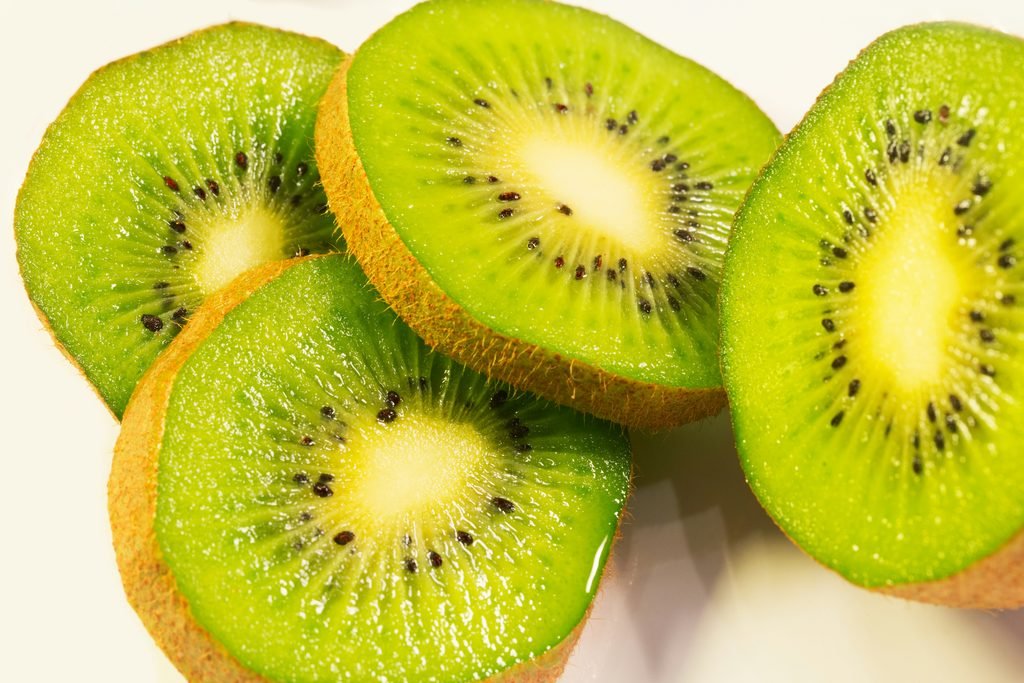
Kiwi contains many tiny edible black seeds within the flesh.
There is little hamster-specific evidence assessing those seeds individually. PetMD broadly advises removing seeds and pits from fruit before feeding hamsters, although that recommendation is mainly practical for fruits containing distinct seeds or pits that can be removed.
With kiwi, separating every tiny seed from the flesh is not realistic.
There is no clear evidence that the tiny seeds naturally contained in a small piece of kiwi flesh represent a known hamster toxin. If you are uncomfortable with that uncertainty, there is also no nutritional reason your hamster needs kiwi in the first place.
Does kiwi’s vitamin C benefit hamsters?
There is no reason to feed kiwi specifically as a vitamin C supplement.
Kiwi is rich in vitamin C from a human nutrition perspective, but nutrient composition does not automatically prove a health benefit when the same food is fed to another species.
A nutritionally complete hamster diet should already provide the vitamins and minerals a healthy hamster requires.
Giving kiwi to “boost immunity,” improve coat health, or correct a vitamin deficiency would go beyond the evidence.
If a veterinarian identifies a nutritional deficiency, treatment should follow veterinary advice rather than relying on individual fruits.
Can dwarf hamsters eat kiwi?
There is no strong evidence supporting a separate kiwi rule for dwarf hamsters.
A healthy dwarf hamster does not automatically need exactly half the Syrian serving, nor does kiwi become unsafe simply because the hamster is a dwarf.
If you choose to share kiwi, keep it as a small optional fruit treat rather than a regular part of the diet.
For hamsters with diagnosed diabetes or another metabolic condition, individualized veterinary guidance is more appropriate than a generic species chart.
Can hamsters eat golden kiwi?
Golden kiwi is closely related to the common green kiwi and is not known to contain a hamster-specific toxin.
However, I could not find reliable hamster-specific research establishing separate feeding guidance for golden kiwi.
There is therefore no reason to create a different serving schedule for it.
If you choose to offer it, use the same conservative approach as with green kiwi: fresh, plain, a small amount, and peeled if you want to minimize uncertainty.
What about dried kiwi, kiwi juice and kiwi candy?
These are easy to skip.
Dried kiwi is more concentrated than fresh fruit and commercial versions may contain added sugar. Kiwi juice removes the structure of the whole fruit and provides no advantage over fresh water and a balanced diet. Candy and other kiwi-flavored products can contain sugar, flavorings and other ingredients a hamster does not need.
Fresh plain fruit is much easier to assess.
Water should remain the hamster’s routine drink.
Does cold kiwi cause digestive upset?
There is no good evidence that a small piece of refrigerated kiwi causes digestive problems simply because it is cold.
The old advice to bring kiwi to room temperature before feeding was unnecessarily specific.
You can offer a freshly cut piece without creating a temperature protocol. What matters more is that the fruit is fresh, clean and not allowed to spoil in the enclosure.
What if a hamster eats too much kiwi?
Do not assume that kiwi automatically causes diarrhea because it contains water, fiber, sugar or acid.
If your hamster eats more kiwi than intended, remove the remaining fruit and return to the normal balanced diet.
Monitor:
- appetite
- activity
- normal drinking
- stool
- overall behavior
Do not fast the hamster, force water, give milk or attempt another home treatment.
If your hamster develops significant or persistent diarrhea, stops eating, becomes unusually lethargic or weak, or shows another meaningful change, contact a veterinarian experienced with hamsters.
Remove fresh kiwi from food stores
Hamsters often carry fresh food into their nest or another food cache.
Unlike the normal dry food hoard, moist fruit can deteriorate. The RSPCA notes that wet foods are susceptible to mold and bacterial growth.
After offering kiwi, check likely food stores and remove fresh fruit before it spoils. There is no need to destroy clean, dry stored food at the same time.
The bottom line
Kiwi is probably suitable for a healthy hamster in a small amount, but the evidence is not strong enough to justify the precise rules commonly repeated online.
A veterinary-reviewed source specifically considers kiwi acceptable for hamsters, while broader veterinary and welfare guidance allows small amounts of fresh fruit as extras.
There is no reliable basis for saying a Syrian needs exactly a pea-sized piece once a week, a dwarf needs exactly half that amount, cold kiwi causes digestive upset, or kiwi’s acidity causes mouth sores.
If you want to offer kiwi, a small piece of fresh peeled flesh is a reasonable conservative choice. Keep it optional and let a nutritionally complete hamster food remain the foundation of the diet.
Keep reading: What can hamsters eat? | Foods toxic to hamsters | Safe vegetables for hamsters
Sources: Woodgreen hamster feeding guide | RSPCA hamster diet guide | PetMD: What can hamsters eat? | PangoVet veterinary-reviewed kiwi guide
Hamster Corner provides general educational information about hamster care and nutrition. If your hamster develops a significant change in appetite, stool, activity or behavior, contact a veterinarian experienced with hamsters.