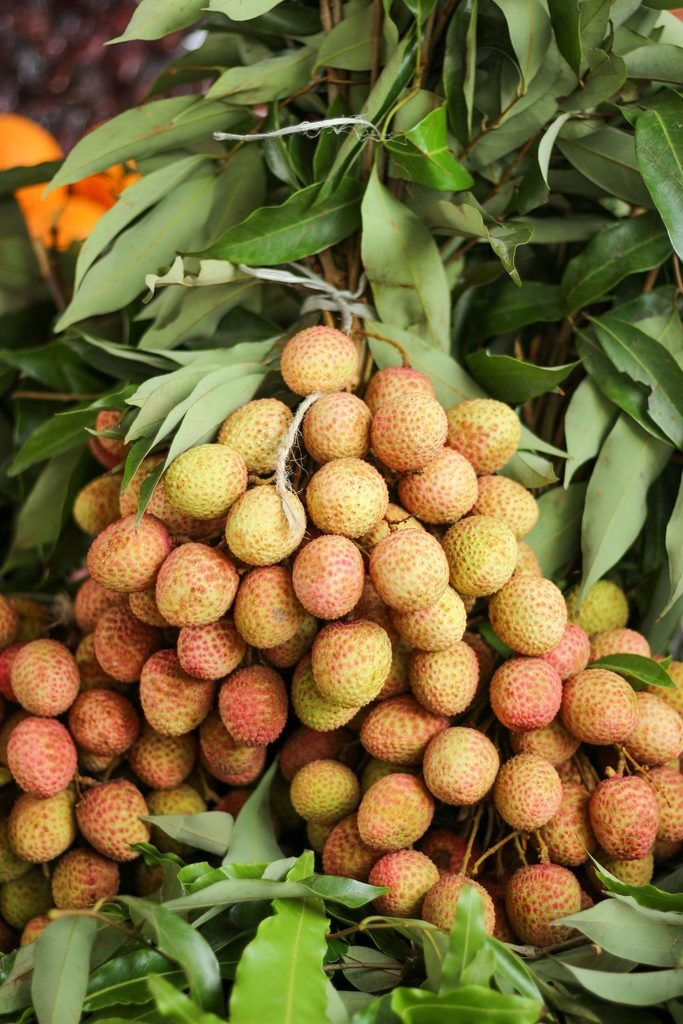
There is not enough hamster-specific evidence to recommend lychee as a treat. A small bite of ripe lychee flesh is not proven toxic to hamsters, but lychee contains naturally occurring compounds that deserve more caution than an ordinary fruit, and no reliable source establishes a safe hamster serving. With several better-studied fruits available, I would skip lychee rather than put it on a weekly feeding schedule.
The old advice that a Syrian can safely eat a pea-sized piece once a week and a dwarf can have a smaller amount once or twice a month sounds precise, but those limits are not based on hamster-specific research.
Lychee is also more complicated than its sugar content suggests. Scientific studies have detected the naturally occurring compounds methylenecyclopropylglycine, or MCPG, and hypoglycin A in lychee fruit. Those compounds have been associated with severe hypoglycemia in other contexts.
That does not mean a tiny piece of ripe lychee is known to poison a hamster. It means there is too much uncertainty to call lychee a proven safe treat.
Is lychee safe for hamsters?
There is no strong veterinary or major hamster-welfare source that specifically recommends lychee for pet hamsters.
General hamster guidance does allow small amounts of fruit. The RSPCA recommends pieces of fruit alongside a balanced hamster diet, while Woodgreen Pets Charity specifically lists fruits such as apple, pear, strawberries, blueberries and banana.
Lychee is not on Woodgreen’s recommended fruit list.
That absence alone does not make it toxic, but lychee has an additional complication: research has identified MCPG and hypoglycin A in the edible flesh as well as the seed.
For that reason, I would classify lychee as evidence limited and unnecessary, rather than simply “safe.”
Why lychee deserves more caution than most fruit
Lychee belongs to the soapberry family, Sapindaceae.
Research investigating outbreaks of severe hypoglycemia in humans has detected MCPG and hypoglycin A in lychee. These compounds can interfere with normal energy metabolism and have caused profound hypoglycemia in experimental and clinical settings.
Studies have also found that concentrations can vary between fruits and appear to be higher in less-ripe lychees than in ripe fruit.
None of this provides a hamster toxic dose.
That distinction is important. It would be wrong to take a human outbreak and declare that one bite of lychee is poisonous to a hamster.
But it would be equally wrong to ignore the evidence and confidently recommend a weekly serving when no hamster feeding study establishes one.
Can hamsters eat ripe lychee flesh?
A tiny accidental bite of ripe lychee flesh should not automatically be treated as poisoning.
The concern is uncertainty, not proof that every amount is dangerous.
If you are deliberately choosing treats for a hamster, however, there is little reason to select lychee when fruits with clearer hamster-care guidance are available.
Woodgreen specifically lists small amounts of:
- apple without seeds
- pear
- strawberries
- blueberries
- banana
These make more sense when you want to offer fruit occasionally.
For the wider feeding framework, see what hamsters can eat.
How much lychee can a hamster eat?
There is no evidence-based serving size.
The old article recommended:
- one pea-sized piece for a Syrian
- a smaller piece for a dwarf
- once per week for Syrians
- once or twice per month for dwarfs
Those numbers should be removed because no reliable hamster source establishes them.
Woodgreen gives a general treat guideline of roughly the size of a hamster’s ear once or twice a week, but that is guidance for suitable treats broadly. It should not be used to create a safe lychee dose when lychee itself has not been established as a recommended hamster food.
The simplest recommendation is not to make lychee part of the feeding routine.
Should dwarf hamsters avoid lychee because of diabetes?
Lychee should not be turned into a special dwarf-diabetes rule.
The previous version stated that Campbell’s, Winter White and Roborovski hamsters all have a hereditary predisposition to type 2 diabetes. That is too broad.
Metabolic risk differs between hamster species and lines. It is particularly important not to treat every dwarf species as biologically identical.
Lychee is a sweet fruit, but sugar content alone is not the main reason I would skip it. The bigger issue is the lack of hamster-specific feeding evidence combined with what is known about naturally occurring compounds in lychee.
If your hamster has diagnosed diabetes or another metabolic condition, follow an individualized diet from a hamster-experienced veterinarian rather than relying on generic fruit lists.
Should you remove the lychee seed?
Yes. Do not feed the seed.
Lychee seeds are not an edible part of the fruit, and research has specifically identified MCPG and other biologically active compounds in them.
There is no reason to test whether a hamster can chew or tolerate one.
The old article described the seed primarily as a choking hazard and said it contained “small amounts of saponins.” That explanation was both too narrow and unnecessarily specific.
The more useful rule is straightforward: remove the seed completely because it is not an appropriate food and its chemistry is less benign than the ripe flesh.
Can hamsters eat the lychee shell?
Skip the shell as well.
The rough outer pericarp is not the part humans normally eat, and there is no hamster-specific reason to offer it.
I would not claim that it is proven “indigestible” or that it will injure the cheek pouches. Those statements need evidence.
It is simply an unnecessary plant part with no feeding benefit.
Does lychee’s sugar cause diarrhea?
There is no good evidence that eating too much lychee causes hamster diarrhea specifically because of its sugar and water content.
That kind of mechanism is commonly repeated in pet-food articles without direct evidence.
Too much fresh food can disrupt the overall diet, and any unusual food may be poorly tolerated by an individual hamster, but watery stool should not automatically be blamed on fruit being “too watery.”
Significant diarrhea in a hamster deserves attention because hamsters can become seriously ill quickly.
If diarrhea is persistent or accompanied by reduced appetite, lethargy, weakness, a soiled rear end or another meaningful change, contact a hamster-experienced veterinarian rather than waiting for a fixed 24- or 48-hour period.
What about canned lychee?
Canned lychee is not a useful hamster food.
Many products are packed in syrup or sweetened liquid, adding more sugar to a fruit the hamster does not need in the first place.
Interestingly, research has detected very low concentrations of the lychee-associated compounds in some canned samples. That still does not create evidence that canned lychee is a recommended hamster food.
There is simply no benefit to offering it.
Can hamsters eat dried lychee?
I would skip dried lychee too.
Removing water concentrates the fruit into a much smaller piece, and commercial dried fruit may also contain added sugar or other ingredients.
More importantly, dried lychee solves none of the evidence problems surrounding the fruit.
A hamster does not need concentrated tropical fruit when its staple diet should already provide complete nutrition.
Is lychee good for hamsters because it contains vitamin C?
No health benefit has been demonstrated.
Lychee contains vitamin C, copper, potassium and other nutrients when analyzed as human food. That does not prove that feeding lychee improves a hamster’s immunity, health or nutritional status.
A nutritionally complete hamster food should already supply appropriate vitamins and minerals.
Do not use lychee as a vitamin supplement.
Are longan and rambutan the same?
No.
Lychee, longan and rambutan are related fruits, but being related does not mean they automatically have identical chemistry or identical safety profiles.
Research examining soapberry fruits has found differences in levels of MCPG and hypoglycin A between lychee, longan and rambutan samples.
So the old advice to apply the exact same feeding rule to all three fruits was not justified.
Each fruit should be assessed separately rather than assuming botanical relatives are interchangeable.
What if my hamster already ate lychee?
First identify what was eaten.
A tiny amount of ripe flesh is different from chewing the seed, eating an unripe fruit or consuming a processed lychee product with other ingredients.
If your hamster ate a small amount of ripe flesh and is behaving normally, remove the remaining fruit and monitor:
- normal appetite
- activity
- stool
- drinking
- overall behavior
Do not force water, give milk, induce vomiting, fast the hamster or try to treat the situation with sugar at home.
If the seed was chewed or swallowed, the amount was large or unknown, the fruit was clearly unripe, or your hamster develops weakness, unusual lethargy, reduced appetite, neurological signs or another significant change, contact a veterinarian experienced with hamsters.
Keep any packaging or remaining fruit available so you can identify exactly what was eaten.
For other food hazards, see foods toxic to hamsters.
The bottom line
I would not deliberately feed lychee to a hamster.
There is no good hamster-specific evidence establishing lychee as a safe treat or providing a reliable serving size. At the same time, scientific research has identified MCPG and hypoglycin A in lychee fruit and seeds, with concentrations varying according to factors such as ripeness.
That does not justify saying that a tiny bite of ripe lychee is proven toxic to hamsters.
It does justify being more cautious than the old advice of “a pea-sized piece once a week.”
If you want to offer fruit, choose one that reputable hamster-care sources actually recommend, such as apple without seeds, pear, strawberry or blueberry.
Lychee is best classified as unnecessary and evidence limited, not as a routine hamster treat.
Keep reading: What can hamsters eat? | Foods toxic to hamsters
Hamster Corner provides general educational information about hamster care and nutrition. If your hamster eats a questionable food or develops a significant change in appetite, stool, activity or behavior, contact a veterinarian experienced with hamsters.