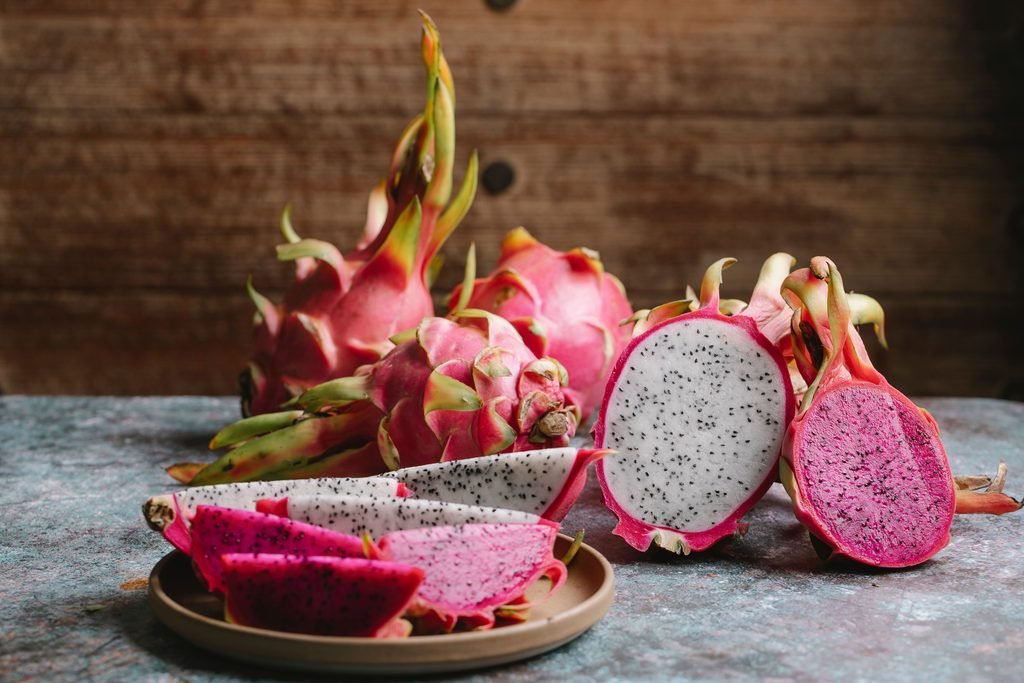
Dragon fruit is not a food I would actively recommend for hamsters because hamster-specific feeding guidance is limited. I could not find a major veterinary or animal-welfare hamster guide that specifically lists dragon fruit, or pitaya, as a recommended fruit.
That does not mean a tiny piece of dragon fruit flesh has been proven toxic. It means we do not have enough hamster-specific evidence to justify rules such as “half a pea twice a week” or to confidently declare the skin and seeds safe.
If you want to give your hamster fruit, there are better-established options such as strawberry, banana, blueberry, apple, and pear.
Is dragon fruit safe for hamsters?
There is no clear hamster-specific answer.
Current PetMD hamster guidance says that most fruits can be offered in limited quantities, while avoiding citrus fruits, rhubarb, and fruit seeds or pits. However, its specific safe-fruit examples include foods such as apple, pear, strawberry, banana, and blueberry rather than dragon fruit.
That puts dragon fruit into an important middle category:
not known to be a routine toxic food, but not specifically supported enough for me to recommend it confidently.
This distinction is useful because many “Can hamsters eat X?” pages online turn a lack of reported toxicity into an automatic yes.
Those are not the same thing.
For foods with clearer hamster guidance, see what hamsters can eat.
Why I would not give an exact dragon fruit serving
The original version recommended a cube measuring about 7 mm, once or twice a week for a Syrian.
There is no hamster-specific study establishing that portion or schedule.
A precise number can make advice look more authoritative without actually making it more accurate.
Veterinary feeding guidance instead gives broader rules. PetMD recommends keeping fruits, vegetables, grains, hay, and treats to a limited share of a hamster’s overall diet, while the nutritionally complete staple food remains the foundation.
If someone chooses to offer an unfamiliar fruit despite limited specific guidance, the reasonable principle is start very small, not “7 mm is the safe dose.”
Is dragon fruit high in sugar?
Dragon fruit contains naturally occurring sugar, but calling it a fixed “8–9 grams per 100 grams” is too simplistic.
Pitaya is a group of related fruits rather than one nutritionally identical product.
Published analyses show noticeable variation between species and cultivars. One scientific review reported total sugar around 5.6 to 6.1 grams per 100 grams for several pitaya species, while another analysis measured approximately 10 to 11 grams per 100 grams in red and white varieties.
The useful lesson for hamster owners is not the exact number.
It is simply that dragon fruit is still fruit, so it should never become a major part of a hamster’s diet.
Can dwarf hamsters eat dragon fruit?
I would not create a separate “safe once a week” rule for dwarf hamsters.
The original article also grouped Roborovski, Winter White, and Campbell’s hamsters together as if all dwarf species carried the same diabetes risk.
That is too broad.
A dwarf hamster is smaller than a Syrian, so any fresh-food portion would naturally need to be smaller. But that does not establish dragon fruit as a suitable food in the first place.
If you want to give a dwarf hamster some fruit, choosing one specifically included in current veterinary hamster feeding guidance is easier than experimenting with pitaya.
If your individual hamster has diabetes, obesity, or another medical condition affecting its diet, follow your veterinarian’s feeding advice.
What about the tiny black seeds?
This is another place where the original article was too confident.
Dragon fruit contains numerous tiny edible seeds that humans normally consume with the flesh. But I could not find hamster-specific veterinary evidence establishing that those seeds have been evaluated for routine feeding.
PetMD gives a broad recommendation to remove fruit seeds and pits before feeding fruit to hamsters.
Dragon fruit seeds are obviously very different in size and structure from an apple seed or cherry pit, so I would not call them a proven choking or poisoning hazard.
But I also would not write:
“the seeds are definitely safe and pose no impaction risk.”
We simply do not have evidence strong enough for that statement.
This is another reason dragon fruit is less convenient than a fruit with clearer hamster feeding guidance.
Can hamsters eat dragon fruit skin?
I would not offer the skin.
The outer peel is not the part normally recommended as fruit flesh, and hamster-specific feeding guidance for it is essentially absent.
Research on dragon fruit describes the peel as chemically distinct from the pulp and particularly rich in pigments and other phytochemicals. That may be interesting for food science, but it does not establish the peel as hamster food.
There is no reason to experiment with it.
If a hamster ever receives dragon fruit flesh, the outer skin should be removed.
Is red dragon fruit better than white dragon fruit?
There is no useful hamster-care evidence showing that one color is safer.
Red and white pitaya do differ nutritionally. Research has found differences in sugar concentrations, pigments, antioxidant activity, minerals, and other compounds.
But those human nutrition differences do not tell us which variety should be fed to a hamster.
The original article said red dragon fruit had more antioxidants but was slightly sweeter and then treated both as equally safe.
That is unnecessary detail for the actual search intent.
Neither variety is nutritionally important enough to a hamster that you need to choose between them.
Does dragon fruit provide useful vitamins for hamsters?
Dragon fruit contains vitamins, minerals, fiber, and plant compounds.
That does not make it an important hamster food.
A nutritionally complete hamster diet should already provide the nutrients your hamster requires.
Adding dragon fruit for vitamin C, potassium, antioxidants, or fiber is unnecessary and can encourage owners to think of individual fruits as supplements.
They are not.
Fruit is an optional extra.
Does dragon fruit’s high water content cause diarrhea?
Too much fresh produce can contribute to gastrointestinal upset in hamsters, but I would not blame dragon fruit specifically because it contains a lot of water.
PetMD warns more broadly that excessive fruit and vegetables can upset a hamster’s gastrointestinal tract, and sudden dietary changes can also cause diarrhea.
That gives us a better rule:
introduce unfamiliar fresh foods cautiously and keep the amount limited.
There is no need for a separate theory that “watery fruit causes diarrhea.”
Should dragon fruit be served at room temperature?
There is no good evidence that refrigerated dragon fruit causes digestive upset simply because it is cold.
The original article told owners to warm refrigerated fruit to room temperature before feeding it.
I would remove that rule.
More relevant considerations are:
- use fresh food
- avoid spoiled fruit
- keep portions small
- remove uneaten fresh food before it deteriorates
Hamsters commonly hoard food, so fresh fruit can disappear into bedding rather than being eaten immediately.
Can hamsters eat dried dragon fruit?
I would skip dried dragon fruit.
Removing water concentrates the fruit into a much smaller piece, making portion control harder. Commercial dried dragon fruit may also contain added sugar or other ingredients.
More importantly, if fresh dragon fruit itself has limited hamster-specific guidance, turning it into a concentrated processed version does not make it a better choice.
If you want to offer fruit, use one with clearer hamster feeding recommendations.
What if my hamster already ate dragon fruit?
If your hamster took a tiny amount of plain dragon fruit flesh, do not automatically assume it has been poisoned.
I could not find evidence identifying ordinary dragon fruit flesh as a known hamster toxin.
Remove the remaining fruit and monitor your hamster normally.
Watch for meaningful changes such as:
- diarrhea or unusually soft droppings
- reduced appetite
- unusual lethargy
- another significant change from normal behavior
If your hamster ate a large amount, ate another ingredient along with the dragon fruit, or becomes unwell, contact a veterinarian experienced with hamsters.
Do not use home remedies or attempt to make a hamster vomit.
For known problem foods, see foods toxic to hamsters.
What fruit can I offer instead?
There is no shortage of alternatives.
Current PetMD dwarf hamster guidance specifically lists:
- apple
- pear
- strawberry
- banana
- blueberry
These fruits still need moderation because fruit should remain a small part of the overall diet.
You could also skip fruit entirely and offer one of the suitable foods in our safe vegetables for hamsters guide.
For example, cucumber has much clearer hamster-specific feeding guidance than dragon fruit.
Is dragon fruit worth trying?
For me, no.
This is not because I found evidence that dragon fruit is dangerous.
It is because there is no advantage to experimenting with it.
A hamster does not need pitaya, and several fruits and vegetables already have direct support from veterinary or animal-welfare feeding guides.
That gives owners an easier decision:
If a food is optional and the hamster-specific evidence is weak, choose something better established.
That is more useful than stretching uncertain evidence into a confident yes.
The bottom line
There is not enough hamster-specific guidance for me to recommend dragon fruit as a regular hamster treat.
Dragon fruit flesh is not currently known as a classic hamster toxin, but that does not establish a safe portion, frequency, or species-specific feeding rule.
The original recommendations of a half-pea-sized cube, one or two servings per week, smaller weekly servings for dwarfs, and guaranteed-safe seeds were more precise than the evidence supports.
If your hamster accidentally eats a tiny piece of plain flesh, there is no reason to assume poisoning. Remove the rest and monitor normally.
For intentional treats, I would choose fruits and vegetables with clearer hamster-care guidance instead.
Keep reading: What can hamsters eat? | Can hamsters eat cucumber? | Safe vegetables for hamsters | Foods toxic to hamsters
Hamster Corner provides general educational information about hamster care and nutrition. If your hamster eats a questionable food or develops diarrhea, loss of appetite, lethargy, or another significant health change, contact a veterinarian experienced with hamsters.