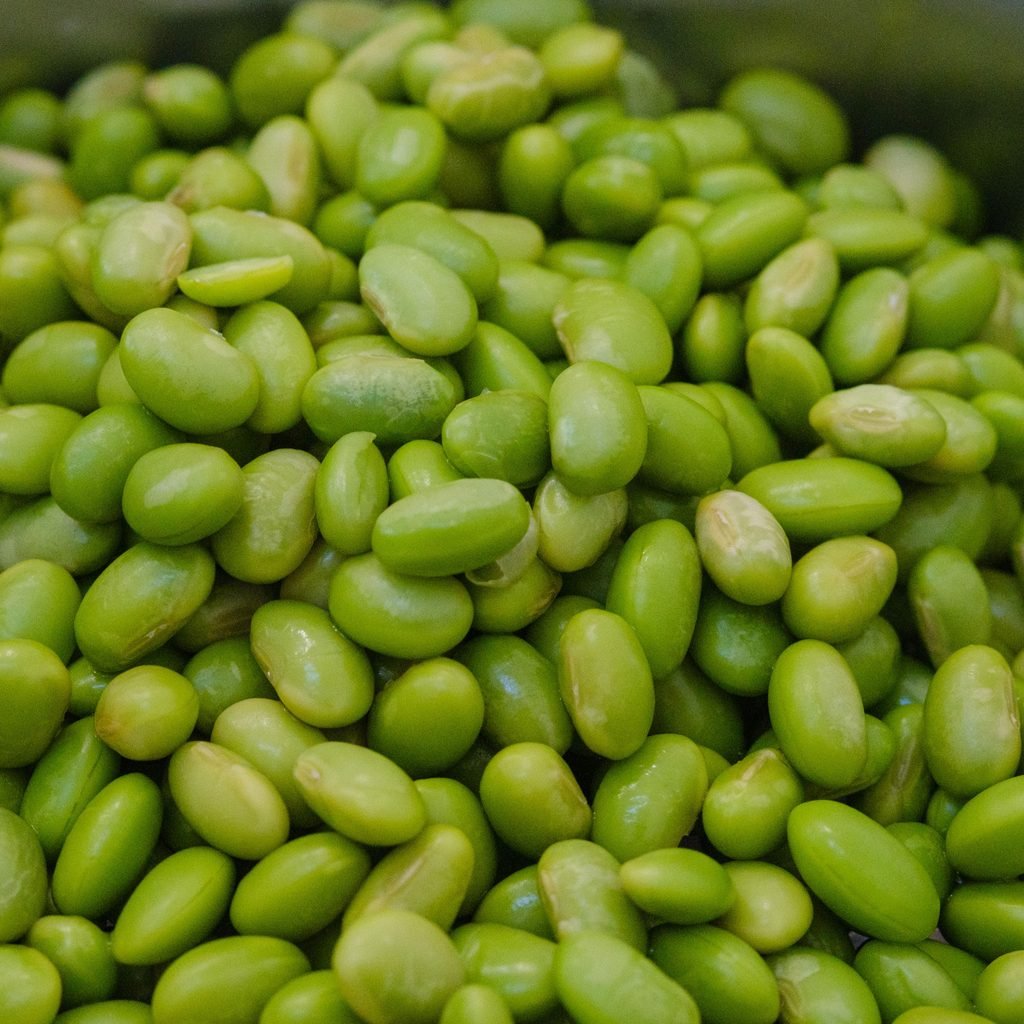
A healthy hamster can probably have a very small amount of plain cooked edamame, but there is not enough hamster-specific guidance to justify an exact serving such as one or two beans every week.
Edamame is a young soybean. General hamster feeding guidance supports limited fresh foods and some pulses, while PetMD specifically advises against raw beans. That makes plain, cooked, shelled edamame the most sensible form if you choose to offer it.
Still, edamame is optional. Your hamster does not need it as a protein supplement, and better-established foods such as peas and green beans are easier choices.
Is edamame safe for hamsters?
Edamame is not specifically listed in the major hamster feeding guides I checked, so I would not describe it as a thoroughly established hamster food.
There is, however, some useful supporting guidance.
Woodgreen’s hamster feeding guide includes small amounts of pulses and cereals among foods that can be offered alongside a balanced hamster diet.
PetMD’s dwarf hamster care guide says hamsters can eat most vegetables but specifically tells owners not to offer raw beans.
Taken together, that suggests a cautious approach:
if you want to offer edamame, use a small amount that has been cooked and served plain.
That is more defensible than claiming that one bean for a dwarf and two beans for a Syrian have been scientifically established as safe portions.
How much edamame can a hamster eat?
There is no veterinary serving size specifically for edamame.
The original article recommended one or two whole beans for Syrians and one bean for dwarfs. For a small hamster, however, even a whole edamame bean is a fairly substantial piece of food.
I would start smaller.
| Hamster | Practical starting point |
|---|---|
| Syrian hamster | A small piece of one cooked, shelled edamame bean |
| Dwarf hamster | A smaller piece than you would give a Syrian |
You do not need to put edamame on a weekly schedule.
If your hamster already receives other vegetables, herbs, seeds, or treats, there is no reason to add soy simply because several days have passed.
For the overall feeding framework, see what hamsters can eat.
Does edamame need to be cooked?
I would serve it cooked.
PetMD explicitly lists raw beans among foods not to offer hamsters.
There is also a legitimate food-science reason behind cooking soybeans. Raw soy contains protease inhibitors, including trypsin inhibitors, which can interfere with protein digestion. Heat processing reduces much of this activity.
That does not mean one raw soybean automatically poisons a hamster.
It means there is no advantage to using raw edamame when cooked edamame is readily available.
Is frozen edamame already cooked?
Not necessarily fully cooked.
This is one place where the original article was inaccurate.
Commercial frozen edamame is commonly blanched before freezing. Virginia Tech describes blanching as a standard processing step and notes that frozen edamame has already been partially cooked before the consumer prepares it.
So:
frozen does not automatically mean raw.
But it also does not automatically mean ready to eat.
Follow the preparation directions on the package, cook the beans without salt or seasoning, then allow the piece intended for your hamster to cool before offering it.
Cooling is simply practical. There is no evidence-based need to claim that refrigerated food itself causes digestive upset.
Should you remove the edamame pod?
I would.
Not because the pod has been proven toxic or because it is a confirmed choking hazard.
The problem is simpler: hamster-specific guidance for edamame pods is lacking, and the pod is tougher and less convenient than the bean itself.
Shelling gives you:
- easier portion control
- a softer piece of food
- fewer unknowns
- less material that can be dragged into the food stash
So if you decide to offer edamame, use a small piece of the bean rather than giving the entire pod.
Can dwarf hamsters eat edamame?
I would not automatically ban it.
The original article said edamame was especially suitable for dwarfs because it was low in sugar and had “no diabetes concern.”
That is too simplistic.
Food safety is not determined by sugar content alone, and Roborovski, Winter White, Campbell’s, and hybrid dwarf hamsters should not all be treated as medically identical.
A healthy dwarf hamster simply needs a smaller amount because it has a much smaller body than a Syrian.
If your individual hamster has diabetes, obesity, kidney disease, or another condition requiring dietary management, ask your veterinarian before adding unusual treats.
Is edamame a good protein treat?
I would not market it that way.
Yes, soybeans contain protein.
But a healthy pet hamster should already be receiving the protein it needs from a nutritionally complete staple diet.
PetMD emphasizes that a balanced commercial hamster food should form the main part of the diet, and Woodgreen likewise notes that a quality dry mix already contains appropriate protein sources.
That means edamame does not need to fill a “protein gap.”
Using foods as supplements when no deficiency exists can make hamster feeding unnecessarily complicated.
Edamame is, at most, an optional bit of variety.
How to prepare edamame for a hamster
If you decide to offer some:
- Choose plain edamame with no seasoning.
- Prepare it according to the package directions.
- Do not add salt, soy sauce, oil, garlic, or spices.
- Remove the bean from the pod.
- Cut off a small piece rather than automatically giving the entire bean.
- Let cooked food cool before serving.
- Remove uneaten pieces later so they do not spoil in the enclosure.
Hamsters commonly hoard food, so something that disappears from the feeding area may simply have been moved into the bedding.
PetMD recommends removing uneaten fresh produce because stored moist foods can spoil.
Can hamsters eat salted edamame?
I would skip it.
Restaurant edamame is commonly salted or seasoned, and some packaged products also contain added sodium, sauces, or flavorings.
Woodgreen advises avoiding salty and seasoned human foods, while PetMD lists salty foods among foods that should not be offered to hamsters.
There is no reason to calculate how much salt remains on an individual bean.
Use plain edamame or choose another vegetable.
What if my hamster ate one salted edamame bean?
Do not panic over one accidental bite.
Remove the remaining food and make sure fresh drinking water is available as usual.
If the hamster ate a large quantity of heavily salted food or develops a significant change such as weakness, abnormal behavior, diarrhea, or reduced appetite, contact a veterinarian experienced with hamsters.
One accidental bite is different from deliberately making salty foods part of the diet.
Can hamsters eat raw soybeans?
I would not offer them.
PetMD specifically advises against raw beans for hamsters, and raw mature soybeans also contain higher levels of antinutritional compounds than properly processed soy foods.
Do not confuse:
- cooked green edamame
- raw edamame
- mature dried soybeans
- roasted soy snacks
They are different products.
For hamster feeding, there is no need to experiment with raw soybeans.
Edamame vs. peas and green beans
If you want a legume-like vegetable, peas and green beans have clearer hamster-specific support.
Woodgreen explicitly lists both peas and green beans among suitable hamster vegetables and specifically says green beans can be offered raw or lightly cooked in small amounts.
That makes the choice easy:
| Food | Hamster guidance |
|---|---|
| Peas | Specifically recommended |
| Green beans | Specifically recommended |
| Edamame | Plausible when cooked and plain, but less directly documented |
| Raw beans | PetMD advises against them |
Edamame is therefore not a food you need to make work.
If you already have plain cooked edamame and want to share a tiny piece, that is one thing.
If you are shopping specifically for your hamster, peas or another well-established vegetable make more sense.
See our safe vegetables for hamsters guide for more options.
What if my hamster does not like edamame?
Then skip it.
A hamster does not need every food that appears on a safe-food list.
If your hamster sniffs the bean and walks away, remove it later. Do not repeatedly offer edamame because you believe it needs the protein or nutrients.
A complete staple diet matters far more than any individual vegetable or legume.
The bottom line
Plain cooked edamame can probably be offered to a healthy hamster in a very small amount, but the evidence does not support an exact one-bean or twice-weekly feeding rule.
Use cooked, shelled, unseasoned edamame rather than raw beans, pods, or salted restaurant-style edamame.
Do not treat edamame as a necessary protein supplement. A complete hamster food should already provide the protein and nutrients your hamster needs.
And if you want the simplest choice, use peas, green beans, or another vegetable that has clearer hamster-specific feeding guidance.
Keep reading: What can hamsters eat? | Safe vegetables for hamsters | Foods toxic to hamsters
Hamster Corner provides general educational information about hamster care and nutrition. If your hamster eats a questionable food or develops persistent diarrhea, loss of appetite, weakness, or another significant health change, contact a veterinarian experienced with hamsters.