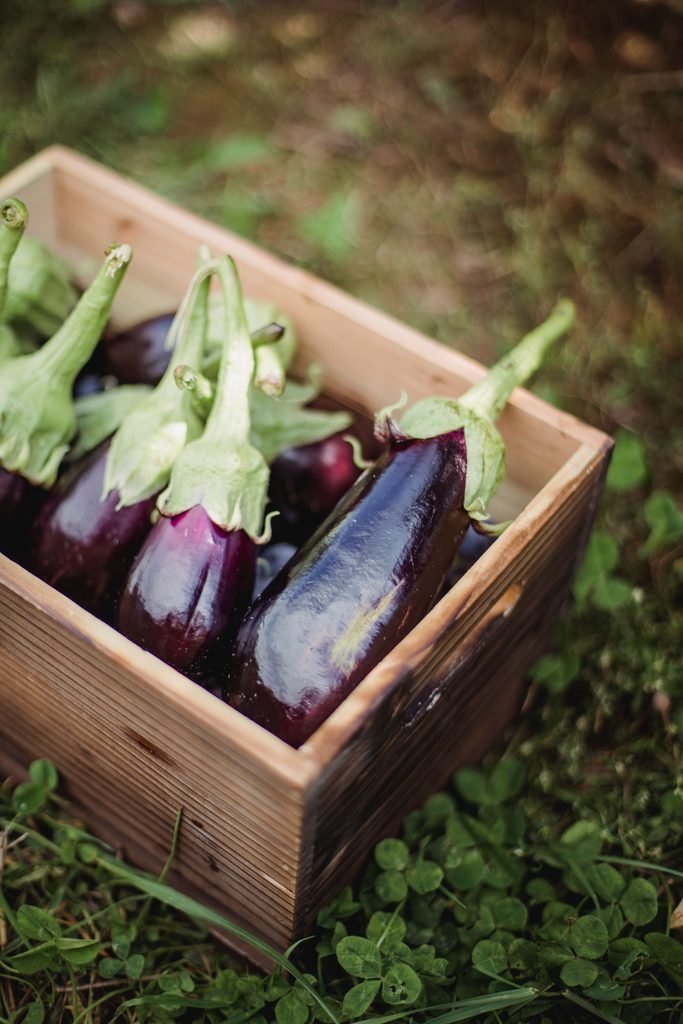
I would not feed eggplant, also called aubergine, to a hamster. Woodgreen Pets Charity specifically includes aubergine on its list of foods hamster owners should avoid.
That recommendation is more useful than trying to make eggplant safe by peeling and cooking it. There is no hamster-specific evidence establishing a safe cooked portion, and the common explanation that cooking “removes the solanine” from eggplant is oversimplified.
If your hamster has already taken a tiny bite of ordinary eggplant flesh, that does not automatically mean a poisoning emergency. Remove the remaining food and monitor your hamster. For intentional feeding, however, there are plenty of vegetables with much clearer hamster-care guidance.
Is eggplant safe for hamsters?
I would put eggplant in the avoid category.
Woodgreen’s current hamster feeding guide directly lists aubergine among foods not to feed hamsters. The same guide gives owners a long list of better-established vegetables, including broccoli, cucumber, peas, spinach, cauliflower, asparagus, coriander, and green beans.
PetMD takes a broader approach and says hamsters can eat many vegetables while identifying several foods that should be avoided. It does not specifically recommend eggplant.
When one respected hamster-welfare source specifically tells owners to avoid a completely optional food, I do not see a good reason to invent a preparation method to work around that advice.
For a broader list of foods with clearer guidance, see what hamsters can eat.
Does cooking make eggplant safe?
There is no good evidence for the original rule:
raw eggplant = unsafe
cooked eggplant = safe
Eggplant belongs to the Solanum genus and does contain steroidal glycoalkaloids. But the chemistry is more complicated than simply saying it contains solanine that disappears during cooking.
The major glycoalkaloids identified in eggplant fruit include solasonine and solamargine. Research also shows that the concentration of these compounds varies between cultivars and plant tissues.
More importantly, glycoalkaloids are relatively heat-stable. Ordinary boiling, baking, and frying do not necessarily remove them to the extent implied by the original article.
So I would remove this claim entirely:
“Cooking breaks down enough solanine to make eggplant safe for hamsters.”
We do not have evidence supporting that hamster-specific conclusion.
Is eggplant the same problem as green potatoes?
No.
This is another reason not to explain every nightshade with one simple “solanine” rule.
Potatoes, tomatoes, and eggplants are related, but they do not contain identical glycoalkaloid profiles.
Potatoes are particularly associated with α-solanine and α-chaconine. Tomatoes contain compounds such as α-tomatine. Eggplant is associated more strongly with solasonine and solamargine.
Being in the same botanical family does not make all these foods nutritionally or toxicologically identical.
For hamster owners, though, you do not need to become a plant toxicologist to make the decision.
Woodgreen says avoid aubergine, and several better-established vegetables are available.
That is enough.
Can hamsters eat raw eggplant?
I would not offer it.
This recommendation is not based on the claim that one tiny bite of raw eggplant is proven poisonous to a hamster.
It is based on the lack of a useful reason to feed it and the direct Woodgreen recommendation to avoid aubergine.
Do not test raw eggplant simply because humans can eat some eggplant preparations safely.
Human food safety does not automatically establish pet feeding safety.
Can hamsters eat cooked eggplant?
I would skip cooked eggplant too.
Cooking it plain removes problems such as oil, garlic, salt, and seasoning, but it does not solve the more basic issue that eggplant itself is not a recommended hamster vegetable in the strongest specific guidance I found.
There is also no established hamster serving such as:
- one pea-sized piece
- half a pea for dwarfs
- once a week
- twice a week
Those measurements were invented rather than evidence-based.
If you are already cooking vegetables and want to save a piece for your hamster, choose one with clearer feeding guidance instead.
Can hamsters eat eggplant skin?
I would not offer the skin.
But I also would not claim that the skin is dangerous specifically because it contains a proven toxic dose of solanine.
Research confirms that eggplant peel and pulp have different phytochemical profiles, and glycoalkaloid distribution can vary substantially between cultivars.
That does not give us a hamster-safe threshold for peeled versus unpeeled eggplant.
Since I would not recommend the fruit in the first place, peeling it does not turn it into a useful hamster food.
Can hamsters eat eggplant leaves or stems?
No. I would keep the leaves, stems, flowers, and green calyx out of the enclosure.
These plant parts are not ordinary food for a pet hamster, and nightshade plant tissues can contain biologically active glycoalkaloids.
Do not use an eggplant plant as:
- forage
- enrichment
- a chew
- nesting material
- garden clippings for the enclosure
This is especially important if you grow eggplants at home. Something being pesticide-free does not automatically make every part of the plant appropriate for a hamster.
Can dwarf hamsters eat eggplant?
My recommendation is the same for dwarf and Syrian hamsters:
skip it.
There is no need to create a separate dwarf rule based on sugar or diabetes.
The original article said eggplant was particularly suitable for dwarf hamsters because it was low in sugar. That misses the bigger question.
A food does not become a good hamster food simply because it contains little sugar.
Roborovski, Winter White, Campbell’s, and hybrid hamsters also should not automatically be treated as one identical diabetes-risk category.
Here, species-specific diabetes arguments are unnecessary because there is already a simpler reason not to feed eggplant.
What if my hamster accidentally ate eggplant?
First, identify what was eaten.
A tiny accidental bite of ordinary eggplant flesh is different from chewing a large amount of the plant, leaves, stem, or an eggplant dish containing other ingredients.
If your hamster took a small bite of plain eggplant flesh:
- Remove the remaining eggplant.
- Return to the normal diet.
- Keep fresh drinking water available as usual.
- Watch your hamster for any meaningful change.
Signs that warrant veterinary advice include:
- persistent diarrhea
- reduced appetite
- unusual lethargy
- weakness
- obvious abdominal discomfort
- another significant change from normal behavior
If your hamster ate a substantial quantity, ate leaves or another plant part, or becomes unwell, contact a veterinarian experienced with hamsters.
Do not try to make a hamster vomit.
For other questionable foods, see foods toxic to hamsters.
What vegetables can you give instead?
There is no shortage of alternatives.
Woodgreen specifically lists vegetables such as:
- broccoli
- cucumber
- peas
- spinach
- cauliflower
- asparagus
- coriander
- green beans
- cabbage
- Brussels sprouts
PetMD also recommends vegetables including cucumber, colored bell peppers, leafy greens, broccoli, squash, carrots, and spinach depending on the specific hamster guide.
That makes eggplant particularly unnecessary.
If you want something soft and easy to portion, use a small piece of cucumber.
For more choices, see safe vegetables for hamsters.
Why I would not try to make eggplant work
This is a useful principle beyond eggplant.
When owners search “Can hamsters eat X?”, the answer does not always have to be:
yes, if you prepare it in exactly these six steps.
Sometimes the food is optional, guidance is weak or negative, and better alternatives are easy to find.
Eggplant fits that situation.
A hamster does not need eggplant for fiber, vitamins, antioxidants, or variety. A nutritionally complete hamster food should already provide the essential nutrients your hamster needs, while well-established fresh foods can provide variety around it. PetMD similarly emphasizes that a balanced commercial diet should form the foundation of feeding.
There is no benefit in creating a complicated cooking ritual for a vegetable you can simply leave off the menu.
The bottom line
I would not feed eggplant to a hamster.
Woodgreen Pets Charity specifically lists aubergine among foods hamster owners should avoid. There is also no hamster-specific evidence establishing that peeled cooked eggplant is safe at a particular serving size.
The original explanation that raw eggplant contains solanine and cooking removes enough of it to make the flesh safe is also too simplistic. Eggplant contains glycoalkaloids including solasonine and solamargine, and ordinary cooking does not reliably eliminate glycoalkaloids.
If your hamster accidentally takes a tiny bite of plain eggplant flesh, do not automatically assume poisoning. Remove the rest and monitor your hamster.
For intentional feeding, choose one of the many vegetables with clearer hamster-specific guidance instead.
Keep reading: What can hamsters eat? | Can hamsters eat cucumber? | Safe vegetables for hamsters | Foods toxic to hamsters
Hamster Corner provides general educational information about hamster care and nutrition. If your hamster eats a questionable food or develops persistent diarrhea, loss of appetite, weakness, or another significant health change, contact a veterinarian experienced with hamsters.