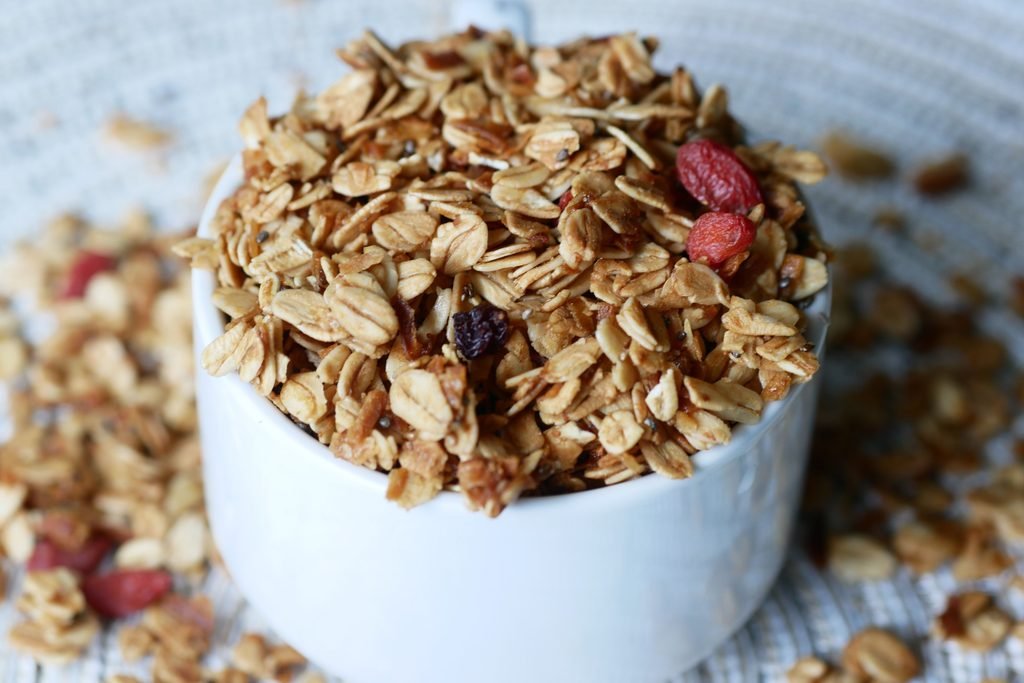
Most granola is better left out of a hamster’s diet. It is usually made from oats mixed with sweeteners, oils, dried fruit, chocolate, nuts, or other ingredients your hamster does not need.
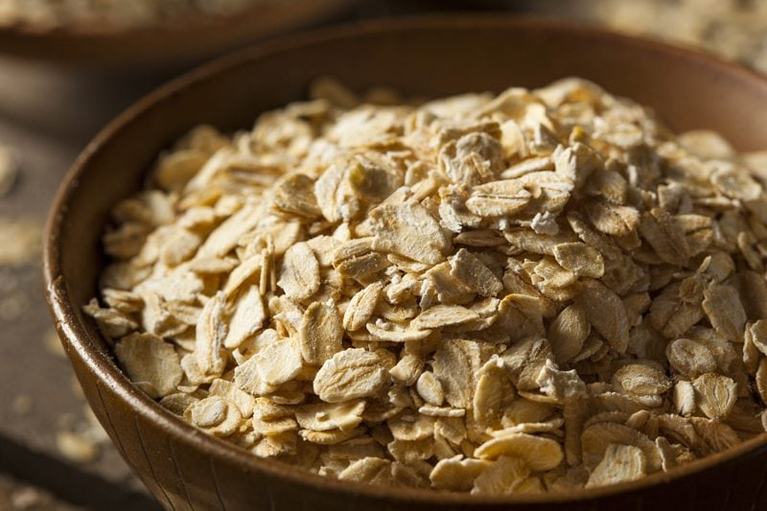
Plain oats are the easier choice. Woodgreen Pets Charity specifically recommends a few plain porridge oats as an occasional hamster treat, so there is little reason to turn them into granola first.
If your hamster has already eaten a tiny piece of granola, do not automatically panic. Check the ingredient list first. A plain oat cluster is a very different situation from granola containing chocolate or another questionable ingredient.
Is granola safe for hamsters?
I would not recommend ordinary commercial granola.
The problem is not that the word “granola” describes one toxic food. Granola is a recipe category, and two products can have completely different ingredient lists.
A typical granola may contain some combination of:
- rolled oats
- sugar
- honey
- maple syrup
- oil
- nuts
- seeds
- dried fruit
- chocolate
- salt
- flavorings
Some of those individual foods may be acceptable in a hamster diet in appropriate forms. Others are better avoided.
Once they are mixed into a sweetened human breakfast food, however, there is little reason to feed the finished product.
PetMD advises that most human foods should not be given to hamsters, while Blue Cross specifically recommends avoiding sugary and fatty treats, including products containing honey or molasses.
What about completely unsweetened granola?
This is where the definition starts to become important.
If a product contains nothing more than plain toasted oats, then the hamster question is essentially about oats rather than granola.
Plain oats have much clearer support. Woodgreen says hamsters can have a few plain porridge oats as a small treat.
If the product contains added oil, sweeteners, dried fruit, flavorings, or multiple other ingredients, I would skip it.
So rather than searching supermarkets for the perfect hamster-safe granola, buy plain oats.
How much granola can a hamster eat?
There is no evidence-based granola serving for hamsters.
The original version of this article recommended:
- one teaspoon for a Syrian
- half a teaspoon for a dwarf
- once a week
I would remove all three numbers.
A teaspoon of granola can contain several ingredients and represents a surprisingly large amount of concentrated human food for such a small animal.
Blue Cross gives a much more useful general fresh-treat guideline: portions should be around the size of the hamster’s ear. Woodgreen similarly describes small treats around ear size when rotating extras.
But I would not turn even that into a granola allowance.
Granola is unnecessary. Plain oats are easier to portion.
For the overall feeding framework, see what hamsters can eat.
What granola ingredients should you look for?
If your hamster has already eaten granola, the ingredient list is much more useful than the nutrition marketing on the front of the package.
Here is how I would sort common ingredients.
| Ingredient | What to do |
|---|---|
| Plain oats | Generally low concern |
| Chocolate or cocoa | Avoid |
| Honey, sugar, syrup or molasses | Unnecessary sugary ingredients |
| Raisins | Better avoided because hamster guidance conflicts |
| Other dried fruit | Better skipped in granola |
| Plain nuts or seeds | Depends on the individual ingredient and amount |
| Added salt | Better avoided |
| Xylitol or other sugar alcohols | Do not intentionally offer |
| Artificial flavors | No reason to include them |
| Added oils | Make an already optional food more calorie-dense |
The important distinction is that “not suitable” and “proven toxic” are not the same thing.
A pet-care article should not call every unnecessary ingredient poison.
Can hamsters eat chocolate granola?
No.
This is one ingredient where the answer is much clearer.
PetMD specifically lists chocolate among foods hamsters should never receive. Chocolate contains methylxanthines including theobromine and caffeine, and experimental research confirms hamsters metabolize theobromine rather than making chocolate an appropriate hamster food.
Do not offer:
- chocolate granola
- cocoa granola
- chocolate-chip granola
- chocolate granola bars
- granola coated in chocolate
If your hamster accidentally eats a product containing chocolate, identify the product and approximate amount and contact a veterinarian for advice rather than relying on a generic food article.
What about raisins in granola?
I would avoid raisin granola, but I would not tell readers that raisins are proven toxic to hamsters.
Current guidance is inconsistent.
The RSPCA says hamsters should not be given grapes because they may be poisonous to rodents.
An older PetMD hamster-care article, however, includes raisins among foods hamsters can enjoy.
That conflict is enough reason to leave raisins out when they are completely optional.
Granola containing raisins does not become more useful because we argue over which source is correct.
Choose plain oats instead.
Is honey safe in hamster granola?
I would avoid granola made with honey.
This does not require claiming that a trace of honey is acutely poisonous.
Blue Cross specifically recommends avoiding sugary and fatty treats and calls out products containing molasses or honey.
Honey is commonly used as a binder and sweetener in granola, which is exactly what makes granola different from plain rolled oats.
Your hamster gains nothing useful from that added sweetness.
What about maple syrup, brown sugar or cane sugar?
Same practical answer.
These ingredients are added for human taste and texture, not hamster nutrition.
PetMD recommends limiting high-sugar, high-fat treats and keeping the main diet centered on food formulated specifically for hamsters.
There is no need to decide whether maple syrup is marginally healthier than brown sugar.
If sweetener appears near the top of the granola ingredient list, keep it for yourself.
Is xylitol toxic to hamsters?
I would not repeat the common internet claim that a tiny amount of xylitol is proven deadly to hamsters.
That warning is well known in dogs, but toxicity does not automatically transfer at the same dose between species.
There is research involving xylitol and other sugar alcohols in hamsters. High experimental exposure has been associated with gastrointestinal and metabolic effects, including soft stools or diarrhea, but that does not give us a pet-hamster poisoning threshold.
The practical recommendation is still easy:
do not intentionally feed xylitol-containing human food to a hamster.
There is no benefit and no reason to experiment.
If your hamster has eaten a product containing xylitol, tell the veterinarian the exact product and amount rather than assuming dog toxicity numbers apply.
Are macadamia nuts toxic to hamsters?
I would remove that claim from the original article.
Macadamia nut toxicity is well documented particularly in dogs, but I could not find credible hamster-specific evidence supporting a blanket statement that macadamia nuts are toxic to hamsters.
That does not mean macadamia granola is a good hamster food.
It means Hamster Corner should not label a food toxic to hamsters merely because another species has a known poisoning syndrome.
Granola containing macadamias is still unnecessary, so skip it without inventing a hamster-specific toxicology claim.
Can dwarf hamsters eat granola?
My recommendation is the same for dwarf hamsters:
skip commercial granola and use plain oats if you want an oat-based treat.
There is no need to say every dwarf hamster must avoid granola because of diabetes.
Roborovski, Winter White, Campbell’s, and hybrid dwarf hamsters should not all be grouped into one identical metabolic-risk category.
PetMD’s current dwarf hamster guidance gives a much broader rule: nutritionally balanced hamster food should form the foundation, while grains and treats remain limited extras.
A dwarf hamster also eats less overall because it is smaller, so any extra naturally needs to be modest.
Are plain oats better than granola?
Yes, easily.
Woodgreen directly recommends a few plain porridge oats for hamsters.
PetMD also includes dried oat sprays among forage and enrichment foods that can be used in hamster enclosures.
Plain oats give you the part of granola that is actually useful without needing to evaluate:
- added sugar
- syrup
- oil
- chocolate
- dried fruit
- salt
- flavorings
That is a much cleaner answer to the search intent.
If your goal is an oat treat, use oats.
Can hamsters eat dry rolled oats?
A few plain rolled or porridge oats are a straightforward option.
Use oats with no:
- sugar
- salt
- flavor packets
- chocolate
- dried fruit
- sweetener
You can scatter a few flakes in the enclosure rather than putting them all into a bowl.
Scatter feeding encourages the hamster to search for food and use natural foraging behavior. RSPCA, Blue Cross, and PetMD all recommend food-based foraging in some form.
What about cooked oatmeal?
Plain oatmeal is a different question from granola.
The RSPCA advises that wet or powdered foods should generally only be used when a veterinarian recommends them because moist food is harder to keep clean and can support mould or bacterial growth when hidden in the enclosure.
For that reason, dry plain oats are the simpler everyday option.
There is no need to cook oatmeal specifically for a healthy hamster.
Can hamsters eat granola bars?
I would skip them.
Granola bars are even less standardized than loose granola.
A bar may rely on:
- glucose syrup
- honey
- brown rice syrup
- chocolate
- dried fruit
- nut butter
- oils
- salt
- flavorings
Even a product marketed as “natural,” “protein,” “organic,” or “no refined sugar” is still a human snack.
Marketing claims do not tell you whether it is appropriate for a hamster.
What if my hamster already ate granola?
Start with the ingredient list.
If it was a tiny piece of simple oat granola and your hamster is acting normally, remove the remaining food and return to its regular diet.
Pay more attention if the granola contained:
- chocolate or cocoa
- caffeine
- a large amount of an unfamiliar ingredient
- an artificial sweetener
- another food already known to be unsafe for hamsters
If you are concerned, keep the packaging. It tells a veterinarian far more than saying your hamster “ate granola.”
Watch for meaningful changes such as:
- reduced appetite
- unusual lethargy
- persistent diarrhea
- tremors or abnormal movement
- another sudden change from normal behavior
Contact a veterinarian experienced with hamsters if symptoms develop or if a clearly concerning ingredient was eaten.
For more established hazards, see foods toxic to hamsters.
What is the best oat-based alternative?
Plain porridge or rolled oats.
That is really the answer.
You do not need homemade hamster granola, sugar-free granola, keto granola, organic granola, or a complicated ingredient checklist.
A few plain oats already have direct hamster-care support.
And if your hamster does not care about oats, there is no nutritional reason to persuade it.
Suitable vegetables, forage, herbs, seeds, and the normal staple diet provide plenty of variety. See safe vegetables for hamsters for other options.
The bottom line
I would skip commercial granola for hamsters and use a few plain oats instead.
Most granola combines oats with sweeteners, fats, dried fruit, chocolate, salt, or other ingredients that add complexity without adding anything your hamster needs.
There is no evidence-based teaspoon serving or once-a-week granola allowance for Syrians or dwarf hamsters.
Plain porridge oats have much clearer support from hamster-care guidance, while Blue Cross specifically recommends avoiding sugary treats containing ingredients such as honey or molasses.
If your hamster accidentally eats a tiny piece of granola, check the ingredient list before assuming it has been poisoned. Chocolate deserves particular concern, while several other ingredients are better described as unnecessary or uncertain rather than automatically toxic.
Keep reading: What can hamsters eat? | Foods toxic to hamsters | Safe vegetables for hamsters
Hamster Corner provides general educational information about hamster care and nutrition. If your hamster eats a questionable product or develops a significant change in appetite, stool, activity, or behavior, contact a veterinarian experienced with hamsters.