Plain food-grade hemp seeds are probably a low-concern seed for a healthy hamster in small amounts, but hamster-specific veterinary guidance is limited. I could not find a major hamster-care source such as Woodgreen, PetMD, RSPCA, or Merck specifically recommending hemp seeds or giving an evidence-based serving.
That means I would not tell owners to feed exactly two or three hemp hearts several times a week.
If your hamster’s balanced food mix already contains hemp seed, there is no obvious reason to pick it out. If you want to add hemp separately, keep the amount modest and treat it as part of the hamster’s overall seeds and extras rather than a nutritional supplement.
Are hemp seeds safe for hamsters?
There is no strong evidence suggesting that ordinary food-grade hemp seed is a classic hamster toxin.
Hemp seed is also used in some specialist hamster mixes and feeding communities, which gives us some practical reassurance. But that is weaker evidence than a veterinary or major animal-welfare organization directly recommending it.
PetMD gives the broader rule that seeds can be included as occasional extras, but they should not dominate the diet because a nutritionally complete hamster food should remain the foundation.
So my recommendation is cautious rather than dramatic:
a small amount of plain food-grade hemp seed is reasonable, but your hamster does not need it.
For the overall feeding framework, see what hamsters can eat.
How many hemp seeds can a hamster eat?
There is no established veterinary hemp-seed serving for hamsters.
The original article recommended:
- 2–3 shelled seeds for a Syrian
- 1–2 seeds for a dwarf
- 2–3 times per week
I could not find evidence supporting those numbers.
Hemp hearts are also extremely small, so counting individual fragments can create a sense of precision without improving the diet.
If you add hemp separately, use a very small amount and remember that it counts toward the hamster’s other seeds and treats.
A dwarf hamster naturally needs less total food than a Syrian because it is smaller, but there is no need for a separate hemp-specific schedule.
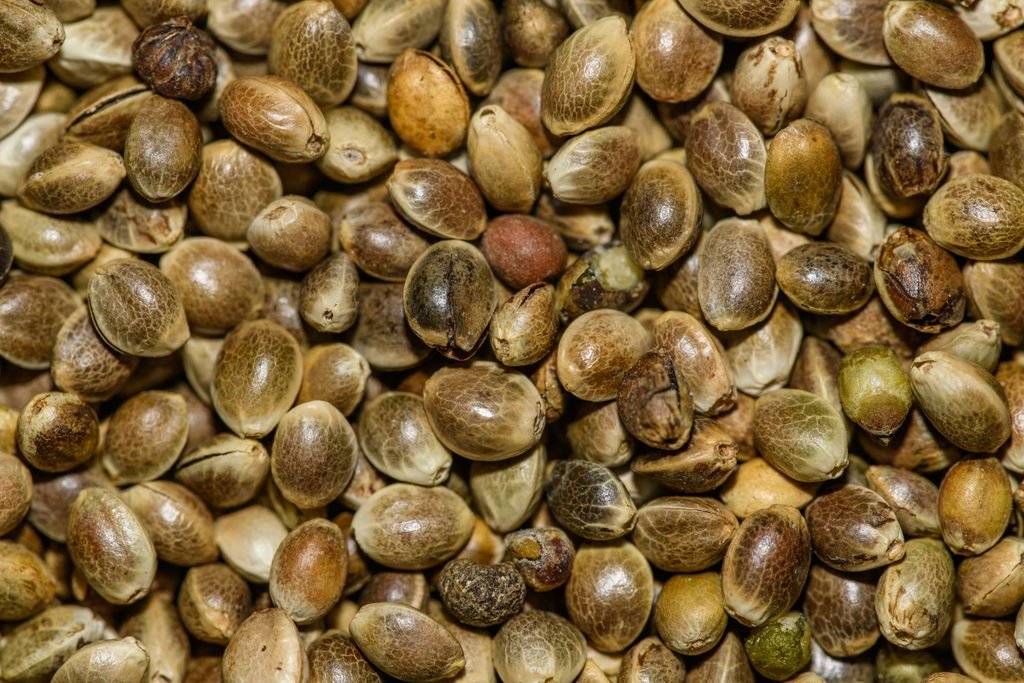
Hemp seeds vs. hemp hearts
These terms are related but not identical.
Whole hemp seeds retain the outer hull.
Hemp hearts are dehulled, or shelled, hemp seeds.
That difference changes their nutritional composition considerably. Reviews of hemp food products report whole seeds at roughly 25–35% fat, while commercial dehulled hemp seeds can contain around 38–52% fat. One analysis of unprocessed hemp hearts measured about 47.7% fat.
So the original claim that hemp seeds are “about 49% fat” is not universally correct.
It is more accurate for hemp hearts than for whole seeds.
For hamster feeding, though, you do not need to calculate an exact fat percentage before offering a few seeds.
The practical point is simply that hemp hearts are energy-dense.
Will hemp seeds make a hamster high?
Ordinary food-grade hemp seeds are not the same thing as marijuana flower.
FDA documentation explains that THC is not produced inside the hemp seed itself. Trace THC detected in hemp-seed foods can result from contact with cannabinoid-containing plant material during harvesting and processing. Proper cleaning and processing are used to keep those residues very low.
That is more accurate than saying:
“hemp seeds contain less than 0.3% THC.”
The 0.3% figure is associated with regulatory definitions of industrial hemp plants and should not be presented as the normal THC concentration of a bag of hemp hearts.
I would also avoid promising that a certain number of seeds has been proven incapable of producing any psychoactive effect in every hamster. I could not find hamster-specific intoxication research establishing such a threshold.
For ordinary food-grade hemp seed used in tiny dietary amounts, though, intoxication is not the practical concern.
Are hemp seeds nutritious?
Yes, hemp seed is nutritionally dense.
Whole hemp seeds generally contain substantial amounts of fat and protein, while hulled hemp hearts are even more concentrated because much of the fibrous outer hull has been removed. Hemp is also rich in polyunsaturated fatty acids, particularly linoleic acid and alpha-linolenic acid.
But this is where a hamster article needs restraint.
Your hamster does not need hemp specifically for:
- omega-3
- omega-6
- magnesium
- protein
- coat health
- heart health
A nutritionally complete hamster food should already provide the essential nutrients the animal requires.
Hemp is optional variety, not a supplement.
Do hemp seeds improve a hamster’s coat?
I would remove that claim.
Hemp contains unsaturated fatty acids, but I could not find hamster-care evidence demonstrating that adding a few hemp seeds noticeably improves coat quality in a healthy hamster.
A poor coat can have many causes, including:
- age
- diet quality
- grooming changes
- parasites
- skin disease
- another underlying health problem
Do not try to treat persistent hair or skin changes with hemp seeds.
Can dwarf hamsters eat hemp seeds?
A small amount of plain hemp seed is not something I would automatically ban for a healthy dwarf hamster.
But I would also remove the original explanation:
hemp is low in sugar, so it is good for diabetes-prone dwarf hamsters.
Sugar content does not determine whether a seed is unlimited or medically useful.
Roborovski, Winter White, Campbell’s, and hybrid dwarf hamsters should not automatically be treated as one identical diabetes-risk group.
The practical distinction is simply body size. A dwarf eats less food overall than a Syrian, so any extra seeds should also be proportionally modest.
If your hamster has diabetes, obesity, or another medical condition requiring dietary management, follow your veterinarian’s advice.
Do hemp seeds cause weight gain?
They can contribute calories, like any energy-dense food.
Hemp hearts in particular contain a substantial amount of fat. That means repeatedly adding large amounts on top of an already complete diet could increase total calorie intake.
But I would not write:
“a few hemp seeds quickly make hamsters obese.”
PetMD’s broader warning is more useful: diets dominated by seeds and excessive treats can contribute to obesity or nutritional imbalance.
Look at the whole diet rather than blaming one seed.
Can too many hemp seeds cause a greasy coat or fatty liver?
I would remove both claims.
I could not find good hamster-specific evidence showing that excess hemp seed directly causes a greasy coat or fatty liver disease.
A greasy or rough coat is not a reliable diagnosis of dietary fat intake.
Likewise, obesity and liver disease are more complicated than:
high-fat treat → fatty liver
If your hamster is gaining unexpected weight or develops persistent coat changes, assess the whole diet and health picture rather than simply removing hemp.
Whole or shelled hemp seeds: which is better?
Neither needs to be declared superior.
Whole seeds contain more hull and therefore more fibrous material.
Shelled hemp hearts are softer and more concentrated in fat and protein.
If either appears in a balanced hamster food, that is different from adding a large separate portion.
For intentional treats, plain food-grade hemp seed or hemp hearts are easier to evaluate than flavored products.
Can hamsters eat hemp seed oil?
I would not add hemp oil to a healthy hamster’s diet.
Oil removes the natural portion control that comes with eating a whole seed and delivers concentrated fat in a very small volume.
More importantly, there is no routine hamster-care recommendation showing that a healthy hamster needs hemp oil supplementation.
If a veterinarian recommends a specific fatty-acid supplement for a medical reason, follow that plan.
Otherwise, leave the oil out.
What about hemp protein powder?
Skip it.
Hemp protein powder is a processed ingredient designed for human diets.
Even plain versions concentrate a particular part of the seed rather than providing the whole food.
A hamster eating a nutritionally complete diet does not need extra protein powder.
PetMD specifically notes that a properly formulated hamster diet should already supply the animal’s required protein.
Can hamsters eat flavored hemp seeds?
I would use plain seeds only.
Skip hemp products with:
- added salt
- sugar
- honey
- spices
- chocolate
- flavor coatings
- added oils
PetMD and Woodgreen both recommend keeping hamster extras simple and avoiding heavily processed or seasoned human foods.
The seed itself is already enough.
How should you offer hemp seeds?
If you choose to use them, there are several simple options.
You can:
- leave hemp already present in a balanced food mix
- scatter a very small amount with the normal food
- place a few seeds in a forage area
- use them sparingly as part of food-based enrichment
Do not keep adding more because the first seeds disappeared.
Hamsters commonly transport food to hidden caches rather than eating everything immediately.
Should hemp seeds be mixed with flax seeds?
They can both appear in a varied seed mix, but there is no reason a hamster must receive both as separate supplements.
Flax has stronger direct hamster-care support because Woodgreen specifically lists flax seed sprays as an enrichment food.
Hemp has less direct authoritative hamster guidance.
If your complete mix already contains both, that is fine.
If you are adding seeds yourself, you do not need to create a daily omega-fatty-acid program for your hamster.
See can hamsters eat flax seeds? for the separate guide.
Are hemp seeds better than sunflower seeds?
There is no useful universal winner.
Hemp and sunflower seeds have different nutrient profiles, but both contribute energy and fat.
PetMD specifically treats plain sunflower seeds as an occasional treat rather than a staple.
Hemp should be viewed similarly if you add it separately.
A balanced diet comes from the complete feeding pattern, not from finding the most nutritious individual seed.
What if my hamster eats a lot of hemp hearts?
If your hamster gets into a bag and eats more than intended, remove access to the food and return to the normal balanced diet.
Do not fast the hamster to compensate.
Watch for meaningful changes such as:
- persistent diarrhea
- reduced appetite
- unusual lethargy
- another significant change from normal behavior
If a very large amount was eaten or your hamster becomes unwell, contact a veterinarian experienced with hamsters.
If the product contained other ingredients, keep the packaging so you know exactly what was consumed.
Are hemp seeds worth adding?
They can be a small part of dietary variety, but they are not essential.
This is the key distinction.
There is no need to avoid ordinary food-grade hemp seed as though it were cannabis flower, but there is also no reason to turn hemp into a hamster superfood.
A good staple diet matters far more.
If hemp is already present in a balanced mix, leave it there.
If it is not, your hamster is not missing an essential ingredient.
The bottom line
Plain food-grade hemp seeds or hemp hearts are probably fine for a healthy hamster in small amounts, but hamster-specific authoritative guidance is limited.
There is no evidence-based rule saying a Syrian needs two or three seeds several times a week or a dwarf needs one or two.
Hemp hearts are energy-dense and can contain around 40–50% fat, while whole seeds generally contain less fat because the hull remains. Keep separately added seeds modest and count them as part of the overall diet.
Food-grade hemp seed also should not be described as containing “0.3% THC.” THC is not produced inside the seed itself, and trace residues in properly processed food products generally result from contamination with other parts of the plant during harvesting.
Use plain seeds, skip hemp oil and protein powder, and do not rely on hemp for coat health or extra protein.
Hemp can be a little variety. It does not need to be a supplement.
Keep reading: What can hamsters eat? | Can hamsters eat flax seeds? | Foods toxic to hamsters | Safe vegetables for hamsters
Hamster Corner provides general educational information about hamster care and nutrition. If your hamster eats a large amount of an unfamiliar food or develops persistent digestive, appetite, weight, or behavior changes, contact a veterinarian experienced with hamsters.