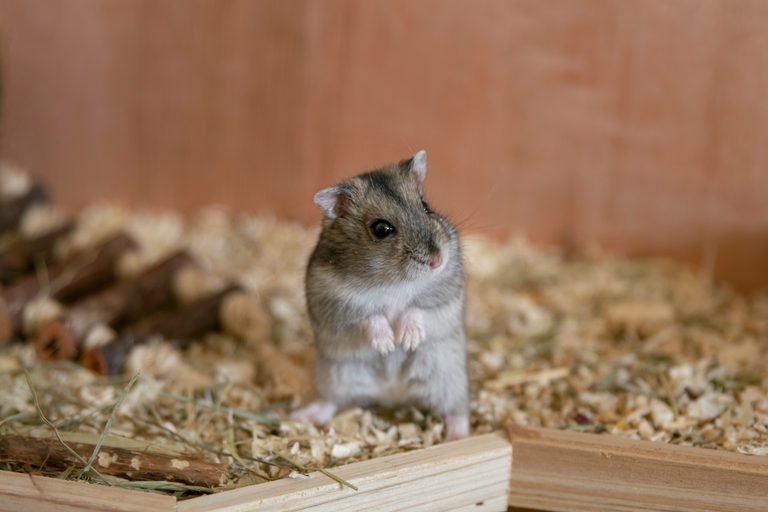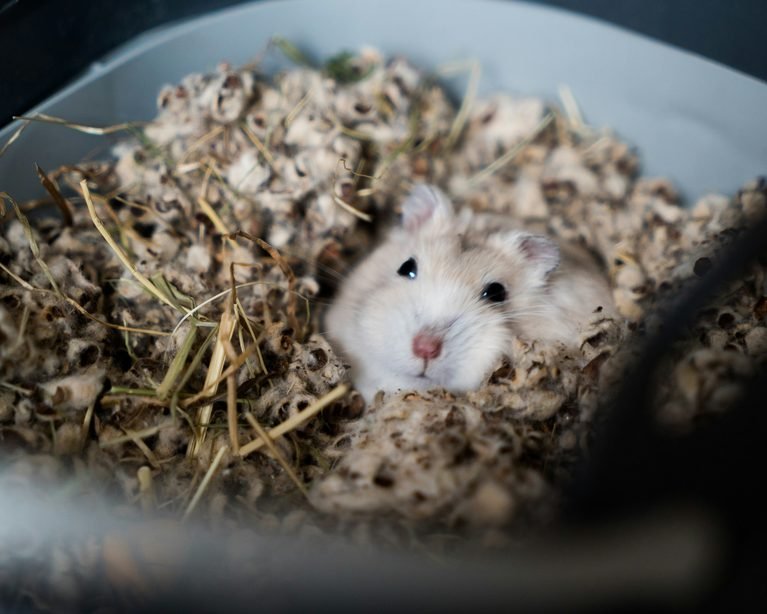
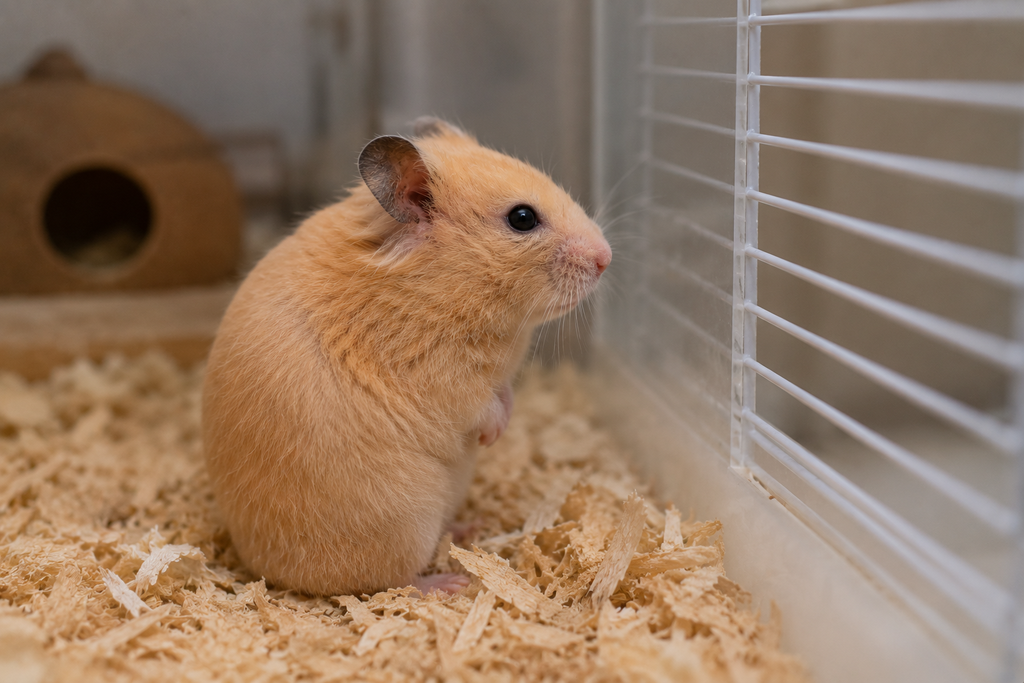
You do not need to give a hamster a cagemate to prevent loneliness. Syrian and Chinese hamsters are naturally solitary and should live alone. Some dwarf hamster species are more social in the wild and can sometimes tolerate established groups, but even they do not need another hamster to be happy. Because fights in captivity can become serious, keeping pet hamsters individually is the simplest and safest recommendation.
It is harder to answer whether a hamster subjectively feels lonely in the human sense. We cannot directly measure that experience. What welfare guidance can answer much more confidently is whether hamsters require another hamster for good welfare, and the answer is no.
Do hamsters need another hamster for company?
No.
The RSPCA says Syrian and Chinese hamsters are not naturally sociable and should always live alone.
For dwarf hamsters, the situation is more nuanced. The RSPCA says species including Roborovski, Campbell’s Russian dwarf and winter white dwarf hamsters can sometimes live in compatible pairs or trios when groups are established appropriately.
But it makes an equally important point:
Even dwarf hamsters do not need the company of other hamsters to be happy.
Groups that initially appear stable can also fall out later, and aggression can cause serious injuries.
Woodgreen Pets Charity takes the more conservative approach and recommends that all pet hamster species live alone. It notes that although some dwarf species live together in the wild, captivity creates a much more restricted environment and fights can become severe or fatal.
For most pet owners, individual housing therefore avoids a risk without depriving the hamster of something it requires.
Are all hamsters solitary in the wild?
No. This is an important correction to a common claim.
Syrian and Chinese hamsters are naturally solitary.
The RSPCA describes adult Syrian hamsters as generally occupying individual burrows, while Chinese hamsters are also considered naturally unsociable.
Some dwarf hamsters are different.
The RSPCA notes that Roborovski hamsters and some other dwarf species naturally live in groups. Woodgreen similarly says dwarf hamsters may live together in the wild for reproduction, safety and access to resources.
So it is inaccurate to say:
Every hamster species lives completely alone in nature.
But wild social behavior does not automatically mean two pet hamsters should share one enclosure.
Captive animals cannot disperse across a large territory when conflict develops. A subordinate hamster may have nowhere to escape.
This is why natural social behavior and safe pet housing are separate questions.
Can dwarf hamsters live together?
Sometimes, according to the RSPCA, but that does not mean they should be paired simply to provide companionship.
The RSPCA says compatible dwarf hamsters can sometimes live in pairs or trios if the group is established early and remains stable. It also warns that fighting can begin later even between animals that previously appeared compatible.
Woodgreen recommends avoiding that risk altogether and housing pet dwarf hamsters individually.
If hamsters are already fighting, the RSPCA says they should be permanently separated rather than repeatedly reintroduced.
For a more detailed look at the housing question, see can two hamsters live together?.
Will a hamster living alone become lonely?
There is no good evidence showing that a pet hamster housed alone develops a welfare problem because it lacks a hamster companion.
For Syrian and Chinese hamsters, solitary housing actually matches their natural social organization.
For dwarf hamsters, RSPCA guidance explicitly states that they do not need company to be happy, even though some species are capable of social living.
That is much stronger evidence than trying to guess whether a hamster experiences the subjective emotion humans call loneliness.
A hamster living alone can still have poor welfare, of course.
But if that happens, the problem is more likely to involve the environment, health or husbandry than the absence of a second hamster.
Does a hamster that looks bored need a friend?
Not necessarily, and behavior alone should not be diagnosed as “loneliness.”
For example:
| What you notice | What it might mean |
|---|---|
| Repetitive bar chewing | Frustration or an enclosure problem may be involved, but the behavior is not a specific loneliness test |
| Repeated pacing or attempts to escape | The enclosure or enrichment may need reviewing |
| Less activity than usual | Could reflect normal timing, age, stress or illness |
| Staying hidden more than usual | May be normal for that hamster, or could reflect disturbance or a health change |
| Waiting near the enclosure door | May reflect learned routines or interest in food or interaction |
None of these behaviors proves that the hamster wants another hamster.
If repetitive bar chewing is an issue, see why hamsters bite cage bars.
A sudden change in activity, appetite, posture or normal behavior deserves more attention because illness can also change how a hamster behaves. See signs of a sick hamster if the change is unusual for your hamster.
What does a hamster living alone actually need?
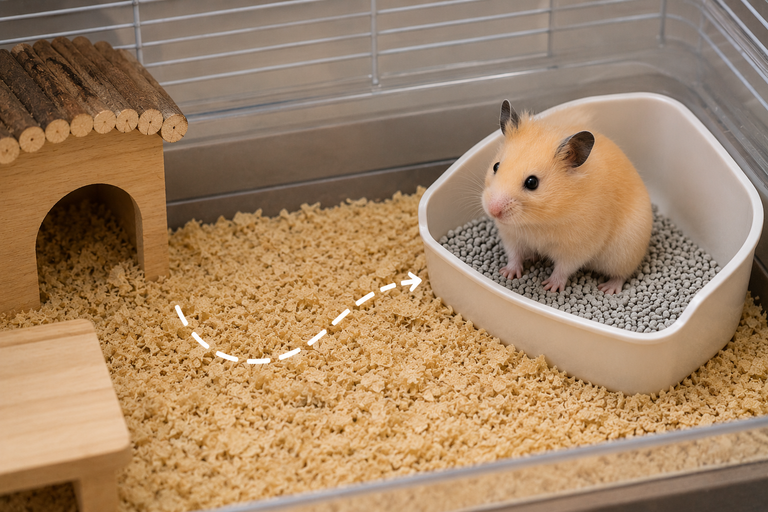
Solitary housing does not mean putting a hamster in an empty enclosure and leaving it alone.
Environmental quality matters enormously.
Enough space
Woodgreen currently recommends a minimum enclosure floor area of 100 × 50 cm for pet hamsters.
Its guidance gives a height of at least 50 cm for Syrian and Chinese hamsters and at least 40 cm for dwarf and Roborovski hamsters.
Blue Cross similarly recommends housing no smaller than 100 × 50 cm of floor space.
Deep bedding and burrowing opportunities
The RSPCA recommends a deep layer of suitable substrate so hamsters can dig and construct burrows.
Burrowing is a natural behavior, not simply a decorative enclosure feature.
A suitable running wheel
The RSPCA recommends a solid, good-quality wheel with a sufficiently large diameter that allows the hamster to exercise comfortably.
I would not turn this into one universal wheel measurement for every Syrian or dwarf hamster without considering the individual animal and the wheel design.
Foraging and enrichment
Hamsters need more than a wheel.
Provide hiding places, tunnels, chewable materials, digging opportunities and ways to search for food.
For more ideas, see hamster enrichment ideas.
Undisturbed sleep
The RSPCA emphasizes allowing hamsters to sleep undisturbed during the day and providing predictable light conditions.
A hamster sleeping while you are awake is not necessarily bored, depressed or lonely.
Does human interaction replace hamster companionship?
That framing is not quite right because a hamster living alone does not necessarily have a missing “hamster companionship slot” that a human needs to fill.
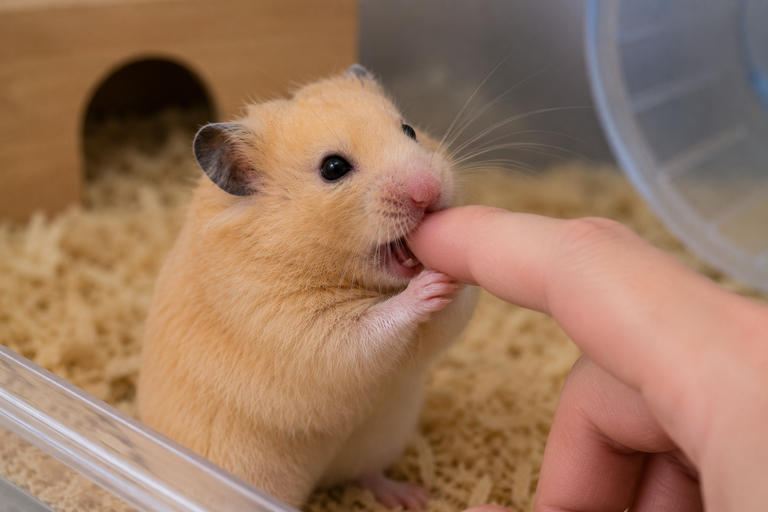
Some hamsters can become comfortable with gentle human handling and may voluntarily interact with familiar caretakers.
That interaction can provide stimulation and help with taming.
But individual hamsters vary. Some enjoy handling more than others, and forcing daily contact is not necessary for proving that a hamster is happy.
The more useful goal is to let your hamster become comfortable with your presence while respecting its sleep and allowing it to choose interaction where possible.
See how to tame a hamster for a gradual approach.
Will my hamster miss me when I am away?
We do not have enough evidence to say hamsters “miss” their owners in the emotional sense people usually mean.
Hamsters can become familiar with repeated human cues, particularly scent and handling routines, but that is different from proving separation distress or loneliness when an owner is absent.
As long as a competent caretaker maintains the hamster’s food, water, enclosure and welfare needs, you should not assume that temporary absence causes the same emotional response seen in highly social companion animals.
My hamster changed after being separated from another hamster. Is it grieving?
Do not assume either grief or that separation was definitely the wrong decision.
A hamster may behave differently after any major environmental change. Its enclosure, scents, resource locations and routine may all have changed at once.
If the hamsters were separated because of aggression, keeping them apart is important.
Do not reintroduce fighting hamsters because one appears quieter afterward. The RSPCA specifically recommends permanent separation when fighting occurs.
Give the hamster a stable, enriched environment and monitor its normal eating and activity.
If behavior changes significantly or your hamster also stops eating, loses weight, becomes lethargic or shows other signs of illness, contact a hamster-experienced vet.
Frequently asked questions
Will my Syrian hamster be happier with a friend?
No. Syrian hamsters are naturally solitary and should be housed individually. Adding another Syrian creates a risk of aggression rather than providing a welfare benefit.
Do dwarf hamsters get lonely?
There is no evidence that dwarf hamsters require a cagemate to avoid loneliness. Some dwarf species can be more social than Syrian hamsters, but the RSPCA explicitly states that they do not need other hamsters to be happy.
Should I buy two hamsters so they can keep each other company?
Not for that reason. Syrian and Chinese hamsters should live alone. Some dwarf groups can sometimes remain compatible, but co-housing introduces a fighting risk without being necessary for companionship.
Is a hamster happy living alone?
A hamster can have good welfare while living alone when its physical and behavioral needs are met. Look at the quality of the enclosure, opportunities to burrow and forage, normal eating and drinking, activity patterns and overall health rather than using the number of hamsters in the cage as a happiness measure.
The bottom line
Your hamster does not need another hamster to prevent loneliness.
Syrian and Chinese hamsters are naturally solitary and should live alone. Some dwarf hamster species are more social in the wild and the RSPCA says compatible groups can sometimes be maintained, but even these hamsters do not require company to be happy.
Woodgreen takes the safer captive-housing position that all pet hamster species should live individually because fights can become severe or fatal.
So I would not solve a supposedly “lonely” hamster by adding a second hamster.
Instead, look at what we can actually improve: enclosure space, deep bedding, burrowing, foraging, a suitable wheel, enrichment, undisturbed sleep and appropriate gentle interaction.
Keep reading: Can two hamsters live together? | Hamster enrichment ideas | How to tame a hamster | Signs of a sick hamster