Feed your hamster a measured allowance of complete dry hamster food every day. Evening is a convenient time because hamsters are usually awake and active then, but you do not need to feed at an exact hour. Fresh foods are extras rather than the foundation of the diet, and fresh water should always be available.
The part that often confuses new owners is the food stash. An empty bowl does not necessarily mean an empty stomach. Hamsters naturally carry food into their burrows and store it for later, so a sensible feeding routine needs to account for both the food you provide and the food already hidden around the enclosure.
How often should you give dry hamster food?
Give your hamster its normal dry-food allowance once per day.
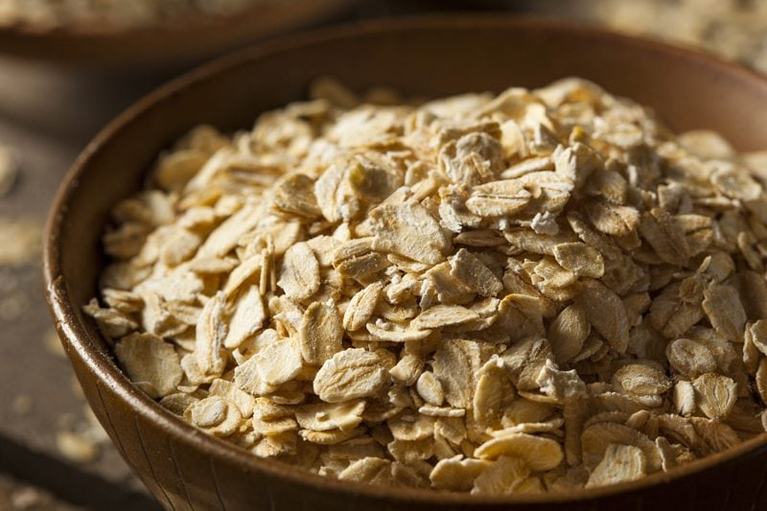
A good-quality complete hamster food should make up the foundation of the diet. Woodgreen Pets Charity gives a practical guideline of around 10 g of dry food per day for Syrian hamsters and around 5 to 8 g per day for Chinese, dwarf and Roborovski hamsters. However, foods differ in calorie density and formulation, so also follow the instructions for the specific food you use.
Scatter feeding is often more useful than simply filling a bowl. Hamsters are natural foragers, and hiding or scattering part of the daily ration around the enclosure allows them to search for food and carry it back to their stores.
For the bigger picture on staple foods and extras, see what hamsters can eat.
Is evening the best time to feed a hamster?
Evening is a practical choice, not a medical requirement.
Hamsters spend much of the day sleeping and become active in the evening and at night. Feeding once your hamster is awake lets you refresh food without disturbing its sleep and gives you a chance to observe whether it comes out and eats normally.
You do not need to hit the same exact time every night. More importantly, do not wake a sleeping hamster simply because it is “feeding time.”
If your schedule means you need to put dry food in the enclosure a little earlier, that is not a problem. Your hamster can forage for it when it wakes.
Does dry food need to be available 24/7?
It is better to think in terms of a daily food allowance plus the hamster’s existing hoard than trying to keep a bowl visibly full at all times.
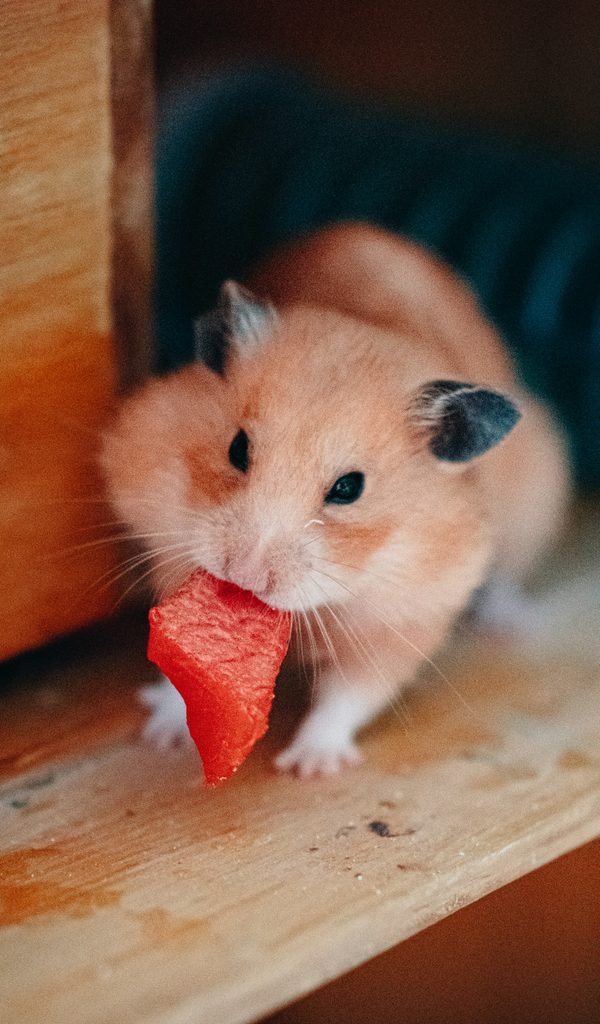
Hamsters naturally move food into hidden stores. The RSPCA notes that they use their cheek pouches to carry food to nests or hiding areas where it may be eaten or saved for later.
That means an empty feeding dish is not automatically a reason to add another full portion.
At the same time, do not repeatedly remove a clean dry-food hoard just because you find it. Blue Cross warns that removing a hamster’s entire larder can be stressful. During spot cleaning, concentrate on spoiled fresh food, damp bedding and anything contaminated rather than destroying a clean dry cache.
A large hoard also does not automatically prove that your hamster is being overfed. Hoarding itself is normal hamster behavior. Look at the overall pattern, including how much food is actually disappearing and whether your hamster’s weight is changing.
How often should hamsters have fresh vegetables?
There is no single fresh-food schedule that every reputable welfare source uses.
PDSA says a small portion of fresh fruit, vegetables and herbs can be offered daily. Woodgreen and Blue Cross also include fresh produce in a hamster’s diet but emphasize keeping portions small and treating extras as a relatively minor part of the overall diet.
So there is no good reason to turn this into a rigid rule such as “vegetables must be given every day” or “vegetables must only be given every other day.”
A practical approach is to keep the complete dry diet as the staple and offer small amounts of suitable fresh foods alongside it. Broccoli, cucumber, bell pepper and courgette are among commonly recommended options.
Fresh food should be given in small enough quantities that you can keep track of it, especially because hamsters may carry it into their burrows. Remove uneaten fresh food during your daily checks rather than allowing it to remain hidden and spoil.
For individual vegetables and preparation questions, see the safe vegetables for hamsters guide.
How often should hamsters have treats?
Treats do not need to be part of the daily feeding routine.
Woodgreen suggests portions roughly the size of the hamster’s ear once or twice a week as a general treat guideline. This is one of the cases where an animal-welfare source does provide a specific practical recommendation, so it is more useful than inventing measurements such as “thumbnail-sized” or “front-paw-sized.”
Possible extras include a small piece of suitable fruit, boiled egg or a mealworm, depending on what is already included in the hamster’s complete food.
Fruit is not necessary for a hamster to have a balanced diet. Sugary and fatty commercial treats, including products containing honey or molasses, are also best avoided or kept out of the regular routine.
Be careful with broad claims about dwarf hamsters here. Some veterinary guidance specifically highlights Russian dwarf hamsters as having greater diabetes concerns, but that should not be rewritten as “all dwarf hamsters are diabetes-prone.”
If you are unsure about a particular ingredient rather than its feeding frequency, check the foods toxic to hamsters guide before offering it.
How often should you change your hamster’s water?
Your hamster should have constant access to fresh, clean water.
Change the water daily and check the bottle or bowl at least once a day. If you use a bottle, make sure the spout is working and has not become blocked or started leaking.
Water is different from optional fresh foods or treats. It is not something that can be skipped because your hamster has food stored elsewhere.
What if you forget to feed your hamster one day?
Do not intentionally plan days without a normal dry-food allowance.
If you realize you missed a feeding and your hamster still has clean dry food stored in its enclosure, there is no reason to panic or compensate with an oversized meal. Check the food supply, make sure fresh water is available, and return to the normal routine.
What you should not do is assume that a hamster’s ability to hoard food makes skipped feeding harmless. You cannot know exactly how much usable food remains in every hidden cache.
Changes in appetite are also worth taking seriously. The RSPCA recommends contacting a vet if a hamster starts eating less, especially if this occurs alongside abnormal droppings or other changes.
A simple hamster feeding routine
For most healthy adult pet hamsters, the routine can stay simple:
- Give the normal allowance of complete dry food every day.
- Evening is convenient because your hamster is more likely to be awake.
- Scatter some or all of the dry food to encourage foraging.
- Do not automatically refill an empty bowl without considering stored food.
- Leave clean dry hoards alone where possible.
- Offer fresh foods in small amounts as optional extras.
- Remove uneaten fresh food during daily checks.
- Keep treats occasional rather than making them part of every meal.
- Provide fresh water at all times and change it daily.
The important distinction is between staple food and extras. Your hamster needs an appropriate complete diet every day. It does not need fruit, vegetables, mealworms or commercial treats on a rigid schedule to make that diet complete.
Frequently asked questions
Should I feed my hamster at exactly the same time every day?
No. A reasonably consistent routine is useful, but there is no need for an exact clock time. Feeding in the evening is convenient because your hamster is likely to be awake. Avoid waking it during the day just to keep a schedule.
Why is my hamster’s food bowl empty so quickly?
It may have eaten some of the food, but it may also have carried much of it into a hidden store. Check for clean dry hoards before assuming your hamster needs another full portion.
Should I remove my hamster’s food hoard?
Remove spoiled fresh food and anything that has become wet or contaminated, but avoid routinely destroying a clean dry-food hoard. Storing food is normal hamster behavior, and completely removing the larder can be stressful.
Do hamsters need fresh vegetables every day?
Not necessarily. PDSA allows a small daily portion, while other welfare guidance emphasizes small amounts in moderation. Fresh vegetables can add variety, but an appropriate complete dry diet remains the nutritional foundation.
This article is for informational purposes only and is not a substitute for veterinary advice. If your hamster suddenly eats less, loses weight, becomes lethargic or develops abnormal stools, contact a hamster-experienced vet.