
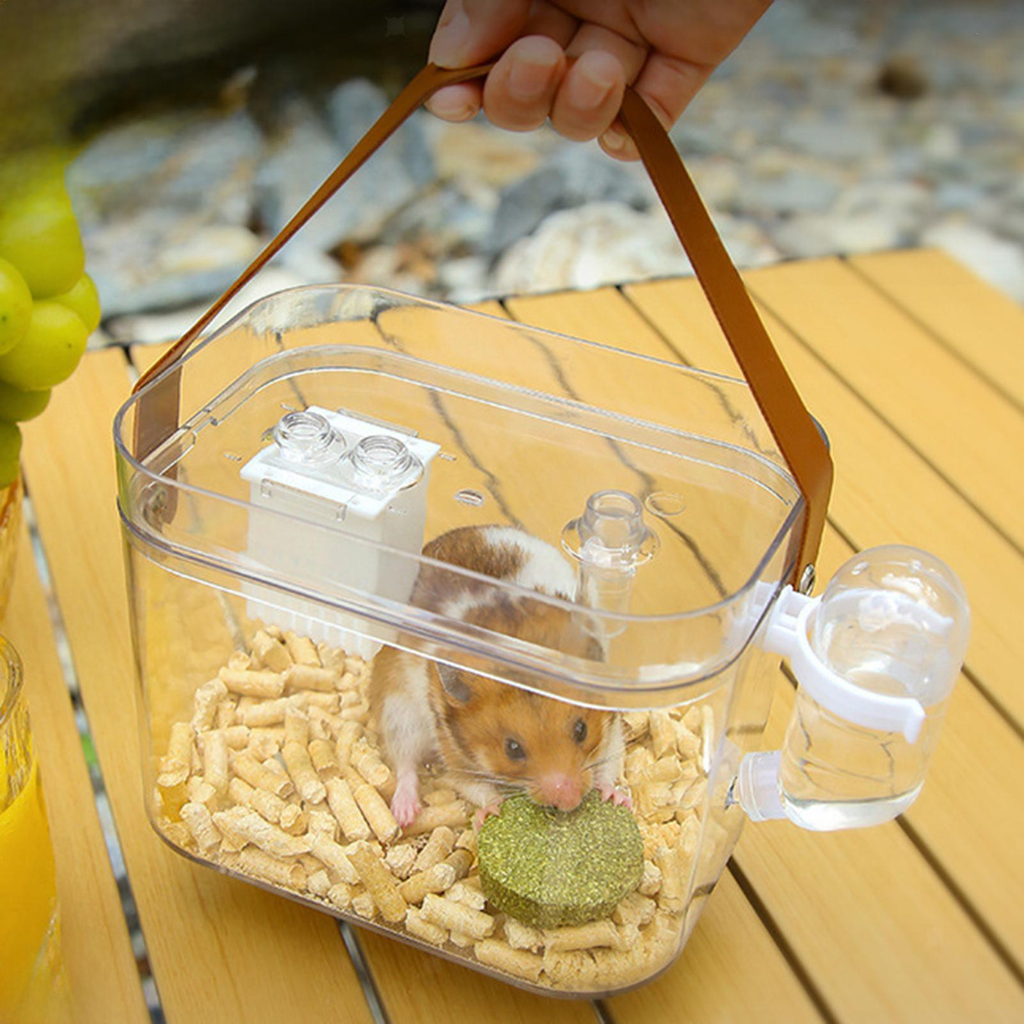
Spot-clean a hamster enclosure regularly by removing wet or visibly soiled bedding and leftover fresh food, but avoid stripping out all of the bedding every week unless the enclosure genuinely needs it. A larger, well-maintained setup may only need a more thorough refresh every few weeks. When you do a deeper clean, keep some clean, unsoiled used bedding so the enclosure still smells familiar.
There is no single cleaning schedule that fits every hamster. Current welfare organizations differ slightly: Woodgreen recommends daily spot cleaning and a refresh every two to three weeks, while Blue Cross and RSPCA suggest spot cleaning every few days and a deeper clean roughly once or twice a month.
The useful rule is simple: remove waste before it builds up, but do not repeatedly reset a clean enclosure just because the calendar says so.
How often should you clean a hamster cage?
Use two levels of cleaning.
Regular spot cleaning
Check the enclosure frequently and remove:
- wet or urine-soaked bedding
- visibly dirty bedding
- leftover fresh vegetables or other perishable food
- dirty sand if your hamster urinates in its sand bath
- obvious spills around the water source
Woodgreen recommends daily spot cleaning. Blue Cross and the RSPCA suggest every few days.
You do not need to choose one organization and ignore the others. Check the enclosure regularly and clean soiled areas when you find them.
A hamster that urinates in one predictable corner may be easier to maintain than one that urinates throughout its burrows.
Deeper cleaning
A more extensive clean is needed less often.
Woodgreen recommends a refresh every two to three weeks. Blue Cross and RSPCA say a deeper clean is usually needed around once or twice a month, depending on enclosure size and toileting habits.
PDSA adds an important distinction: a small cage may become dirty enough to require a full clean weekly, while a larger enclosure may only need one every few weeks.
That is another reason a rigid rule such as “never clean more often than every three weeks” does not work.
If bedding is damp, heavily soiled or smelly, clean it. If most of a large enclosure is still dry and clean, there is no benefit in throwing all of it away just to follow a schedule.
Why you should not replace all the bedding unnecessarily
Hamsters rely heavily on scent.
Blue Cross explains that familiar smells help hamsters feel secure and recommends returning some clean used bedding after a full clean. RSPCA similarly advises transferring a small amount of old, unsoiled bedding and nesting material.
Woodgreen goes further and recommends keeping as much clean used bedding as practical during its current refresh-clean routine.
So the goal is not a sterile, scent-free enclosure.
Instead:
remove what is dirty and preserve what is still clean.
This also reduces the amount of established burrowing material you destroy during every clean.
I would not claim that every full clean automatically suppresses immunity, causes behavioral illness or produces a specific stress disorder. The simpler point has direct support: excessive disturbance and removal of familiar scent can be stressful.
How much old bedding should you keep?
There is no need to measure out exactly one handful.
Blue Cross suggests saving a few handfuls and notes that roughly a third can be useful during a fuller clean. RSPCA simply recommends retaining a small amount, while Woodgreen advises keeping as much clean used bedding as possible.
The principle matters more than an exact fraction.
Keep bedding that is:
- dry
- clean
- free from spoiled food
- not heavily soiled with urine or feces
Mix it back through the fresh bedding or return it to familiar areas of the enclosure.
When should you not save old bedding?
This is an important exception.
If the enclosure has been contaminated by mold, a harmful substance, a significant parasite problem or an infectious disease, normal scent-preservation advice may no longer be appropriate.
Your veterinarian may recommend more extensive cleaning or disinfection.
Do not preserve contaminated bedding simply because an article told you to “always save old bedding.”
How to spot-clean a hamster enclosure
Spot cleaning should be small and targeted.
1. Find the wet areas
Many hamsters choose one or a few places to urinate.
Remove wet bedding and replace only what you removed.
If your hamster uses its sand bath as a toilet, scoop or replace the dirty section of sand rather than automatically throwing away the whole bath on a fixed weekly schedule.
2. Remove spoiled fresh food
Fresh vegetables and other perishable foods should not be allowed to spoil in a hoard.
Woodgreen specifically recommends removing uneaten fresh food from the previous day during routine cleaning.
Dry staple food is different. Hamsters naturally store food, so do not automatically destroy every food hoard simply because you find one.
If a hoard is dry and clean, it can often be left alone. Remove food that is damp, moldy, contaminated or otherwise spoiled.
3. Check the water area
Look for leaks around the bottle or bowl.
A leaking bottle can create a large hidden patch of wet bedding, especially if it sits near a burrow.
Replace soaked substrate and fix or replace the leaking water source.
4. Top up bedding where needed
After removing dirty material, replace it with fresh suitable bedding.
You do not need to rebuild the entire enclosure after every spot clean.
How to do a deeper hamster cage clean
Wait until your hamster is naturally awake.
RSPCA, Blue Cross and PDSA all advise avoiding unnecessary cleaning disturbance while a hamster is sleeping.
Then:
- Move the hamster to a secure carrier or playpen. Include familiar bedding and a hide where practical.
- Remove dirty bedding and spoiled food. Preserve clean, dry bedding for reuse.
- Inspect burrows and food stores. Remove wet or contaminated material without automatically discarding everything.
- Clean soiled hard items. This may include the wheel, bowls, water bottle, sand bath and hides.
- Clean enclosure surfaces as needed.
- Rinse and dry cleaned items thoroughly.
- Return bedding and furniture. Mix clean used bedding with fresh bedding.
- Return the hamster once everything is dry and secure.
You do not have to make the layout identical down to the centimeter, but avoiding a complete environmental reset every time can reduce unnecessary disturbance.
What should you use to clean a hamster cage?
For a deeper clean, Blue Cross, PDSA and Woodgreen recommend a pet-safe cleaner or disinfectant.
Follow the product instructions carefully.
Blue Cross specifically recommends washing the enclosure after applying pet-safe disinfectant and allowing it to dry completely before the hamster returns.
For food bowls and water bottles, Blue Cross recommends warm water and a bottle brush.
Avoid improvising with strongly scented household cleaners simply because they smell “clean.”
Likewise, do not mix cleaning chemicals.
If a disinfectant is needed because your hamster has an infectious illness or parasites, ask your veterinarian which product and dilution are appropriate.
How often should you clean the water bottle and food bowl?
This is another area where the published routines differ.
PDSA includes bowls and bottles in its daily spot-clean list. Woodgreen emphasizes changing the water daily and cleaning bowls and bottles during its refresh clean. Blue Cross includes bottle and bowl cleaning during a fuller cage clean.
Rather than inventing another exact schedule:
- provide clean fresh water every day
- inspect the bottle or bowl regularly
- wash it whenever it becomes dirty
- clean it thoroughly as part of routine enclosure maintenance
- check that bottle spouts remain functional and are not leaking
Food bowls should also be cleaned when they are dirty, particularly if wet or fresh foods have been placed in them.
How often should you clean a hamster sand bath?
There is no good universal rule that says every sand bath must be completely replaced once a week.
Woodgreen recommends removing wet areas and dirty sand during routine spot cleaning and replacing the sand during a more thorough enclosure refresh, particularly when the hamster uses it as a toilet.
So inspect the sand rather than watching the calendar.
Remove:
- urine-soaked areas
- feces
- spoiled food
- other contamination
Top up or replace more of the sand when it is no longer clean.
For more on choosing and using sand, see our hamster sand bath guide.
Should you clean out your hamster’s nest?
Avoid routinely destroying a clean nest.
A hamster’s burrow and nesting area are important parts of its enclosure. But you still need to deal with hygiene problems.
During a deeper clean, check accessible nesting and hoarding areas for:
- wet bedding
- spoiled fresh food
- mold
- excessive waste
Remove contaminated material while preserving clean nesting material where practical.
If the nest is dry and clean, there is no reason to completely dismantle it during every spot clean.
What if the enclosure smells?
Do not immediately remove every piece of bedding.
First look for the source.
Common places to check include:
- the hamster’s toilet area
- the sand bath
- underneath the water bottle
- a wet burrow
- spoiled fresh food
- the wheel
- hides or platforms that have been urinated on
Targeted cleaning may solve the problem without a full reset.
If an enclosure becomes strongly dirty very quickly despite appropriate cleaning, check whether the enclosure is too small, the bedding is insufficiently absorbent, or the water bottle is leaking.
A sudden change in urination can also be medically relevant. If your hamster begins producing much more urine than usual or is drinking noticeably more, contact a hamster-experienced veterinarian rather than treating it only as a cleaning problem.
Is ammonia the reason you need to spot-clean every day?
Urine-soaked bedding should not be allowed to accumulate, but I would remove the article’s strong ammonia explanation.
Woodgreen states that keeping the enclosure clean is important for preventing health problems including respiratory problems. RSPCA likewise says bedding should remain clean and dry.
That is enough to justify good hygiene.
There is no need to import laboratory-rodent ammonia thresholds and turn them into a specific pet-hamster rule.
The practical signal for an owner is simpler:
if bedding is wet or heavily soiled, remove it.
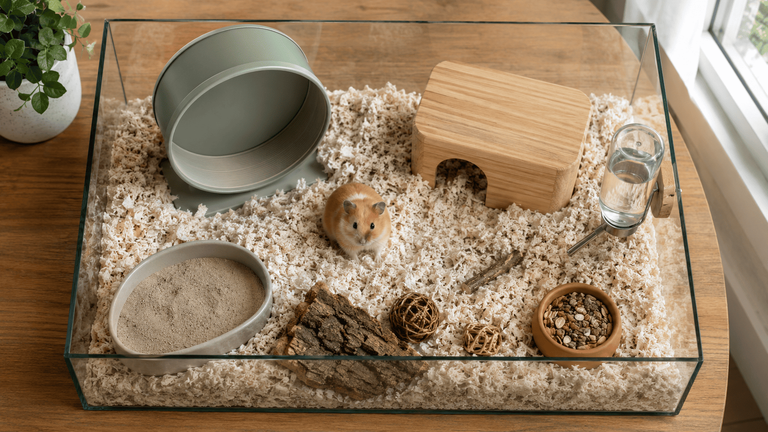
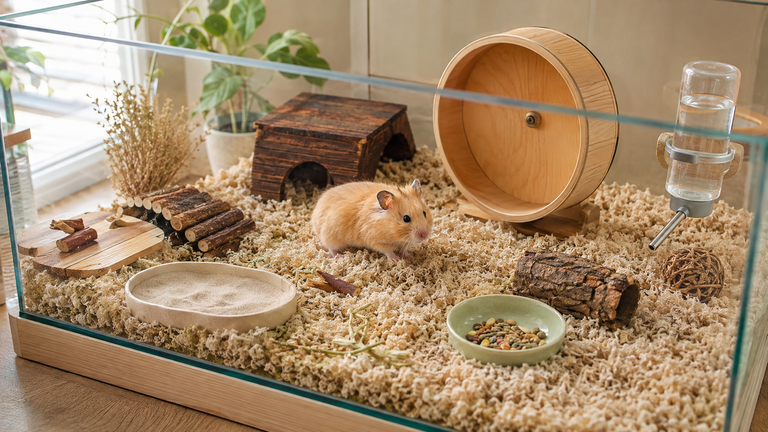
Do glass tanks, bins and barred cages need different schedules?
The basic cleaning principle is the same.
Enclosure design can change how quickly you notice dirt and where it accumulates, but it does not create a separate hygiene schedule.
For any enclosure:
- remove wet bedding
- check hidden burrows and corners during deeper cleans
- clean contaminated hard surfaces
- keep ventilation unobstructed
- allow cleaned surfaces to dry fully
- preserve clean familiar bedding when appropriate
Do not assume that a glass tank automatically needs more frequent complete cleaning or that a barred cage automatically stays cleaner.
The hamster’s toileting habits, bedding, enclosure size and moisture levels matter more.
Should you remove your hamster for spot cleaning?
Usually not for a quick, localized clean.
If your hamster is awake and comfortable elsewhere in the enclosure, you can quietly remove a small wet patch without turning the process into a handling session.
For a deeper clean involving major bedding removal or cleaning products, move the hamster to a secure carrier or playpen first.
Do not wake a sleeping hamster just to complete a non-urgent cleaning task.
A practical cleaning routine
Instead of memorizing a rigid calendar, use this:
| Check | What to do |
|---|---|
| Wet or dirty bedding | Remove when found |
| Uneaten fresh food | Remove before it spoils |
| Dirty toilet area or sand | Spot-clean as needed |
| Water | Refresh daily and check bottle/bowl |
| Dirty wheel, bowl or hide | Clean when soiled |
| Large enclosure still mostly clean | Preserve clean bedding and continue spot cleaning |
| Widespread soiling or persistent odor | Do a more extensive refresh |
| Infectious disease, parasites or contamination | Follow veterinary cleaning advice |
For many well-sized enclosures, a deeper refresh may fall somewhere around every two to four weeks. Smaller or unusually messy setups may need attention sooner.
Do you need to bathe your hamster when you clean the cage?
No.
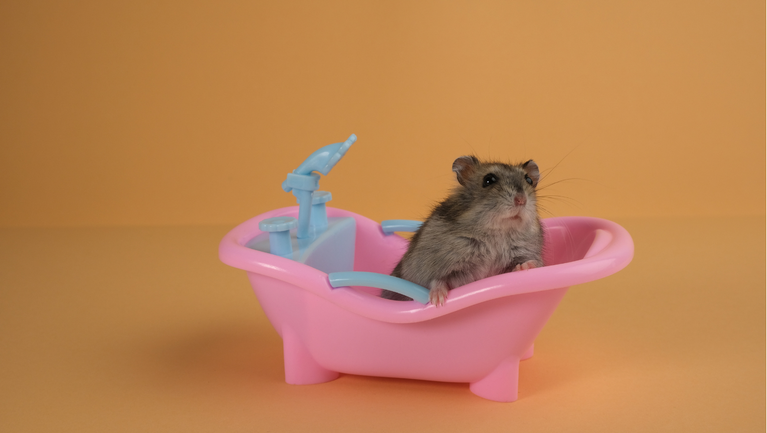
Cleaning the enclosure does not mean washing the hamster.
Healthy hamsters groom themselves, and routine water bathing is unnecessary. A suitable sand bath provides another way for hamsters to maintain their coat.
If your hamster’s fur is repeatedly soaked with urine, diarrhea or another discharge, that can indicate a health problem and deserves veterinary attention rather than a routine bath.
The bottom line
Clean what is dirty, preserve what is clean, and avoid unnecessary full resets.
Spot-clean wet bedding, contaminated sand and leftover fresh food regularly. A larger, well-maintained enclosure may only need a more extensive refresh every few weeks, while a smaller or messier setup may need one sooner.
When you do a deeper clean, preserve some clean, unsoiled used bedding so familiar scent remains. Clean bowls, bottles, wheels and other hard items as needed with an appropriate pet-safe product, rinse where required and let everything dry before the hamster returns.
The important exception is contamination or disease. If bedding is moldy, heavily contaminated or your vet has diagnosed an infectious or parasitic problem, hygiene takes priority over preserving scent.
A good hamster enclosure should be clean and dry without being repeatedly stripped back to zero.
Keep reading: Hamster cage setup | Hamster bedding depth | Hamster sand bath
Hamster Corner provides general educational information about hamster care. If your hamster develops unusual urination, diarrhea, discharge, breathing problems or another significant health change, contact a hamster-experienced veterinarian.
[…] how to clean a hamster cage for the larger cleaning […]
[…] how to clean a hamster cage for the full cleaning […]