
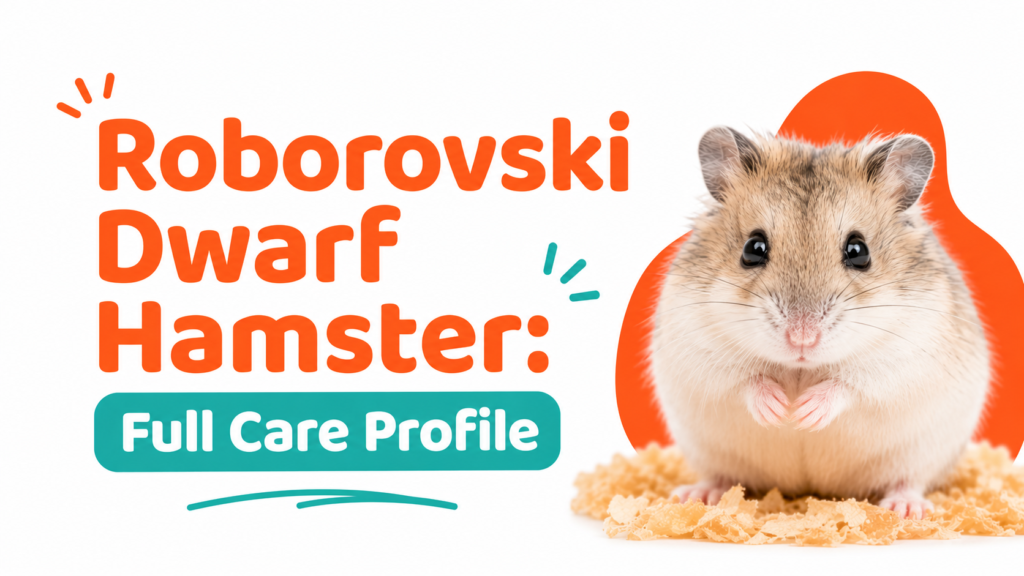
The Roborovski is the smallest pet hamster at about 2 inches and the fastest, living 2 to 3 years or more. They are charming to watch but very hard to hold, since they rarely sit still. Robos suit people who want to observe an active hamster rather than cuddle one, and they should be housed alone.
The Roborovski, or Robo, is a tiny bundle of energy. If you love watching a hamster zoom, dig, and explore, a Robo is a joy. If your heart is set on holding and cuddling, it is probably not the species for you. Here is everything you need to know.
Roborovski at a glance
| Trait | Detail |
|---|---|
| Size | About 2 inches, the smallest species |
| Lifespan | 2 to 3 years, sometimes up to 3.5 |
| Temperament | Fast, active, skittish, not cuddly |
| Housing | Best alone |
| Best for | Watching, patient and experienced keepers |
Appearance and size
At roughly 2 inches, the Robo is about the size of your thumb. It has a sandy-brown coat, a white belly, and distinctive white spots above the eyes that give it a permanently surprised look. There is no dorsal stripe, which helps tell it apart from other dwarfs.
Temperament and handling
Robos are among the most active and fastest hamsters, capable of running several miles a night on a wheel. That energy makes them captivating to watch but genuinely difficult to handle, since they dart and rarely stay still. They are not aggressive and rarely bite, but they are escape artists, so handle them low to the ground or over an enclosed space. Most owners enjoy Robos as a watch-and-observe pet rather than a hold-and-cuddle one. Gentle, patient interaction over time, as in our taming guide, can build some trust.
Housing
A Robo needs the same generous space as any hamster: at least 40 by 20 inches (100 by 50 cm) of floor space, deep bedding of 8 to 10 inches for burrowing, and a solid wheel of at least 10 inches (25 cm). Because they are so small, make sure bar spacing on any cage is tight, or better, use a barless tank or bin so they cannot squeeze out. Our cage setup guide has the details.
On keeping Robos together: Roborovskis are sometimes described as social and kept in same-sex groups, but pairings often break down into serious fighting with little warning. Solo housing is the safest, lowest-stress choice and is what we recommend, especially for beginners.
Diet
Feed a quality staple food with small amounts of safe vegetables and a little protein. Like all dwarfs, Robos are prone to diabetes, so keep sugar low and go easy on sugary fruit and vegetables. See our full guide on what hamsters can eat.
Health and lifespan
Robos are hardy and often live 2 to 3 years, sometimes a little longer. Watch for the usual hamster issues and keep an eye on weight and skin. Our guide to the signs of a sick hamster covers what to look for.
Enrichment and daily care
Robos are little athletes, so enrichment is where they shine. They love a deep dig area, a sand bath in chinchilla sand for rolling and grooming, multiple hides, and a large solid wheel they will run on for miles each night. Scatter-feed their food to encourage natural foraging, and add safe wood chews. Daily care is quick: fresh water, a spot-clean of soiled corners, and a food top-up, while watching that your fast little hamster looks lively and well. Because they are so quick, do any cleaning calmly and make sure the enclosure stays escape-proof.
Time and cost commitment
A Robo lives 2 to 3 years or more, so it is a real multi-year commitment. As with any hamster, the main cost is the upfront setup of a large enclosure, a solid wheel, and deep bedding, with modest ongoing costs for food and bedding. Robos are low on handling time but high on watching enjoyment, so they suit someone who likes observing a busy pet. Keep an exotic vet in mind for any health needs, ideally found before an emergency.
Is a Roborovski right for you?
Choose a Robo if you want an entertaining, active pet to watch and you are happy not to handle it much. They are not ideal for young children, who usually want to hold their pet, or for first-time owners hoping to bond through handling. If handling matters to you, a Syrian is a better fit.
Legal note
Roborovskis are legal in most of the United States, including California without a permit, but all hamsters are banned in Hawaii. Check your local and state laws first.
Frequently asked questions
Are Roborovski hamsters good for beginners?
Not really for handling. They are easy to care for but too fast to hold comfortably, so beginners who want a hands-on pet usually do better with a Syrian.
Can Roborovski hamsters live together?
It is risky and not recommended. Groups often end in fighting. Solo housing is the safest choice.
Do Roborovski hamsters bite?
They rarely bite and are not aggressive, but they are very fast and prone to escaping, so handle them carefully and low to the ground.
Do Roborovski hamsters need a sand bath?
They love one. A shallow dish of chinchilla sand lets a Robo roll and groom, which keeps the coat clean and provides great enrichment. Use plain chinchilla sand, not dust, and remove it after a while so it stays clean.
Are Roborovski hamsters hard to care for?
Day-to-day care is straightforward and the same as any hamster. The challenge is handling, not care. They are fast and escape-prone, so the main skill is calm, secure handling rather than anything complex about their daily needs.
The bottom line
The Roborovski is a tiny, fast, fascinating hamster best enjoyed as a pet to watch rather than hold. Give it a large solo enclosure with deep bedding and a solid wheel, keep its diet low in sugar, and check your local laws. If you want a hamster to handle, see the Syrian profile or our species guide.
Keep reading: Types of Hamsters, Dwarf vs Syrian, Winter White Profile.
Note: pet laws vary by area. Check your local and state laws before getting a hamster, as some species are restricted or banned in certain places (notably Hawaii and California).