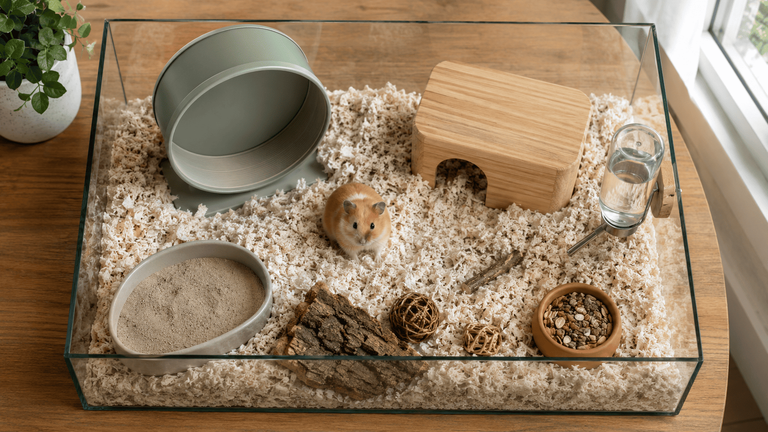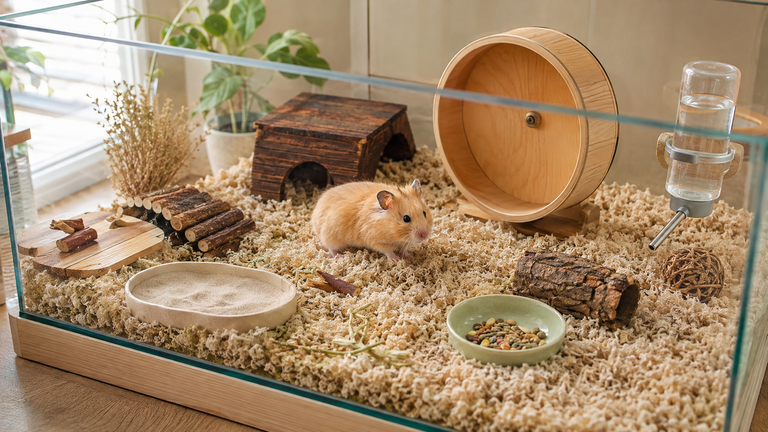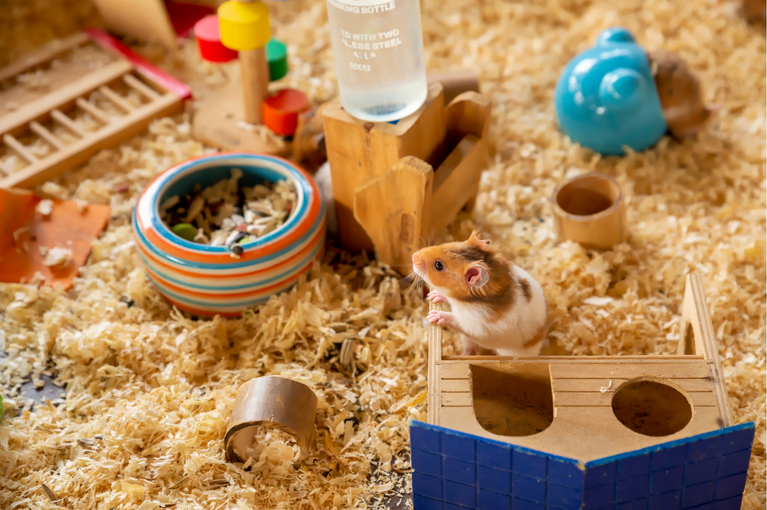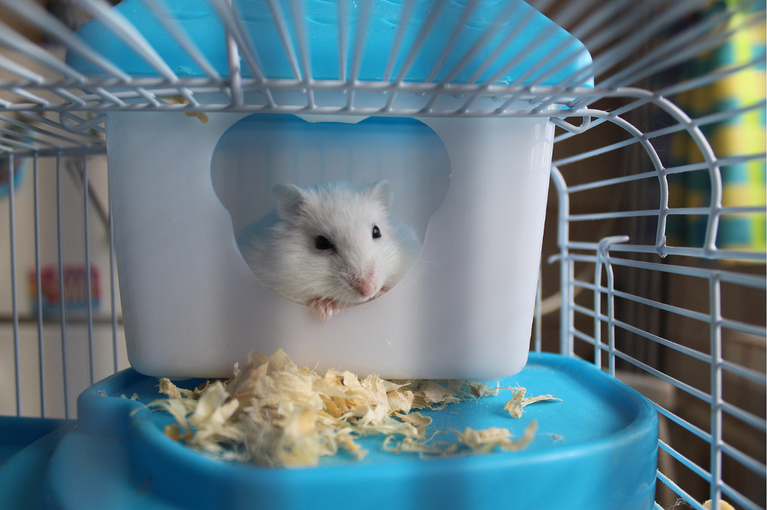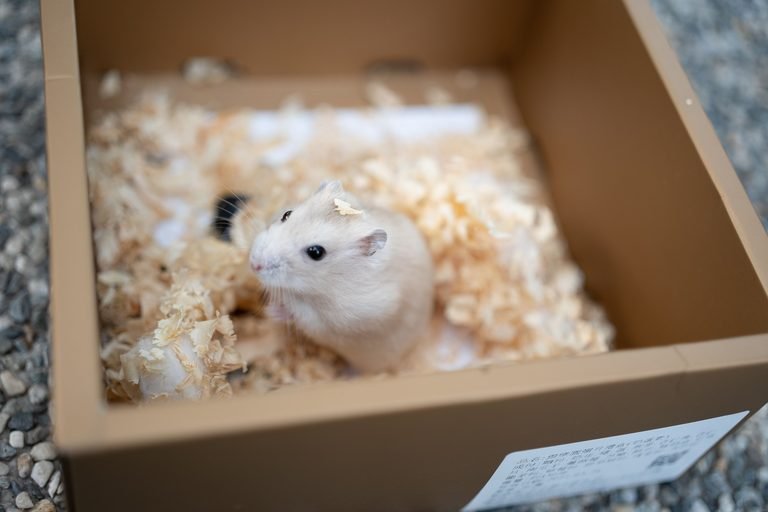
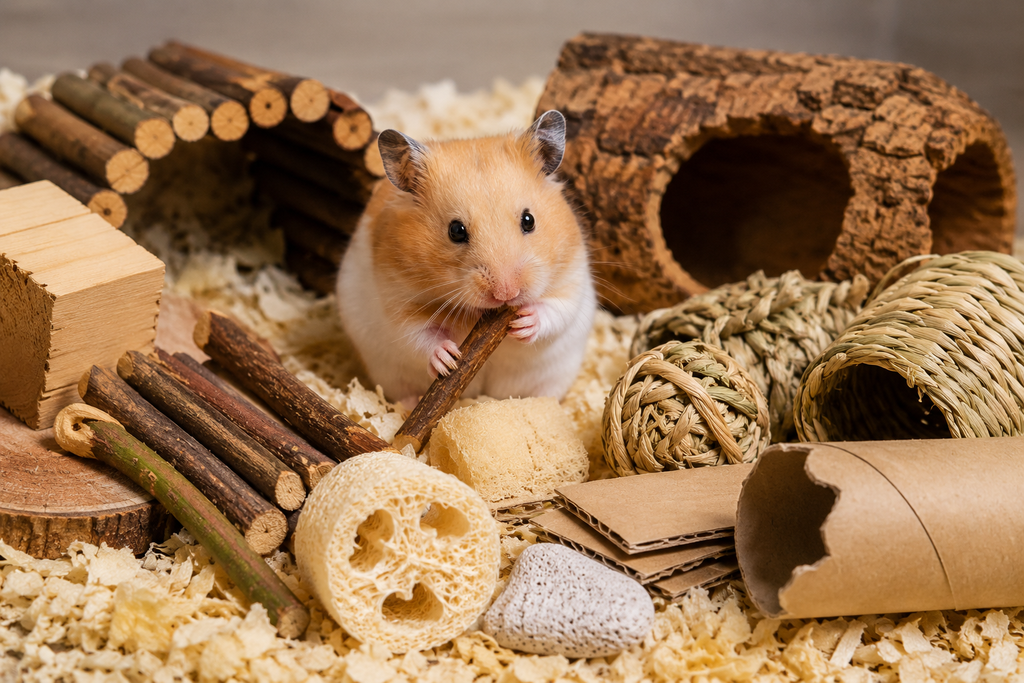
Good hamster chew materials include safe untreated woods such as apple, pear, hazelnut and willow, along with plain cardboard, seagrass, unbleached loofah and pumice. PDSA specifically lists these materials as suitable for hamsters to gnaw.
Chewing matters because hamster incisors grow continuously. But chew toys are only part of dental care. A hamster can still develop overgrown or misaligned teeth because of injury, abnormal tooth alignment or other problems, so toys should not be treated as a guarantee against dental disease.
Why do hamsters need things to chew?
A hamster’s front incisors continue growing throughout its life.
The Merck Veterinary Manual explains that hamsters need food and other appropriate items to gnaw so their teeth can wear down naturally. Overgrown teeth can interfere with eating and may lead to drooling, appetite loss and weight loss.
Merck Veterinary Manual hamster dental care
Chewing also gives hamsters another normal activity to perform inside the enclosure. PDSA describes gnawing as both a natural behavior and a source of mental and physical stimulation.
That makes chew materials useful for both dental wear and enrichment.
However, I would remove the claim that chew toys are “the main way to prevent malocclusion.” Malocclusion means the teeth do not meet correctly, and giving more wood cannot necessarily correct abnormal alignment.
If your hamster’s teeth look overgrown, or it starts dropping food, drooling or losing weight, contact a hamster-experienced veterinarian rather than trying to solve the problem by adding harder toys.
Which woods are safe for hamsters to chew?
PDSA provides an unusually useful hamster-specific list.
Suitable gnawing woods include:
- apple
- pear
- hazelnut
- willow
- dogwood
- elm and red elm
- grape and grapevine
- hawthorn
- poplar
- quince
- yucca
PDSA hamster care and safe gnawing materials
Blue Cross also recommends fruit-tree sticks for gnawing, while Woodgreen specifically mentions safe fruit-tree twigs.
That gives apple and pear wood, in particular, good support from multiple welfare sources.
I would remove birch from the article’s “confirmed safe woods” list unless we find equally strong hamster-specific guidance for it. Its absence from the PDSA list does not prove birch is toxic, but there is no need to recommend it when several better-supported choices exist.
Should wood be untreated?
Yes. Use wood intended for pet use or material from a source whose identity and treatment history you can trust.
Avoid painted, stained, varnished or chemically treated timber. Hardware-store lumber is not a sensible hamster chew simply because the underlying tree species happens to be suitable.
If you collect branches yourself, correctly identify the tree and avoid branches exposed to pesticides, herbicides or other chemical treatments.
Commercial small-animal chew sticks from a reputable supplier remove much of that uncertainty.
Can hamsters chew cardboard?
Yes.
Cardboard has strong support as hamster enrichment.
Blue Cross recommends cardboard tubes for hamsters to explore and chew, while PetMD lists cardboard boxes, paper towel rolls and similar paper-based objects as enrichment.
Blue Cross hamster enrichment guidance
Plain cardboard can therefore serve several jobs at once: something to shred, chew, investigate and hide inside.
Good choices include:
- toilet-roll or paper-towel tubes
- plain cardboard boxes
- simple cardboard tunnels
- homemade cardboard forage toys
Remove staples, tape, plastic windows and other attached materials before putting cardboard into the enclosure.
I would not claim that all printing inks or adhesives are harmless. When possible, simpler cardboard with minimal coating and decoration is easier to assess.
For ideas that use cardboard as enrichment rather than just a loose chew, see our DIY hamster toys guide.
Is cork safe for hamsters?
Cork has good support as enclosure enrichment.
Both Blue Cross and Woodgreen recommend cork logs or similar natural structures for hamster habitats.
Cork can provide texture, cover and a structure to explore.
What I would remove is the stronger claim that cork is “completely safe to ingest,” “contains no oils or chemicals,” or “cannot splinter.” The welfare sources support cork as an enrichment material, but they do not establish all of those ingestion and mechanical-safety claims.
Use natural cork intended for animal enclosures and inspect it periodically for damage.
Can hamsters chew loofah?
Yes, if it is an appropriate unbleached loofah.
PDSA directly lists unbleached loofah among suitable hamster gnawing materials.
That means loofah can stay in the article without relying on pet-shop marketing.
Avoid loofah that has been treated with soap, fragrance or cleaning products.
There is no need to claim that a home-grown loofah is automatically safe simply because it came from a garden. The same basic sourcing rules apply: know what it is and what it has been exposed to.
Is seagrass safe?
Yes.
PDSA also lists seagrass as a suitable gnawing material for hamsters.
Plain woven seagrass toys, mats or tunnels can therefore provide another texture alongside wood and cardboard.
Choose simple pet-safe items without loose decorations, coatings or unknown additives.
What about pumice chews?
PDSA explicitly lists pumice stone among suitable items for hamster gnawing.
So a pet-safe pumice item can be an option.
However, it does not need to be described as an “excellent dental workout,” nor does every hamster require one. Safe wood, cardboard and other gnawing options may already provide plenty of choice.
The important distinction is between offering appropriate chew materials and trying to mechanically grind teeth down with the hardest object you can find.
If teeth are actually overgrown, veterinary assessment is the appropriate next step.
Are mineral blocks good for hamsters?
The evidence is mixed enough that I would not recommend mineral blocks as a default chew.
Current PetMD hamster care sheets include pet-safe mineral blocks among possible chewable items for dental wear.
However, Woodgreen takes a more conservative position and advises avoiding mineral and salt blocks, describing them as unnecessary and potentially harmful.
Woodgreen hamster feeding guidance
Because a nutritionally complete hamster diet should already provide the required minerals, there is no nutritional reason to add a mineral block merely for “trace minerals.”
With plenty of better-supported chewing materials available, Hamster Corner would not make mineral blocks a recommended essential.
Should hamsters chew cedar or pine?
I would avoid turning this into the blanket statement that “all cedar and pine in any form are toxic.”
PetMD specifically warns against cedar and pine shavings as bedding because their aromatic oils can irritate hamster skin and mucous membranes.
Blue Cross similarly recommends avoiding most wood shavings or sawdust while noting that aspen can be used.
That provides a clear bedding recommendation.
It does not automatically prove every solid piece of every pine species is toxic as a chew, so I would avoid overextending the bedding evidence.
More importantly, PDSA already gives a long list of clearly suitable woods. There is little reason to experiment with uncertain wood when apple, pear, hazelnut and willow are readily available.
For bedding specifically, see our bedding to avoid guide.
What about plastic?
Plastic products need to be monitored if your hamster chews them.
PetMD advises removing plastic hideouts when a hamster begins chewing them because swallowed broken plastic can cause gastrointestinal obstruction or injury.
That is a stronger and more useful claim than simply saying “soft plastic is dangerous but hard plastic is fine.”
If your hamster is actively destroying a plastic toy, replace it with a safer chewable material rather than expecting it to distinguish between chewing and swallowing.
How many chew toys does a hamster need?
There is no evidence-based number such as exactly two or three chew toys.
Instead, provide more than one suitable material and enough environmental variety for the hamster to choose from.
A simple setup could include:
- safe wooden gnawing material
- cardboard
- a seagrass or loofah item
- other appropriate enrichment such as tunnels, hides and foraging opportunities
Rotate or replace items when they become heavily damaged, dirty or no longer useful.
You do not need to replace everything every few weeks simply to create novelty. Hamsters rely heavily on familiar scents, so constantly changing their whole environment is not necessarily beneficial.
What if my hamster ignores its chew toys?
That does not automatically mean something is wrong.
Hamsters differ in what they prefer to gnaw. Try changing the material, shape or placement rather than continually adding more products.
You can also provide enrichment that involves chewing indirectly, such as a cardboard forage toy containing part of the hamster’s normal food.
If your hamster’s incisors remain an appropriate length and it is eating normally, the fact that you rarely see it attacking a wooden block is not itself a dental emergency.
Will chew toys stop cage-bar biting?
They may give your hamster more appropriate things to gnaw, but bar chewing should not be treated as simply a shortage of chew toys.
Woodgreen notes that regular bar chewing can damage hamster teeth and recommends improving the overall enclosure with more space and varied enrichment, including tunnels, safe twigs, appropriate wheels and scatter feeding.
That means the response should be broader than hanging another wooden stick from the bars.
If your hamster repeatedly chews cage bars, review the entire hamster cage setup and hamster enrichment rather than focusing only on dental wear.
Signs of a dental problem
Chew toys are preventive enrichment, not treatment for an existing dental problem.
Merck and PetMD identify warning signs that can accompany overgrown or diseased teeth, including:
- difficulty eating
- dropping food
- reduced appetite
- drooling
- weight loss
- facial swelling
- teeth that appear unusually long or poorly aligned
If you notice these changes, contact a hamster-experienced veterinarian.
Do not cut or file hamster teeth at home. Dental problems may involve more than simply an incisor being “too long,” and improper trimming can damage the tooth.
Frequently asked questions
What wood is safe for hamsters to chew?
PDSA specifically lists apple, pear, hazelnut, willow, dogwood, elm, grapevine, hawthorn, poplar, quince and yucca among suitable gnawing woods.
Use untreated material from a reliable source.
Are apple sticks safe for hamsters?
Yes. Apple wood is supported by PDSA, Blue Cross and Woodgreen as a hamster gnawing option.
Avoid branches whose pesticide or chemical-treatment history is unknown.
Is cardboard safe for hamster teeth?
Plain cardboard is suitable enrichment and can be chewed and shredded, but it is not a substitute for all other gnawing materials.
Offer cardboard alongside safe wood and other enrichment.
Do hamsters need mineral blocks?
No. They are not nutritionally necessary when the hamster is eating an appropriate complete diet.
PetMD includes pet-safe mineral blocks as possible chew items, while Woodgreen recommends avoiding mineral and salt blocks. With many simpler alternatives available, they are not something Hamster Corner needs to recommend.
What if my hamster’s teeth are already too long?
See a veterinarian.
Chew toys cannot reliably correct established overgrowth or abnormal tooth alignment. Overgrown incisors sometimes need professional trimming or other veterinary treatment.
Bottom line
Safe chew options for hamsters include well-supported woods such as apple, pear, hazelnut and willow, plus cardboard, seagrass, unbleached loofah and pet-safe pumice.
Chewing helps naturally wear continuously growing incisors and provides useful enrichment, but chew toys do not guarantee that a hamster will never develop dental disease.
Use clean, untreated materials from reliable sources. Be cautious with plastic that is being destroyed, and do not rely on mineral or salt blocks as nutritional supplements.
Most importantly, treat drooling, difficulty eating, dropping food, weight loss or visibly overgrown teeth as a veterinary issue rather than trying to solve an existing dental problem with a harder chew toy.
Keep reading: DIY hamster toys · Hamster cage setup · Hamster enrichment ideas · Bedding to avoid