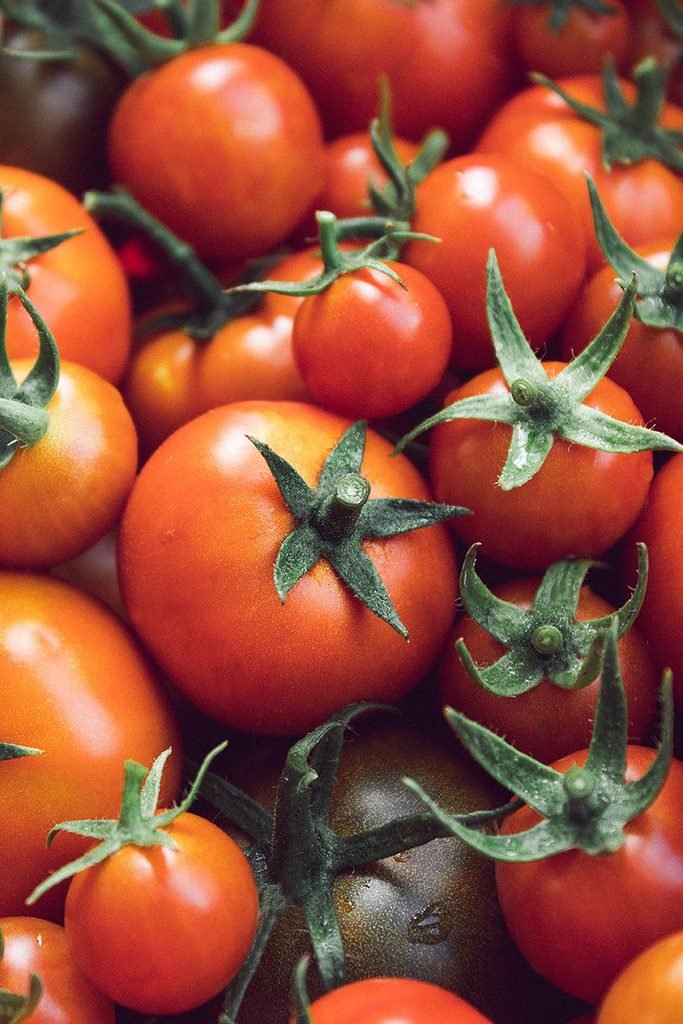
I would skip tomato for hamsters. Reputable guidance currently conflicts: PDSA lists tomato among fruits suitable for hamsters, while Woodgreen Pets Charity specifically includes tomato in its foods-to-avoid list. Ripe tomato flesh is not clearly established as a hamster toxin, but when good sources disagree and the food is unnecessary, there is little reason to take the chance.
There is another important correction to common tomato advice. The main glycoalkaloid associated with tomato plants is α-tomatine, not simply “solanine.” α-Tomatine is much more concentrated in green plant tissues and immature fruit and falls substantially as tomatoes ripen.
Can hamsters eat ripe tomatoes?
This is one of those questions where a confident “yes” hides an important disagreement between authoritative sources.
PDSA lists tomato among fruits it considers suitable for hamsters, while recommending small portions and moderation.
Woodgreen Pets Charity, however, specifically puts tomato on its list of foods to avoid feeding hamsters.
Neither position gives us a good basis for declaring a pea-sized piece of ripe tomato universally safe once a week.
So my practical recommendation is:
Skip tomato and choose a fresh food with clearer hamster-specific guidance instead.
That does not mean ripe tomato has been proven poisonous to hamsters. It means the evidence is not consistent enough to justify recommending it when plenty of better-supported alternatives exist.
For foods with clearer guidance, see safe vegetables for hamsters.
Why do hamster sources disagree about tomatoes?
Part of the confusion comes from treating the tomato fruit and the rest of the tomato plant as if they were chemically identical.
Tomatoes contain steroidal glycoalkaloids, particularly α-tomatine. Research reviews show that α-tomatine occurs at much higher levels in immature green fruit and vegetative tissues such as leaves and stems. Its concentration drops considerably as the fruit ripens.
That helps explain why ripe tomato fruit and green tomato plant material should not automatically receive the same risk assessment.
But chemistry alone does not answer the pet-feeding question.
A study showing that ripe fruit contains less α-tomatine does not prove that a particular amount is safe for a pet hamster. Likewise, the presence of α-tomatine in leaves does not give us a hamster-specific poisoning dose.
This is why I would not turn tomato chemistry into an exact serving schedule.
Is solanine the problem with tomato plants?
The original article said tomato leaves, stems and green fruit contain solanine and are therefore toxic to hamsters.
That is an oversimplification.
Solanine is better known as a major glycoalkaloid associated with potatoes. In tomatoes, the principal steroidal glycoalkaloid discussed in the research literature is α-tomatine, together with related tomato glycoalkaloids.
A review of α-tomatine biosynthesis reports that it accumulates particularly in leaves and immature green fruits, then decreases as tomatoes mature.
So if you see hamster articles explaining tomato risk purely as “solanine poisoning,” they are probably simplifying the chemistry too far.
Can hamsters eat green tomatoes?
I would not feed green or unripe tomatoes.
Research consistently shows that immature green tomatoes contain substantially more α-tomatine than ripe fruit.
What we do not have is a reliable hamster-specific threshold telling us how much green tomato would cause poisoning.
That means the responsible conclusion is not:
A certain amount of green tomato will poison your hamster.
It is:
Green tomato contains more of the tomato plant’s glycoalkaloids, hamster-specific safety data are limited, and there is no reason to feed it.
That is enough reason to avoid it.
Can hamsters eat tomato leaves or stems?
I would avoid tomato leaves, stems and other green plant material as well.
Research shows that α-tomatine is concentrated in vegetative tomato tissues, particularly leaves and other green parts.
Again, I could not find good hamster-specific evidence establishing an exact toxic dose.
So these parts are best treated conservatively rather than assigning an unsupported poisoning threshold.
If you grow tomatoes at home, do not place tomato vines, leaves or cuttings in your hamster’s enclosure as enrichment or forage.
Is tomato too acidic for hamsters?
The claim that tomato is unsafe because its acidity irritates a hamster’s stomach or mouth is much weaker.
I could not find good hamster-specific evidence showing that the acidity of a small amount of ripe tomato causes mouth irritation, stomach irritation or diarrhea.
That means the original article’s statements such as:
- tomato acidity upsets a hamster’s stomach
- watery tomato causes diarrhea
- tomato causes mouth irritation
should not be presented as established facts.
There is already a stronger reason to skip tomato: reputable hamster-feeding sources disagree about whether to offer it at all.
There is no need to add unsupported digestive mechanisms on top.
How much tomato can a hamster eat?
I would not give a pea-sized serving rule.
There is no authoritative hamster-specific evidence establishing:
- a pea-sized portion for Syrian hamsters
- a smaller portion for dwarf hamsters
- once-a-week feeding
- a different maximum frequency for each species
And because Woodgreen specifically recommends avoiding tomato, creating an exact “safe serving” would give readers more certainty than the evidence supports.
If you choose to follow PDSA’s guidance rather than Woodgreen’s, keep fresh foods small and secondary to the complete diet. But Hamster Corner’s recommendation is simpler: choose another fruit or vegetable with clearer agreement among reliable sources.
For the broader diet framework, see what hamsters can eat.
What about dwarf hamsters?
There is no evidence-based reason to create a special tomato rule for every hamster described as a dwarf.
The original article grouped Roborovski, Winter White and Campbell’s hamsters together and recommended smaller amounts partly because dwarfs were described as diabetes-prone.
That is too broad.
PDSA specifically highlights Russian dwarf hamsters as particularly prone to diabetes. That should not be expanded into an identical metabolic risk profile for every dwarf species or hybrid.
More importantly, diabetes does not need to decide the tomato question here.
Because authoritative hamster guidance already conflicts about tomato itself, I would skip it for Syrians and dwarfs alike rather than constructing different serving schedules.
Can hamsters eat cherry tomatoes?
Cherry tomato is still tomato.
Its smaller size does not resolve the disagreement between PDSA and Woodgreen, and there is no hamster-specific evidence showing that cherry tomatoes deserve a different safety classification from other ripe tomatoes.
I would skip them for the same reason.
Can hamsters eat tomato sauce or ketchup?
I would not offer either.
Ketchup and many tomato sauces are formulated as human foods and may contain salt, sugar, onion, garlic, seasonings or other added ingredients.
There is also no nutritional reason for a hamster to eat processed tomato products.
Check individual ingredients rather than assuming every tomato product has the same composition.
What if my hamster accidentally eats ripe tomato?
If your hamster eats a small amount of plain ripe tomato once, do not assume poisoning has occurred.
PDSA currently lists tomato as a suitable fruit, which is important context when assessing an accidental small exposure.
Remove the remaining tomato, check that it was ordinary ripe fruit rather than leaves, stems or unripe fruit, and monitor your hamster’s normal appetite, activity and droppings.
Do not induce vomiting, force water, fast your hamster or use another home treatment.
If your hamster ate tomato leaves, stems, a substantial amount of unripe fruit, an unknown tomato plant part, or develops significant lethargy, weakness, reduced appetite, breathing changes, neurological signs or other concerning symptoms, contact a hamster-experienced vet.
The bottom line
I would skip tomato for hamsters because reputable hamster-care sources currently disagree.
PDSA lists tomato among suitable fruits, while Woodgreen specifically advises hamster owners to avoid it. That conflict is more important than pretending there is a universally accepted pea-sized safe serving.
The original “solanine” explanation also needs correction. The major tomato glycoalkaloid is α-tomatine, which is found at much higher levels in leaves, stems and immature green fruit and declines substantially as the fruit ripens.
None of that establishes an exact hamster poisoning dose.
So the practical decision is simple: tomato is unnecessary, the guidance is inconsistent, and there are plenty of fresh foods with clearer hamster-specific support. I would choose one of those instead.
Keep reading: What can hamsters eat? | Foods toxic to hamsters | Safe vegetables for hamsters | Can hamsters eat bell peppers?
Hamster Corner provides general educational information about hamster care. It is not a substitute for professional veterinary advice. If your hamster eats an unknown plant part or develops signs of illness, contact a hamster-experienced vet.