
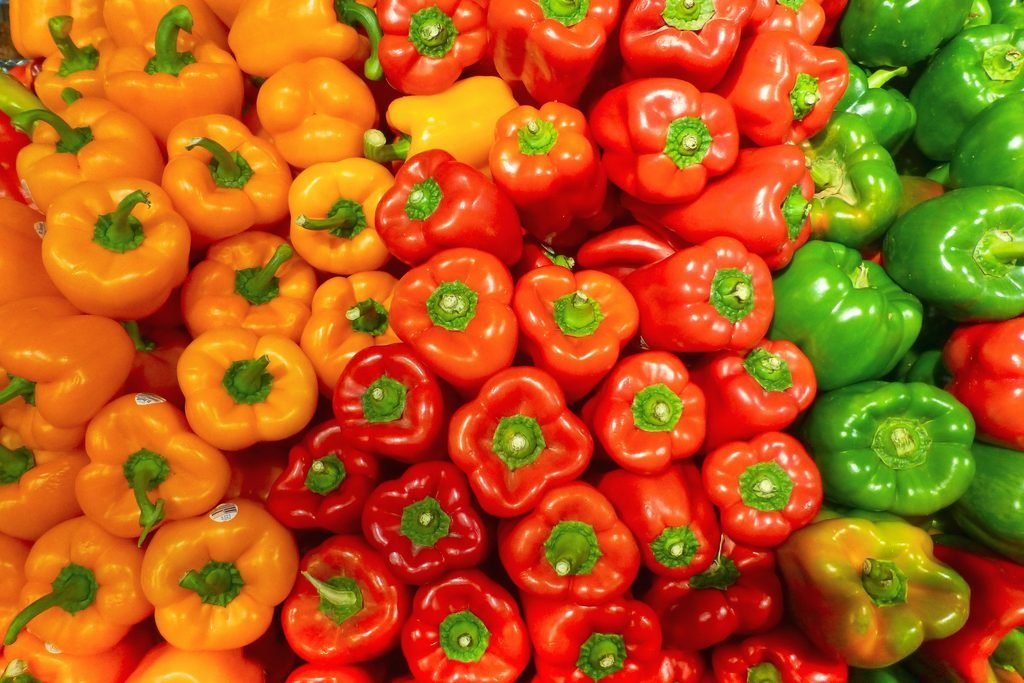
Yes. Hamsters can eat sweet bell peppers in small amounts. PDSA specifically includes bell sweet peppers on its list of suitable vegetables for hamsters. You do not need to choose a particular color, and there is no good reason to treat bell pepper as a special food for dwarf hamsters just because it contains relatively little sugar.
Bell pepper works best as a fresh extra alongside a complete hamster diet, not as something your hamster needs for vitamin C or any other specific nutrient. The practical questions are how much to offer, whether the seeds need to come out, and whether the same advice applies to hot peppers.
Are bell peppers safe for hamsters?
Yes. Bell sweet peppers are specifically included in PDSA’s list of vegetables suitable for hamsters.
That gives bell pepper a stronger evidence base than foods where owners have to rely on general rodent advice or assumptions based on human nutrition. Still, it should remain a small part of the diet. A hamster’s main food should be a nutritionally complete hamster food, with fresh vegetables and other extras added in modest amounts.
The RSPCA’s hamster feeding guidance similarly recommends a balanced formulated diet supplemented with small quantities of greens, root vegetables and fruit.
For the broader feeding framework, see our guide to what hamsters can eat and our list of safe vegetables for hamsters.
How much bell pepper should you give a hamster?
There is no good hamster-specific evidence supporting the precise “fingernail-sized for Syrians, half that for dwarfs” rule that is often repeated online.
Woodgreen gives a more useful general guideline for treats and fresh extras: keep portions around the size of the hamster’s ear and offer them once or twice a week. That is a reasonable practical starting point for bell pepper too.
You also do not need a separate mathematical serving rule for every hamster species. A smaller hamster will naturally receive a smaller piece than a large Syrian, but there is little value in pretending there is a scientifically established Syrian-versus-dwarf bell pepper chart.
When introducing bell pepper for the first time, keep the amount small and watch how your hamster responds.
Do you need to remove bell pepper seeds?
Removing the seeds, stem and central core is a simple way to serve bell pepper, but the reason matters.
I could not find reliable hamster-specific evidence showing that ordinary bell pepper seeds are toxic or that they present a special choking hazard. So I would not describe the seeds as dangerous.
Instead, remove the core and seeds simply because the fleshy part of the pepper is the part we actually have a reason to offer. There is no need to create an extra risk claim when basic preparation is easy.
Wash the pepper before serving it and cut off a small piece of the flesh. Check the enclosure for uneaten fresh food later, especially if your hamster tends to carry food into a hoard.
Are green, red, yellow and orange bell peppers all okay?
PDSA lists bell sweet peppers generally rather than restricting its recommendation to one color.
Green, yellow, orange and red peppers are different stages or varieties of sweet pepper, and there is no hamster-specific evidence showing that owners need to select one color over another.
You may see advice claiming green pepper is automatically “best for dwarf hamsters” because it is less sweet than ripe red pepper. That conclusion goes further than the evidence. Bell pepper can simply be treated as one of several suitable fresh vegetables rather than as a tool for managing diabetes.
If your hamster has actually been diagnosed with diabetes or another metabolic condition, feeding decisions should follow veterinary advice rather than a generic internet list.
Bell pepper is not the same as a hot pepper
The word “pepper” can create confusion here.
Sweet bell peppers are the food PDSA lists as suitable. That does not mean jalapeños, chillies or other hot peppers should be treated the same way. Woodgreen specifically places chillies on its foods-to-avoid list for hamsters.
So keep this recommendation narrow: sweet bell pepper, yes; hot chilli peppers, skip them.
Can bell pepper cause diarrhea?
Any new food can be a problem if you suddenly change a hamster’s diet or offer too much fresh food. It is more accurate to frame the risk that way than to claim that bell pepper’s water content itself “causes diarrhea.”
The RSPCA advises avoiding sudden dietary changes and stale food because these can upset a hamster’s stomach. It also recommends contacting a vet if your hamster starts eating less, develops moist droppings or has soiled hindquarters.
Do not rely on a rule such as “wait 24 hours” before seeking help. Hamsters are small animals and can deteriorate quickly. Significant lethargy, reduced appetite, persistent abnormal stools or another notable change in behavior warrants prompt veterinary advice.
Can dwarf hamsters eat bell peppers?
Yes. There is no reason in the available guidance to exclude dwarf hamsters from the general recommendation for sweet bell peppers.
What I would avoid is the common claim that bell pepper is especially suitable for “diabetes-prone dwarfs.” Different dwarf species should not automatically be assigned the same diabetes risk, and a food being relatively low in sugar does not make it a diabetes-prevention food.
Offer a small amount as part of an otherwise appropriate diet. If an individual hamster has a diagnosed medical condition, use the diet recommended by its vet.
The bottom line
Hamsters can eat sweet bell peppers in small amounts. PDSA specifically lists bell sweet peppers as a suitable vegetable, making this a fairly straightforward yes rather than a food where safety has to be guessed from indirect evidence.
Wash the pepper and offer a small piece of the flesh. Removing the stem, core and seeds is a simple conservative preparation step, but there is no need to label the seeds toxic or a proven choking hazard. Bell pepper is an optional fresh extra, not a nutritional supplement, diabetes treatment or food that every hamster needs.
And keep the distinction simple: sweet bell peppers are suitable, while hot chillies are best avoided.
Keep reading: What can hamsters eat? | Safe vegetables for hamsters | Foods toxic to hamsters
Hamster Corner provides general educational information about hamster care. It is not a substitute for professional veterinary advice. If your hamster shows signs of illness, contact a hamster-experienced vet.
[…] All species, including dwarfs. See can hamsters eat bell peppers […]
[…] All species. See can hamsters eat bell peppers […]
[…] All species. See can hamsters eat bell peppers […]
[…] Keep reading: What can hamsters eat? | Foods toxic to hamsters | Safe vegetables for hamsters | Can hamsters eat bell peppers? […]