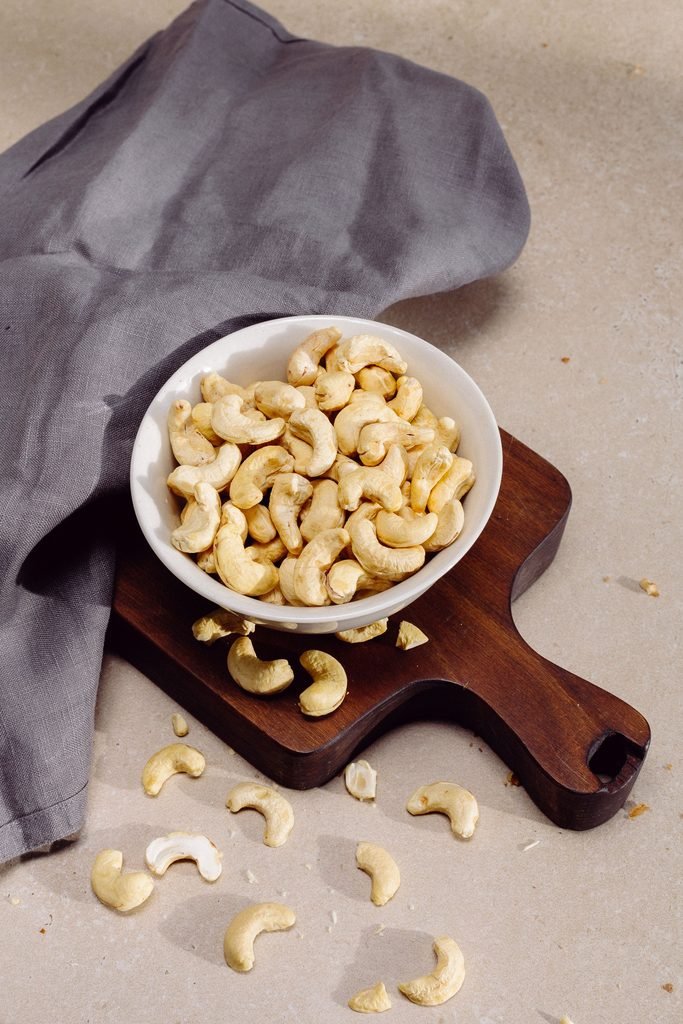
Yes, hamsters can eat a small piece of plain, unsalted cashew occasionally. Cashews are not known to be toxic to hamsters, but they are calorie-dense and high in fat, so they should remain a minor extra rather than a regular part of the diet. There is no strong evidence that every Syrian can safely eat exactly one whole cashew each week or that dwarf hamsters need a separate fixed portion.
Cashews are one of those foods where the basic answer is straightforward but online feeding rules quickly become more precise than the evidence.
Woodgreen Pets Charity says hamsters can have plain, unsalted nuts in very small amounts and specifically mentions walnut and hazelnut as examples. A veterinary-reviewed cashew guide also considers cashews suitable occasionally.
Neither point means a hamster needs cashews.
If the main hamster food is already nutritionally complete, cashew is simply an optional treat.
Can hamsters eat cashews safely?
A small amount of plain cashew appears to be low concern for a healthy hamster.
There is no indication from veterinary guidance that edible cashew kernels are a known hamster toxin. A veterinary-reviewed article from The Vet Desk specifically considers cashews acceptable in moderation, while Woodgreen Pets Charity says plain, unsalted nuts can be offered in very small amounts.
The main practical limitation is that nuts are energy-dense.
That makes cashews a poor food to give generously when a hamster should be getting most of its nutrition from a balanced staple diet.
How much cashew can a hamster eat?
There is no well-established hamster-specific cashew dose.
The previous version of this article recommended:
- one whole cashew for a Syrian
- half a cashew for a dwarf
- once per week for both
Those numbers are more confident than the evidence allows.
A veterinary-reviewed cashew article suggests up to half a cashew once a week, but that is a practical recommendation from one secondary source, not a demonstrated biological safety threshold.
Woodgreen takes a broader approach to nuts, recommending only very small amounts and giving a small piece of walnut or hazelnut as examples.
For cashew, the conservative approach is therefore simple:
offer a small broken piece occasionally rather than treating one whole nut as a standard serving.
You do not need to schedule cashews every week.
Why not give a whole cashew?
Because “not toxic” and “appropriate portion” are two different questions.
Cashews contain a substantial amount of fat and calories relative to their size. A whole cashew is also physically large compared with the amount of food a hamster normally eats.
That does not mean one accidental whole cashew will automatically harm a hamster.
It means there is little reason to make a whole nut the default treat when a much smaller piece provides the same novelty.
Blue Cross recommends keeping fresh foods and treats small and warns against sugary and fatty treats becoming a significant part of the diet.
The complete staple food should remain nutritionally dominant.
Are cashews healthy for hamsters?
Cashews contain protein, unsaturated fats and minerals when analyzed as human food.
That does not prove that adding cashews improves a hamster’s health.
Claims such as:
- cashews improve coat condition
- cashews support the heart
- magnesium from cashews benefits hamster bones
- cashews provide a useful protein boost
would require hamster-specific evidence.
A properly formulated hamster diet should already provide the nutrients a healthy hamster needs.
Cashews should therefore be viewed as an optional food, not a nutritional supplement.
Can dwarf hamsters eat cashews?
There is no evidence that healthy dwarf hamsters must completely avoid cashews.
There is also no reliable rule saying a Syrian gets one whole cashew while every dwarf gets exactly half.
Body size is a sensible reason to keep extras small, but species-specific treat charts can create false precision.
Campbell’s and some Campbell-type hybrid lines deserve greater attention to metabolic health, but that should not be turned into the claim that cashews are dangerous because they contain some natural carbohydrate or sugar.
For a healthy dwarf hamster, the same principle applies:
if cashew is offered, keep it plain, small and occasional.
If a hamster has diagnosed diabetes, obesity or another condition requiring dietary management, follow the feeding plan provided by a hamster-experienced veterinarian.
Can hamsters eat salted cashews?
Skip salted cashews.
Both Woodgreen and veterinary hamster guidance advise avoiding salty human foods.
The reason does not need to be exaggerated into a claim that one salted cashew will immediately damage a hamster’s kidneys or heart.
Commercial salted nuts simply add sodium that a hamster does not need, while an unsalted alternative is easy to choose.
There is no benefit to taking the extra uncertainty.
Can hamsters eat roasted cashews?
Roasting by itself does not make a cashew automatically unsafe.
The old article warned that roasted cashews contained acrylamide that was harmful to hamsters. I could not find good hamster-specific evidence supporting that as a practical reason to avoid ordinary roasted cashews.
What matters more is what has been added.
A plain, unsalted cashew is easier to assess than one covered in:
- salt
- barbecue seasoning
- chili
- garlic seasoning
- sugar coatings
- honey glaze
- chocolate
- flavored powders
If the product is plain and unsalted, whether the edible kernel is sold as raw-labelled or roasted is less important than the ingredient list.
What about honey-roasted cashews?
They are unnecessary.
Honey-roasted nuts generally contain added sweeteners and often salt or oil as well.
A hamster gains nothing from the coating that it would not get from a small piece of plain cashew.
The same applies to caramelized, candied and heavily flavored nuts.
Can hamsters eat chocolate-covered cashews?
No.
Chocolate is specifically included among foods hamsters should not eat in veterinary hamster guidance.
If you want to offer cashew, use a plain edible kernel rather than trying to remove chocolate from a coated nut.
For other potentially hazardous ingredients, see foods toxic to hamsters.
Does too much cashew damage a hamster’s liver or kidneys?
There is not enough evidence to make that claim.
The previous article said excessive cashews could cause:
- liver stress
- kidney strain
- cardiovascular problems
- a greasy coat
- loose stools specifically because of their fat content
Those mechanisms were too specific.
The better-supported concern is dietary balance and excess calorie intake.
A hamster repeatedly filling up on energy-dense treats may eat less of its nutritionally balanced staple food. Overfeeding calorie-dense foods can also contribute to excessive weight gain.
That is enough reason to keep nuts limited without inventing organ damage.
Are cashews better than peanuts?
There is no useful reason to rank them as competing hamster superfoods.
Both are calorie-dense foods that may be offered in suitable plain forms, but neither is necessary when the hamster already receives a complete diet.
If your hamster’s normal food already contains peanuts, seeds and other energy-dense ingredients, that is another reason not to continually add extra nuts on top.
The overall diet matters more than choosing the “healthiest” nut.
Can cashews be used as a taming treat?
A tiny piece can be useful if your hamster particularly likes cashew, but there is no need to give a large piece every time you interact.
Break a small amount into smaller fragments if you want several rewards during a taming session.
You can also use part of the hamster’s normal dry ration as rewards.
That avoids turning every interaction into additional calories.
See our how to tame a hamster guide for a gradual approach to building trust.
What if my hamster ate several cashews?
First identify exactly what was eaten.
Plain unsalted cashews are different from chocolate-coated, heavily salted or flavored nuts.
If your hamster ate more plain cashew than intended but otherwise appears normal:
- remove the remaining cashews
- continue the normal balanced diet
- make sure fresh water remains available
- watch normal appetite, activity and stool
- check the food hoard in case more nuts were stored
Do not fast the hamster, force water, give milk or attempt to make the hamster vomit.
If the cashews contained a potentially hazardous ingredient, a very large or unknown amount was eaten, or your hamster develops significant diarrhea, weakness, reduced appetite, unusual lethargy or another meaningful change, contact a veterinarian experienced with hamsters.
Keep the product packaging so the ingredient list is available if veterinary advice is needed.
The bottom line
Hamsters can eat a small piece of plain, unsalted cashew occasionally, but cashews are an optional treat rather than a useful dietary supplement.
There is no strong basis for the old rule of one whole cashew every week for a Syrian and exactly half for a dwarf.
Cashew-specific veterinary-reviewed guidance supports occasional feeding, while Woodgreen recommends nuts generally only in very small amounts because they are high in fat.
A small broken piece is therefore a more sensible approach than making a whole nut the standard portion.
Skip salted, sweetened, chocolate-coated and heavily flavored cashews. Plain roasted cashews do not need to be rejected solely because they are roasted, and there is not enough hamster-specific evidence to use acrylamide as a reason to ban them.
Most importantly, do not let optional nuts displace a nutritionally complete hamster food.
Keep reading: What can hamsters eat? | Foods toxic to hamsters | How to tame a hamster
Sources: Woodgreen hamster feeding guide | Blue Cross hamster care guide | Veterinary-reviewed cashew guide | PetMD hamster care sheet
Hamster Corner provides general educational information about hamster care and nutrition. If your hamster eats a questionable food or develops a significant change in appetite, stool, activity or behavior, contact a veterinarian experienced with hamsters.